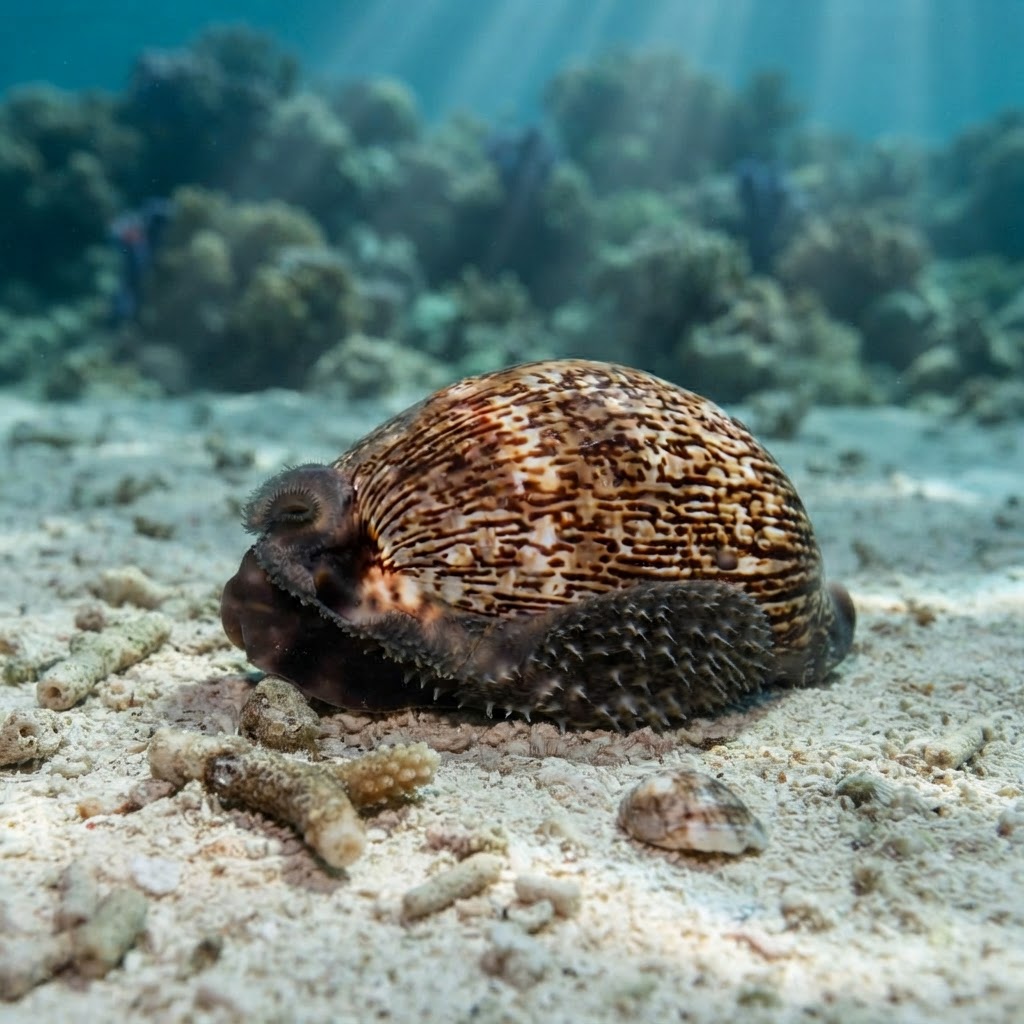
Mauritia arabica
Mottled brown shell on Queensland and Kenting night dives: here's how to find and identify the Arabian cowry underwater.
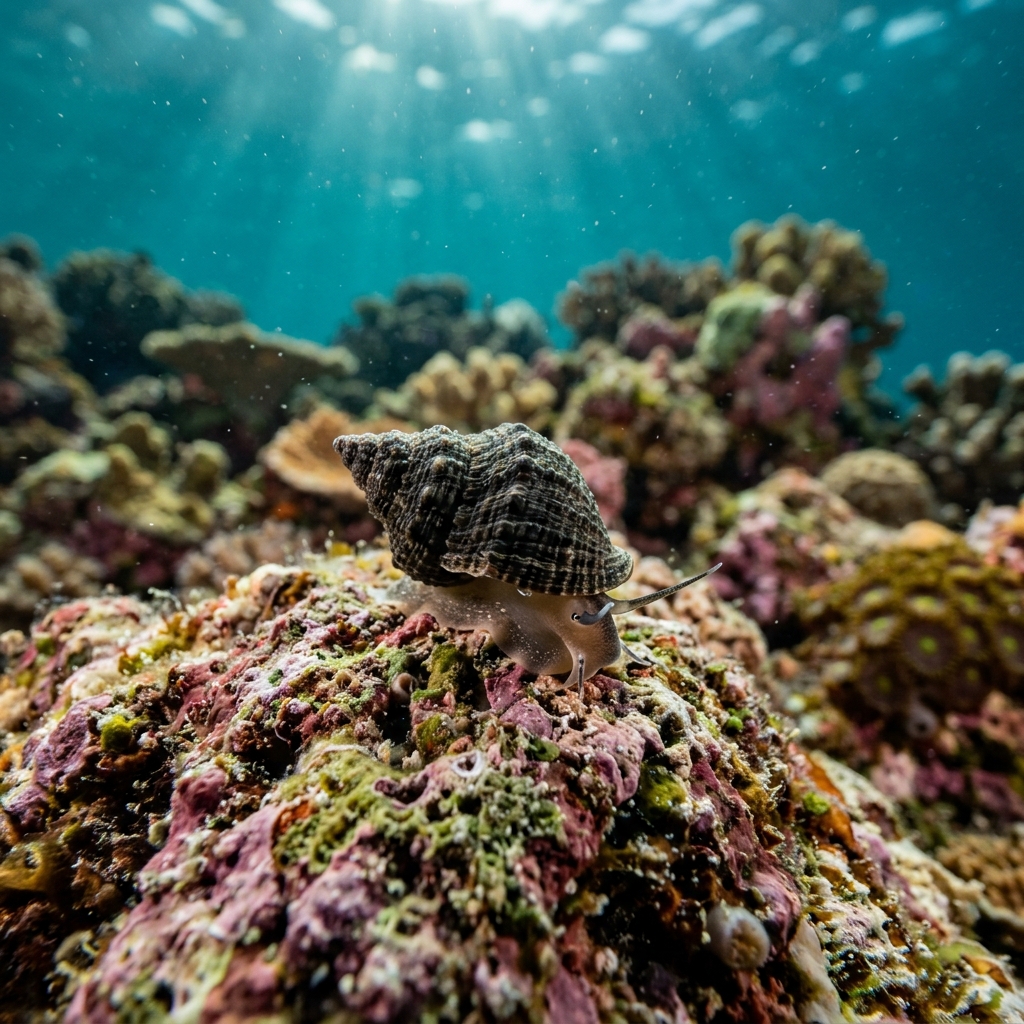
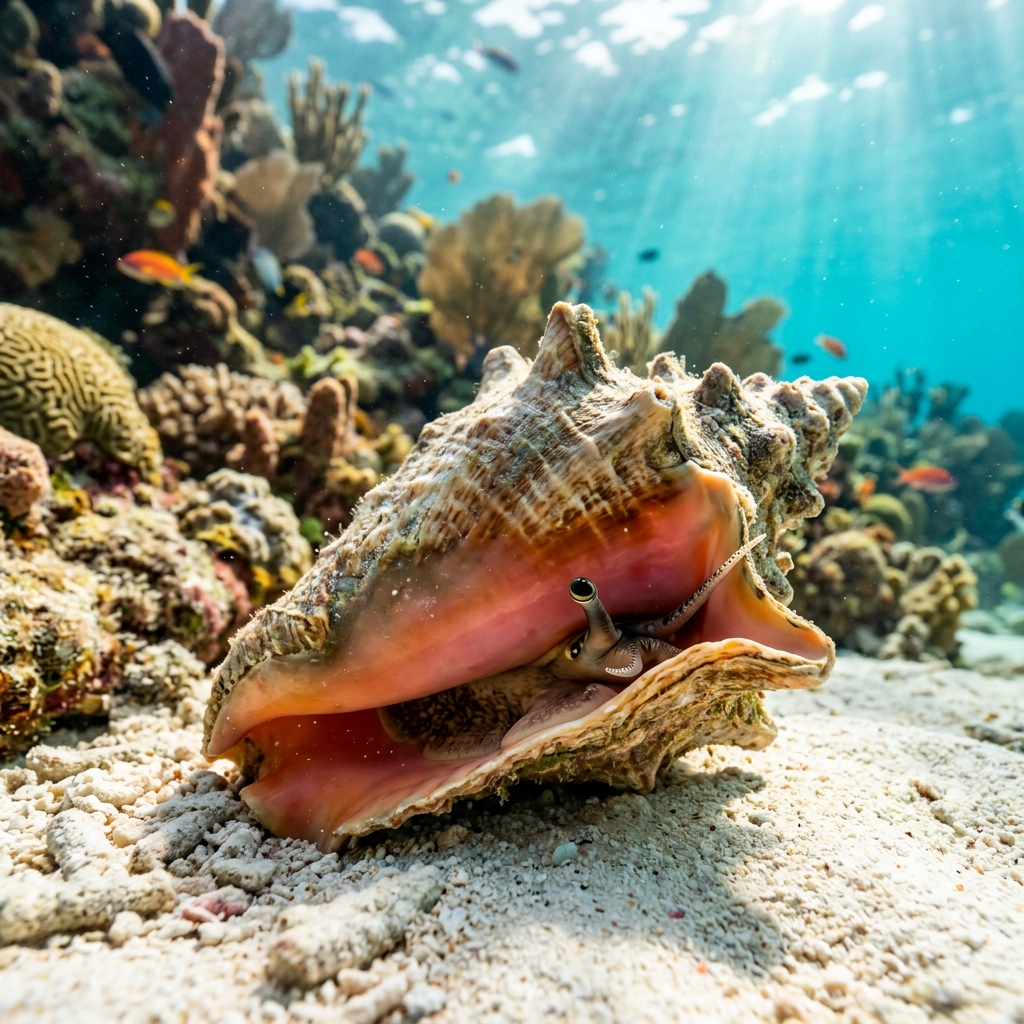
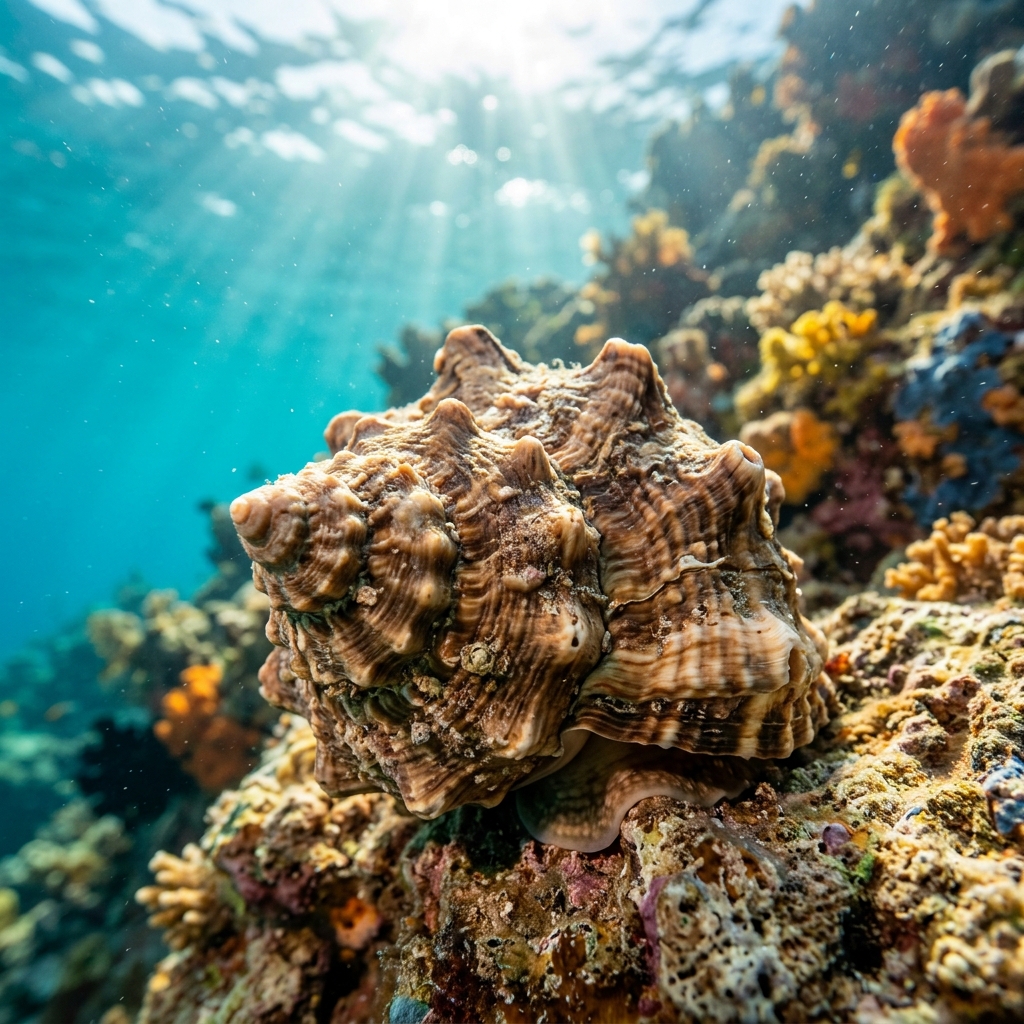
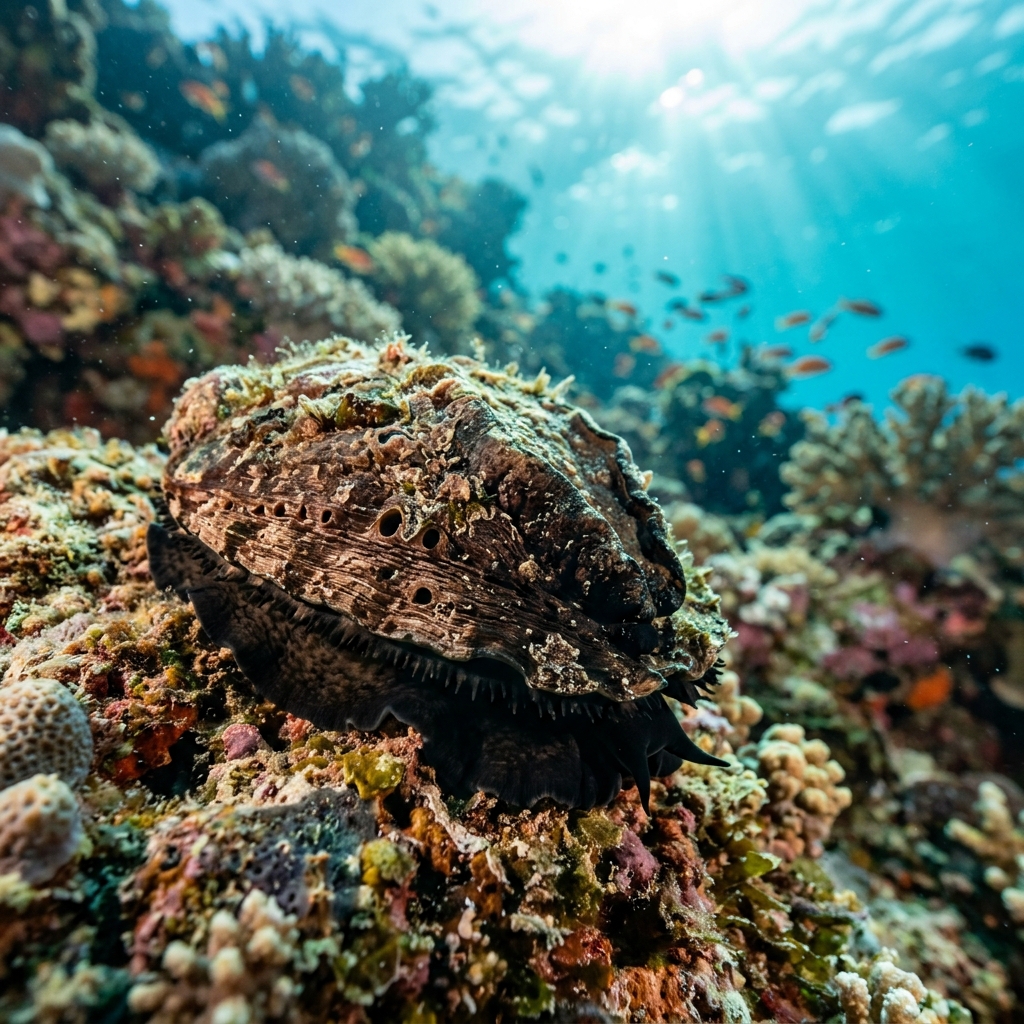
A glossy, oval shell about 7cm long, patterned with irregular brown blotches and networks of fine lines over a cream or tan base, giving it a mottled, almost camouflage-like look. The shell has a smooth, high-gloss finish typical of cowries, with a ridged slit running along its flat underside. When active, the mantle (the fleshy tissue) can extend up over the shell, briefly hiding the pattern beneath a soft, papillated skin.
Expect to find this cowry tucked under coral ledges or rubble during the day, since it is a nocturnal forager that becomes active once the light drops. Night dives are the more productive time to see it out and grazing, often moving slowly across hard substrate. It has no real defensive display beyond retreating and pulling its mantle tight over the shell if disturbed by a torch or a curious diver.
The glossy shell divers see is kept polished by the mantle, which the snail can extend to fully cover it while feeding, protecting the surface from abrasion and algae growth.
Sightings are spread across the year with no clear seasonal pattern, matching its comfort range of roughly 22 to 30C, so it turns up on tropical and subtropical reefs whenever conditions sit in that band. Treat it as a year-round find rather than something tied to a particular month.
Most reliably logged on reefs around Queensland in Australia, with a solid secondary population in Kenting, Taiwan. Divers also find it in Sai Kung, Hong Kong and Bali, Indonesia, with smaller numbers reported from KwaZulu-Natal in South Africa and sites in the Marshall Islands and New Caledonia.
Mapping where Arabian Cowrie is logged…
Queensland in Australia has the strongest population, with Kenting in Taiwan a reliable secondary spot. Sai Kung in Hong Kong and Bali in Indonesia also produce regular sightings.
There is no strong seasonal pattern in the sightings data, and its temperature range of roughly 22 to 30C keeps it on reefs year-round, so any month is worth a look.
Look for a glossy oval shell around 7cm long with irregular brown blotches over a cream background and fine connecting lines. At night the fleshy mantle may be extended over the shell, briefly hiding the pattern.
They typically reach about 7cm in shell length, a manageable size that makes them easy to overlook against rubble unless you are scanning closely with a torch.
No. They pose no threat to divers and simply retreat into their shell or under cover if disturbed.
Its mantle tissue can extend to fully wrap the shell while it feeds, which keeps the glossy surface polished and free of algae, a trait shared across cowry species.
Site and sighting data is aggregated from diver logs, iNaturalist and GBIF. For taxonomy and conservation status:
Triton Shell
2,297 sites