Chaetodon melapterus
A dark-bodied butterflyfish common in the Daymaniyat Islands and Muscat, thriving in 25-29C waters year-round.
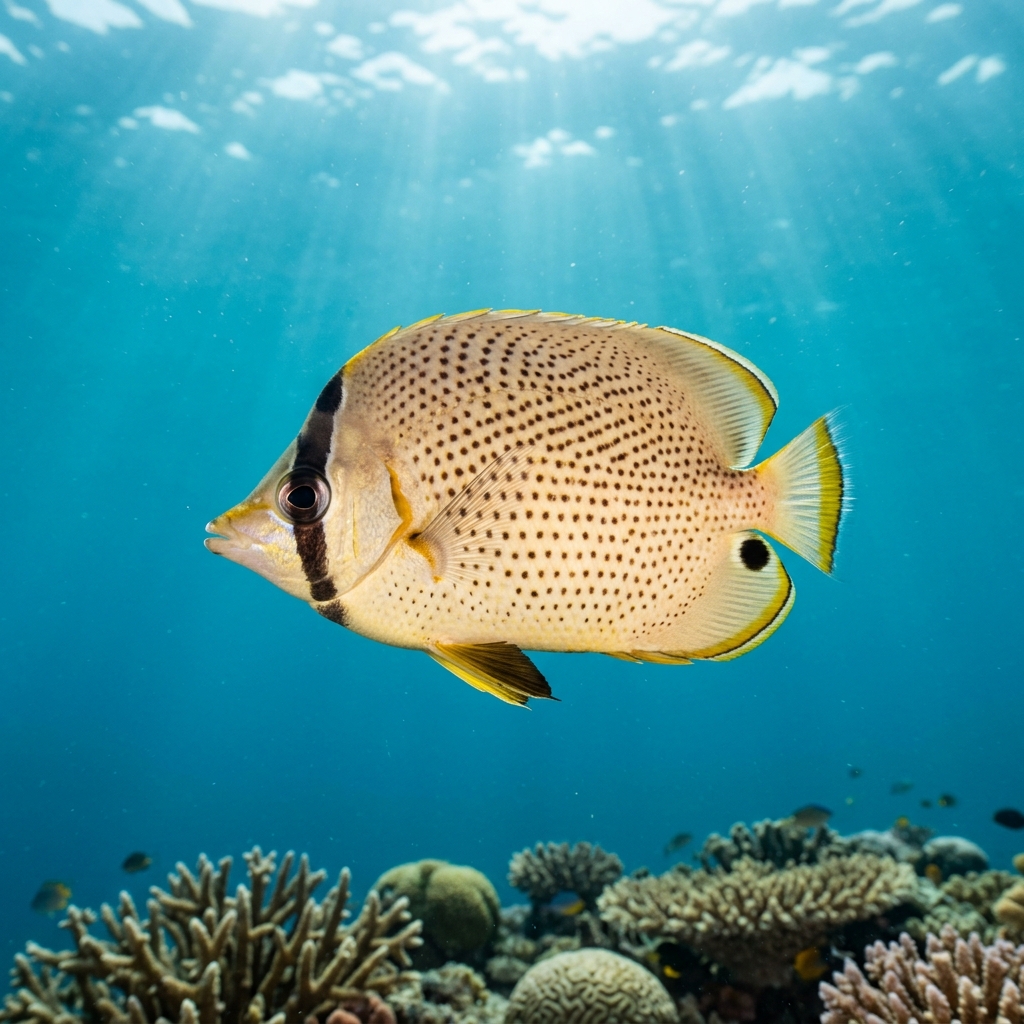
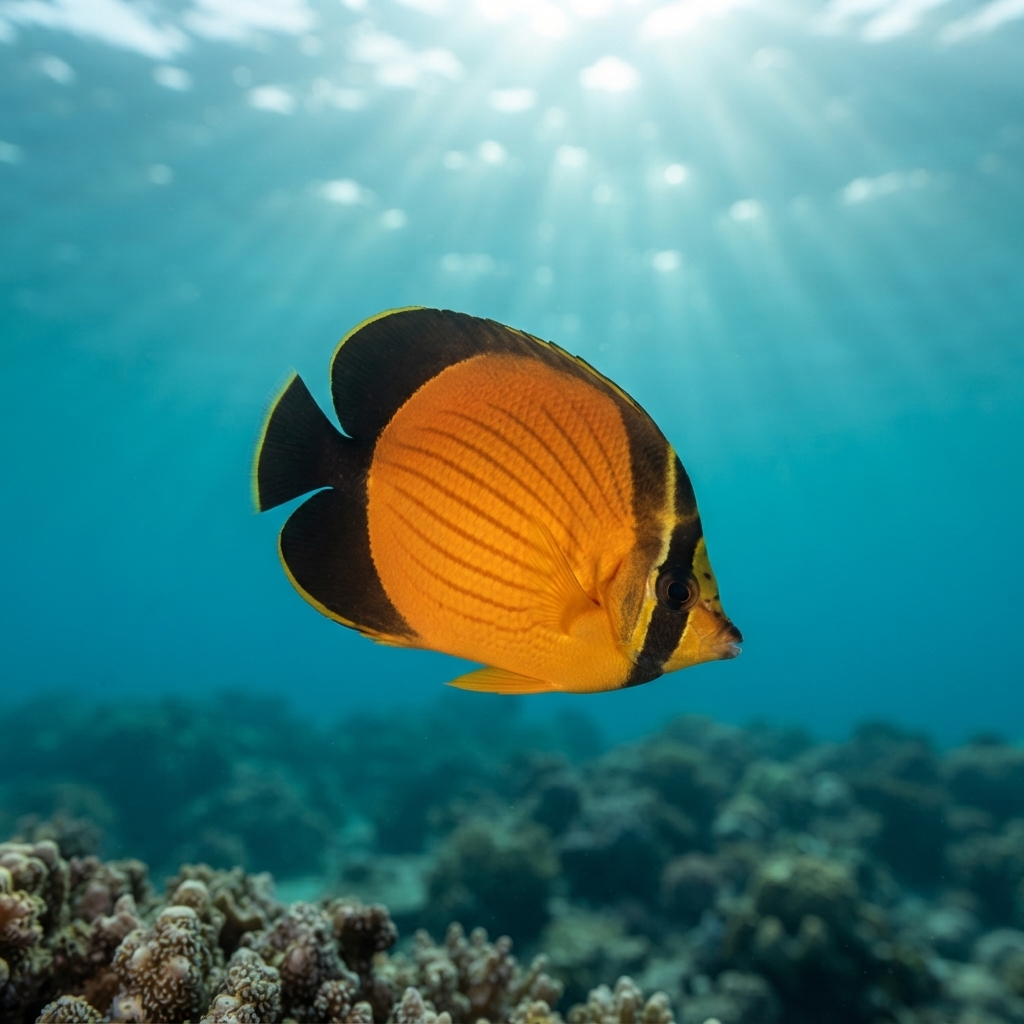
Small, disc-shaped fish around 9cm, with a body that darkens from silvery grey toward the tail into a near-black rear half, giving it a two-toned look. A black band runs through the eye like a mask, and the fins carry a thin yellow trim that shows up well against the darker body. There's no dramatic difference between sexes to worry about underwater.
Usually spotted picking at coral polyps and algae on rocky and coral reef sections, often alone or in loosely paired individuals rather than big groups. It tends to keep a cautious distance from divers but doesn't dart for cover the way some reef fish do, so a slow approach usually gets you a decent look.
It's one of a handful of butterflyfish species adapted to the unusually warm, high-salinity waters of the Gulf and Arabian Sea, a niche most reef butterflyfish don't tolerate as well.
No clear seasonal pattern shows up in sightings, and with a comfortable range of 25.2 to 29.3C it's present on Omani and UAE reefs throughout the year.
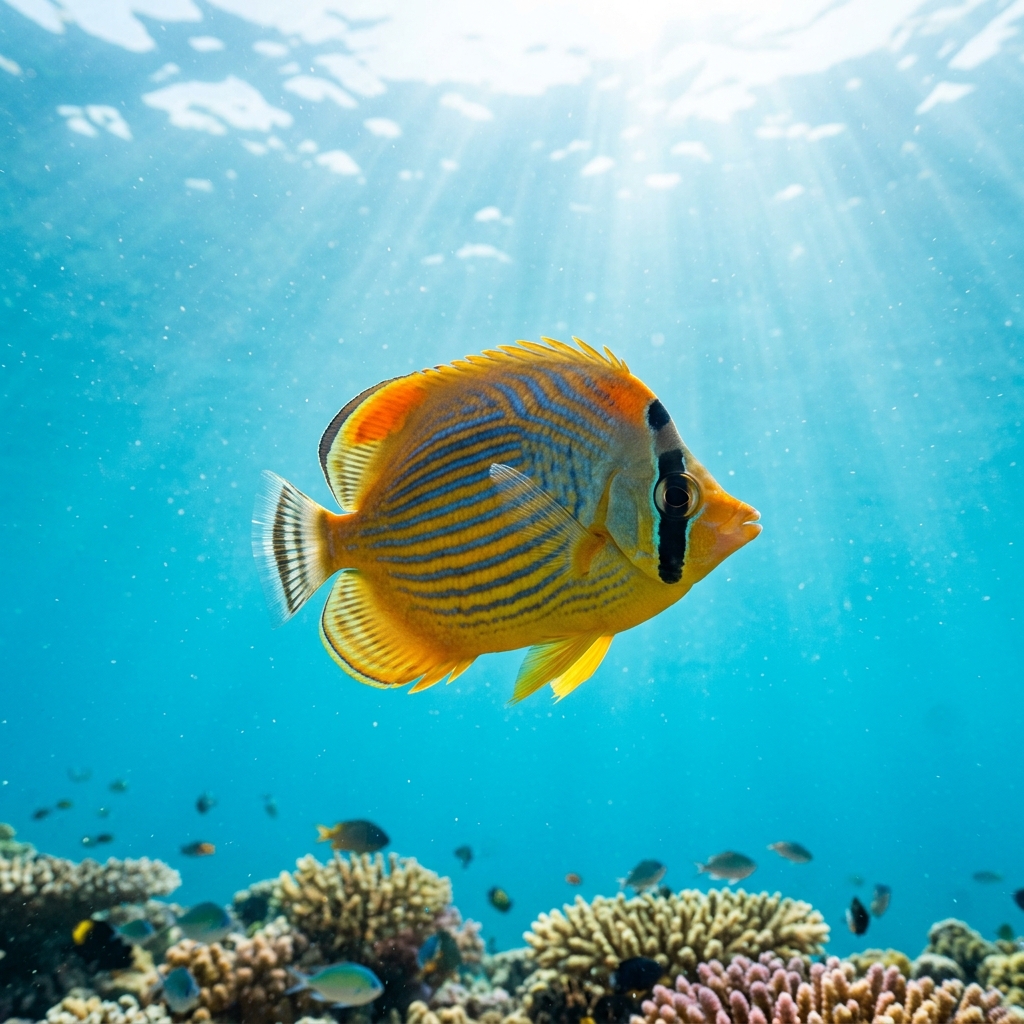
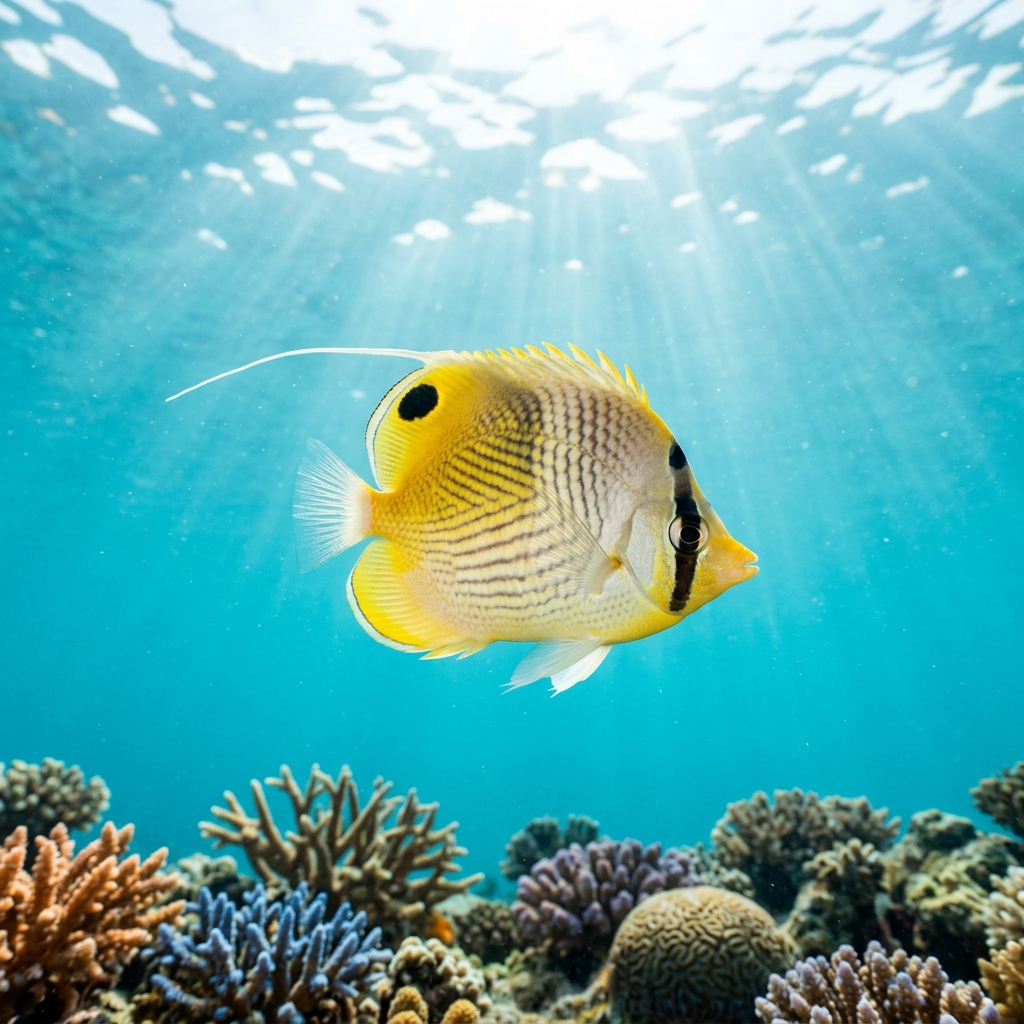
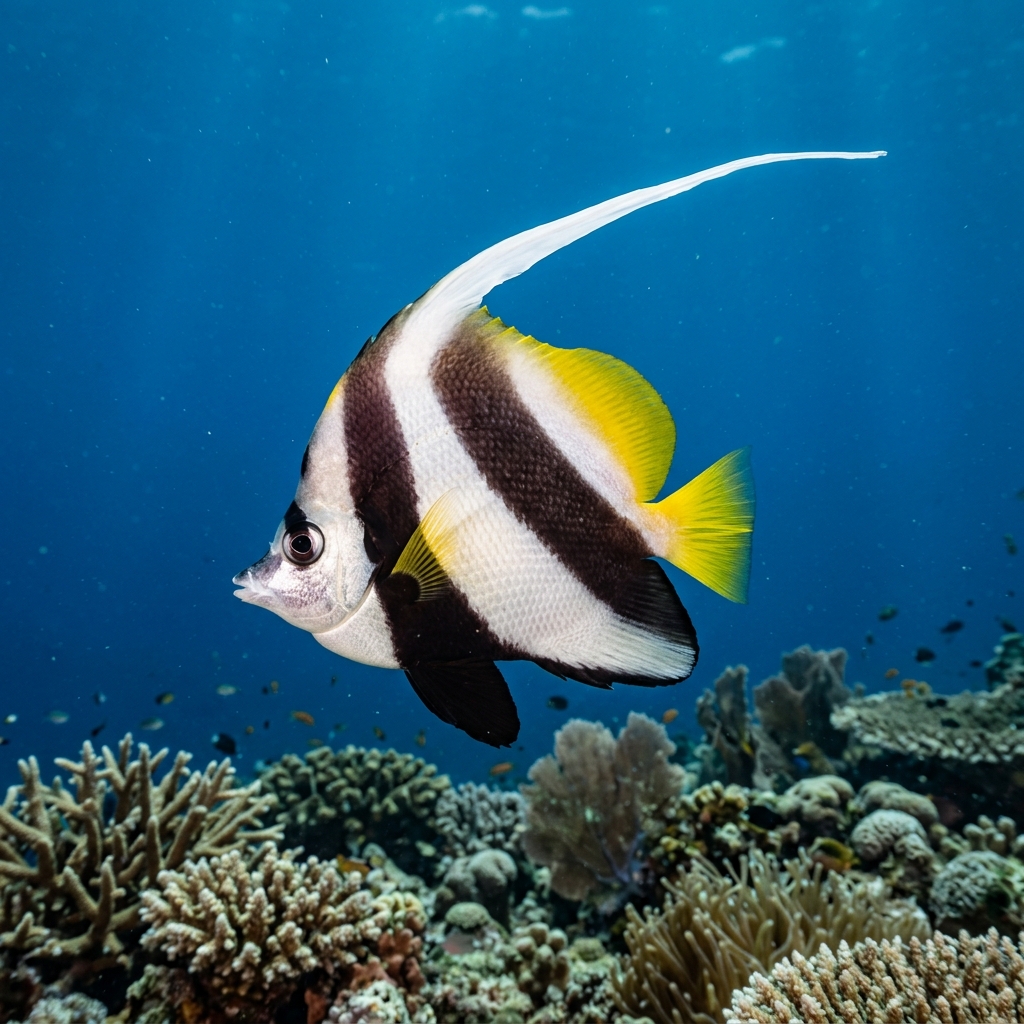
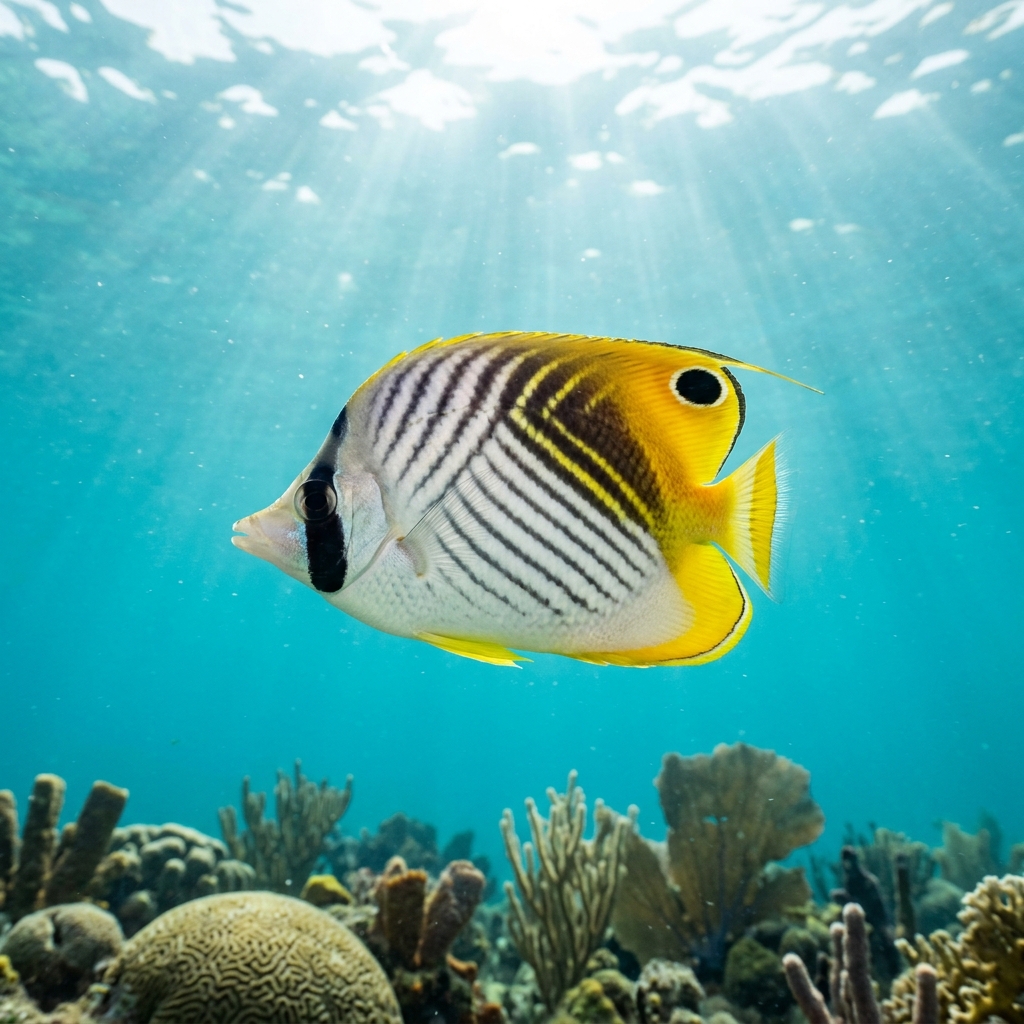
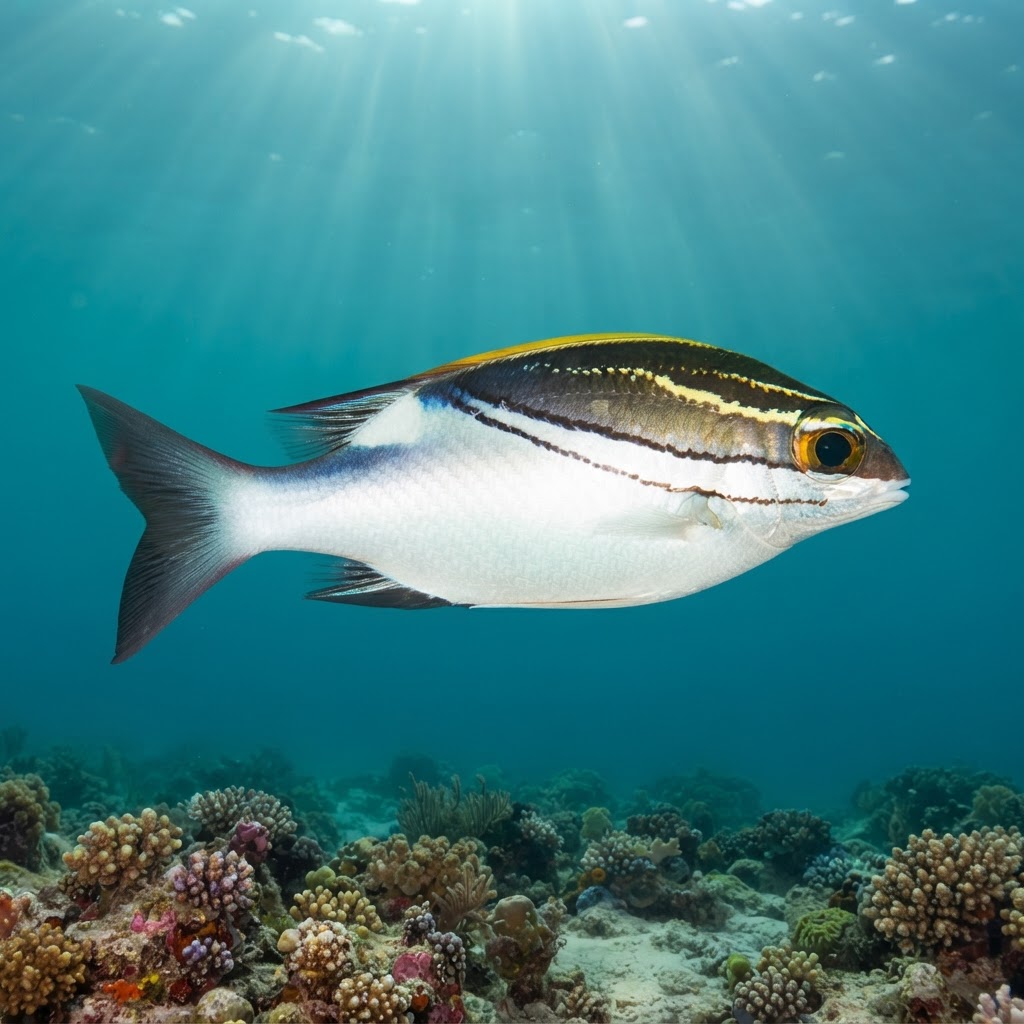
Reef neighbours a diver could mistake it for. Use the identification notes above to tell them apart.
Most reliably logged in Oman, especially around the Daymaniyat Islands and the wider Muscat coastline, with a solid presence too on the UAE's East Coast. These sites cover the core of its known range in the region's rocky and coral reefs.
Mapping where Arabian Butterflyfish is logged…
Oman is the strongest bet, particularly the Daymaniyat Islands and the Muscat coastline, with further sightings along the UAE's East Coast.
There's no strong season in the sighting data, and its warm-water preference of roughly 25 to 29C means it's found on Omani and UAE reefs all year round.
Look for a small, disc-shaped fish with a grey front half that darkens to near-black toward the tail, a black eye-mask, and yellow-trimmed fins.
They stay small, typically reaching around 9cm, in line with most reef-dwelling butterflyfish.
It's logged as uncommon at most sites where divers find it, though a good number of sites in Oman report it as common or very common, so persistence and the right region pay off.
Site and sighting data is aggregated from diver logs, iNaturalist and GBIF. For taxonomy and conservation status:
Melon Butterflyfish
1,616 sites