Aplodinotus grunniens
Spot freshwater drum in the Great Lakes region of Canada and the US, in water as cold as 1°C. Here's where divers log it and what to look for.
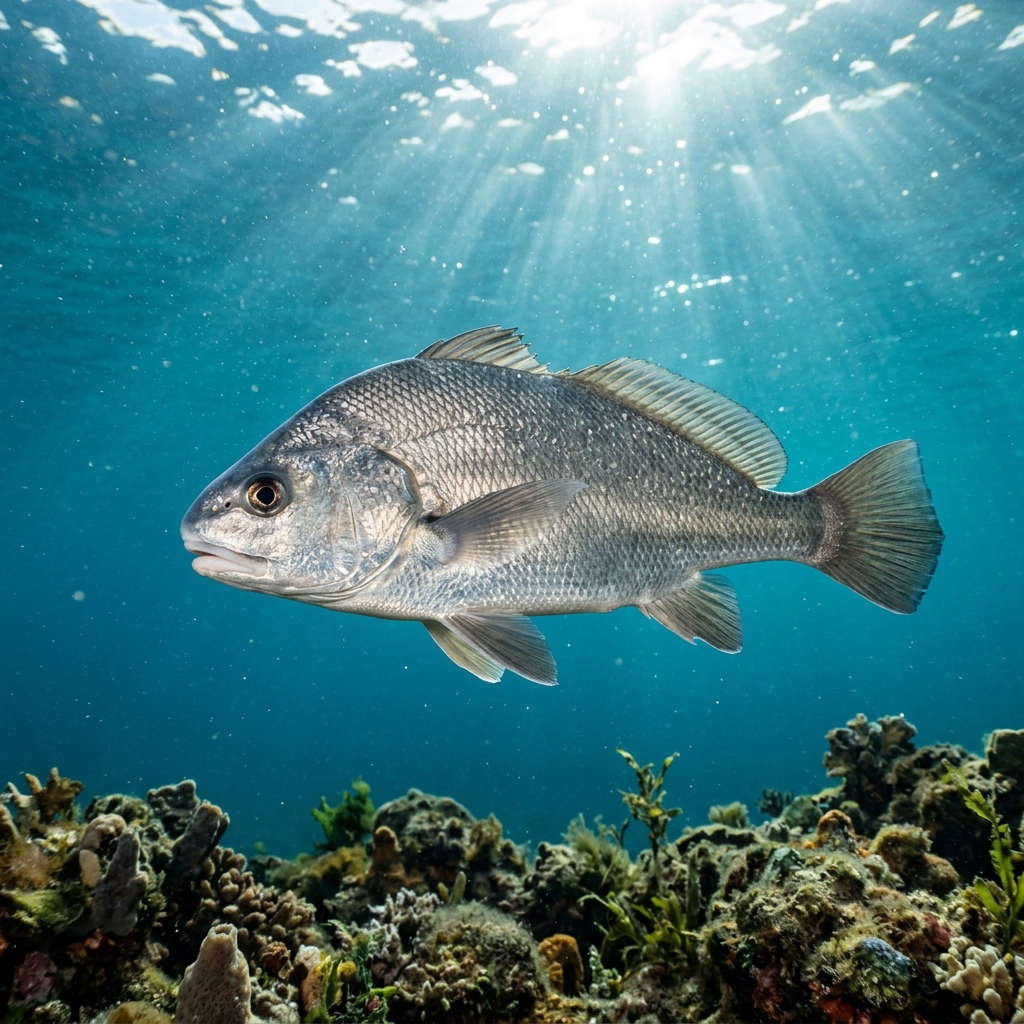
A deep-bodied, hump-backed fish with a distinctly blunt, rounded snout and a continuous dorsal fin that dips noticeably at the midpoint. Colouration is silver to grey with a slight brassy sheen on the flanks, fading to a pale white belly. Look for the lateral line (the sensory canal running along its side) that curves and extends all the way to the tail fin, which is unusual among freshwater fish and a reliable underwater marker.
Typically seen cruising slowly along rocky or sandy lake bottoms, often in small loose groups, rooting through gravel and sediment in search of molluscs and invertebrates. Divers report it as unhurried and largely indifferent to a still observer, though it will move off if approached too closely. Most sightings place it close to the substrate rather than in open water.
Freshwater drum are the only member of the family Sciaenidae (the drums and croakers) that lives entirely in freshwater in North America. Like their marine relatives, they can produce a distinctive low rumbling or grunting sound using specialised muscles that vibrate against their swim bladder, which is how the family name, and this species' name, came to be.
There is not enough seasonal sighting data to identify a peak month, so it should be treated as a year-round resident. It tolerates extremely cold water, with observed temperatures ranging from just above freezing to around 22°C, meaning it stays active through Great Lakes winters when other species are rarely seen.
Almost all diver sightings come from the Great Lakes region, with the majority logged at Canadian sites in Ontario and the surrounding lakes. The United States side of the Great Lakes and the Northeast also produces regular records. This is essentially a Great Lakes species for most divers seeking it out.
Mapping where Freshwater Drum is logged…
Freshwater drum are almost exclusively logged by divers in the Great Lakes region. Canadian sites in Ontario account for the majority of records, with additional sightings from the US side of the Great Lakes and the broader Northeast. No saltwater or tropical dive destinations appear in the data.
There is no confirmed seasonal peak in the sighting data, so it can be treated as a year-round target. It tolerates water temperatures from just above 1°C up to around 22°C, which means it remains active through cold Great Lakes winters when few other fish are encountered.
Key features are a deep, hump-backed body, a blunt rounded snout, and a continuous dorsal fin with a clear dip in the middle. The lateral line is distinctive: it curves down the flank and runs all the way to the tip of the tail fin, unlike most freshwater fish. Overall colour is silver-grey with a faint brassy sheen.
Freshwater drum can reach over 70 cm in length and individuals above 10 kg have been recorded, though fish in that size range are uncommon. Most divers will encounter mid-sized adults that appear roughly comparable in bulk to a large carp.
It produces an audible low-frequency grunt or drumming sound by contracting specialised muscles against its swim bladder. This is the same mechanism used by its marine relatives across the family Sciaenidae. The sound is most associated with spawning behaviour and can sometimes be heard by divers in the water.
Site and sighting data is aggregated from diver logs, iNaturalist and GBIF. For taxonomy and conservation status:
Sun Perch
2,182 sites