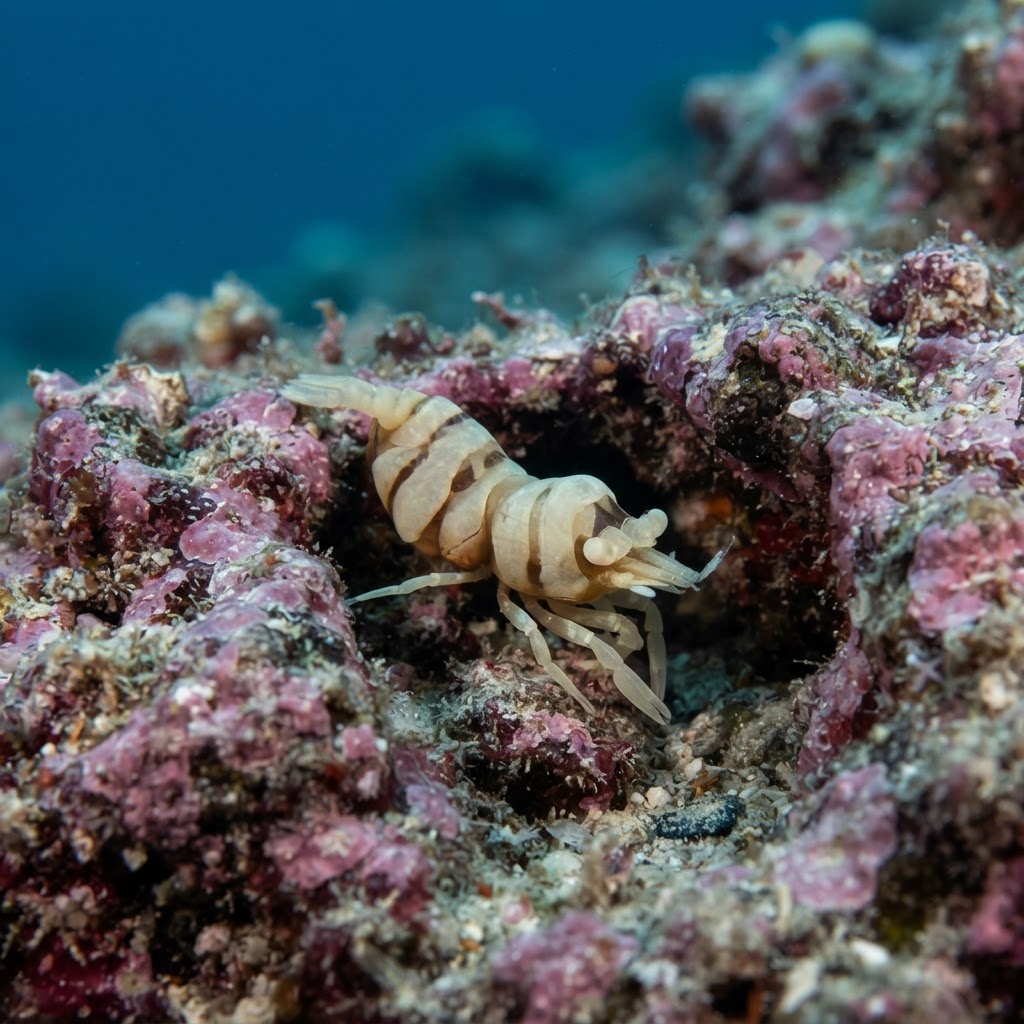
Pontonides ankeri
Tiny whip coral resident found on Luzon and Visayas reefs, 25-31C year-round, rare but worth the slow look.
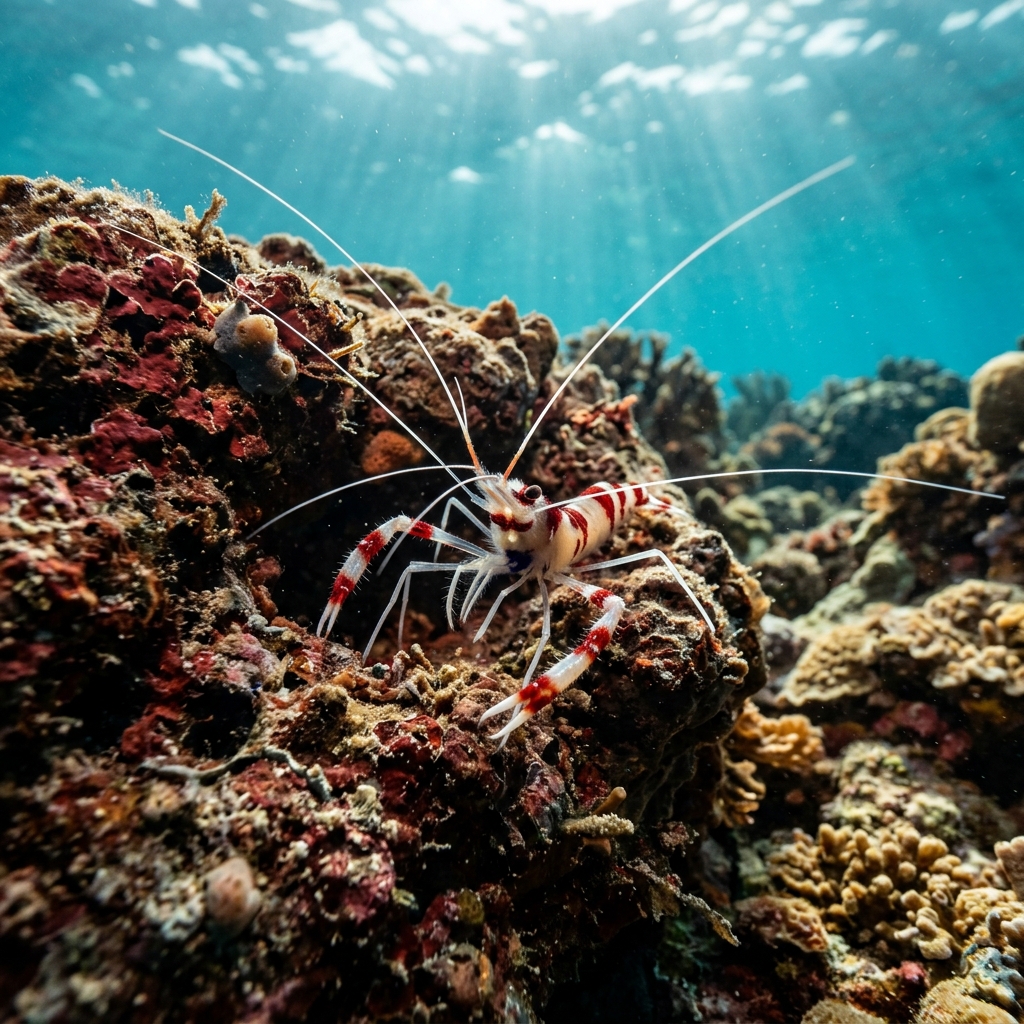
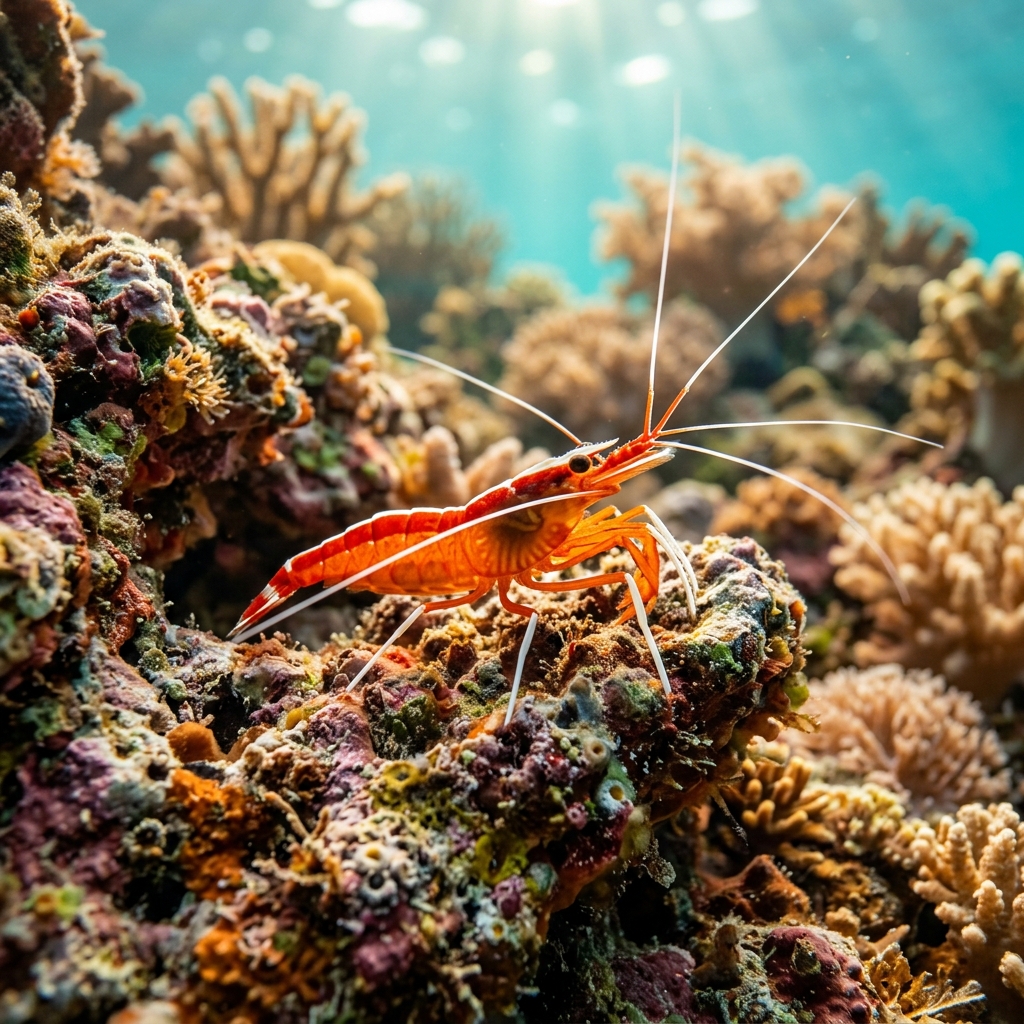
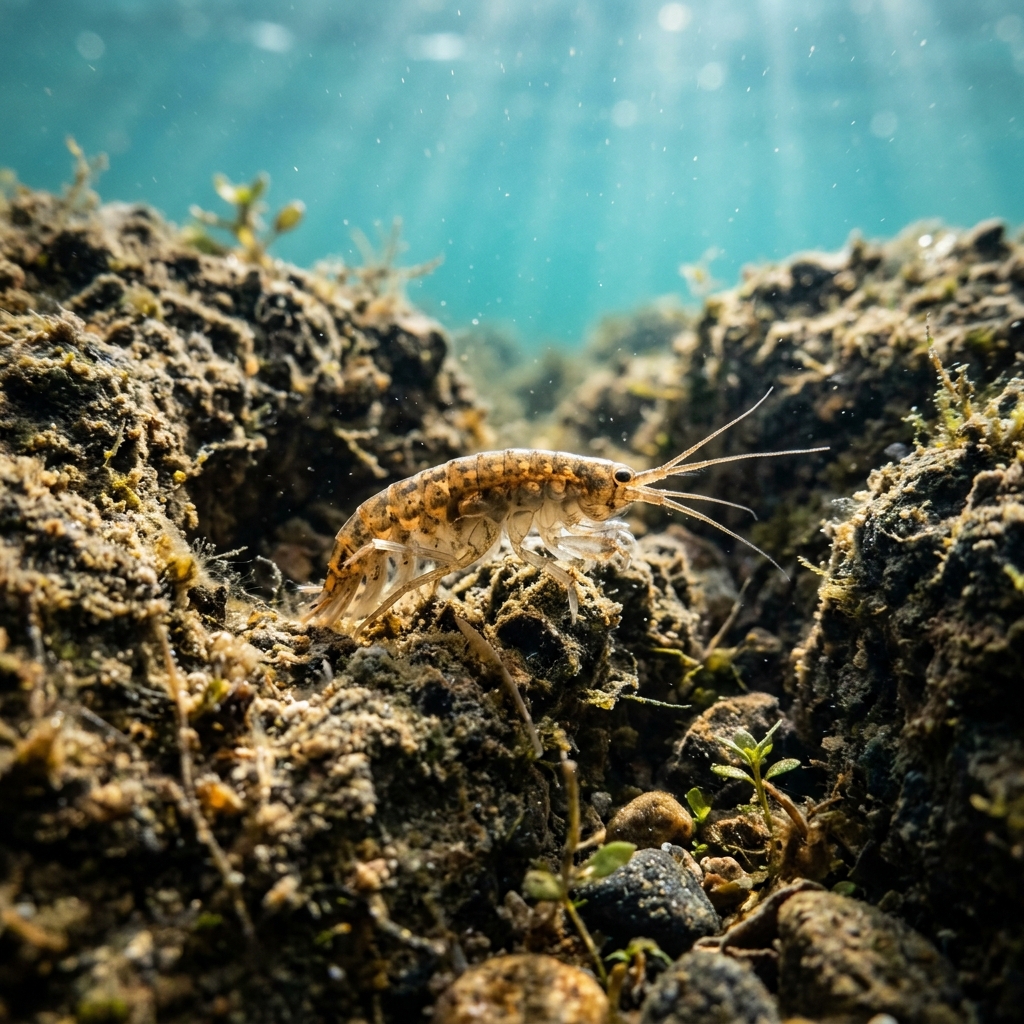
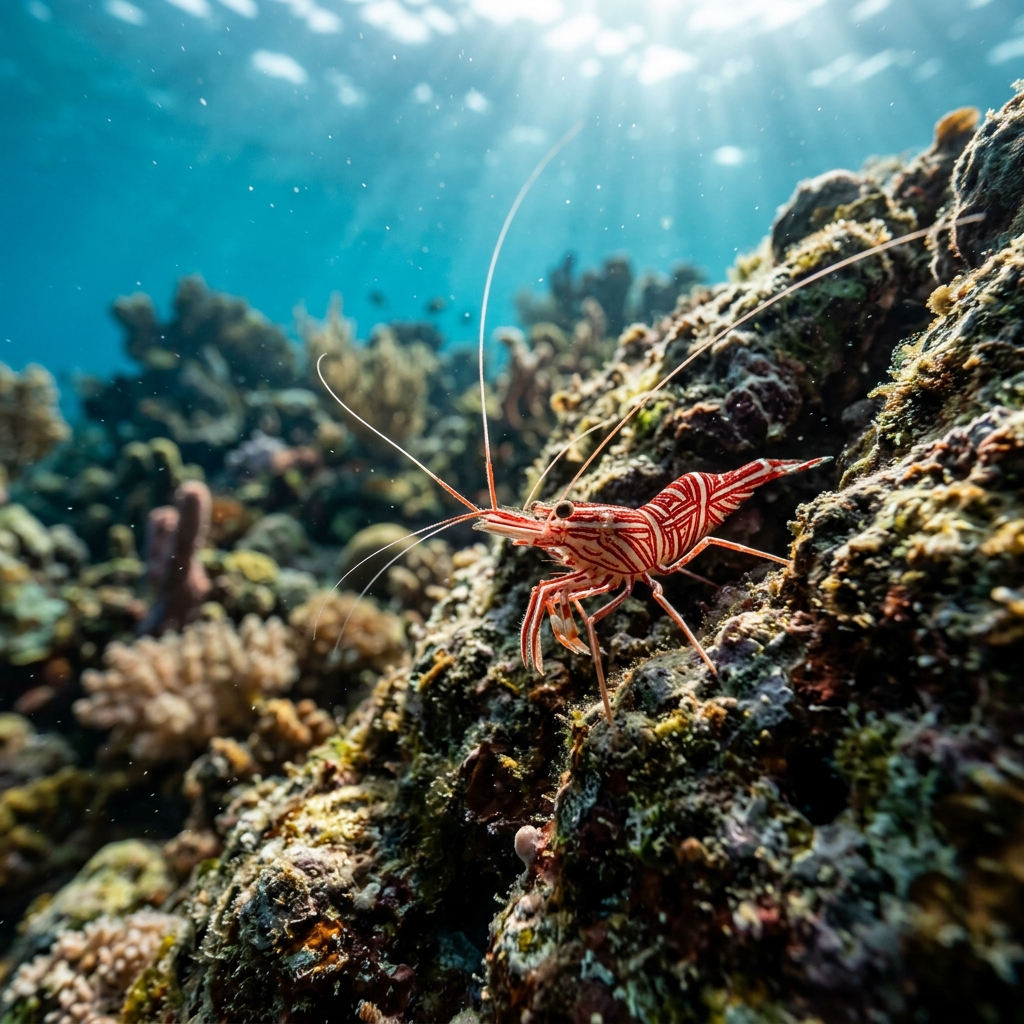
Small enough that most divers need a torch and a slow pass to pick it out, this shrimp is slender and near-transparent with faint banding that lets it vanish against the coral it lives on. It grips the strand of a whip coral (a long, thin, unbranched black coral) side-on, body angled parallel to the coral's length rather than perpendicular like many reef shrimp. Look for a pair of long, thin antennae and a segmented, almost glassy body running along the coral rather than perched on top of it.
Divers find it clamped tight to a single strand of whip coral, usually holding still and relying on its near-transparent body to disappear against the coral rather than fleeing. It tends to sit at depth on slopes and walls where whip corals grow, and it stays put through a slow, patient look rather than darting off, though a fast approach or a torch beam swept too quickly will make it shuffle round to the far side of the strand.
It lives its whole life on a single whip coral colony, so a dive guide who has found one before can usually take you straight back to the same strand on a later dive.
Sightings come in year-round with no clear seasonal pattern in the data, which fits its comfort range of roughly 25 to 31C on tropical Indo-Pacific reefs. Any month works; success depends more on finding whip coral and a guide who knows where to look than on timing a season.
Most consistently logged in the Philippines, with sightings concentrated on Luzon and a smaller number on the Visayas, making Luzon's muck and reef sites the strongest bet. Outside the Philippines it turns up in Indonesia, with a handful of records from Raja Ampat and Bali, so both countries are worth a dedicated whip-coral search on any dive.
Mapping where Anker's Whip Coral Shrimp is logged…
The Philippines is the strongest bet, especially Luzon and the Visayas, with additional sightings from Raja Ampat and Bali in Indonesia. Ask dive guides in these regions to point out whip coral colonies specifically.
Sightings happen year-round with no strong seasonal pattern, consistent with its year-round tropical water niche of roughly 25 to 31C. Any month is worth trying if you can find whip coral.
Look for a slim, near-transparent shrimp gripping a whip coral strand side-on rather than perched across it. Faint banding helps it blend into the coral, so a slow scan with a torch is more effective than a quick pass.
Exact size figures are not well documented, but like other whip coral shrimp it is small, typically only noticeable once a diver is within close range with a torch.
It is logged as rare to uncommon even at the sites where divers know to look, so treat any sighting as a bonus rather than something to expect on every dive. Whip coral habitat is the main clue to search near.
Site and sighting data is aggregated from diver logs, iNaturalist and GBIF. For taxonomy and conservation status:
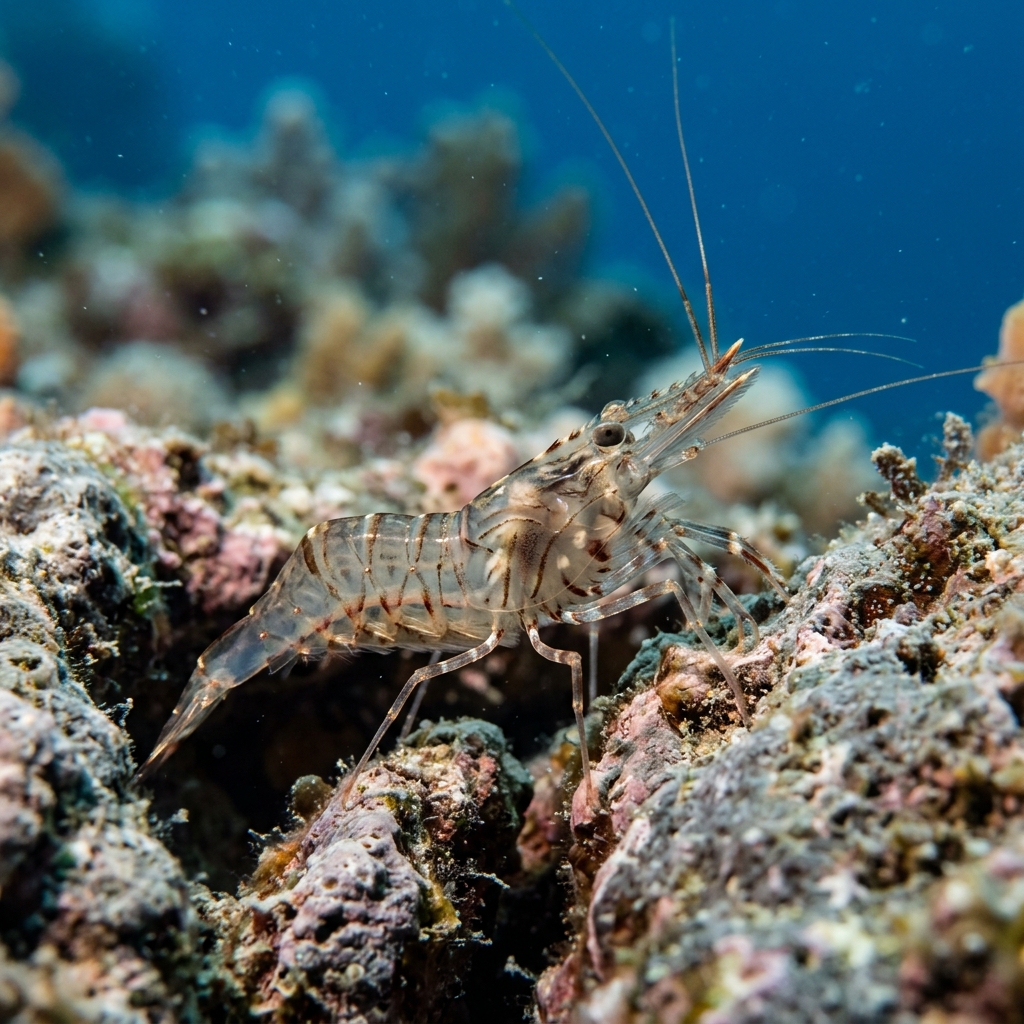
Rockpool Prawn
2,179 sites