Lophius piscatorius
Rare, camouflaged and cold-water: find anglerfish on sandy bottoms off Catalonia and the French Riviera in 3.8 to 14.2 C water.
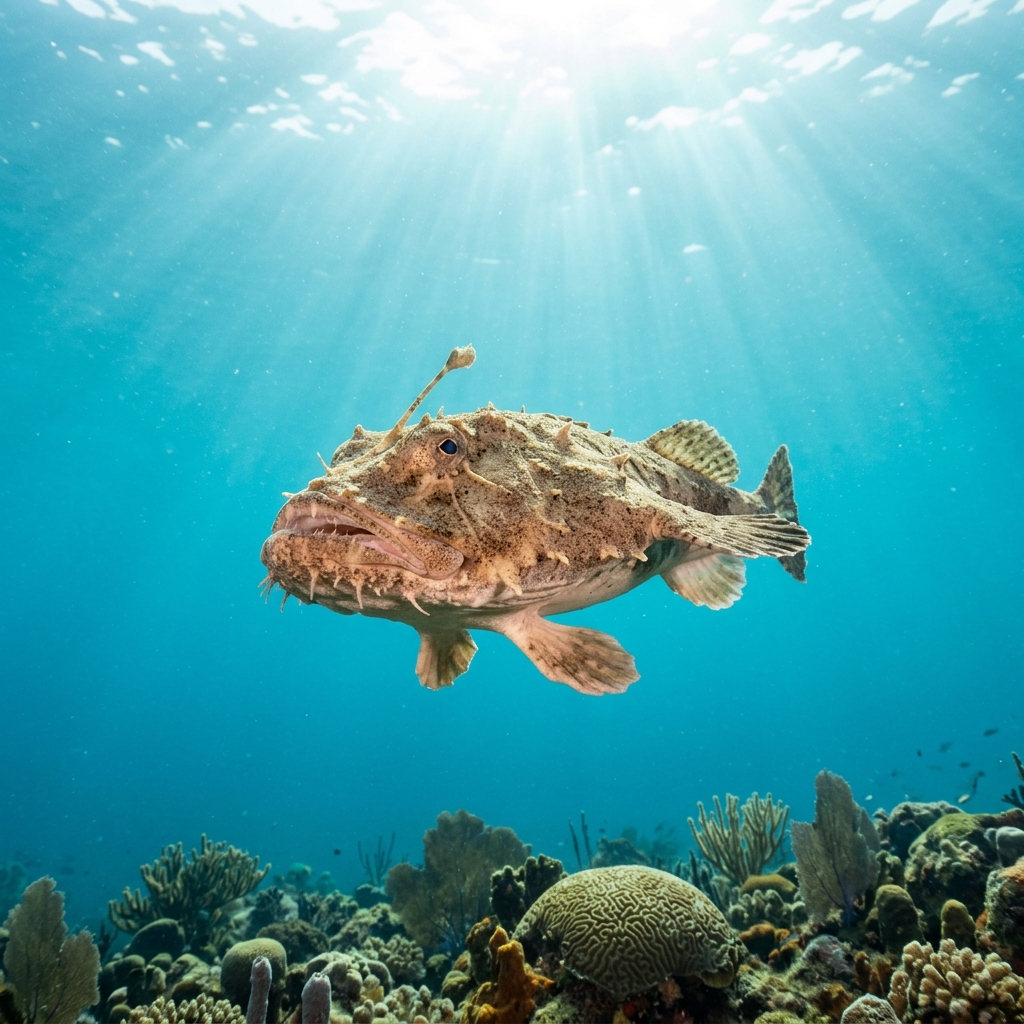
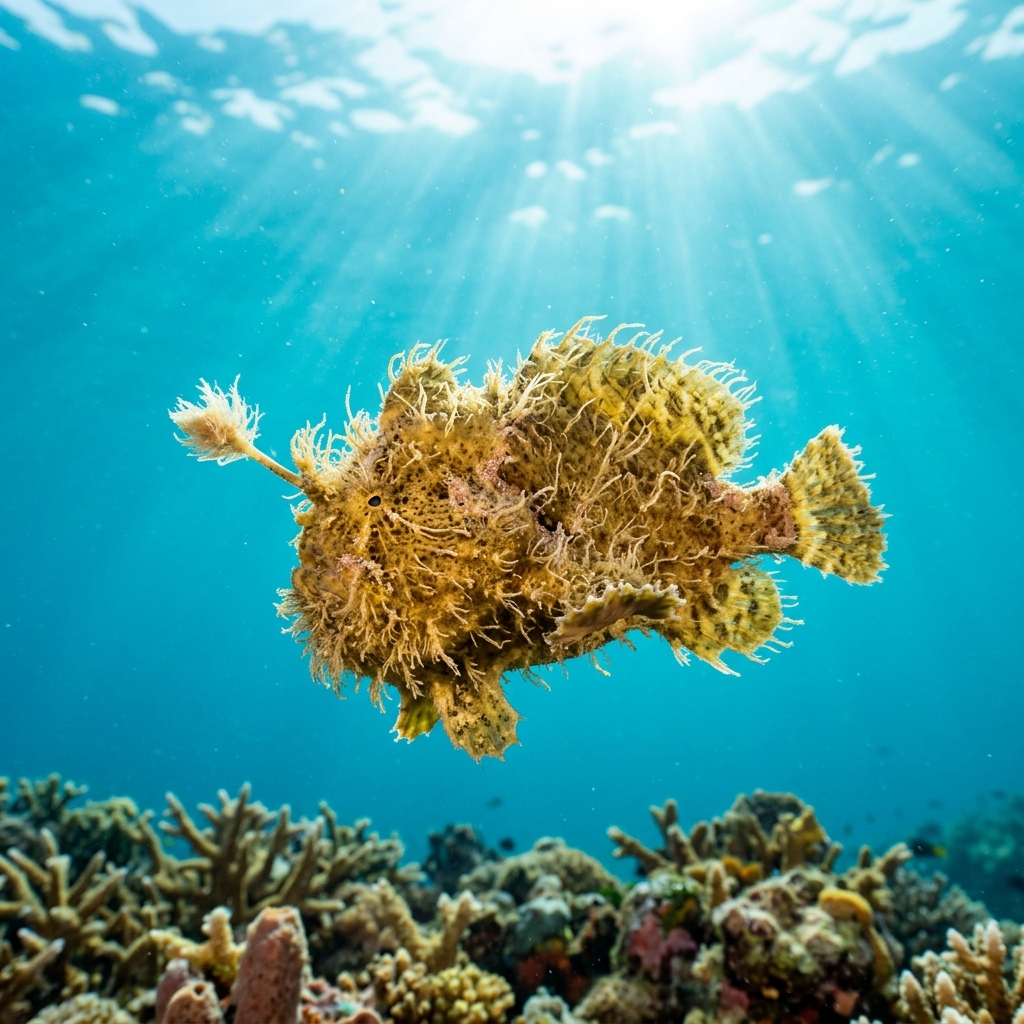
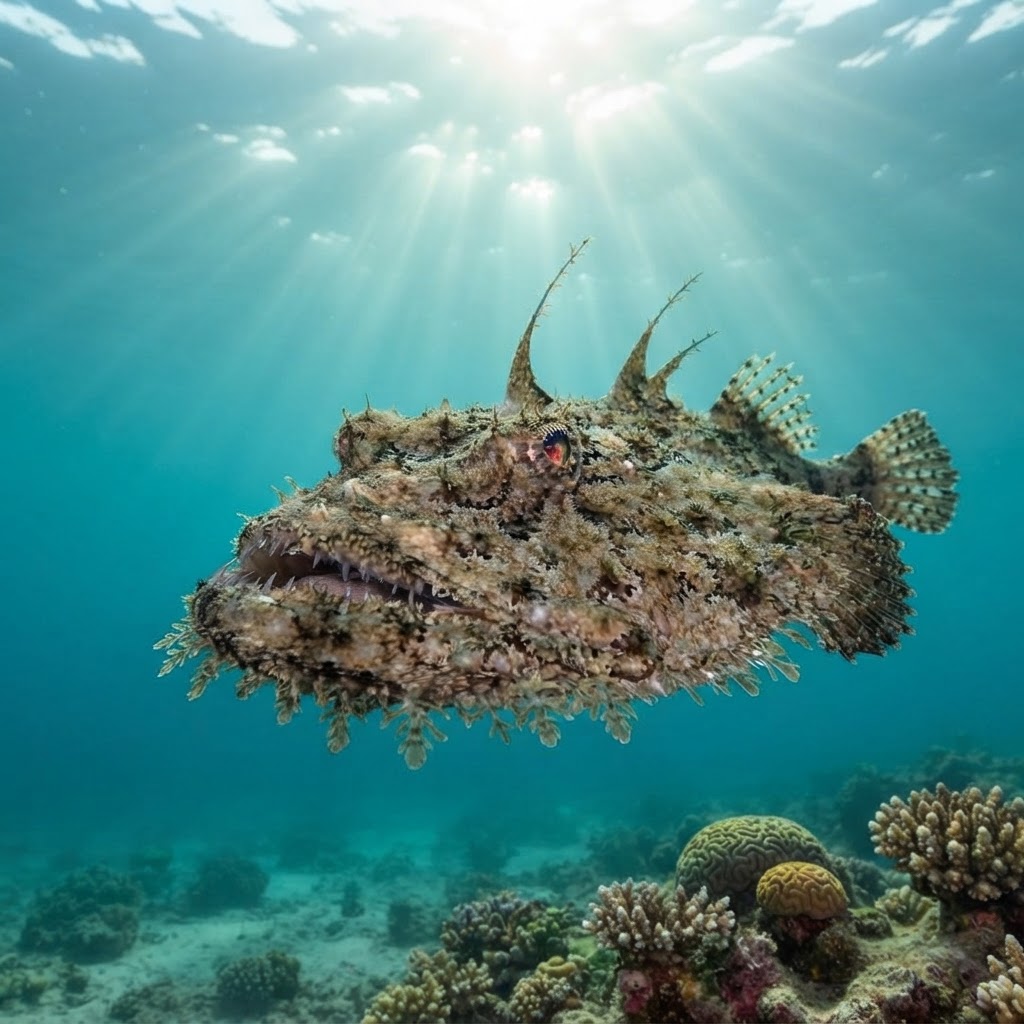
A flattened, almost all-mouth body up to 140 cm long, mottled brown and grey to vanish against sand or rubble. The giveaway is the fleshy lure sprouting from the top of its head, dangled over that enormous hinged mouth to tempt in prey. It lies still on the bottom rather than swimming, so divers usually spot the outline before any movement gives it away.
Expect to find it lying motionless on sand, mud or rubble, often half-buried, using its lure to twitch prey within striking range of that huge mouth. It shows almost no reaction to divers unless approached very closely, relying entirely on staying unseen rather than fleeing. Most sightings come from slow bottom time on sandy or silty patches rather than open water.
That lure on its head is a modified first dorsal fin ray called an illicium, and it strikes prey with a mouth that can open wide enough to swallow fish nearly its own size.
No clear season shows up in the sighting data, so treat this as a year-round possibility wherever the water sits in its comfortable 3.8 to 14.2 C range. That cold-water tolerance means cooler months in temperate sites are just as good a bet as summer.
Catalonia in Spain and the French Riviera and Provence region are the two strongholds where divers actually log this fish, with a scattering of sightings in England, Scotland and Nordland in Norway. Sightings are rare everywhere it turns up, so it rewards divers doing slow, methodical bottom searches over sand and rubble rather than reef cruising.
Mapping where Anglerfish is logged…
The most reliable regions are Catalonia in Spain and the French Riviera and Provence in France, with occasional sightings around England, Scotland and Nordland in Norway. It is a bottom-dweller, so look on sand and rubble rather than reef structure.
There is no strong seasonal pattern in the sighting data, so it is best treated as a year-round encounter. It tolerates water from about 3.8 to 14.2 C, so cooler months are not a barrier.
Look for a flattened, mottled brown body lying still on sand or rubble, with a huge hinged mouth and a fleshy lure sprouting from the top of the head. It rarely swims, so the shape and lure are the clues, not movement.
They can reach around 140 cm in length, making them one of the larger bottom-dwelling anglerfish species divers are likely to encounter.
That lure is a modified fin ray called an illicium, wiggled to mimic small prey and draw fish close enough for the anglerfish to engulf in one strike of its oversized mouth.
No, they pose no threat to divers. They are ambush predators of fish, not divers, and will simply sit still or slip away if approached.
Site and sighting data is aggregated from diver logs, iNaturalist and GBIF. For taxonomy and conservation status:
Giant Frogfish
1,292 sites