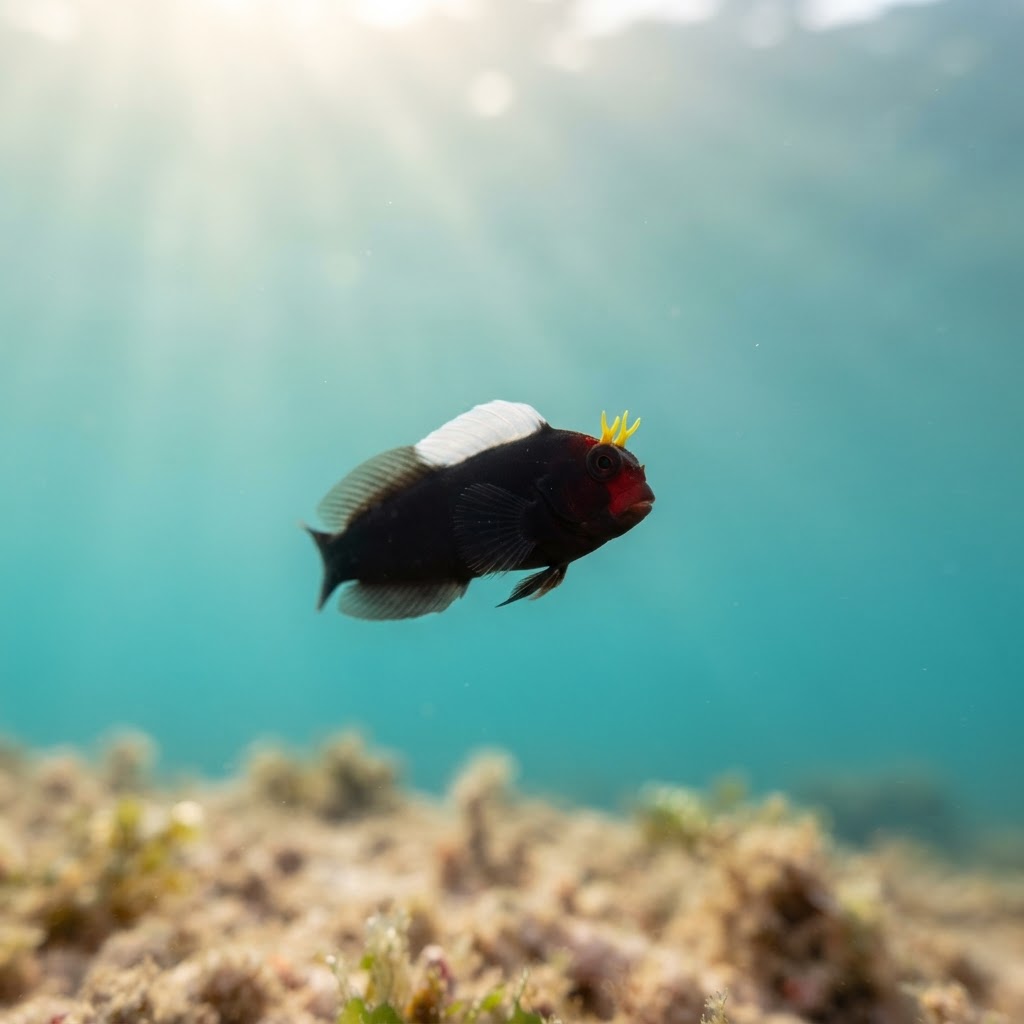
Coralliozetus angelicus
Tiny reef dweller found peeking from crevices along Mexico's Pacific Coast in waters from 20 to 28C, year-round.
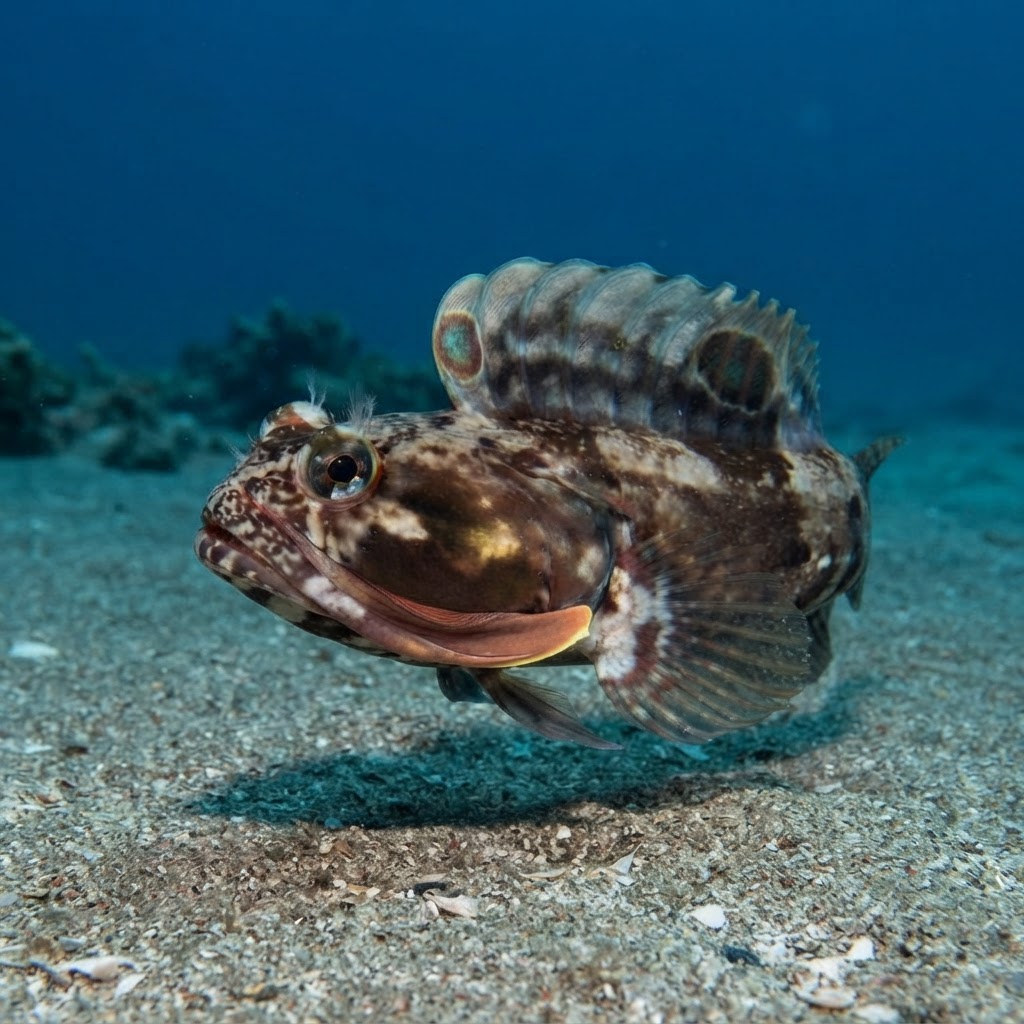
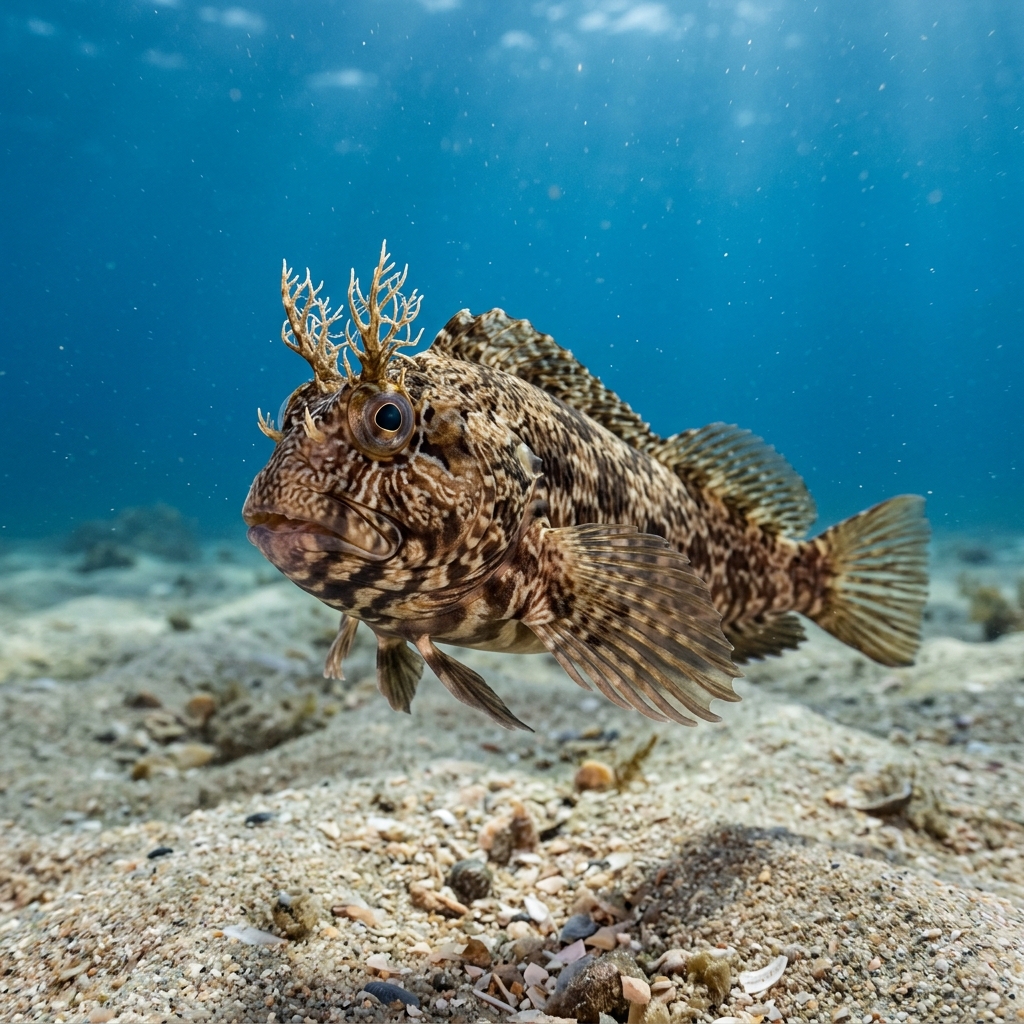
At just 3 centimetres, this is a fish you find by looking for a pair of eyes in a hole rather than a whole body in open water. Mottled brown and cream patterning breaks up its outline against rock and coral rubble, and it holds its head out of a burrow or worm-tube opening rather than swimming freely. Look for the blunt, slightly bulging head and the way it stays almost perfectly still until you get close.
Divers find it tucked into small holes, empty worm tubes, or barnacle shells on rocky reef and rubble patches, usually just its face visible. It rarely leaves the shelter of its burrow when divers approach, instead retreating deeper or simply freezing in place, which makes a slow, close look with a torch the best way to actually see one. Most sightings are logged as uncommon, so it takes a bit of deliberate searching along the substrate rather than a chance encounter in open water.
Like other members of the chaenopsid blenny family, it likely spends almost its entire adult life inside the same small burrow, only darting out briefly to feed or defend the hole from a neighbour.
No clear seasonal pattern shows up in the sightings, and the observed temperature range of roughly 20 to 28C spans the year in this region, so it is a fair bet on any dive there. Treat it as a year-round find rather than something tied to a particular month.
Reef neighbours a diver could mistake it for. Use the identification notes above to tell them apart.
Almost every logged sighting comes from Mexico, with the Pacific Coast the strongest area and Baja California a secondary spot. This is a Pacific Mexico specialty rather than a species spread across multiple countries.
Mapping where Angel Blenny is logged…
Sightings are concentrated in Mexico, especially along the Pacific Coast, with a smaller number of records from Baja California. It is effectively a Pacific Mexico speciality among divers logging small blennies.
There is no strong seasonal signal in the sightings, and the species tolerates a wide temperature range from about 20 to 28C, so it is present year-round on the sites where it occurs.
Look for a tiny, 3 centimetre fish with mottled brown and pale markings poking its head out of a small hole or old worm tube on rock or rubble. It rarely swims in the open, so the key is spotting the face rather than the whole body.
They stay tiny, reaching only around 3 centimetres in length, which is part of why they are easy to miss on a reef.
It appears to live almost its entire life inside a single tiny burrow or abandoned worm tube, a trait shared across chaenopsid blennies, rarely straying far enough for divers to see its full body.
Site and sighting data is aggregated from diver logs, iNaturalist and GBIF. For taxonomy and conservation status:
Rusty Blenny
2,605 sites