Amphiprion biaculeatus
Spot the Maroon Clownfish across the Visayas, Sulawesi, and Sipadan. Deep red body, white bars, and a feisty attitude make it one of the Indo-Pacific's most recognisable clownfish.
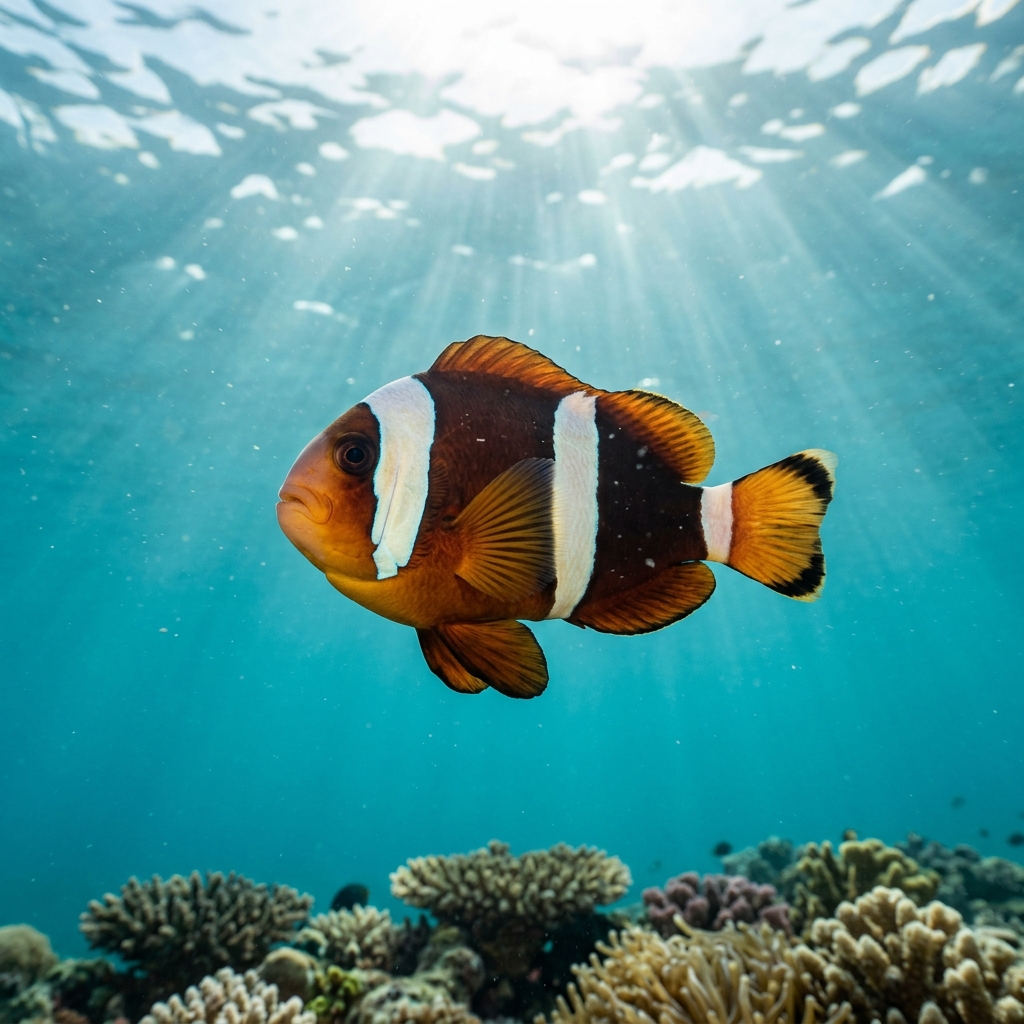
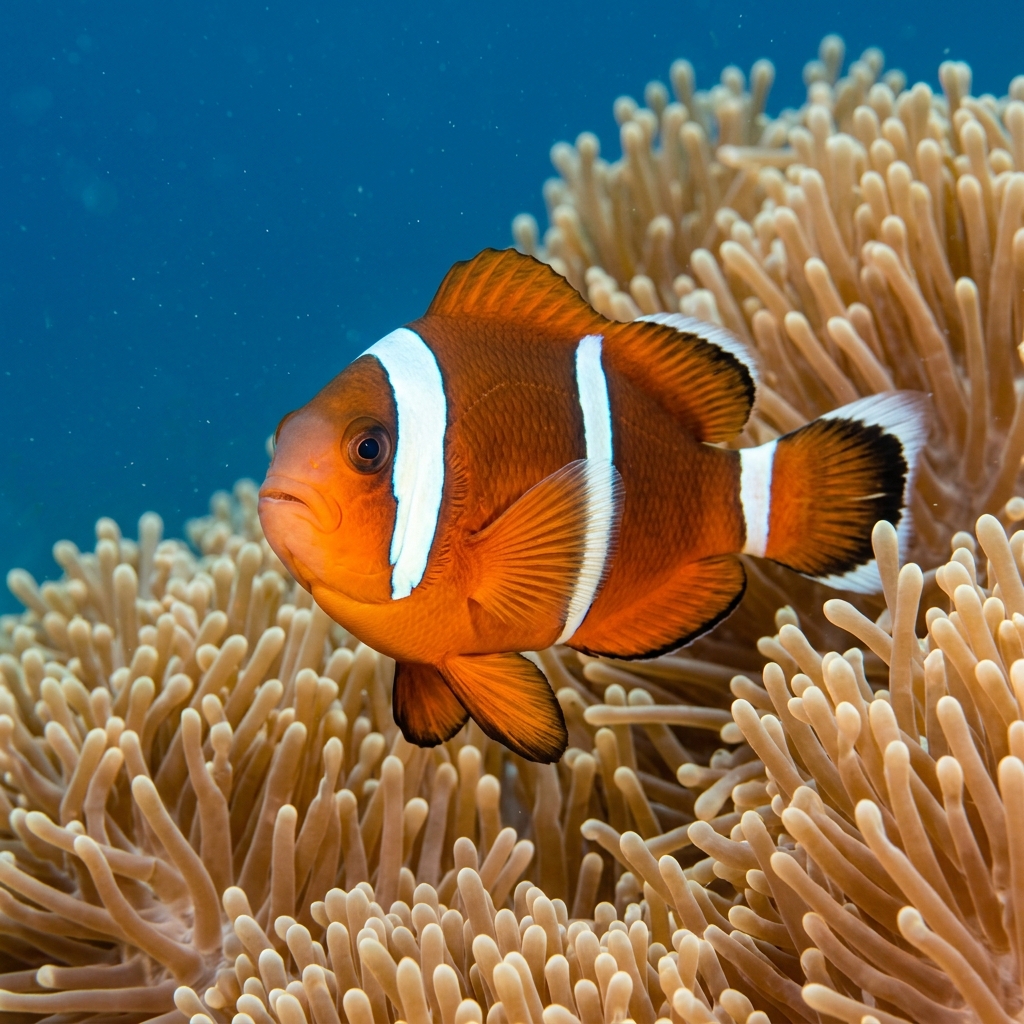
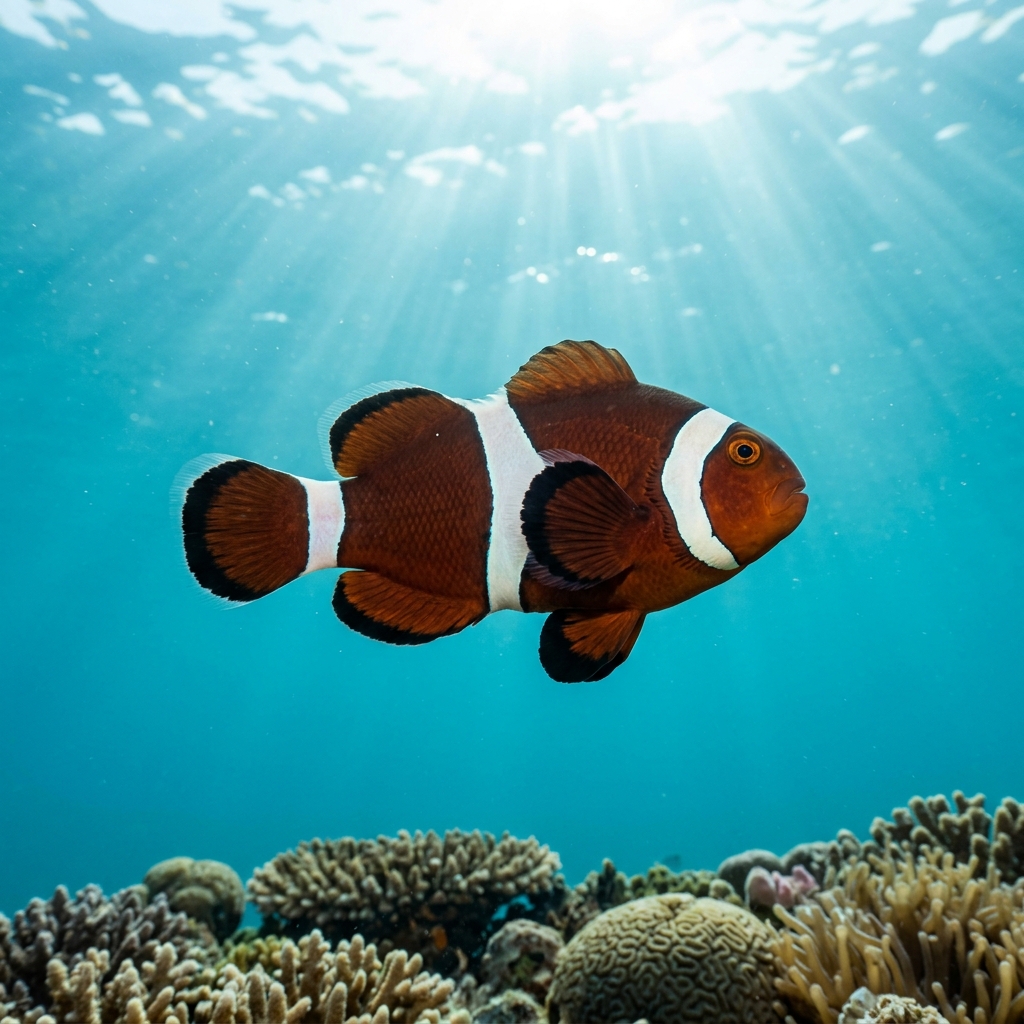
A deep burgundy-red to maroon body sets this clownfish apart from the orange-toned species that dominate most reefs. Look for three bright white bars edged in black running across the head, mid-body, and tail base. The fish is noticeably stocky, and the spine at the cheek (the preopercular spine, a bony projection near the gill cover) is visible up close and unique among clownfish. Females grow considerably larger than males, so size differences within a pair are a useful underwater cue.
Maroon clownfish rarely stray far from their host anemone; you'll almost always find them weaving in and out of the tentacles or perched at the base. They are famously bold defenders and will rush toward a diver's mask or camera lens if they feel the anemone is threatened, so hover a little distance back to watch natural behaviour. Their aggressive posturing is all show at diver scale, but it makes for excellent close-up photography.
Like all clownfish, maroon clownfish are protandrous hermaphrodites: the dominant individual in any pair is always female, and if she disappears, the male will change sex and take her place.
In Northern Hemisphere destinations such as the Philippines and Indonesia, sightings concentrate in March to May and again in September to November. For Southern Hemisphere sites like northern Australia, the September to January window sees the highest activity.
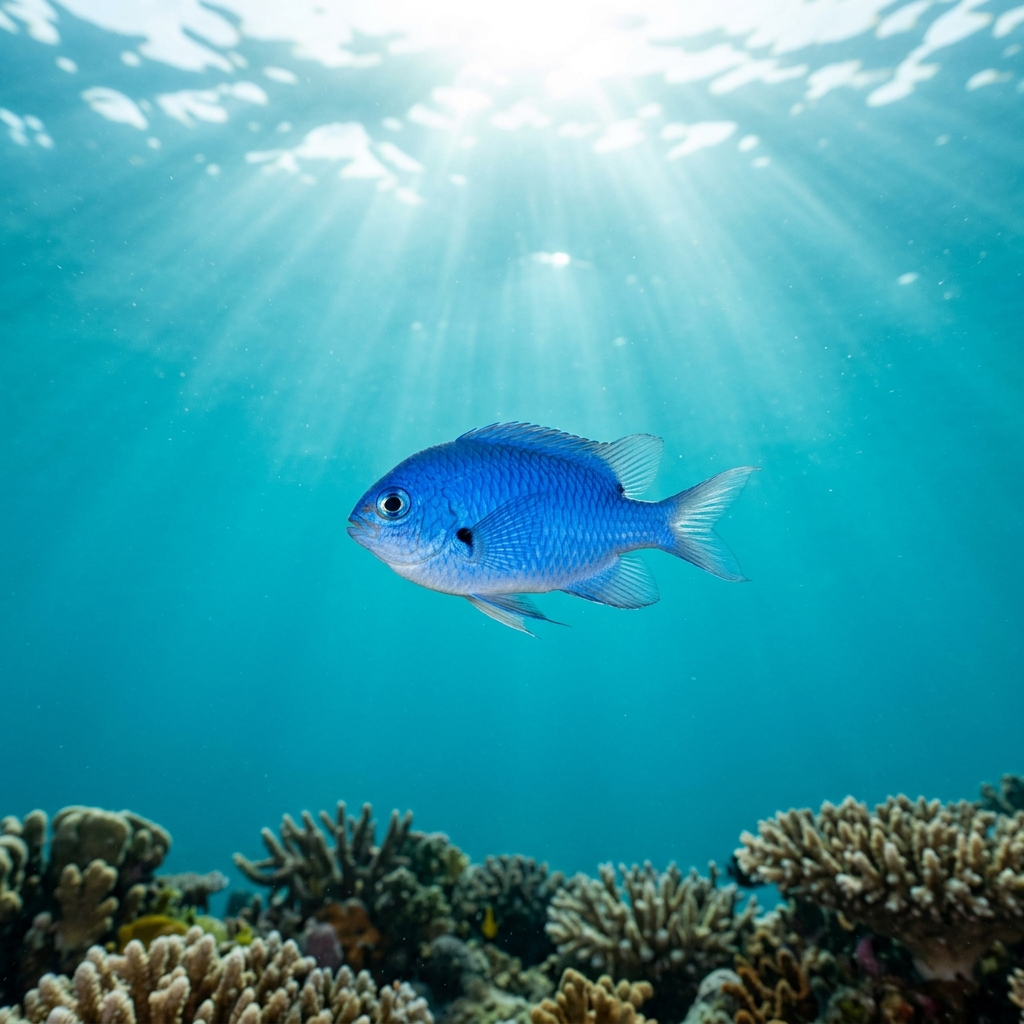
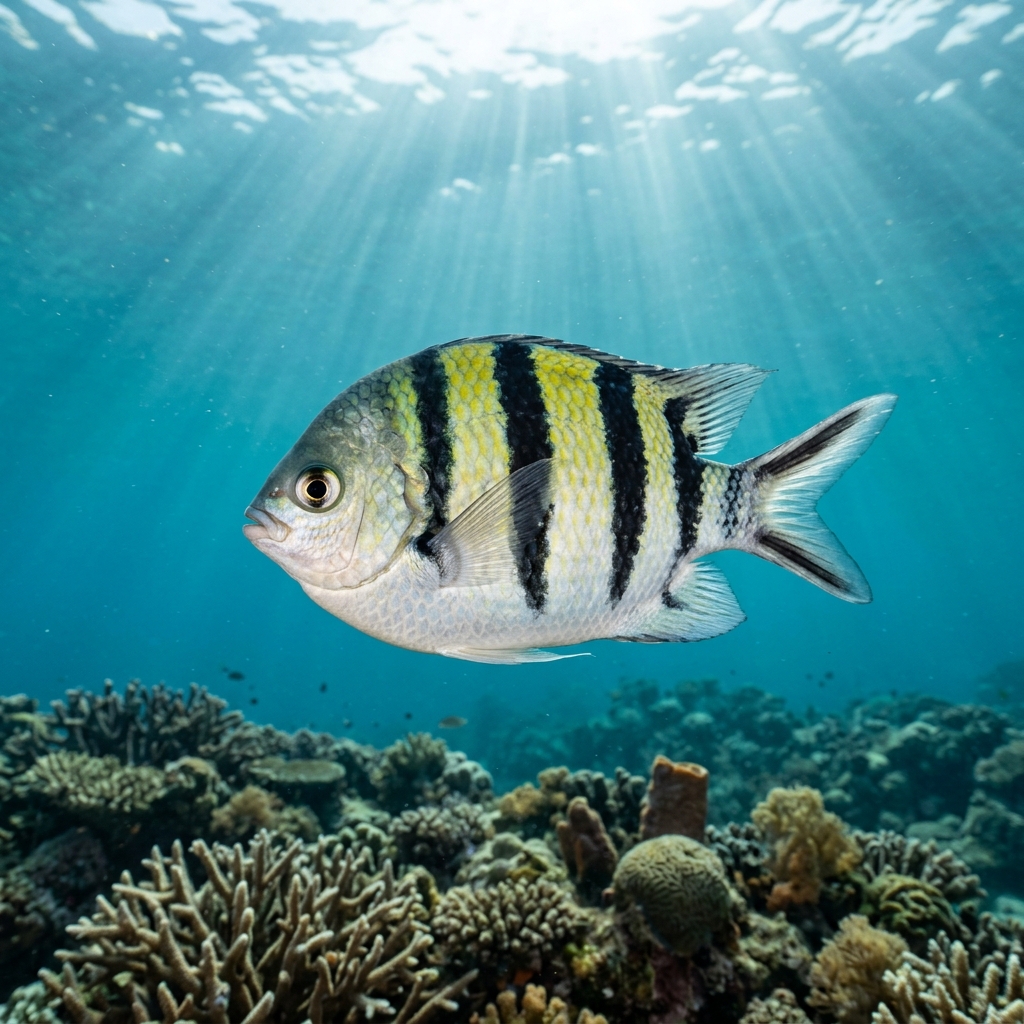
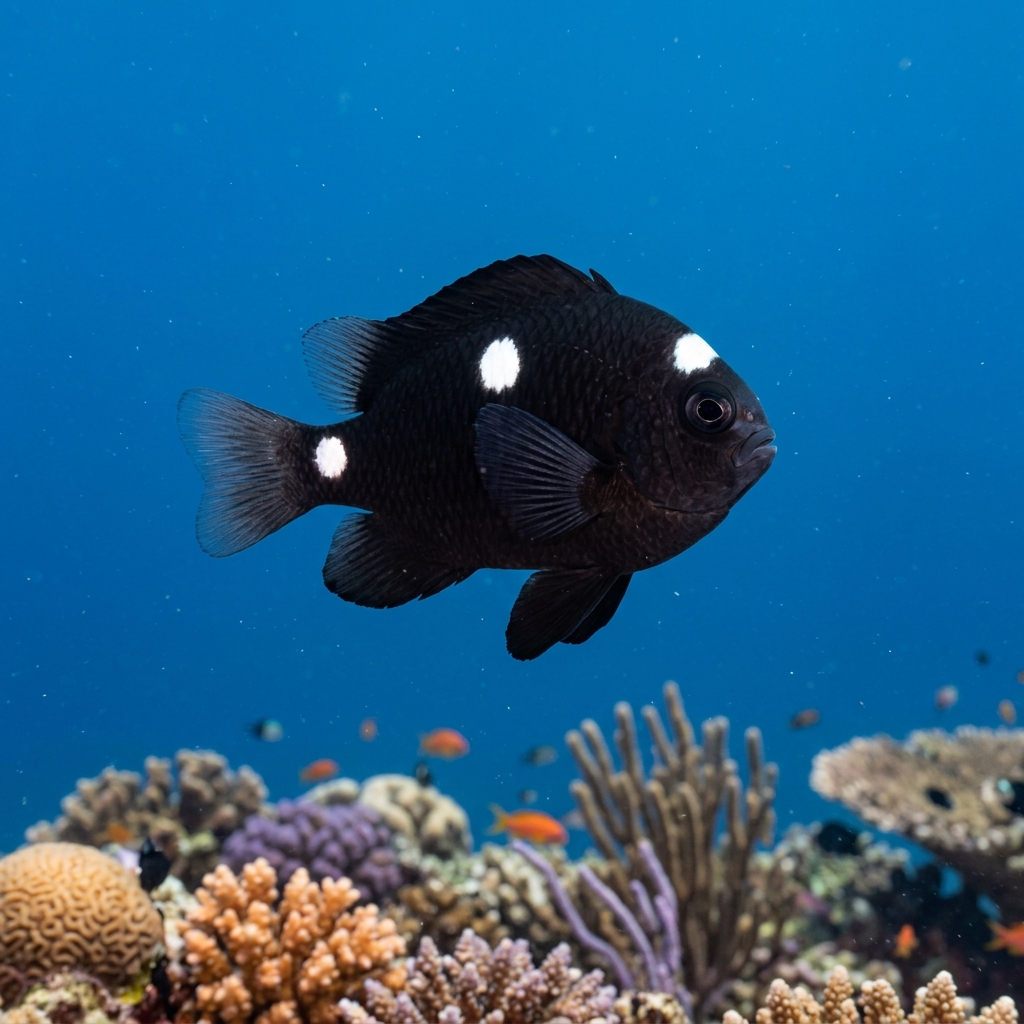
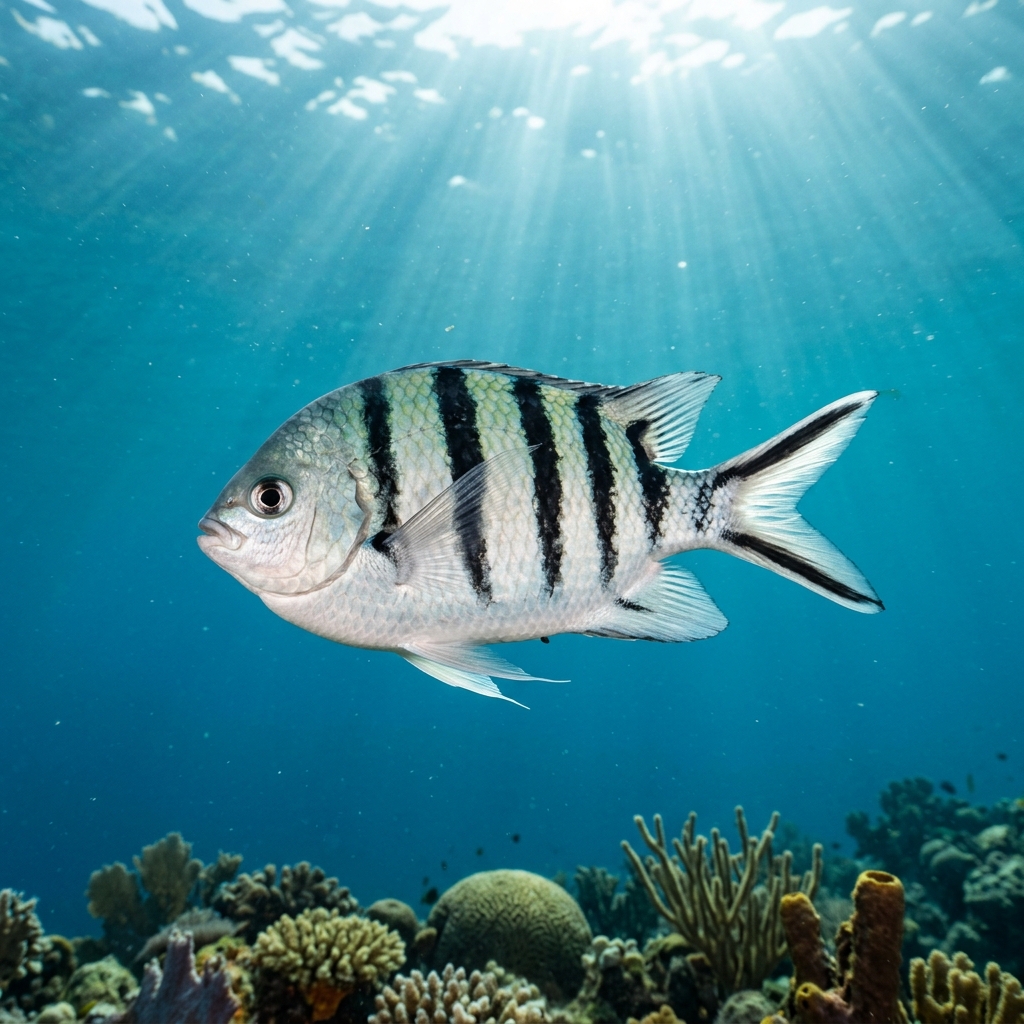
Reef neighbours a diver could mistake it for. Use the identification notes above to tell them apart.
Most sightings come from Indonesia and the Philippines, with the Visayas in the central Philippines and Sulawesi in Indonesia standing out as particularly strong areas. Malaysia's Sipadan and East Sabah, along with West Sabah and Labuan, contribute a solid number of records too. Australia, Timor-Leste, and Papua New Guinea round out the range at lower frequencies.
Mapping where Maroon Clownfish is logged…
The species is most reliably logged across Indonesia and the Philippines, particularly in the Visayas, Sulawesi, and the Nusa Tenggara and Banda Sea regions. Malaysia's Sipadan and the Sabah coast are also strong options. Sightings also occur in Australia, Timor-Leste, and Papua New Guinea.
In the Philippines and Indonesia, March to May and September to November see the most concentrated sightings. If you're diving in northern Australia, aim for September through January. Water temperatures between about 27 and 30 °C suit this species well.
The deep burgundy-to-maroon body colour is the key marker; most other clownfish are orange. Add three white bars edged in black, a stocky build, and the cheek spine visible at close range, and identification is straightforward. Females are noticeably larger than males.
Females, being the dominant sex, can reach roughly 14 to 17 cm, making them among the largest clownfish species. Males are considerably smaller, often staying below 10 cm, so a mated pair shows a striking size difference.
They are not dangerous, but they are unusually bold. A maroon clownfish will dart out and nip at a camera lens or a finger that gets too close to the anemone. The bite is harmless but startling. Give the anemone a little space and the fish will settle back to normal behaviour quickly.
Yes. All maroon clownfish are born male. In a bonded pair the larger, dominant individual becomes female. If she dies, the resident male changes sex and takes her role. This process, called protandrous hermaphroditism, is common across all clownfish species.
Site and sighting data is aggregated from diver logs, iNaturalist and GBIF. For taxonomy and conservation status:
Dascyllus
3,697 sites