Amphioctopus burryi
Spot the Brownstripe Octopus in the Canary Islands, particularly around Lanzarote and Tenerife, in cool waters between 18 and 23 °C.
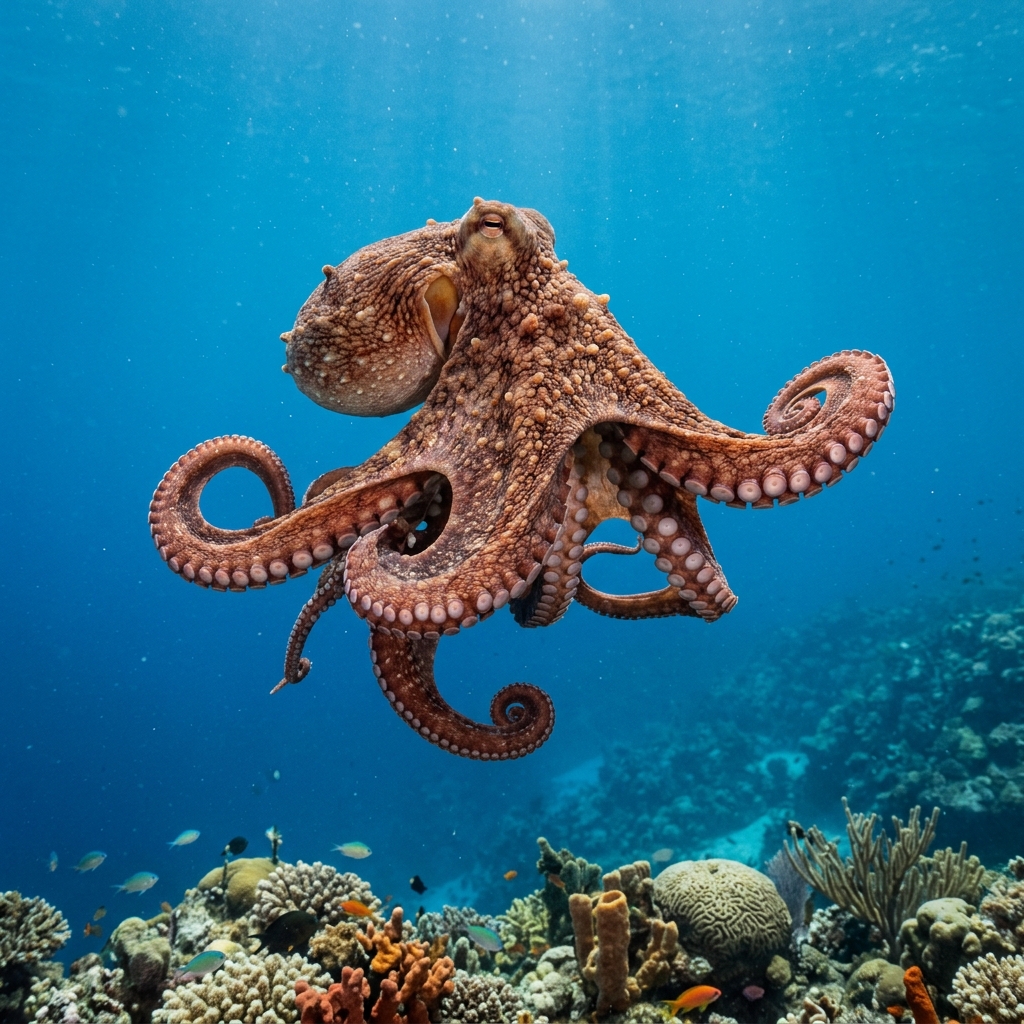
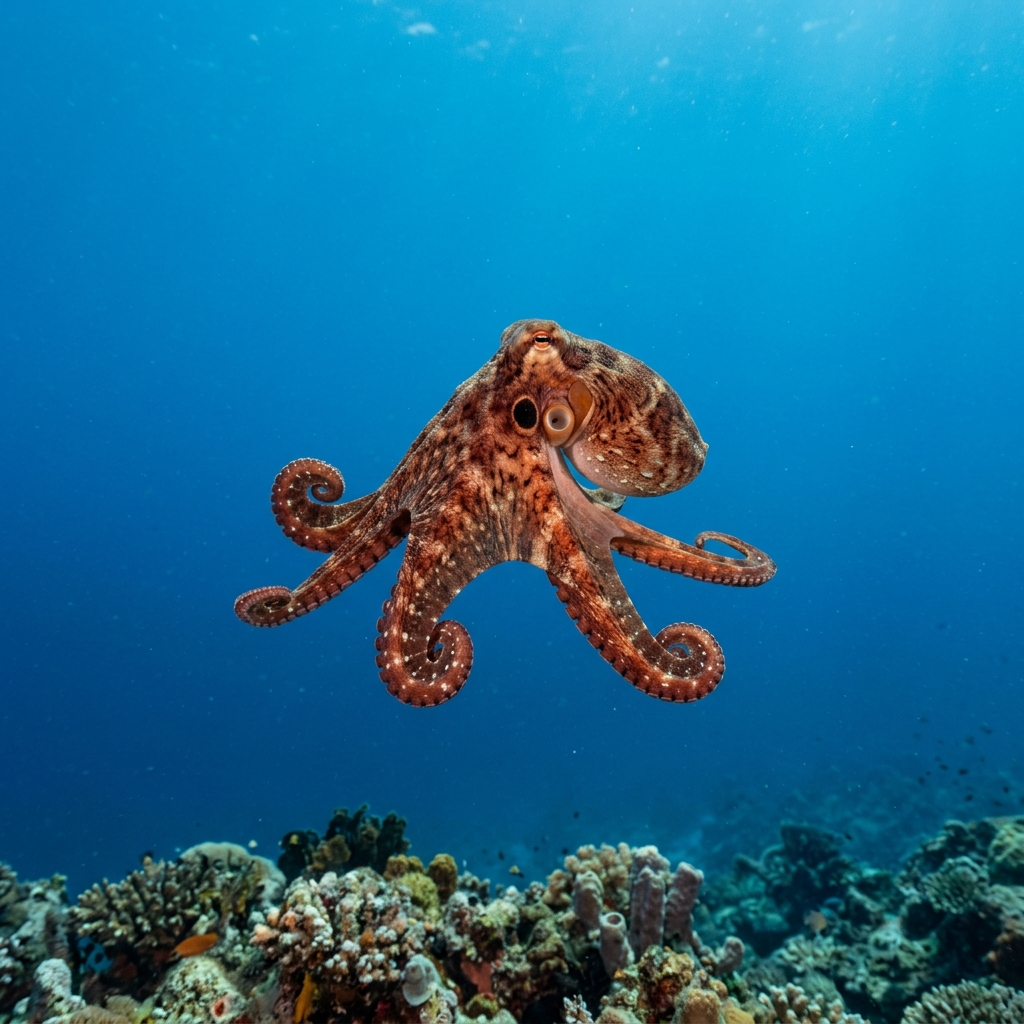
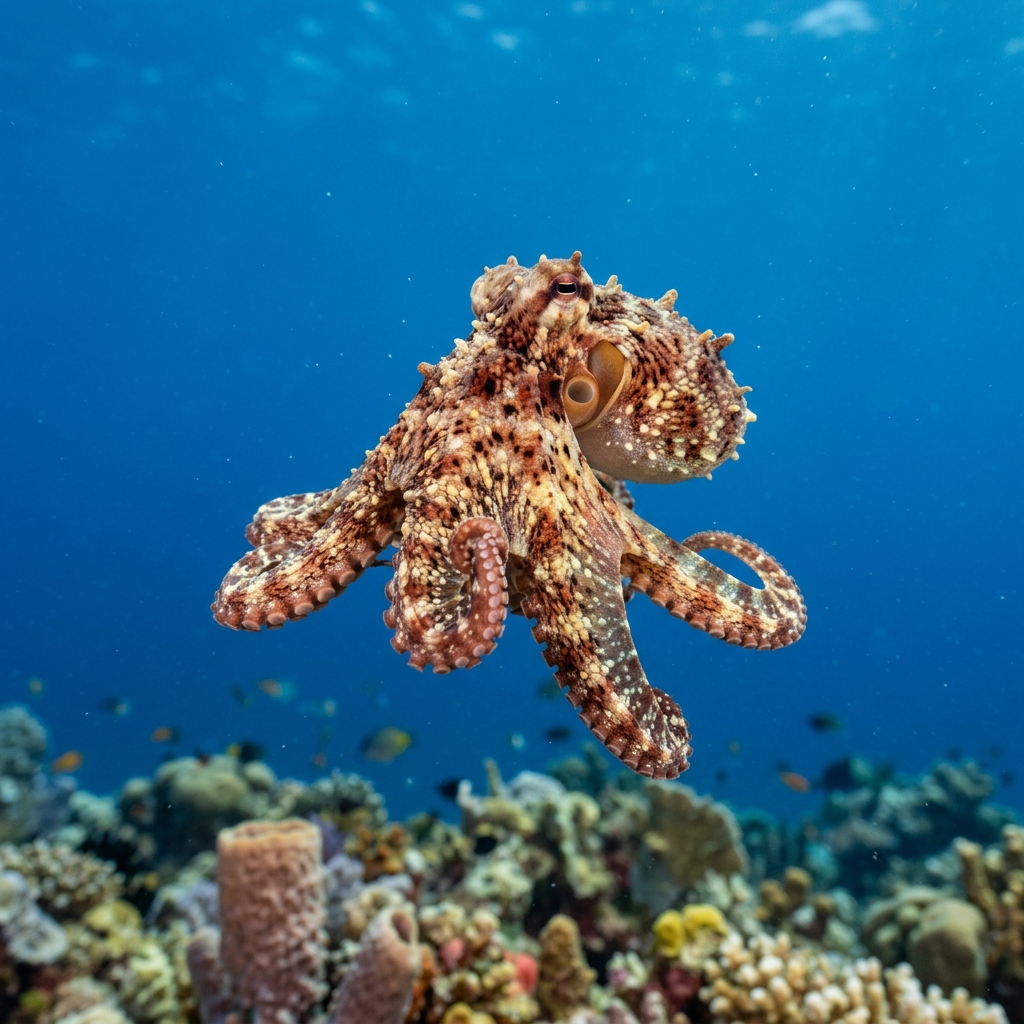
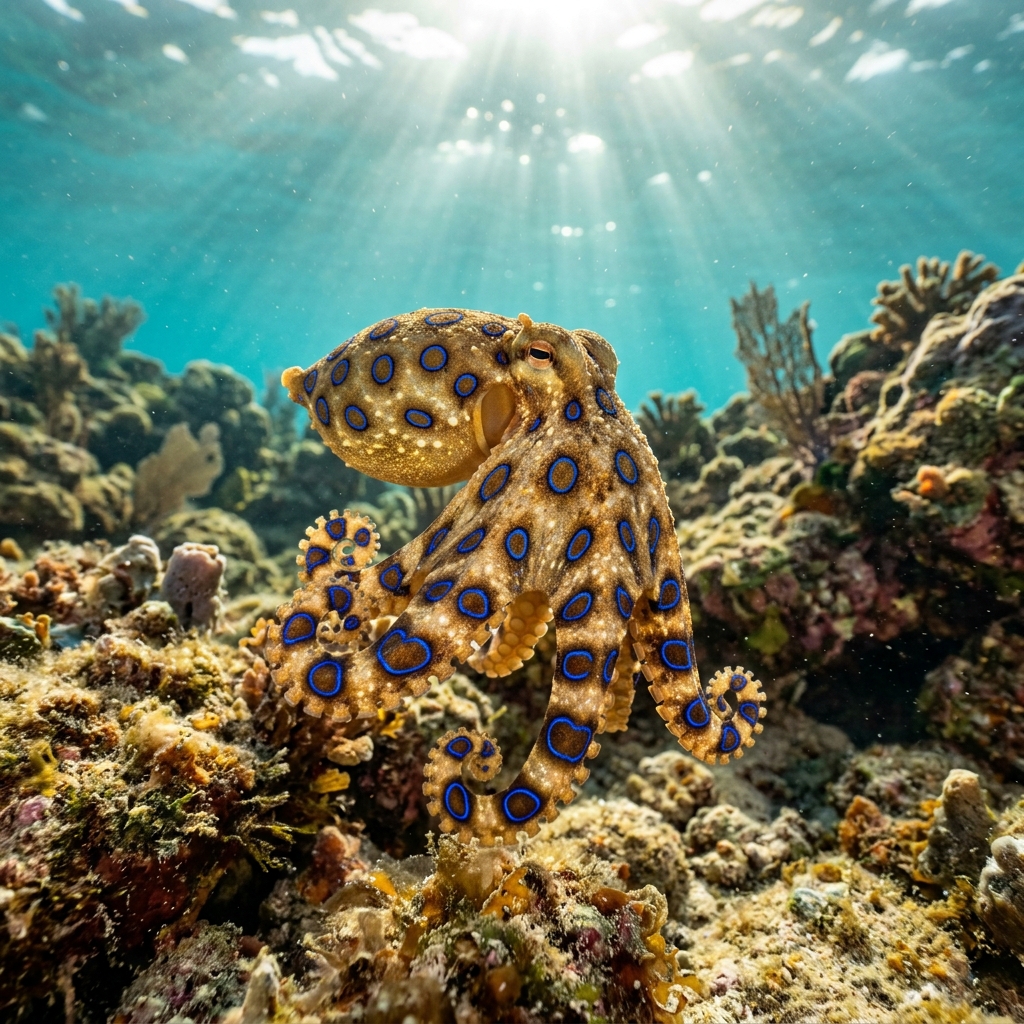
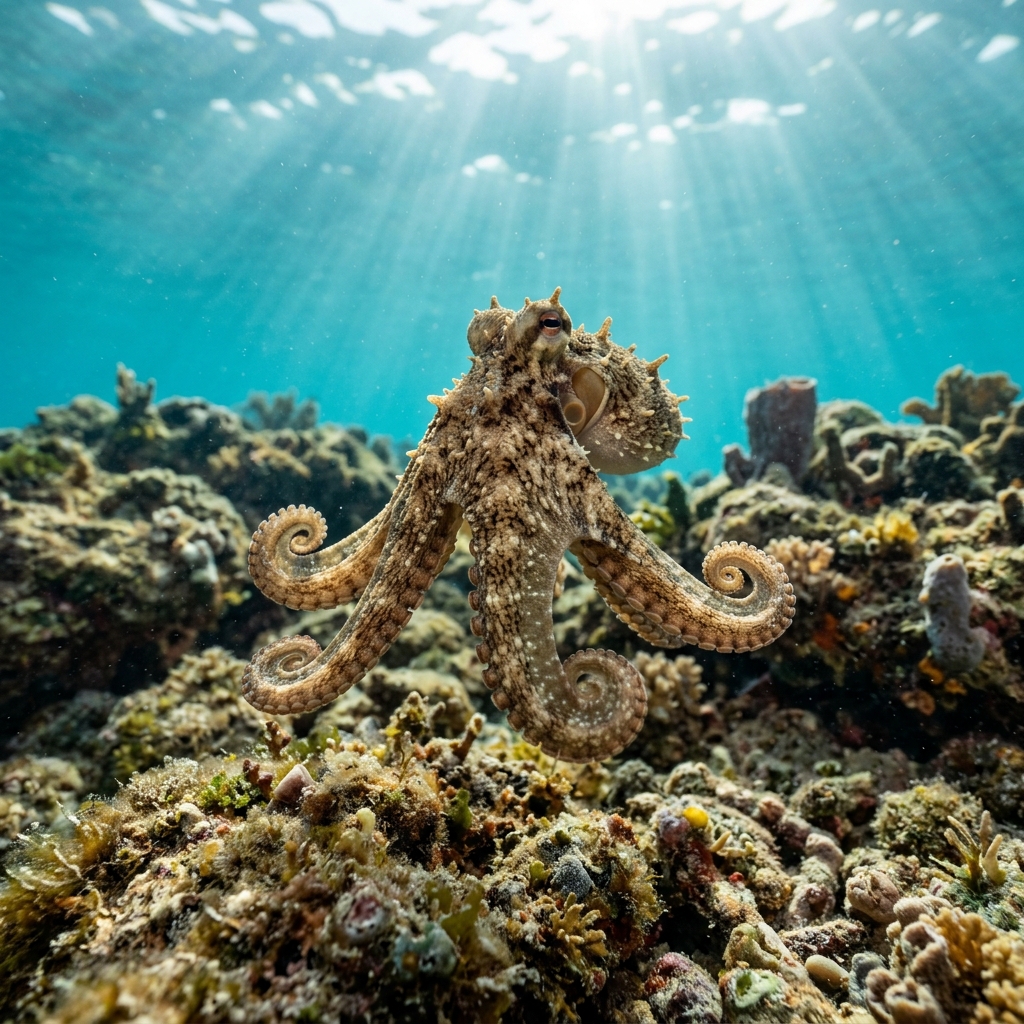
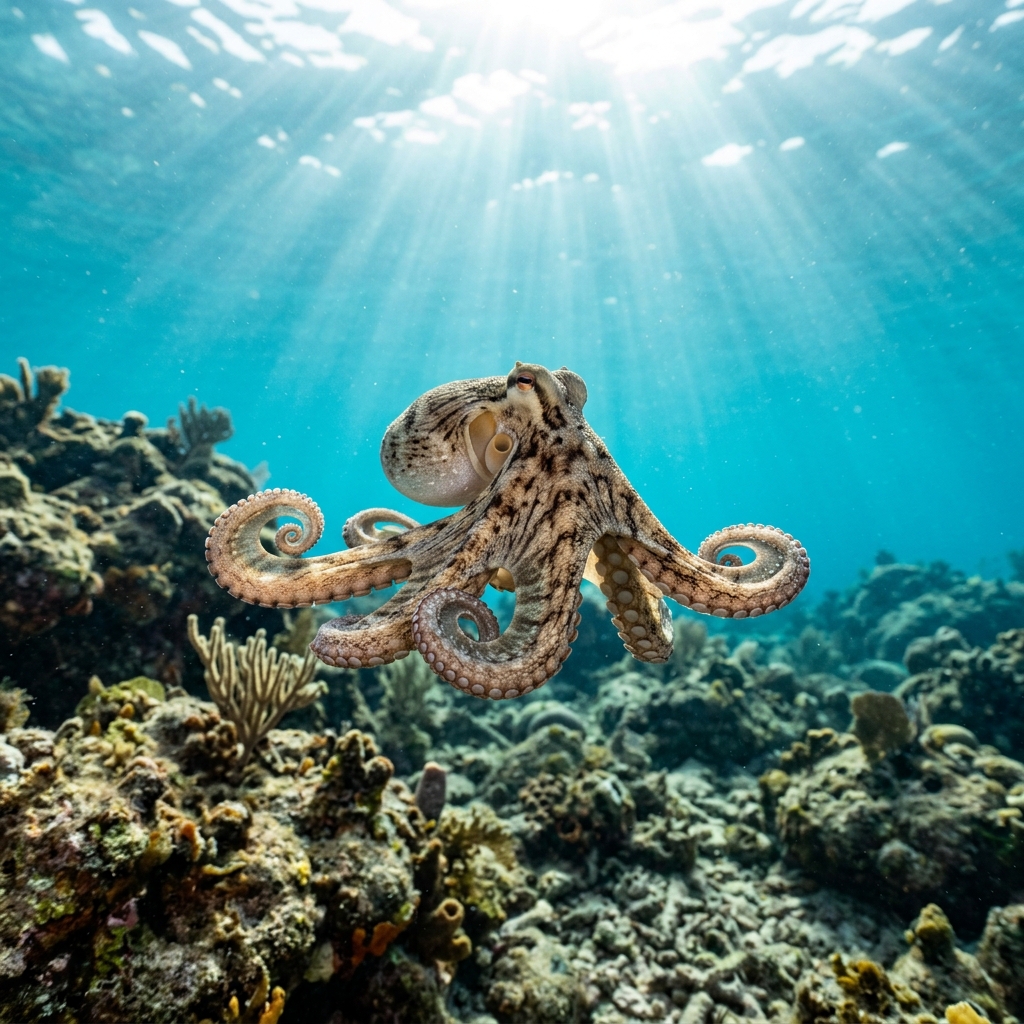
Look for the brown longitudinal stripes running along a pale, cream-to-ochre body, these streaks are the clearest field mark and the source of the common name. Like all octopuses it can shift colour rapidly, but the striped pattern tends to persist as a base texture even when the animal is partially camouflaged against rock. Body size is not confirmed from diver records, so expect anything from a small, fist-sized animal to a moderate cephalopod (body roughly the size of a large mango). The arms are typically banded in a contrasting tone that matches the body stripes.
Divers typically encounter it on rocky reef and rubble terrain, often tucked into crevices or moving cautiously across open substrate. Like most octopuses it is more active at dusk and night, though daytime sightings do occur. When approached it usually retreats into a hole or flattens and camouflages rather than bolting far.
The Brownstripe Octopus appears to be centred on the Canary Islands, which raises interesting questions about how it colonised and whether the population is genetically distinct from any Atlantic relatives, something researchers are still working out.
There is not enough monthly data to identify a seasonal peak, so treat it as a year-round possibility. The observed water temperatures at sighting sites run from roughly 18 to 23 °C, consistent with the Canary Islands' cool subtropical conditions throughout the year.
Reef neighbours a diver could mistake it for. Use the identification notes above to tell them apart.
All confirmed sightings come from the Canary Islands, making this an essentially endemic Canary Islands encounter for divers. Lanzarote accounts for the bulk of logged sightings, with Tenerife recording a solid secondary population. Gran Canaria has only a handful of records to date.
Mapping where Brownstripe Octopus is logged…
Every confirmed diver sighting is from the Canary Islands. Lanzarote is by far the most productive island, followed by Tenerife. Gran Canaria has only isolated records. If you are diving anywhere else, you are very unlikely to encounter this species.
No clear seasonal pattern has emerged from the available data, so sightings appear possible year-round. The Canary Islands stay within roughly 18 to 23 °C throughout the year, which matches the temperature range where this octopus has been recorded.
The key mark is the brown longitudinal striping on a pale body, look for streaks rather than spots or uniform colouration. In the Canary Islands the most likely confusion species is the Common Octopus, which tends to show mottled or blotchy camouflage rather than organised stripes. The Brownstripe's pattern usually remains visible even when the animal is trying to blend in.
No. Brownstripe Octopus pose no significant risk to divers. Like all octopuses they can bite if handled, but they are not venomous in any way dangerous to humans and will almost always retreat rather than confront a diver.
At most sites where it has been logged it is classed as uncommon, with a smaller number of sites rating it rare and only a handful calling it common. Patient searching on rocky reef in Lanzarote gives you the best odds, but do not expect it on every dive.
Site and sighting data is aggregated from diver logs, iNaturalist and GBIF. For taxonomy and conservation status:
Brazilian Reef Octopus
1,142 sites