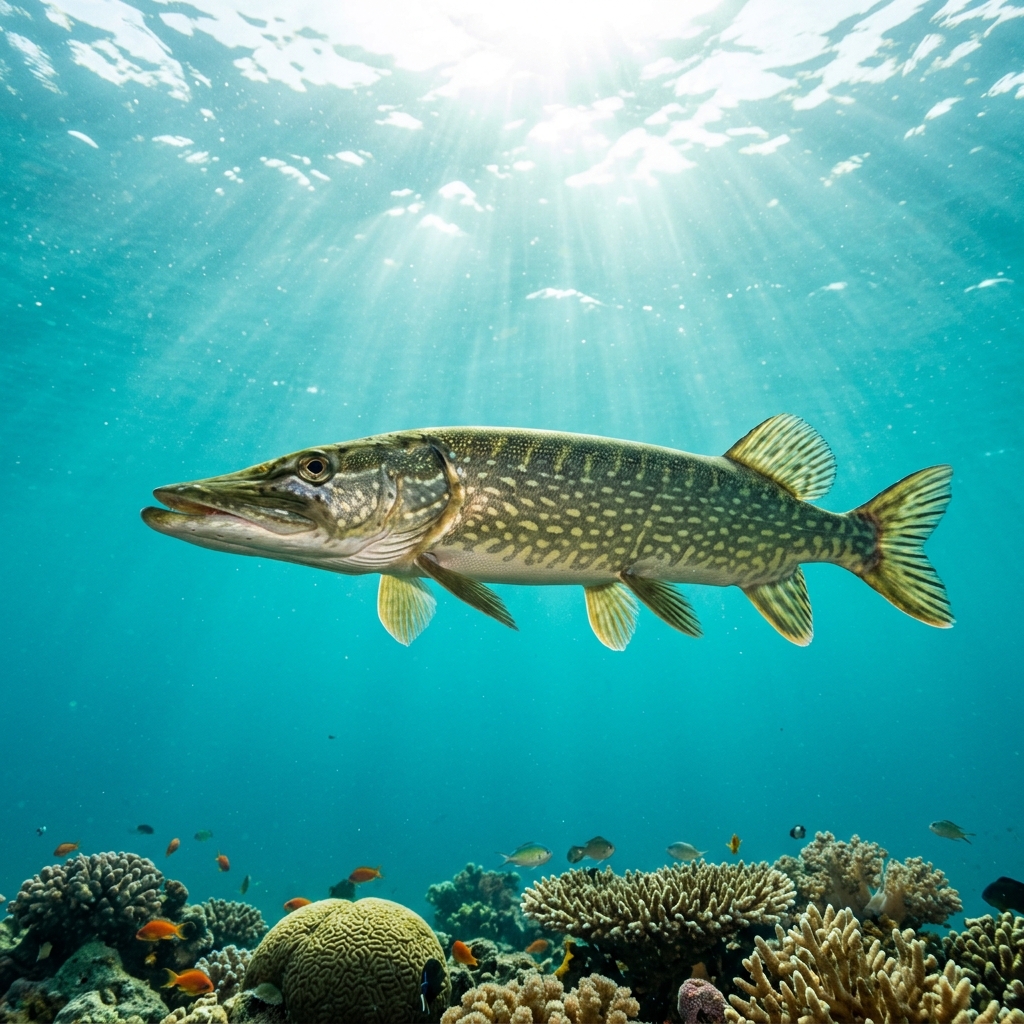
Amia spp.
Bowfin sightings are rare, logged in the Great Lakes region of Canada in cold water down to 2 °C. Here's how to spot one underwater.
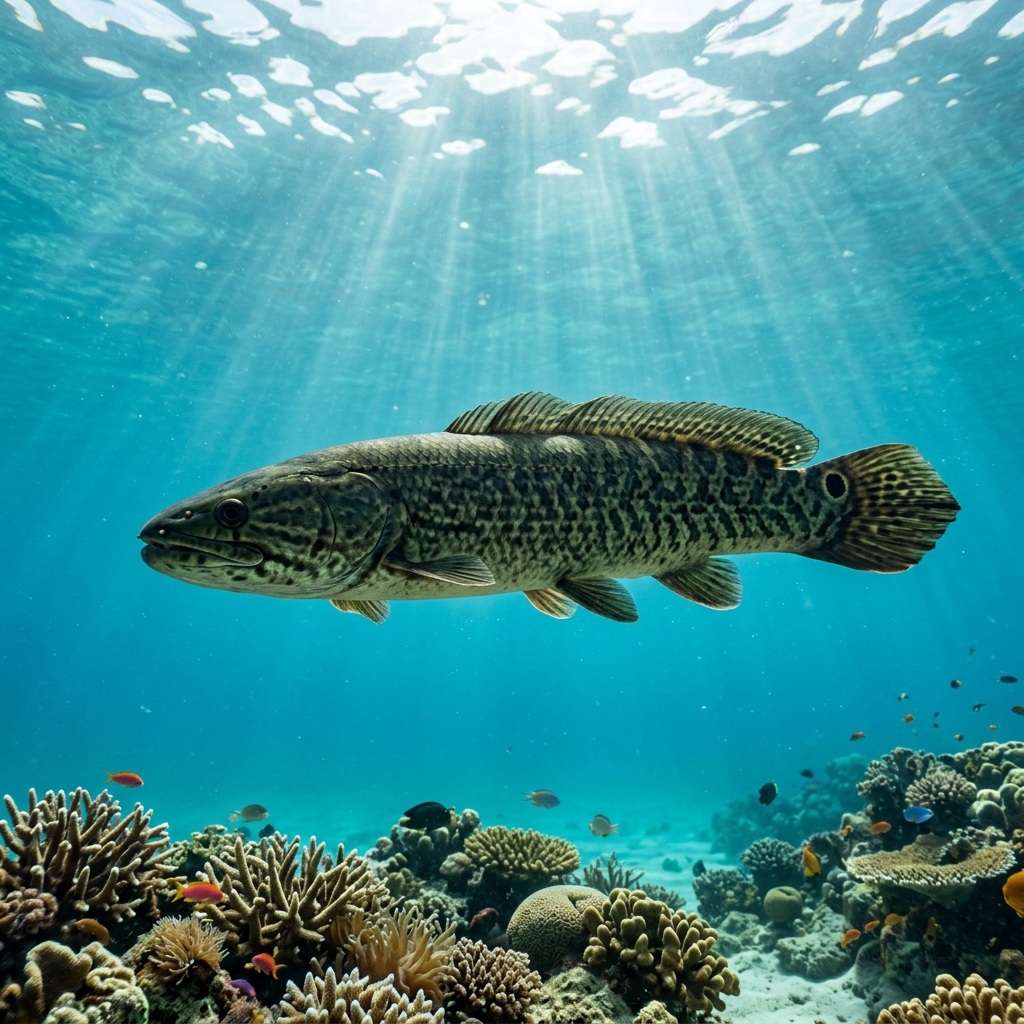
A thick, elongated body covered in olive to dark-green scales gives bowfin an unmistakably prehistoric look in freshwater. The long dorsal fin (the fin along the top of the back) runs almost the entire length of the body, which is the single most useful feature when identifying it underwater. Males carry a dark, pale-ringed spot near the base of the tail, a useful confirmation mark. Overall shape is somewhere between a large perch and an eel, but far more robust.
Bowfin are ambush predators that tend to rest motionless in or near aquatic vegetation, making them easy to miss on a casual pass. When encountered by divers they typically hold their position or move off slowly rather than bolting, which can allow for a close look if you approach without sudden movements. Encounters are more likely in shallower, weedy areas of lakes rather than open or deep water.
Bowfin are one of the oldest surviving fish lineages in North America, sometimes called living fossils, and they possess a modified swim bladder that functions as a primitive lung, letting them gulp air at the surface when oxygen levels in the water drop low.
There is not enough monthly sighting data to point to a peak season, so treat it as a year-round possibility. The water temperatures recorded in observations range from 2.2 to 21.6 °C, confirming bowfin can be active across a wide temperature range through Canadian seasons.
All logged sightings come from the Great Lakes and Ontario region of Canada, making this one of the most localised freshwater encounters in the Fin database. With only a single recorded site in Canada, encounters are rare and opportunistic rather than something you can reliably plan around. If you're diving freshwater in the Great Lakes region, keep an eye over weed beds and silty bottoms where bowfin tend to hold.
Mapping where Bowfin is logged…
Bowfin have been logged by divers in the Great Lakes and Ontario region of Canada. Sightings are rare and come from freshwater lake environments, so encounters are opportunistic. There are no recorded dive-site observations outside Canada in the Fin database.
There is not enough seasonal data to identify a peak month or season. Observation temperatures range from 2.2 to 21.6 °C, showing bowfin remain active across most of the year in Canadian lakes. Treat any freshwater dive in their Great Lakes habitat as a potential encounter regardless of season.
Look for a stocky, elongated olive-green fish with a single long dorsal fin running nearly the full length of its back. Males have a dark, pale-ringed spot at the base of the tail. No other common freshwater fish in the Great Lakes region shares this combination of robust body shape and extended dorsal fin.
Bowfin can reach around 60 to 70 cm in length, with large individuals occasionally exceeding that. Females tend to grow larger than males. In the water they appear solid and powerfully built relative to most freshwater fish of similar length.
Bowfin can breathe air. Their swim bladder is highly vascularised and works as a supplementary lung, allowing them to survive in warm, low-oxygen water by gulping air at the surface. They are also among the oldest surviving ray-finned fish lineages, with fossil relatives dating back over 100 million years.
Site and sighting data is aggregated from diver logs, iNaturalist and GBIF. For taxonomy and conservation status:
Sun Perch
2,182 sites