Pomacentrus amboinensis
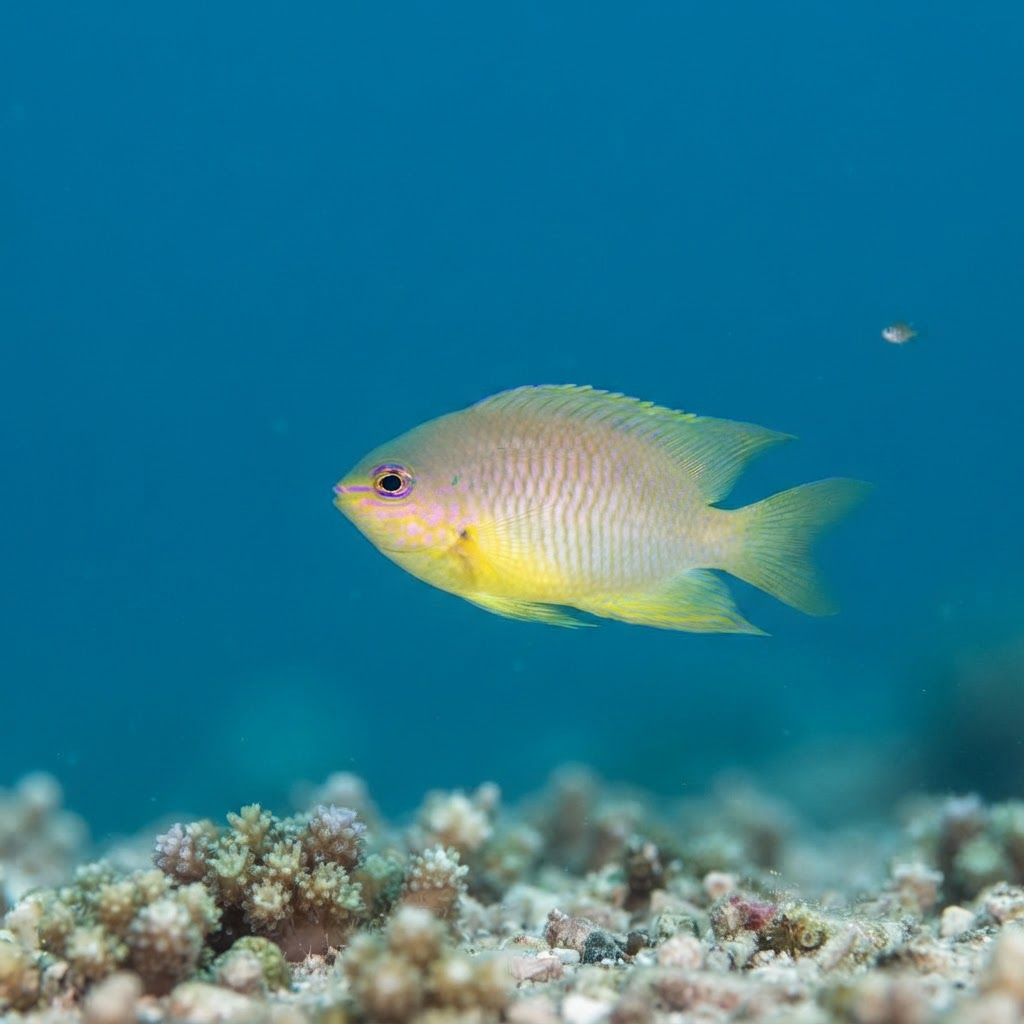
Small yellow-orange damsel with blue eye markings, most commonly logged across the Visayas and Palau's reefs in 25-29C water year-round.
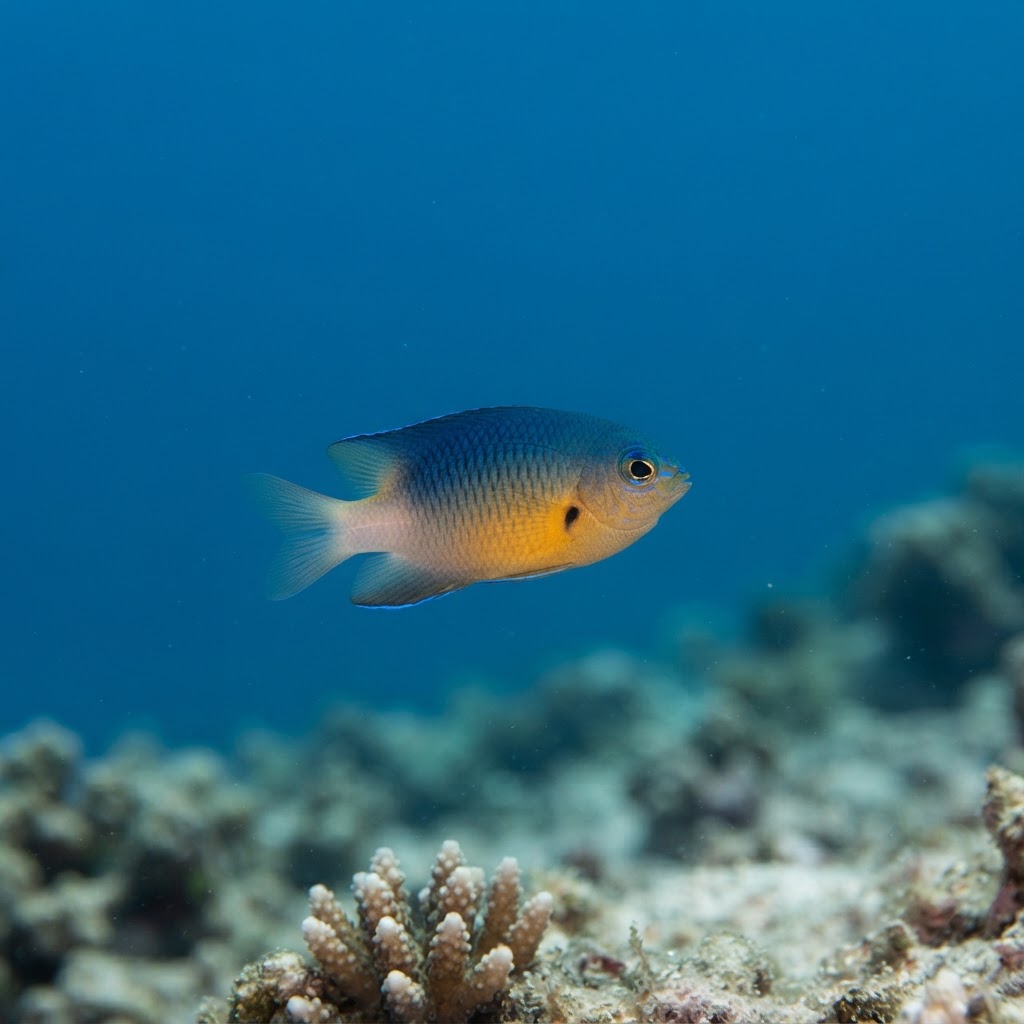
A small, deep-bodied damsel around 6 cm, typically yellow to orange-brown with a faint dark spot near the base of the upper tail fin. Look for pale blue lines radiating around the eye, which is the most reliable field mark at close range. It hovers close to the reef with quick, jerky movements rather than swimming in open water.
Divers usually find it perched over rubble patches or low coral heads, darting out to snap at drifting plankton before dropping back to its patch. It holds its ground rather than fleeing, giving a curious but unbothered look at passing divers, and it is most active in daylight hours when feeding activity on the reef picks up. Expect to see it alone or in loose, scattered groups rather than tight schools.
Like other damselfish, it will guard a small patch of algae-covered rubble against intruders, including fish many times its size, making it one of the more territorial small residents on a reef.
No clear seasonal pattern shows up in the data, and with a comfortable range of roughly 25 to 29C it stays put on tropical reefs all year. Any month works across its core range in the Philippines, Indonesia and Palau.
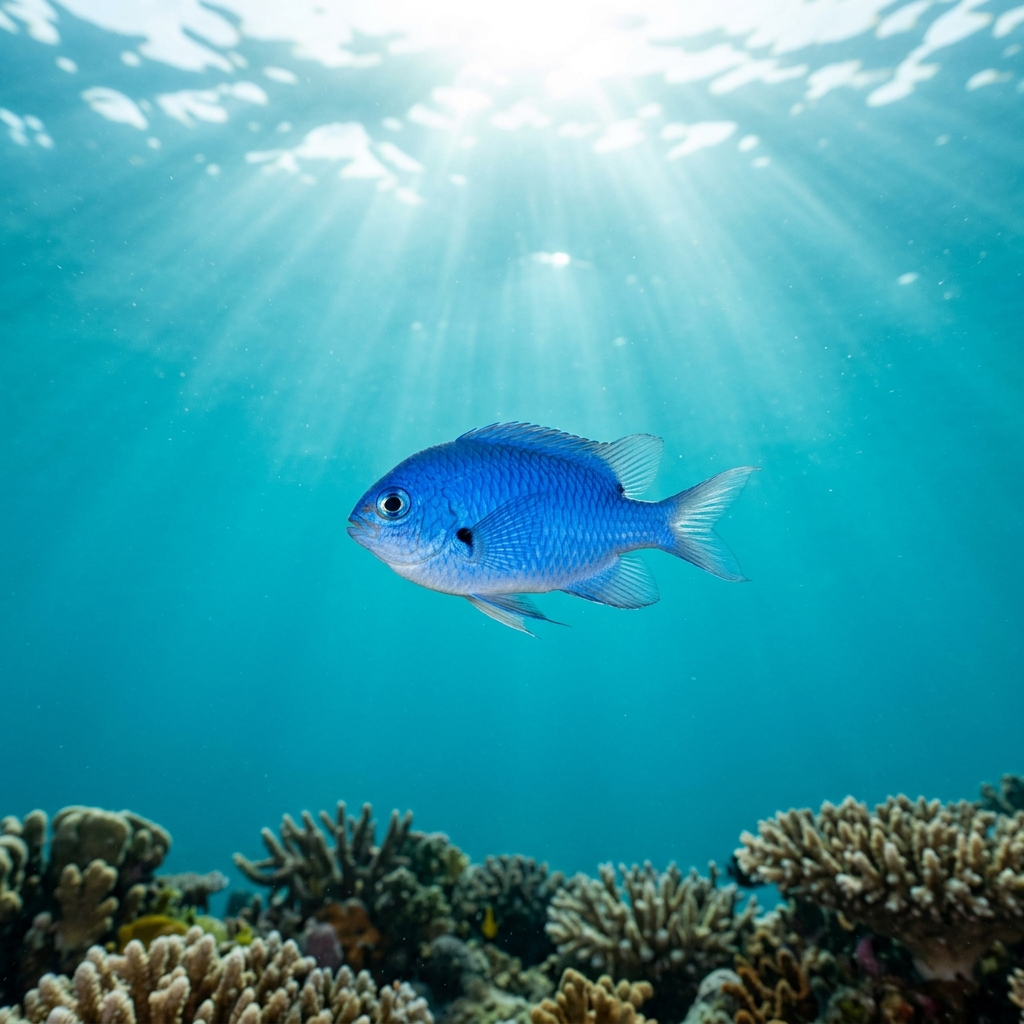
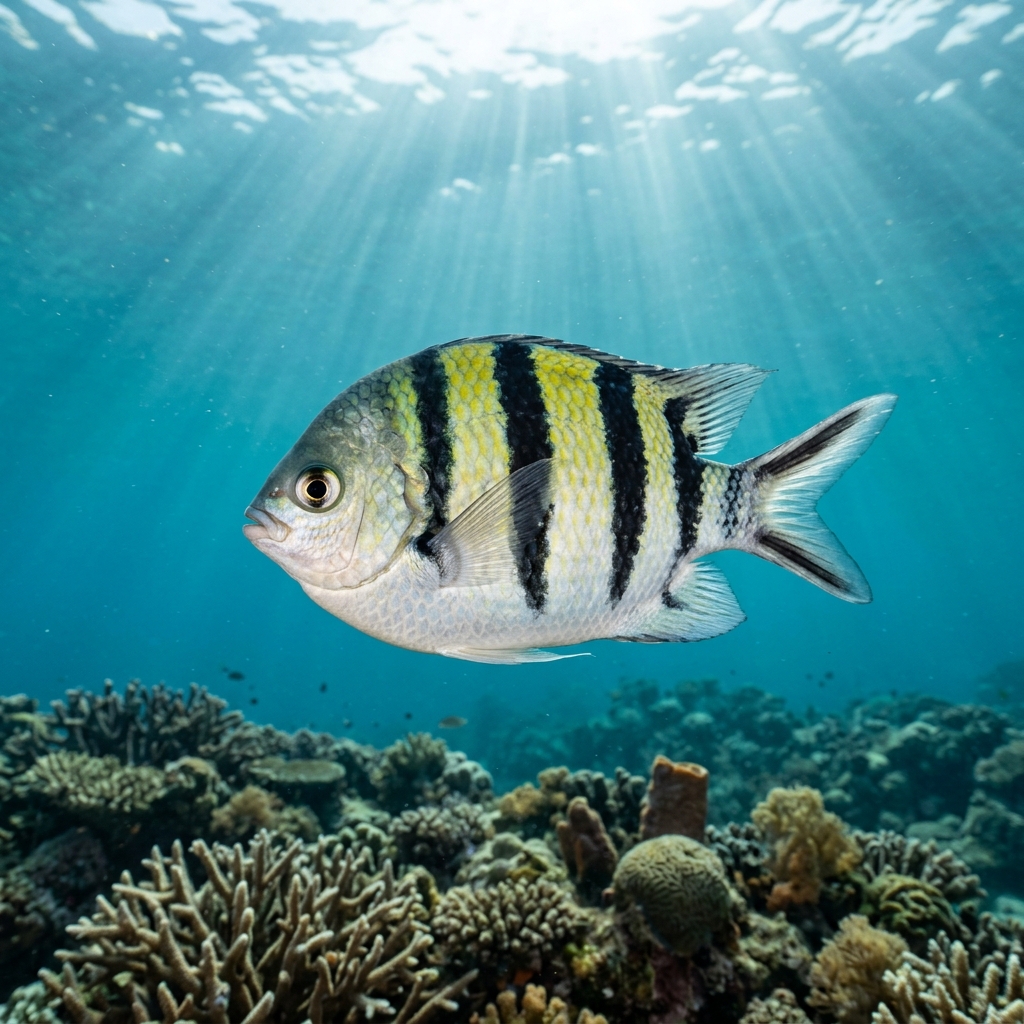
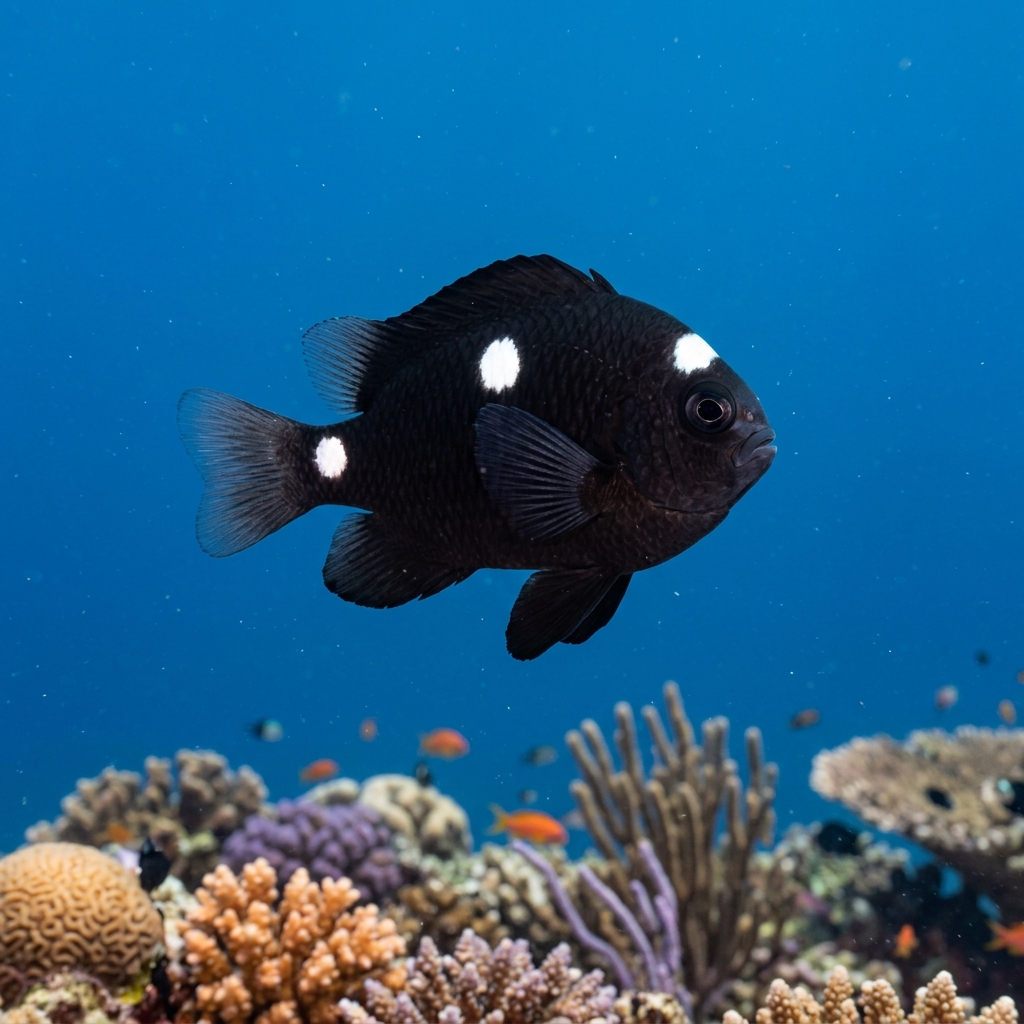
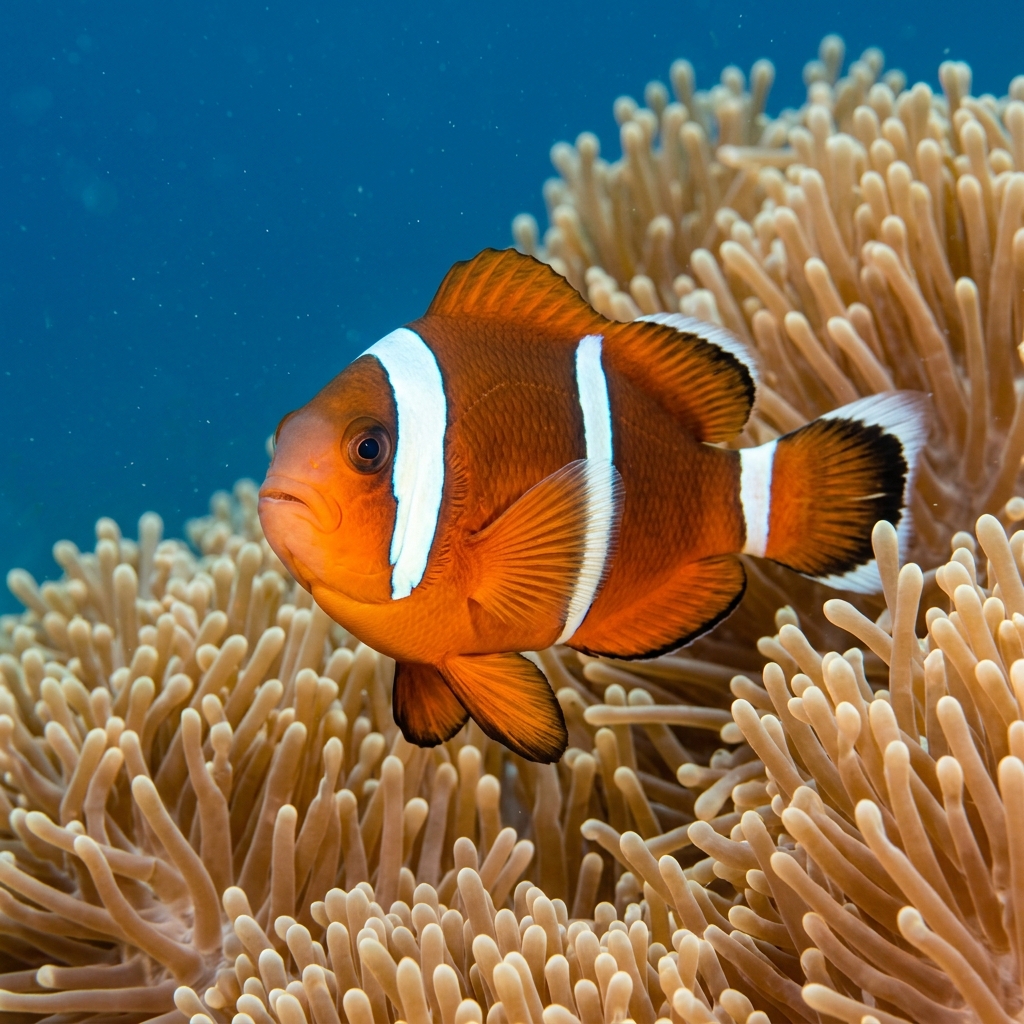
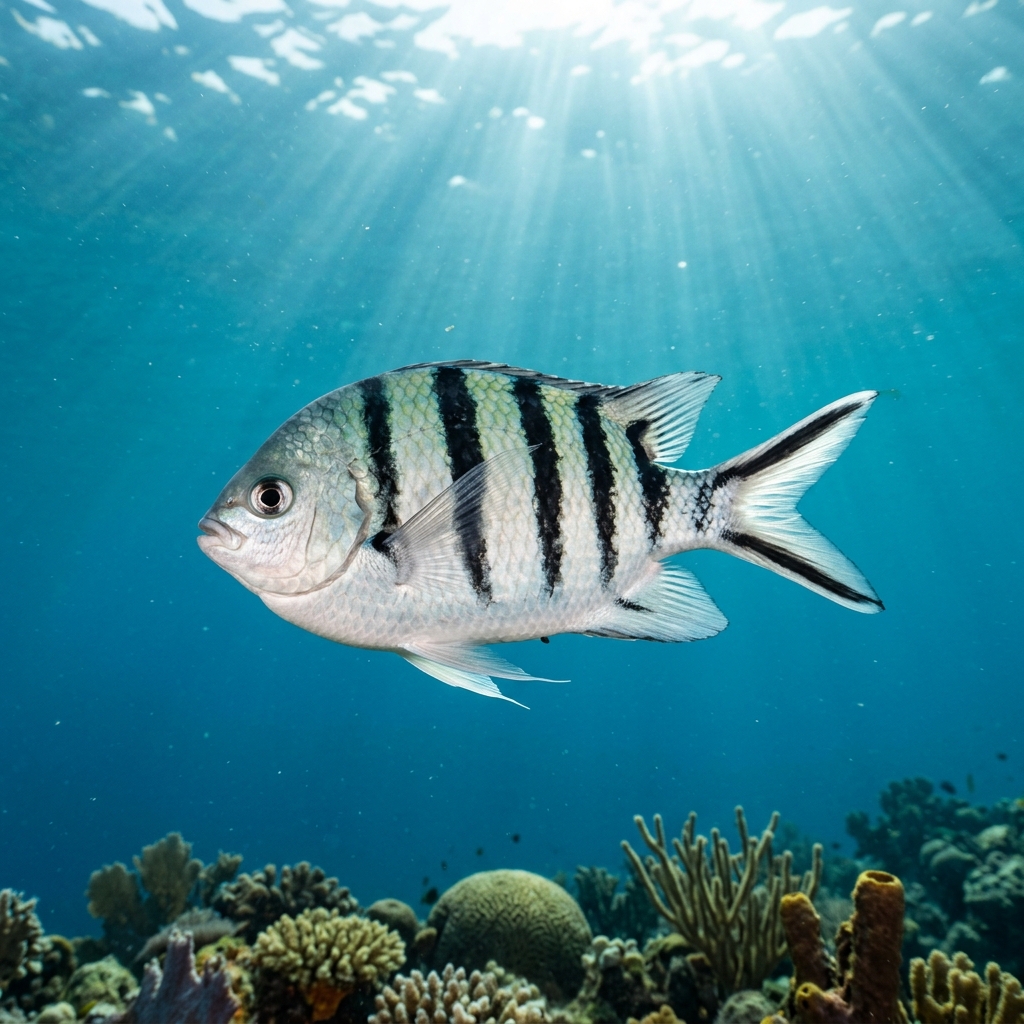
Reef neighbours a diver could mistake it for. Use the identification notes above to tell them apart.
Most reliably logged in the Philippines, especially across the Visayas and Luzon, with strong numbers also coming out of Palau's Koror & Malakal region. Indonesia adds solid sightings in Maluku, Raja Ampat and Sulawesi, and it also turns up on reefs in Queensland, Australia, and Okinawa, Japan.
Mapping where Ambon Damselfish is logged…
It shows up most often in the Philippines, particularly the Visayas and Luzon, and is also a reliable sighting around Palau's Koror & Malakal region. Indonesia's Maluku, Raja Ampat and Sulawesi areas, plus reefs in Queensland and Okinawa, are other good bets.
There is no strong seasonal pattern in the sighting data, so it is considered a year-round fish on tropical reefs. Its comfort range of roughly 25 to 29C means water temperature rarely rules out any month in its core range.
Look for a small yellow to orange-brown damsel about 6 cm long with pale blue lines circling the eye and a faint dark mark near the top of the tail base. It stays close to rubble or low reef structure and moves in short, quick bursts rather than open swimming.
They are small reef fish, typically around 6 cm long, so they are easy to overlook against busier reef backgrounds.
No, they pose no threat to divers. They may dart at your mask or fins if you get too close to their patch of reef, but this is just territorial bluffing, not a real hazard.
Site and sighting data is aggregated from diver logs, iNaturalist and GBIF. For taxonomy and conservation status:
Dascyllus
3,697 sites