Phycocaris simulans
Uncommon but findable in Luzon and Phuket muck sites, this near-invisible shrimp rewards divers who slow down and check the algae.
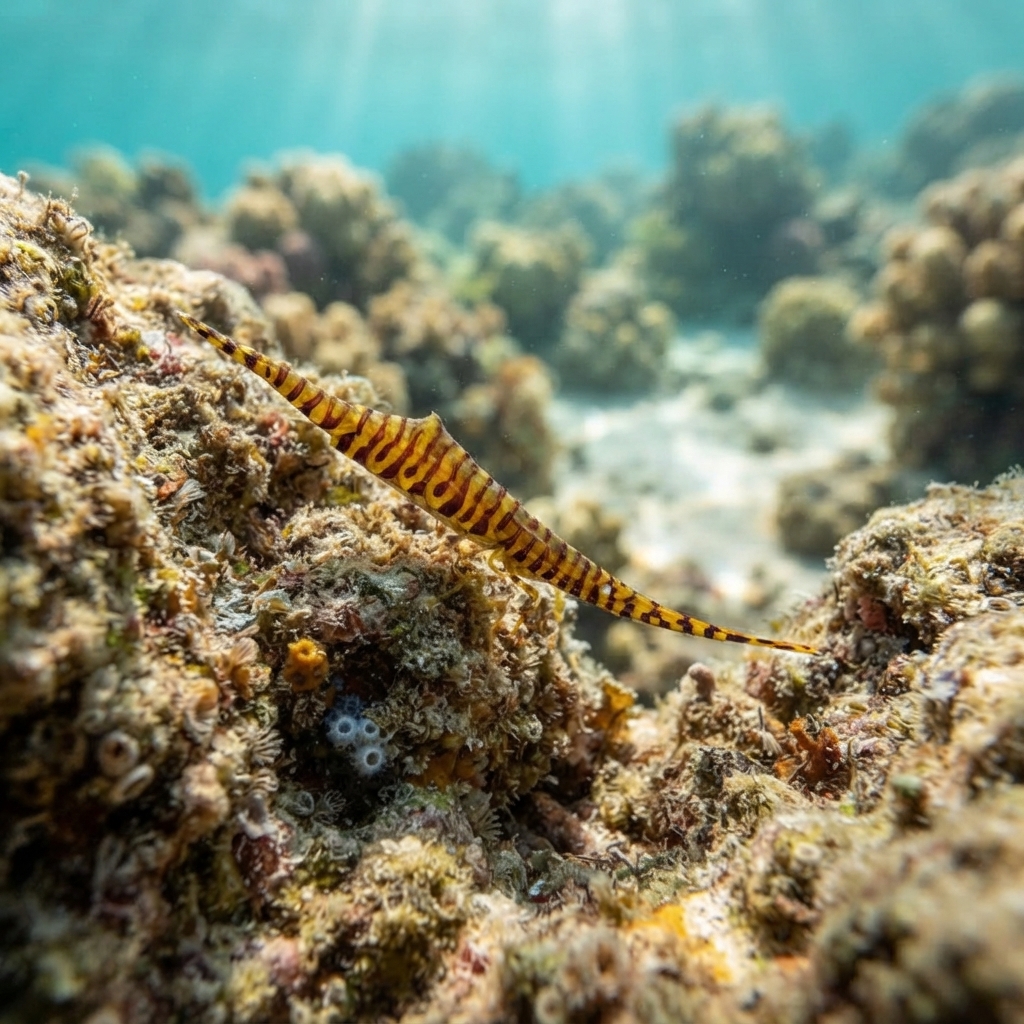
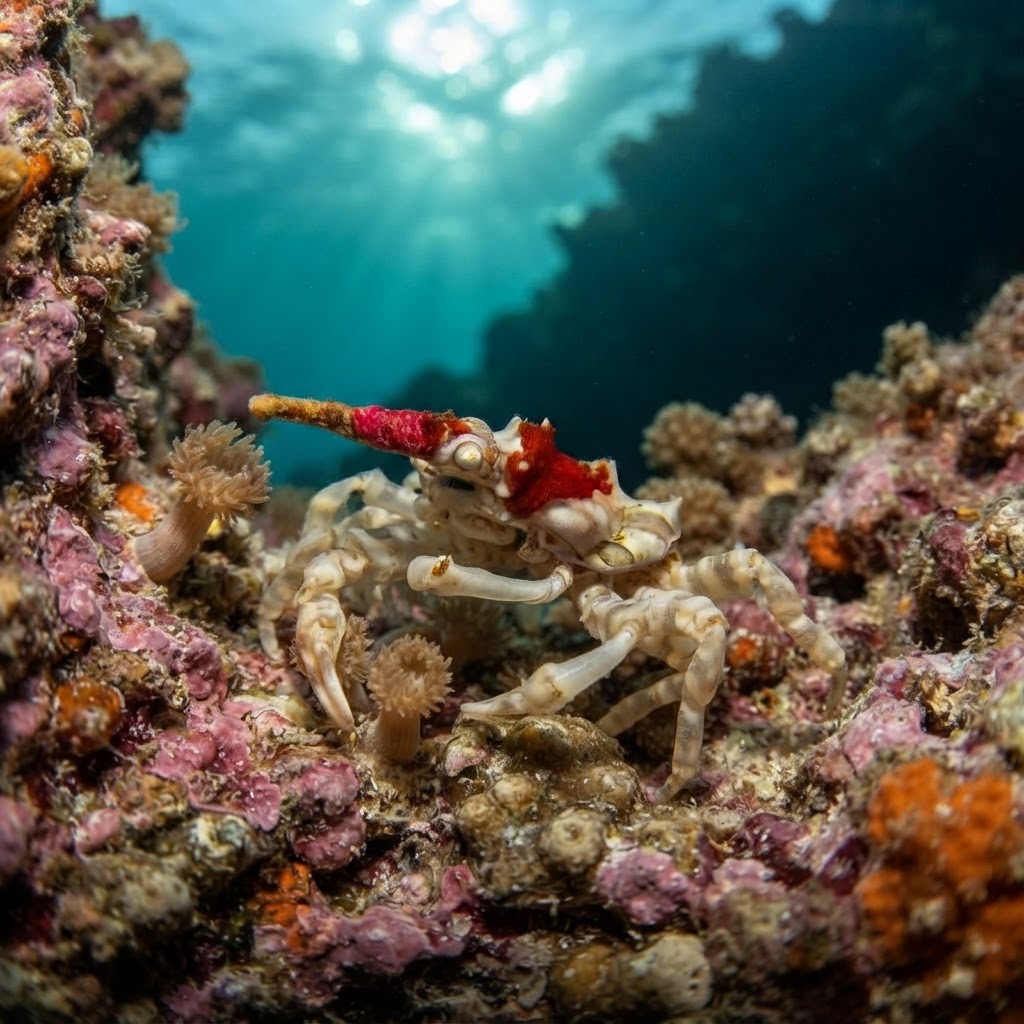
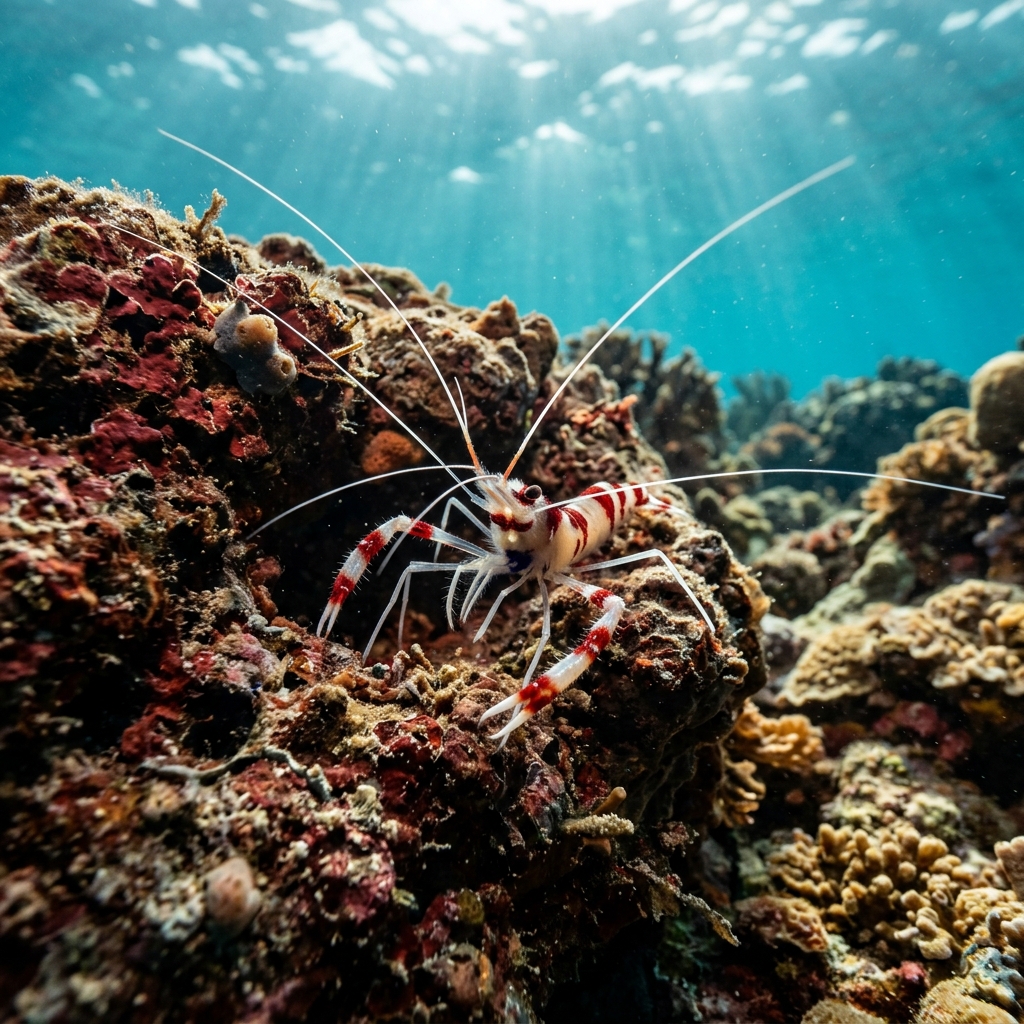
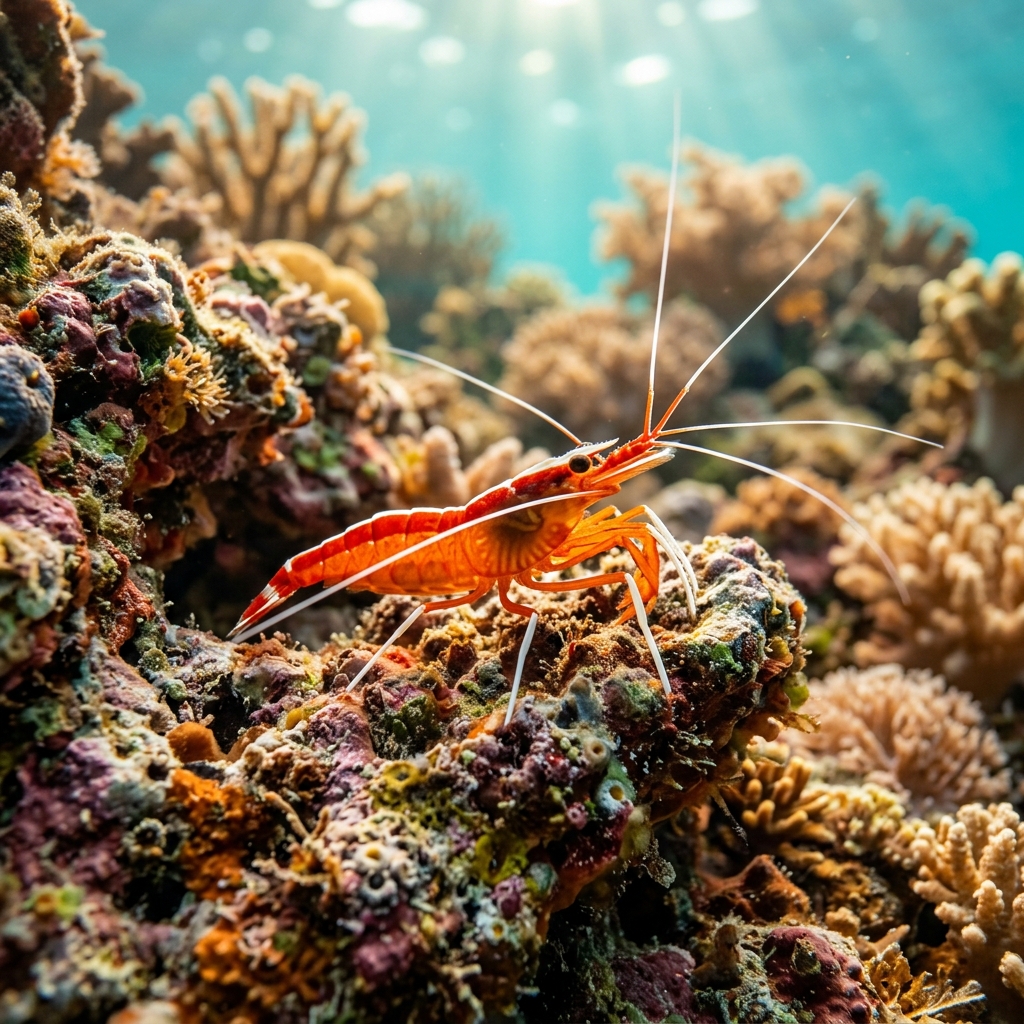
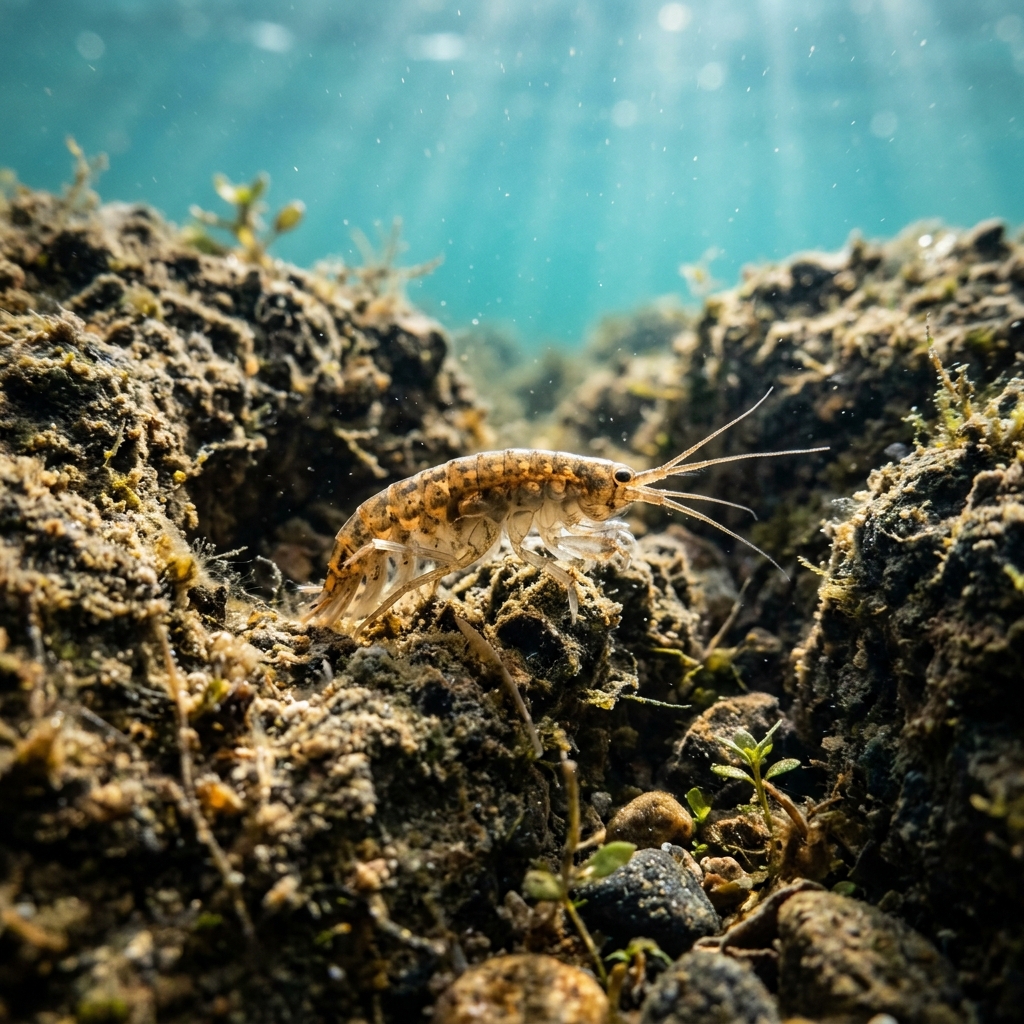
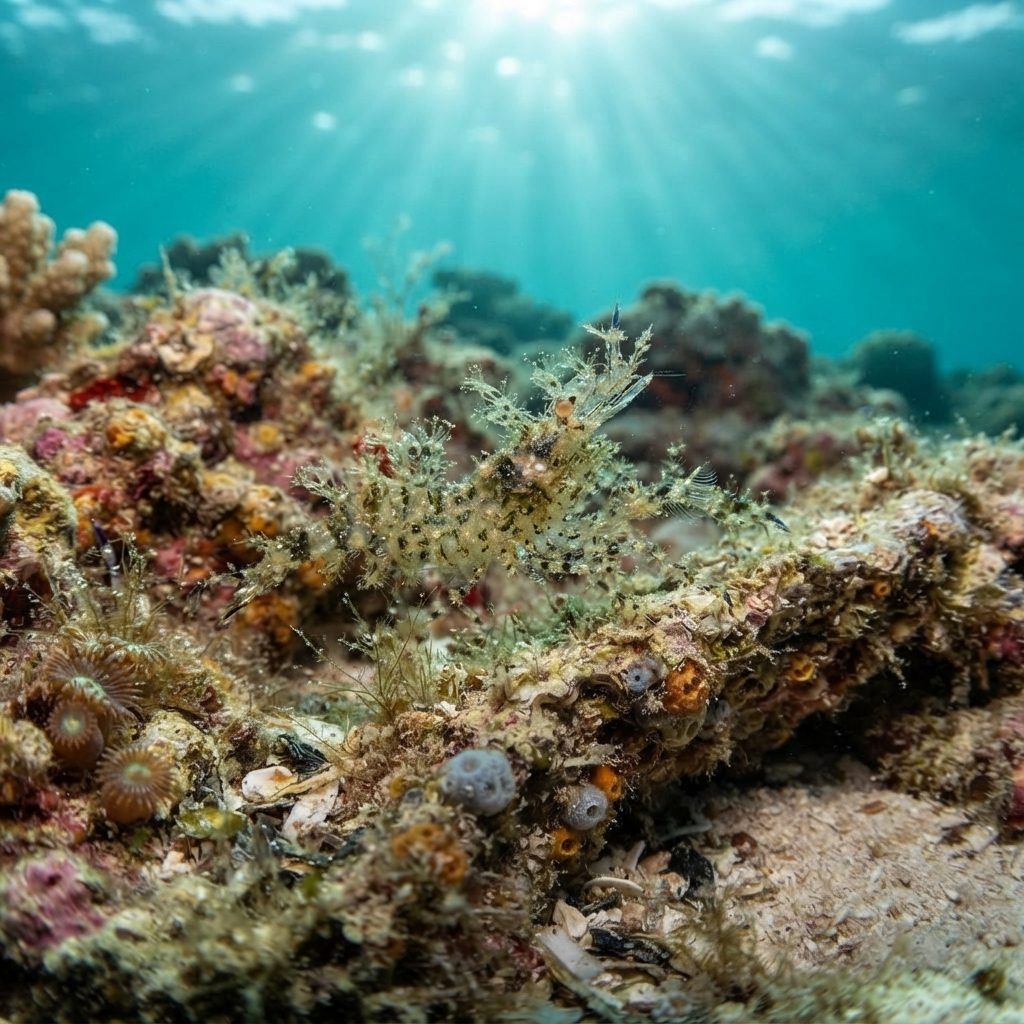
Barely reaches a centimetre or two, with a slender, almost see-through body mottled in greens and browns that matches the algae it clings to. Look for the faint bumps along its back and the way it grips a single algal strand rather than swimming freely. There is no strong colour contrast to key on, so divers usually spot it by movement or by scanning algae clumps with a torch rather than by pattern.
Spends its time motionless or slowly picking its way over algae strands, relying on camouflage rather than flight when a torch beam passes over it. Divers typically find it on muck and rubble dives, hovering close and scanning algal patches rather than swimming the open reef. It shows little reaction to divers, staying put unless disturbed directly, which makes a steady hand and a macro lens the best approach.
Its near-total transparency and algae-matching mottling make it one of the harder shrimp species to photograph even once a guide has pointed it out, since the eye keeps sliding past it.
No clear seasonal pattern shows in the data, and its comfort range of roughly 25 to 31 C covers tropical reefs year-round, so any month is worth a look at the right sites.
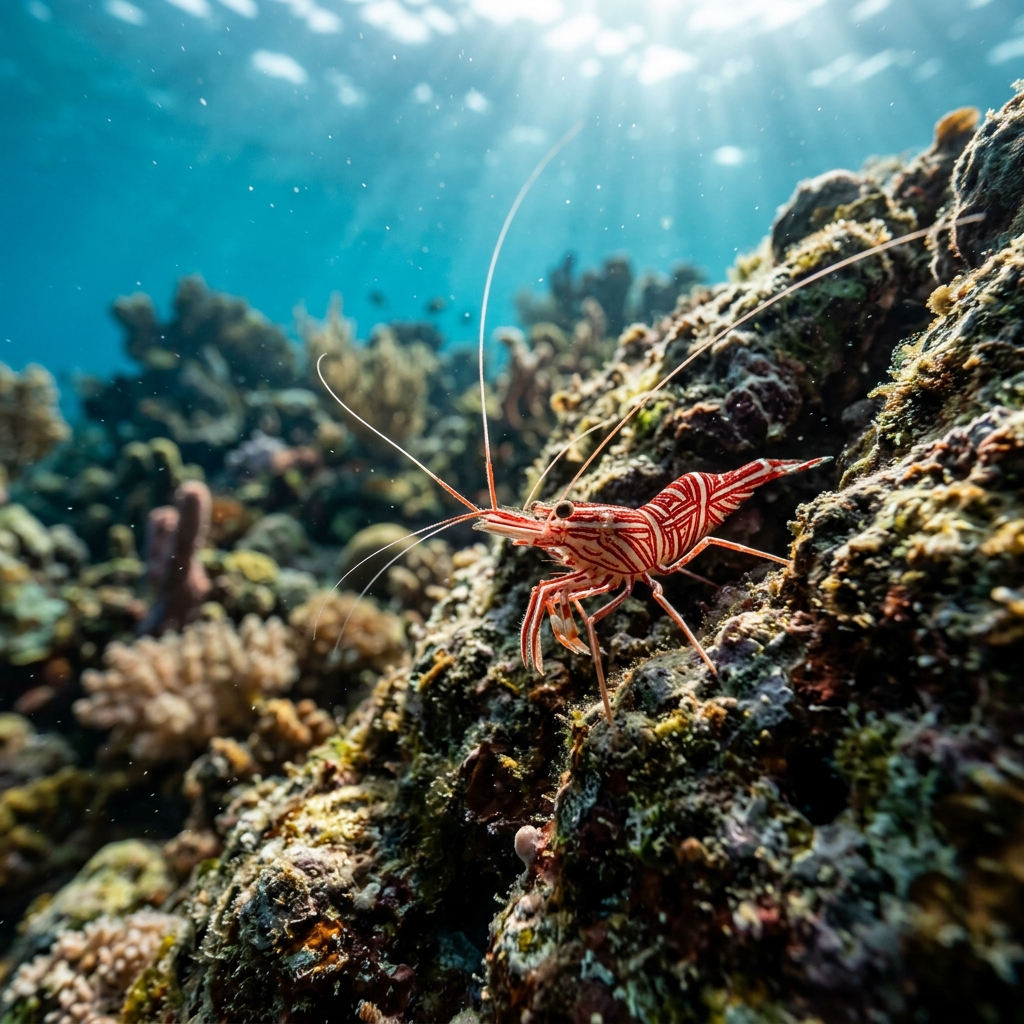
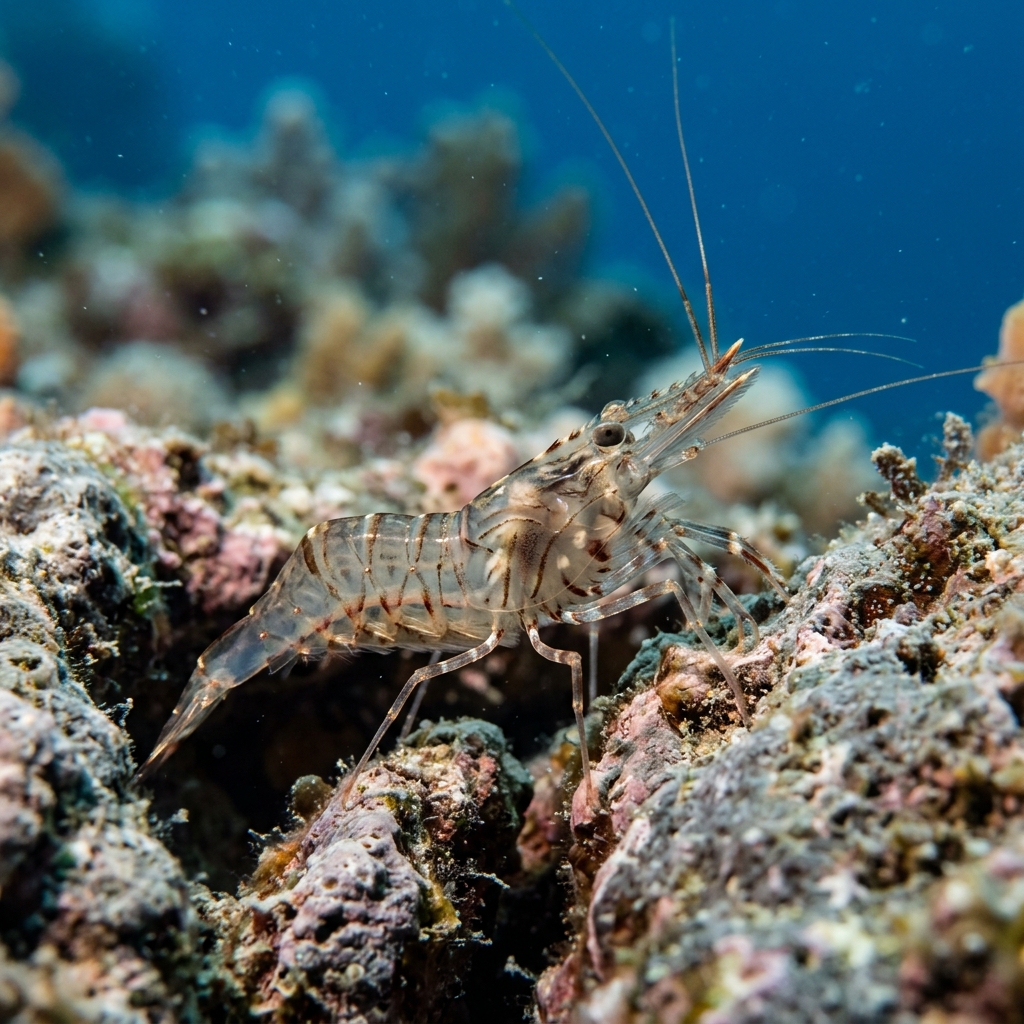
Reef neighbours a diver could mistake it for. Use the identification notes above to tell them apart.
Most reliably logged around Luzon in the Philippines, which carries the bulk of recorded sightings, followed by Phuket in Thailand and Bali and Sulawesi in Indonesia. A handful of sightings also come from Eilat in the Red Sea, showing it turns up wherever algae-covered rubble and muck habitats exist.
Mapping where Algae Shrimp is logged…
Luzon in the Philippines has the strongest record of sightings, with Phuket in Thailand and Bali in Indonesia also reliable spots. Sulawesi and Eilat in the Red Sea have produced fewer but confirmed sightings.
There is no detected season in the sighting data, and its warm-water niche of roughly 25 to 31 C is met on tropical reefs all year, so it can be looked for in any month.
Look for a near-transparent shrimp only a centimetre or two long, mottled green and brown, gripping a strand of algae rather than swimming in open water. It has no bold marking, so a slow scan with a torch on algae clumps is the best way to spot one.
They stay tiny, typically only a centimetre or two long, which along with their transparency makes them one of the trickier macro subjects to find on a dive.
No, they pose no danger to divers at all. They are small, non-aggressive, and simply cling to algae, so there is nothing to be cautious about beyond good buoyancy control near the substrate.
Site and sighting data is aggregated from diver logs, iNaturalist and GBIF. For taxonomy and conservation status:
Rockpool Prawn
2,179 sites