Alburnus alburnus
Spot the alver in Austria's Carinthian and Styrian lakes, a sleek silver freshwater fish active in cold water down to 3°C.
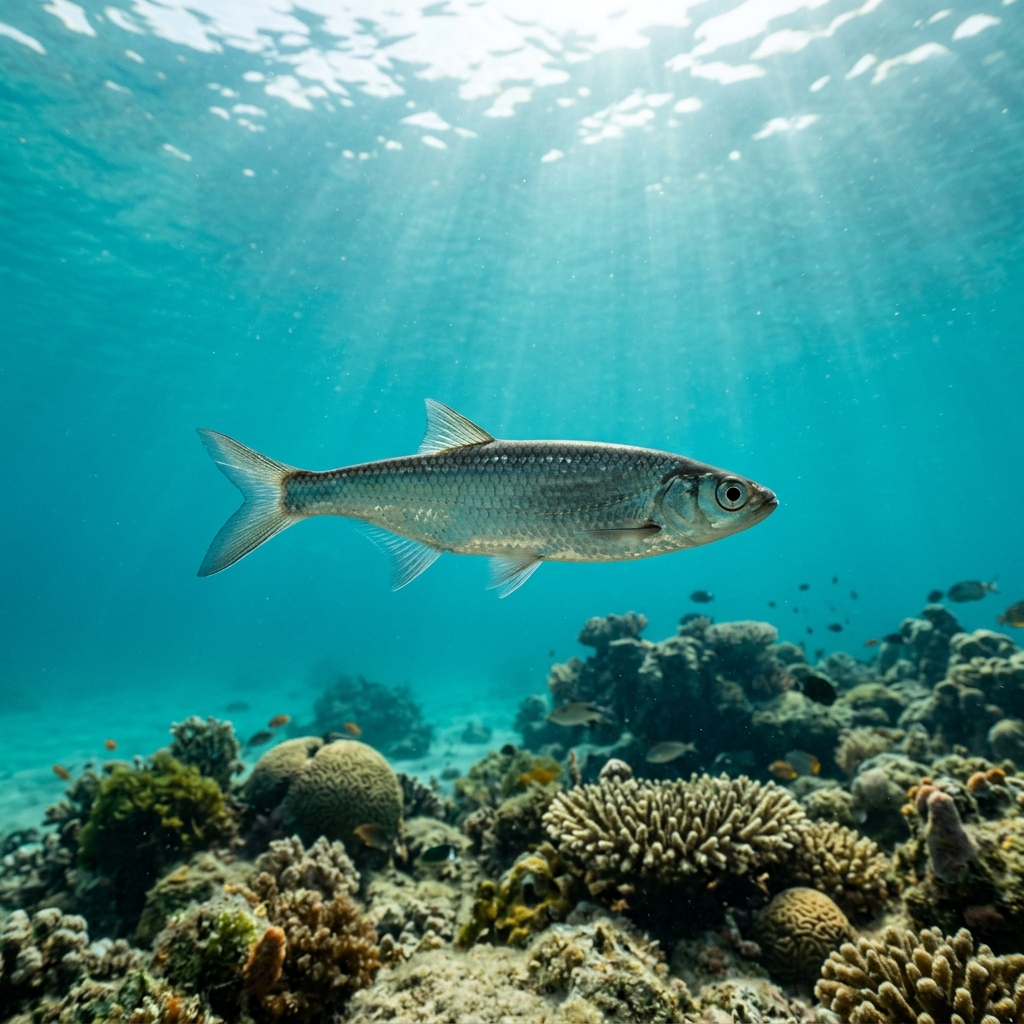
A slim, torpedo-shaped fish with bright silver flanks, a white-to-cream belly, and a noticeably narrow body that tapers sharply towards the tail. The scales are large and reflective, making it flash in surface light. Look for the slightly upturned mouth and the well-defined lateral line (the faint row of pores running along the flank) to separate it from other small silvery fish sharing the same water column.
Alver are schooling fish that typically hang in the upper part of the water column, often just below the surface, where they feed on small invertebrates and surface insects. Divers most commonly encounter loose shoals drifting through open water rather than hugging the bottom or structure. They tend to hold their position briefly when a diver approaches before scattering as a group.
Alver produce a pearlescent substance in their scales called guanine, which historically made them useful in the manufacture of artificial pearls, the shimmer you notice underwater is the same quality that gave them that role.
There is not enough monthly data to point to a single peak season, so treat it as a year-round possibility. The observed water-temperature range of roughly 3 to 18 °C matches the cold, deep Alpine and pre-Alpine lakes where it is most often seen.
Almost all diver-logged records come from Austria, particularly the lakes of Carinthia and Styria, making these two regions by far the most reliable places to look. A smaller cluster of sightings comes from the Lake Geneva region in Switzerland, with a handful of records from western Poland rounding out the range.
Mapping where Alver is logged…
The alver is most reliably encountered in Austria, with Carinthia's lakes and Styria's lakes accounting for the vast majority of diver sightings. The Lake Geneva region in Switzerland and a few sites in western Poland make up the rest of the logged range.
No clear seasonal peak has emerged from the available data, so dives can be planned year-round. The species is comfortable in cold water down to around 3 °C, meaning it stays active even during winter months in Alpine lakes.
Look for a slender, highly reflective silver fish with a pale belly and a distinctly narrow, streamlined body. The upturned mouth and the clean lateral line are useful details. Alver typically swim in loose schools in open water near the surface rather than near the bottom.
Size data for this species is not recorded in the diver observation logs on Fin. In general, alver are a small to medium freshwater fish, typically reaching around 15 to 20 cm in length, though individuals can occasionally grow larger.
No. Alver pose no risk to divers whatsoever. They are small, peaceful schooling fish that will typically move away rather than towards a diver.
The intense silver flash comes from guanine crystals packed into the scales. This reflective quality is especially striking in sunlit shallows and is one of the easiest ways to spot a school before you are close enough to see body shape.
Site and sighting data is aggregated from diver logs, iNaturalist and GBIF. For taxonomy and conservation status:
Sun Perch
2,182 sites