Sparisoma frondosum
Uncommon but reliable on Brazilian reefs, especially Fernando de Noronha, in water around 25 to 28C year-round.
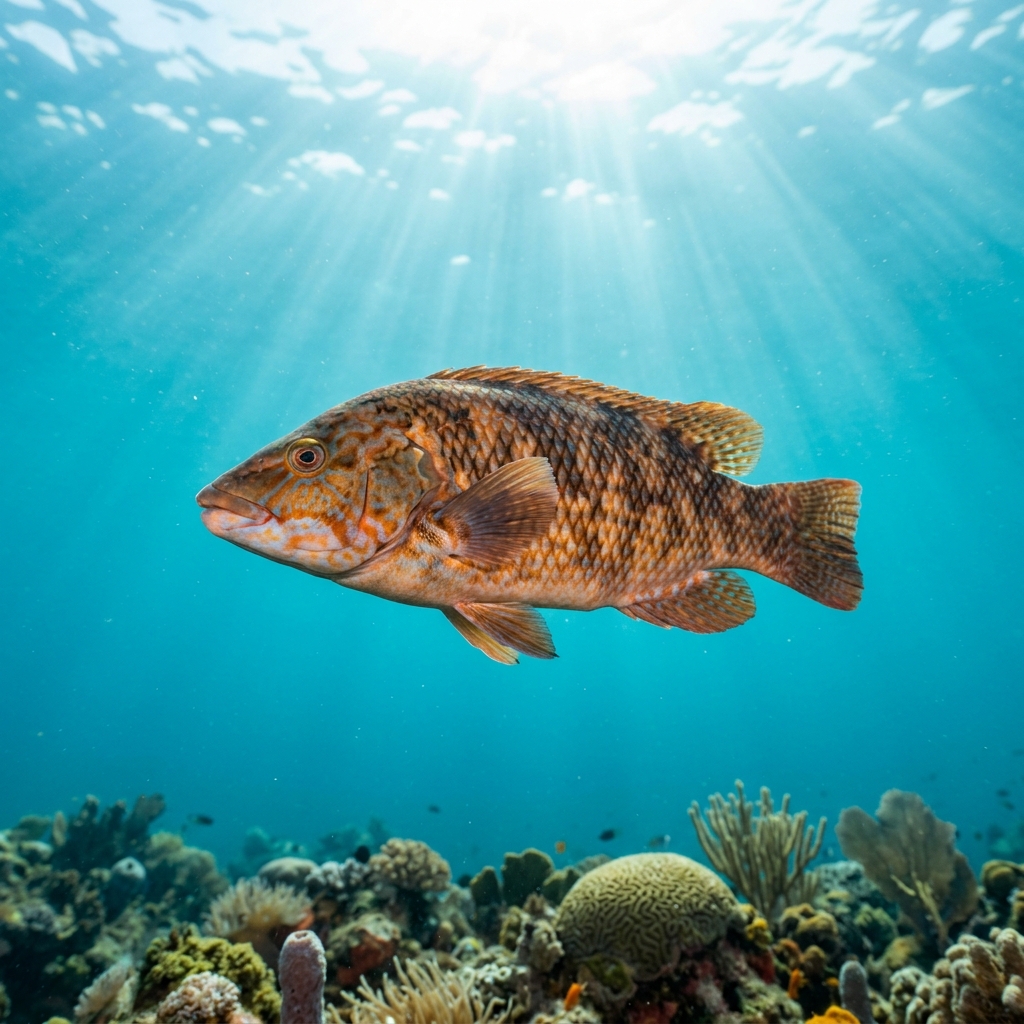
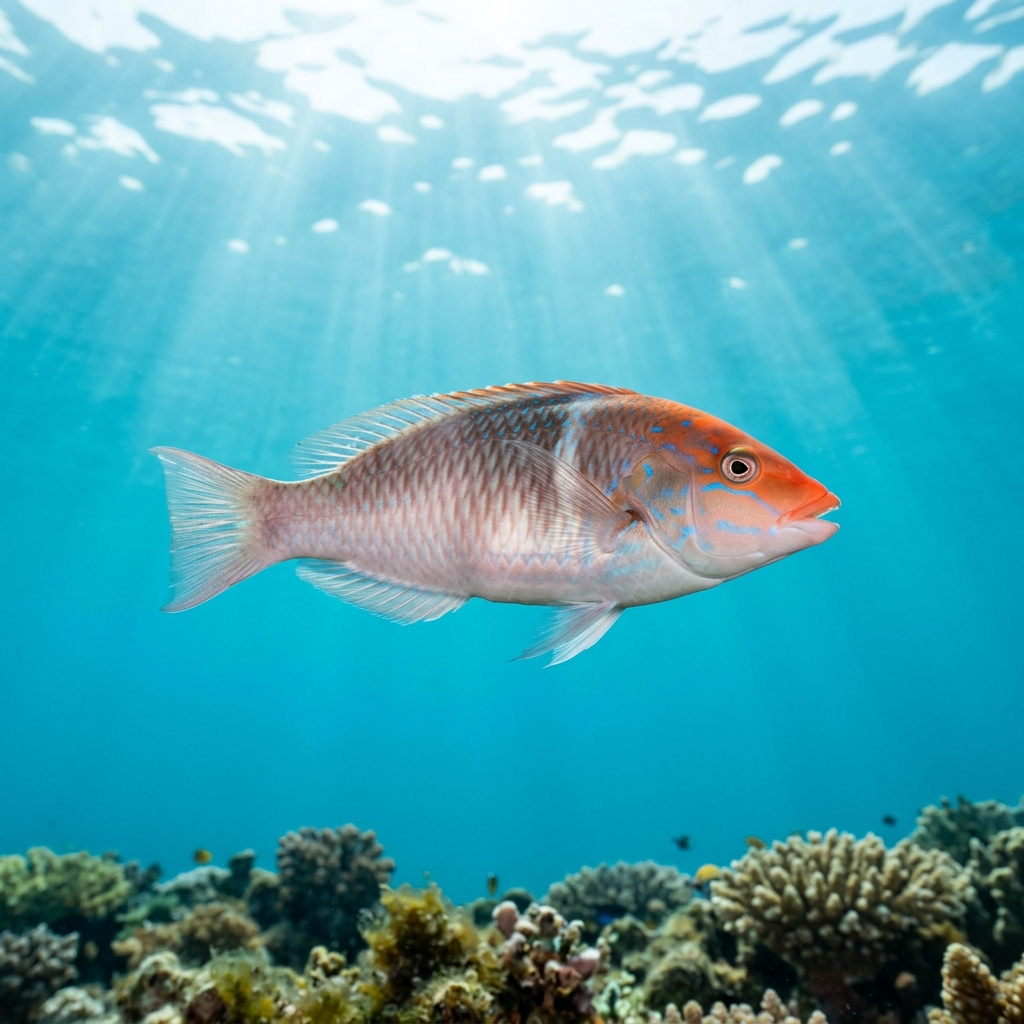
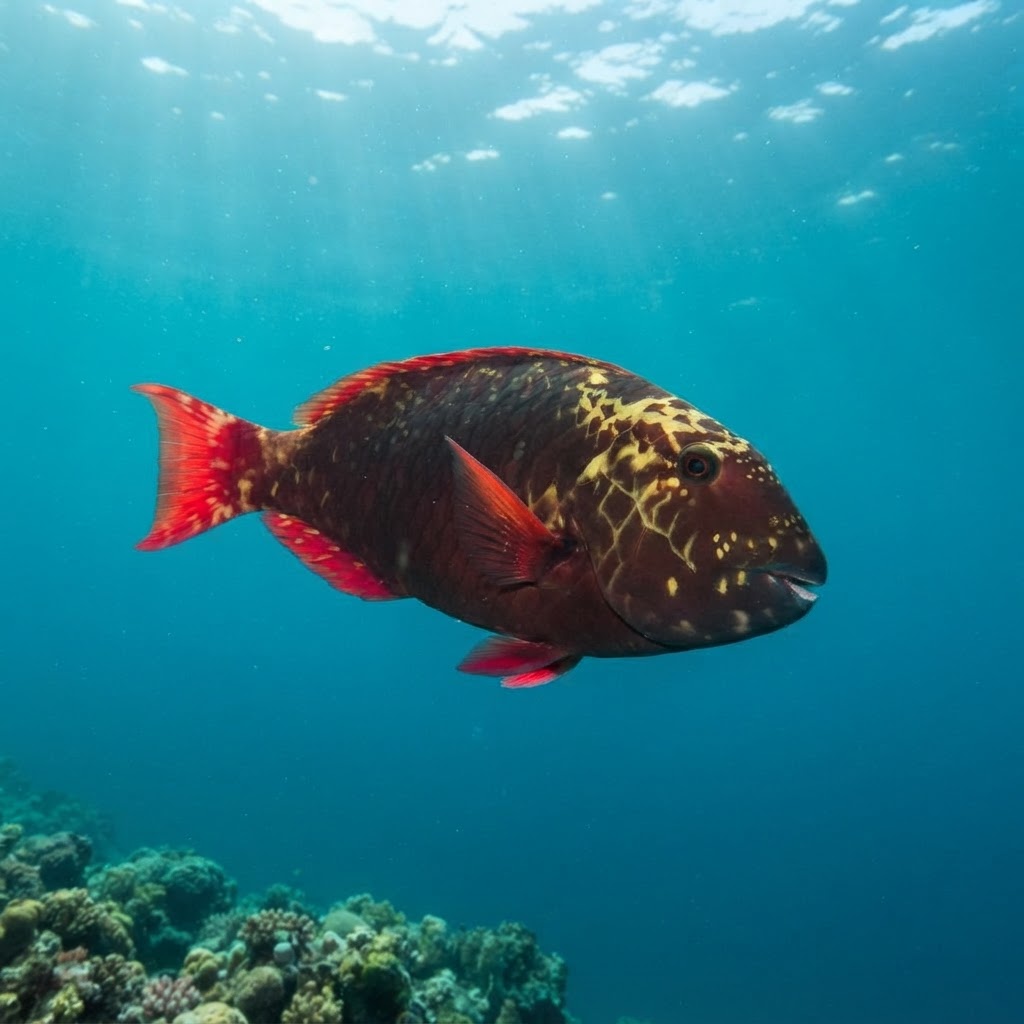
A stocky, medium-sized parrotfish reaching around 24 cm, with a mottled grey to brownish body and the fused, beak-like teeth typical of parrotfishes used for scraping algae off rock and coral. Look for a somewhat blunt head profile and a body that reads more subdued and camouflaged than the vivid greens and blues of many Indo-Pacific parrotfish. It is usually seen alone or in loose company grazing low over reef structure rather than in open water.
Divers typically find it grazing low over rock and reef surfaces, using its beak-like teeth to scrape algae from hard substrate rather than roaming in open water. It tends to be unfussed by divers at a respectful distance, continuing to feed rather than bolting, though at most sites it is logged as uncommon or rare rather than something you are guaranteed to see on every dive. Look for it working the same patch of reef repeatedly during daylight hours rather than at night.
Like other parrotfishes, its fused beak-like teeth let it scrape algae and fine organic matter off rock and dead coral, a grazing habit that helps keep reef surfaces clear and open for new coral growth.
Sightings show no detected seasonal pattern, and with observed water temperatures sitting comfortably between about 24.6 and 27.6C, it appears to be present on these reefs year-round rather than tied to a particular season.
Most reliably logged in Brazil, particularly around Fernando de Noronha, Rio de Janeiro and Santa Catarina, which together account for the bulk of sightings. It also turns up with a solid presence off Cape Verde, notably around Sal and São Vicente, making these Atlantic island and coastal sites the two main places to plan a sighting.
Mapping where Agassiz's Parrotfish is logged…
Brazil is the strongest bet, especially Fernando de Noronha, Rio de Janeiro and Santa Catarina. Cape Verde, particularly Sal and São Vicente, is the other reliable region.
There is no clear seasonal pattern in sightings, and it lives in water consistently around 25 to 28C, so it is reasonable to expect it on these reefs at any time of year.
Look for a stocky parrotfish around 24 cm with a mottled grey-brown body and a fused beak-like mouth, usually seen grazing slowly over rock or reef rather than swimming in open water.
They typically reach about 24 cm in length, making them a medium-sized member of the parrotfish family rather than one of the larger reef grazers.
It is generally logged as uncommon, with rare sightings at many sites and only occasional spots where it shows up regularly, so patience and a close look at reef structure help.
Site and sighting data is aggregated from diver logs, iNaturalist and GBIF. For taxonomy and conservation status:
Bird Wrasse
3,632 sites