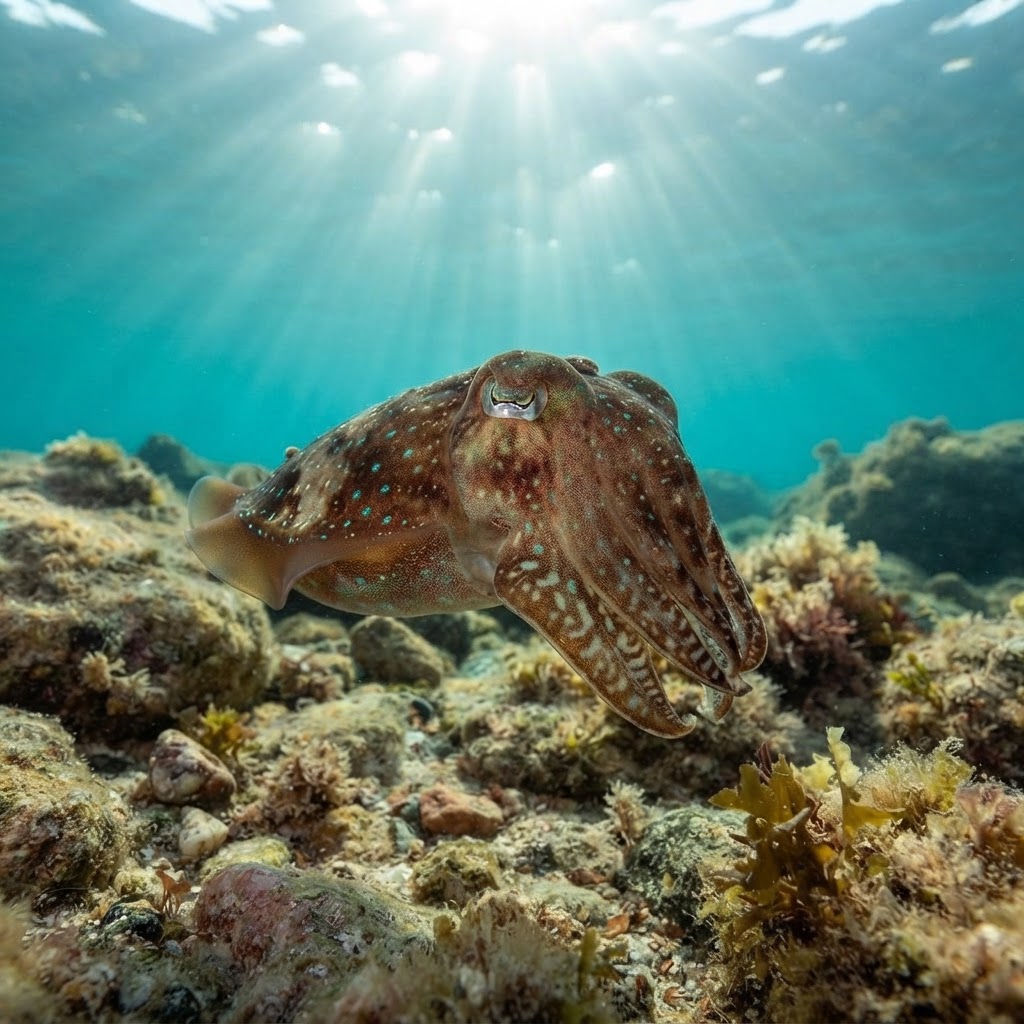
Sepia bertheloti
Uncommon but findable off Tenerife's volcanic reefs in 18-24C water, this small cuttlefish is a favourite for divers who like colour-shifting cephalopods.
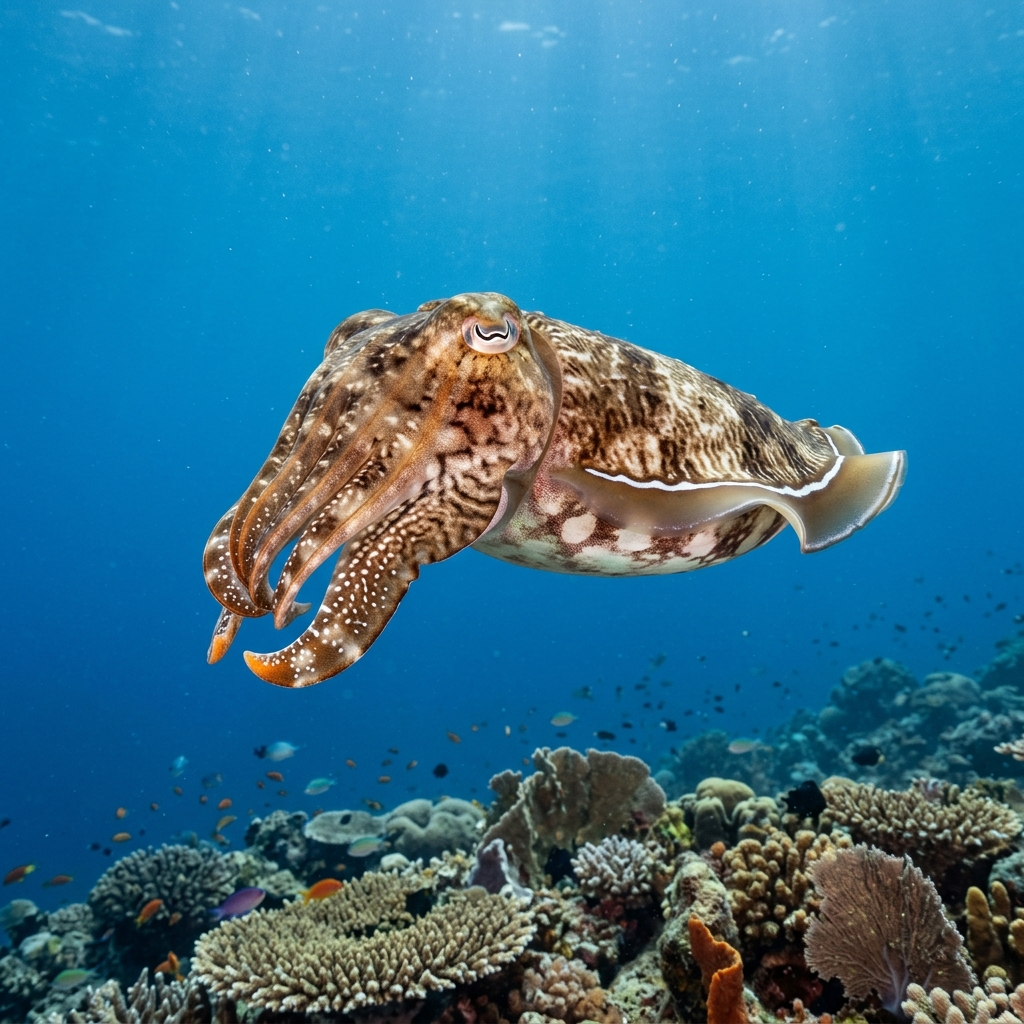
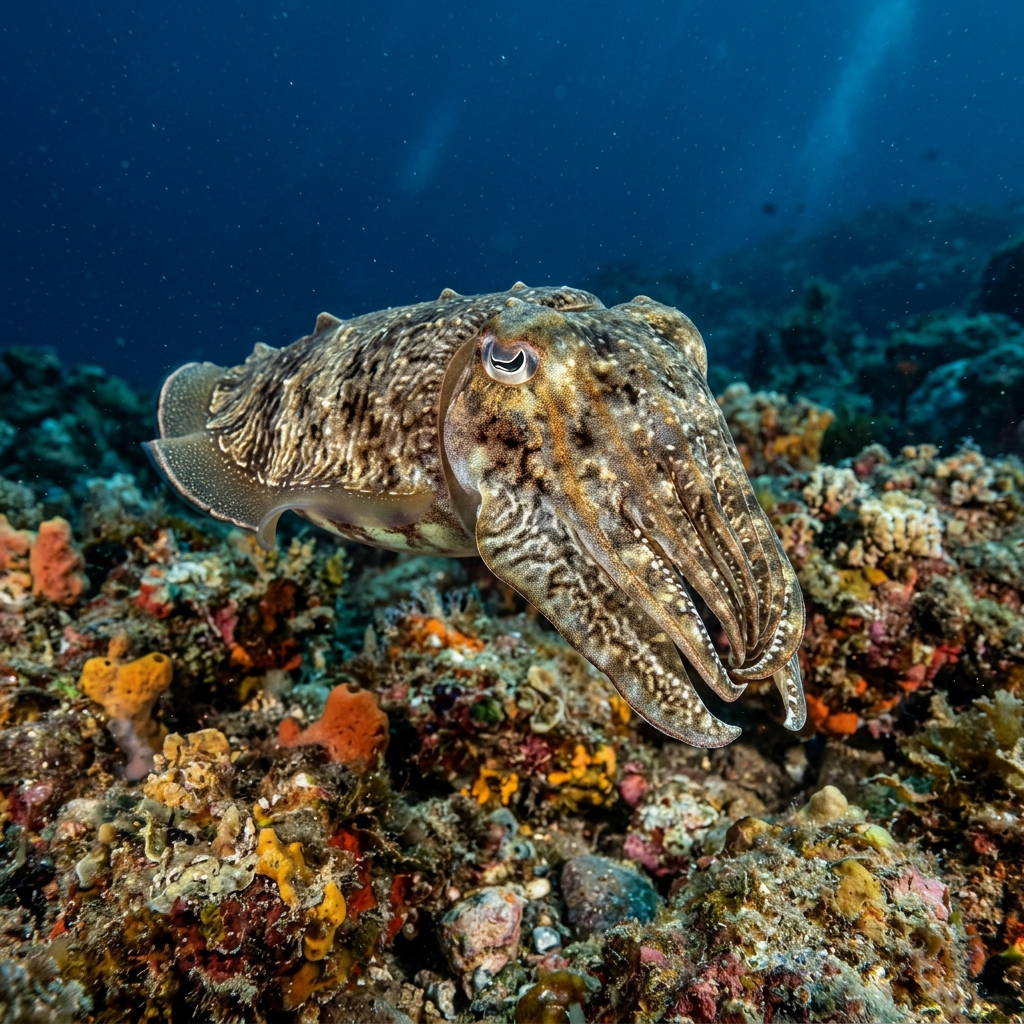
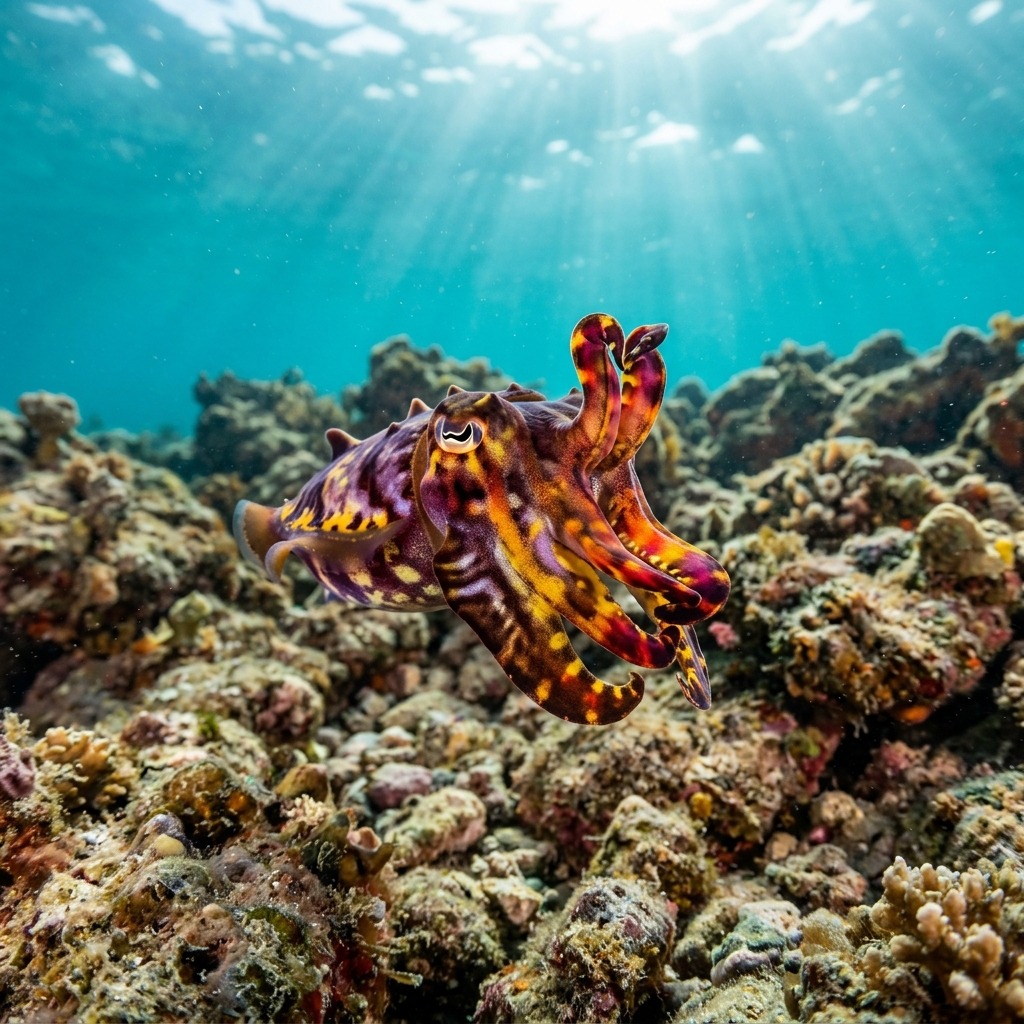
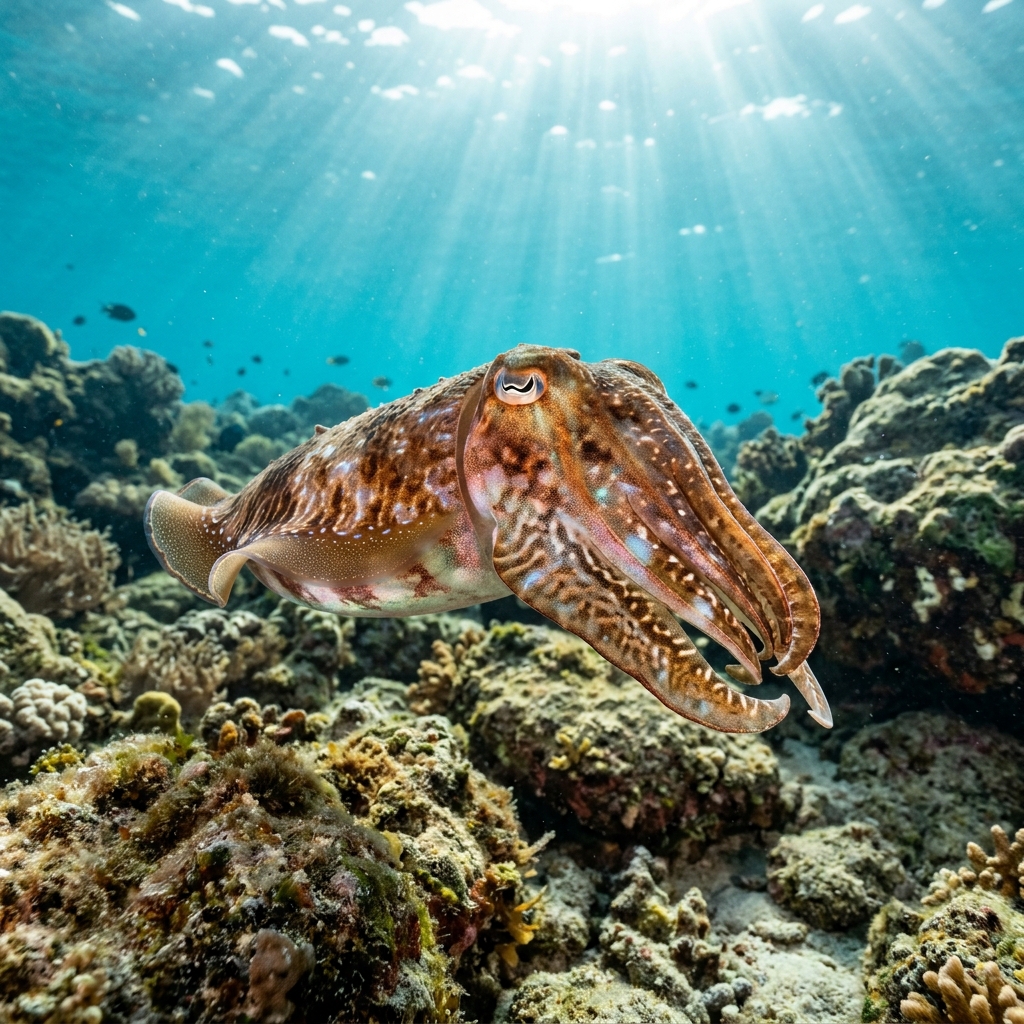
Small for a cuttlefish, topping out around 13 cm, with an oval, flattened body and a fin skirting the full length of its mantle. Skin tone shifts constantly between mottled browns, greys and pale bands as it moves over sand or rock, a camouflage trick typical of the family. Look for the two long tentacles tucked among eight shorter arms and the direct, almost curious stare from its W-shaped pupils.
Divers typically find them settled on sand patches or rocky ledges, blending into the substrate until a torch beam or a close approach gives them away. They tend to hold still and rely on colour change rather than fleeing, though a sudden move can send them jetting off in a puff of ink. Most logs come from daytime dives along volcanic reef terrain rather than open water.
Like other cuttlefish, it can change both colour and skin texture in under a second using pigment-filled cells called chromatophores, letting it vanish against sand, rock or weed almost instantly.
Sightings show no detected season, and with water logged between 17.8 and 23.8C it seems to tolerate the Canary Islands' mild year-round range without a clear peak month. Treat it as a possible encounter on any dive rather than a seasonal target.
Reef neighbours a diver could mistake it for. Use the identification notes above to tell them apart.
Most reliably logged around Tenerife in the Canary Islands, which accounts for the bulk of recorded sightings, with further records from Lanzarote and Gran Canaria. Outside the Canaries, Dakar in Senegal is the other real stronghold for this species.
Mapping where African Cuttlefish is logged…
Tenerife in the Canary Islands is by far the most consistent spot, with additional sightings around Lanzarote, Gran Canaria and Dakar in Senegal.
There's no clear seasonal pattern in sightings, so they turn up year-round in the Canary Islands' mild 18-24C waters. Any time of year is worth a look rather than waiting for a specific month.
Look for a small, oval-bodied cuttlefish under 13 cm with a fin running the length of its mantle and constantly shifting mottled brown and grey patterning. It usually sits still on sand or rock, relying on camouflage rather than swimming away.
They're on the small side for cuttlefish, reaching around 13 cm in length, which makes them easy to overlook against a sandy bottom.
No, they pose no danger to divers. They're a shy, camouflage-reliant species that will simply change colour or ink away rather than confront anything nearby.
Their skin holds pigment cells called chromatophores that let them change colour and texture almost instantly, disappearing against sand or rock in less than a second.
Site and sighting data is aggregated from diver logs, iNaturalist and GBIF. For taxonomy and conservation status:
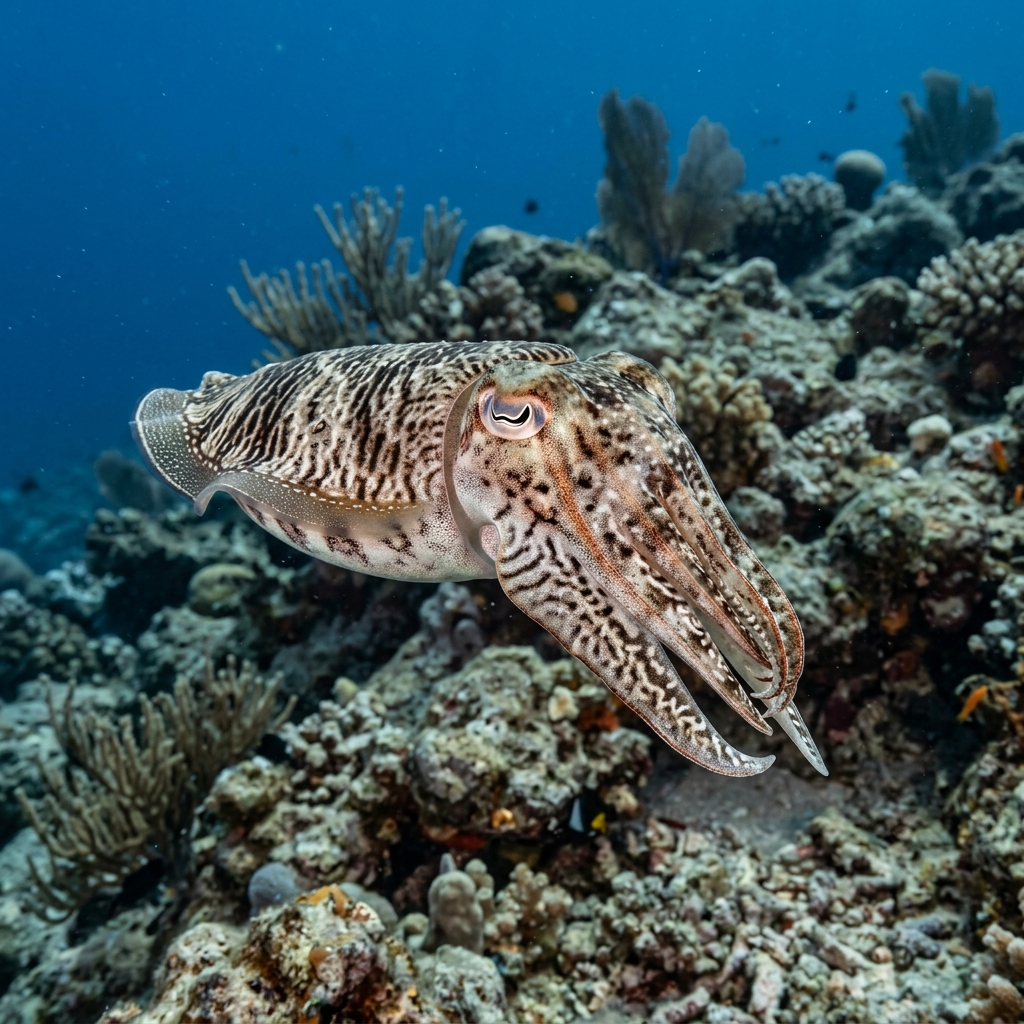
Pharaoh Cuttlefish
925 sites