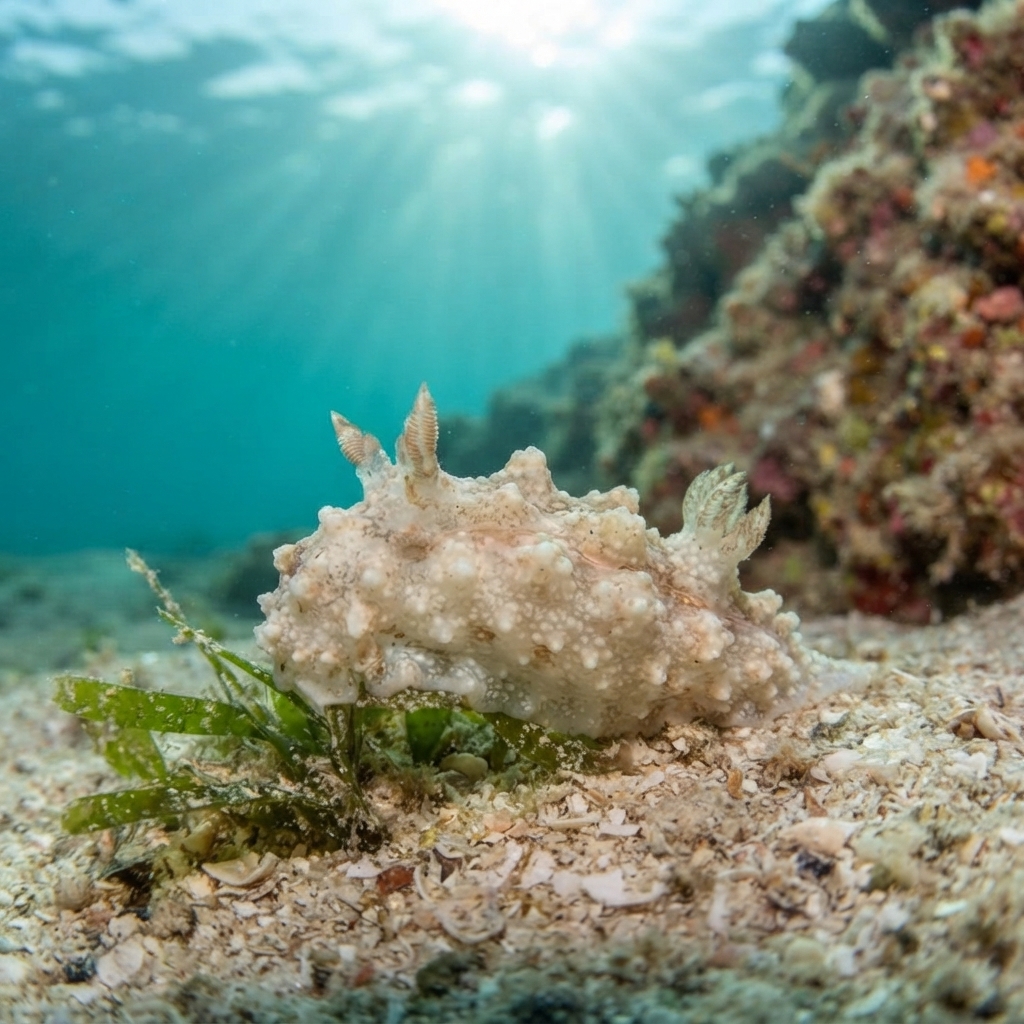
Aegires leuckartii
A tiny white-and-yellow nudibranch turning up on rocky reefs in the Balearic Islands and the French Riviera, water around 15 to 21 C.
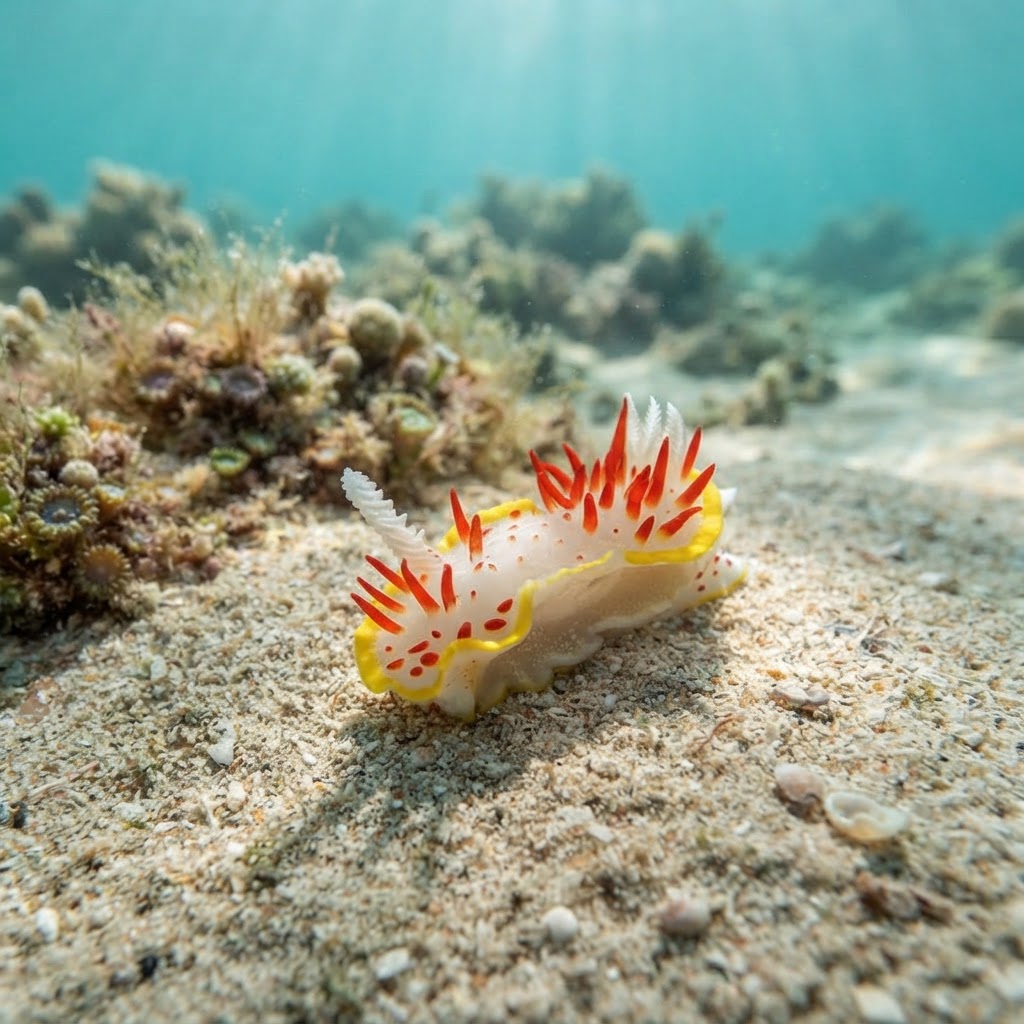
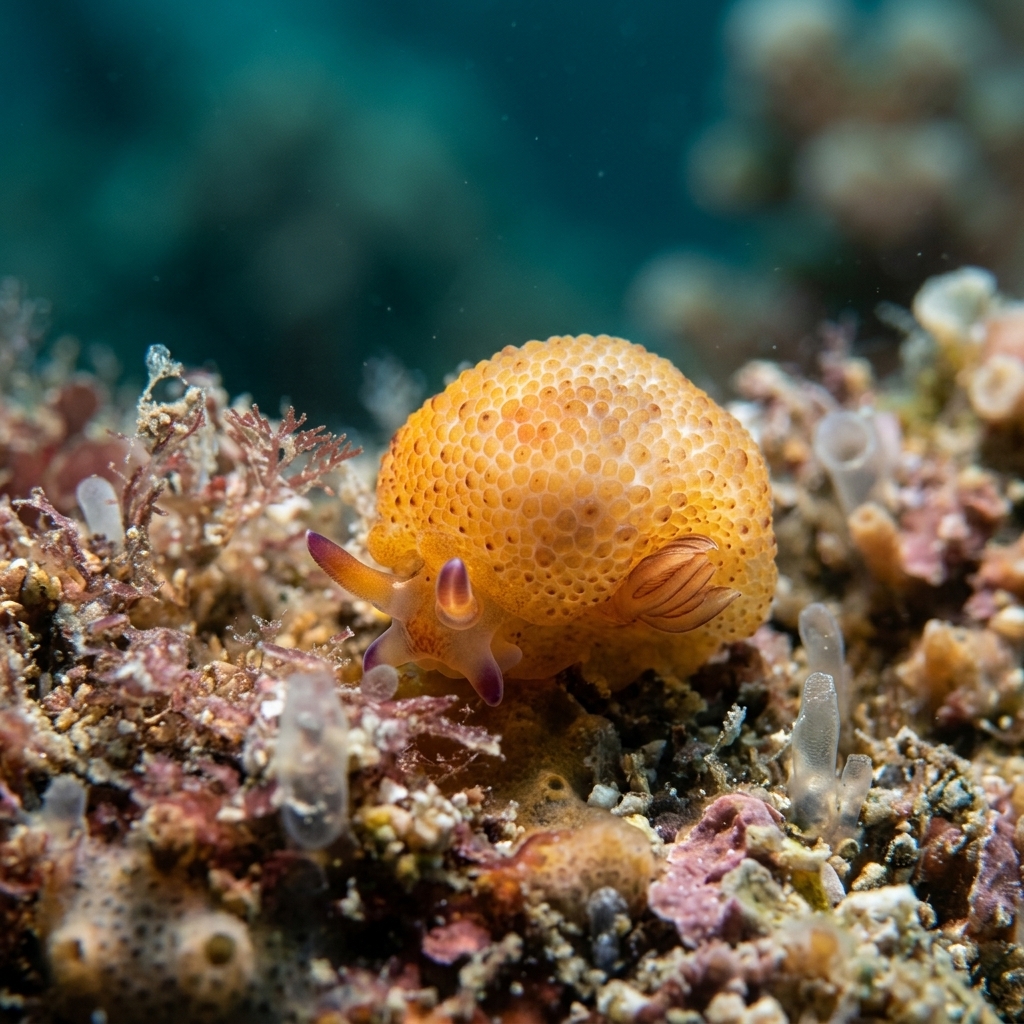
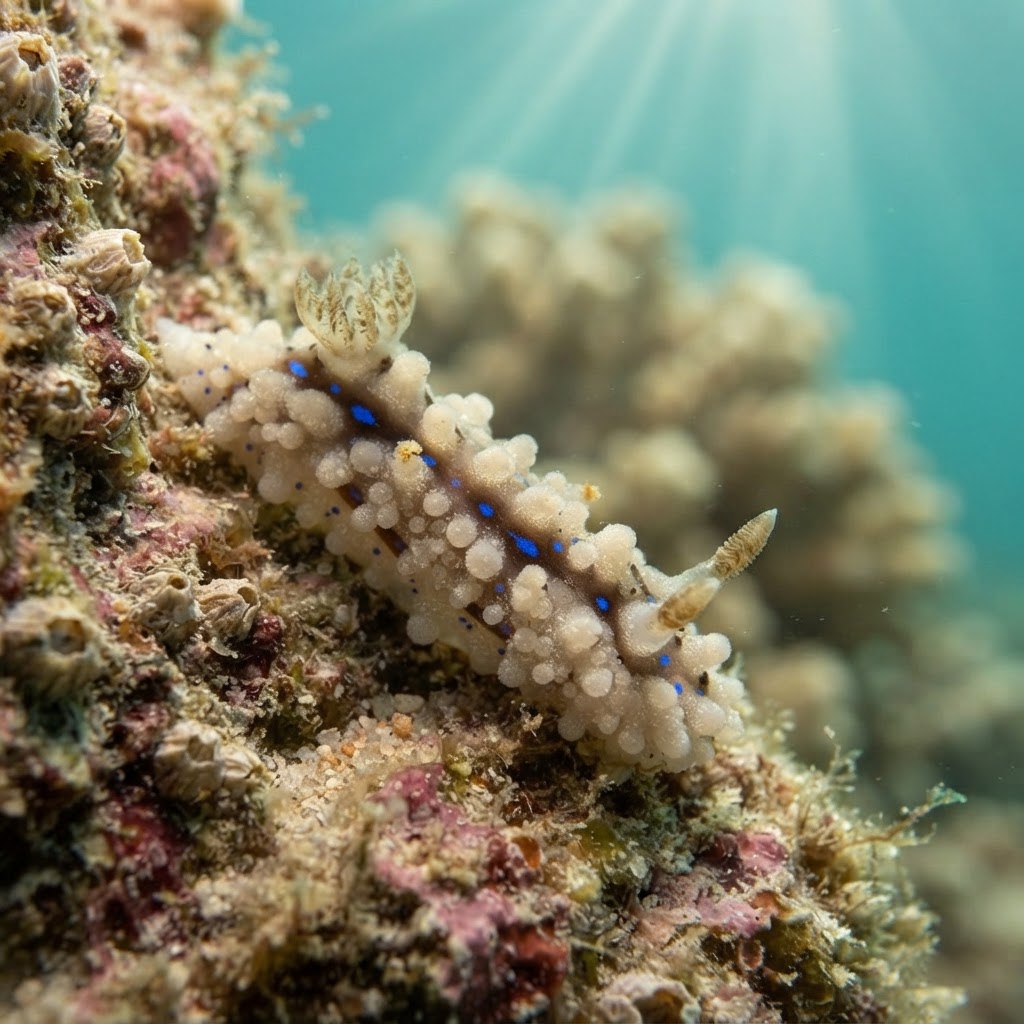
A tiny nudibranch, rarely more than a centimetre or two long, with a bumpy, warty-looking back (tuberculate mantle) that gives it a rough, coral-like texture rather than a smooth gloss. Base colour runs white to cream, often with yellow-tipped tubercles scattered across the mantle, which is the main thing to key on against the smooth-backed dorids sharing the same rock. It moves slowly and stays low, so you generally need to be looking closely at encrusting sponge and bryozoan patches to notice it at all.
Divers find it parked on encrusting sponges and bryozoan-covered rock, moving at the unhurried pace typical of small dorid nudibranchs while grazing. It shows no reaction to divers beyond staying put, since it has no eyes for spotting you and nothing to flee with anyway. Look for it during slow, close-focus macro passes over rocky walls and boulder fields rather than open water swims.
Like other Aegiridae, it almost certainly grazes on sponges, using its rasping feeding structure (radula) to feed on the encrusting species it sits on, which is also its main camouflage.
Sightings don't show a clear season, and the observed water temperature range of 15.2 to 21.2 C spans much of the Mediterranean diving calendar, so it's best treated as a year-round find rather than tied to a particular month.
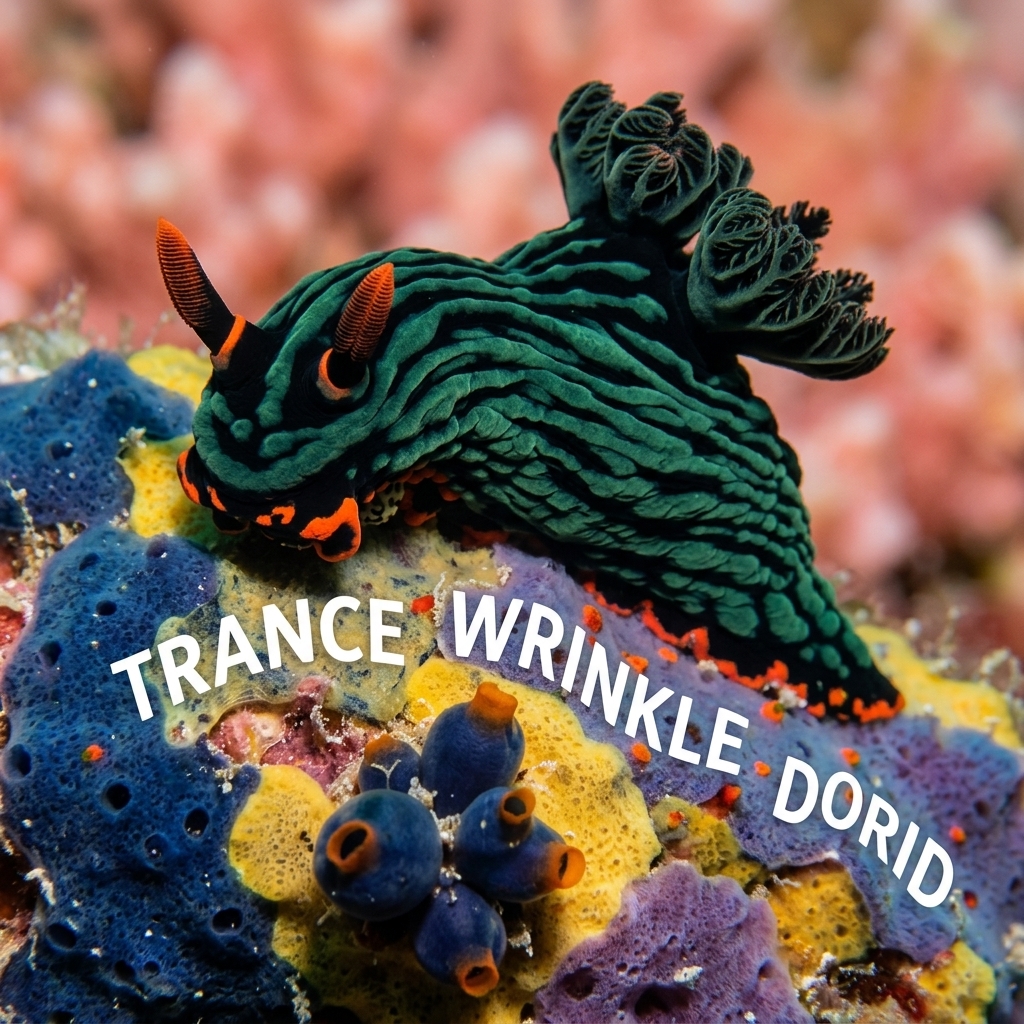
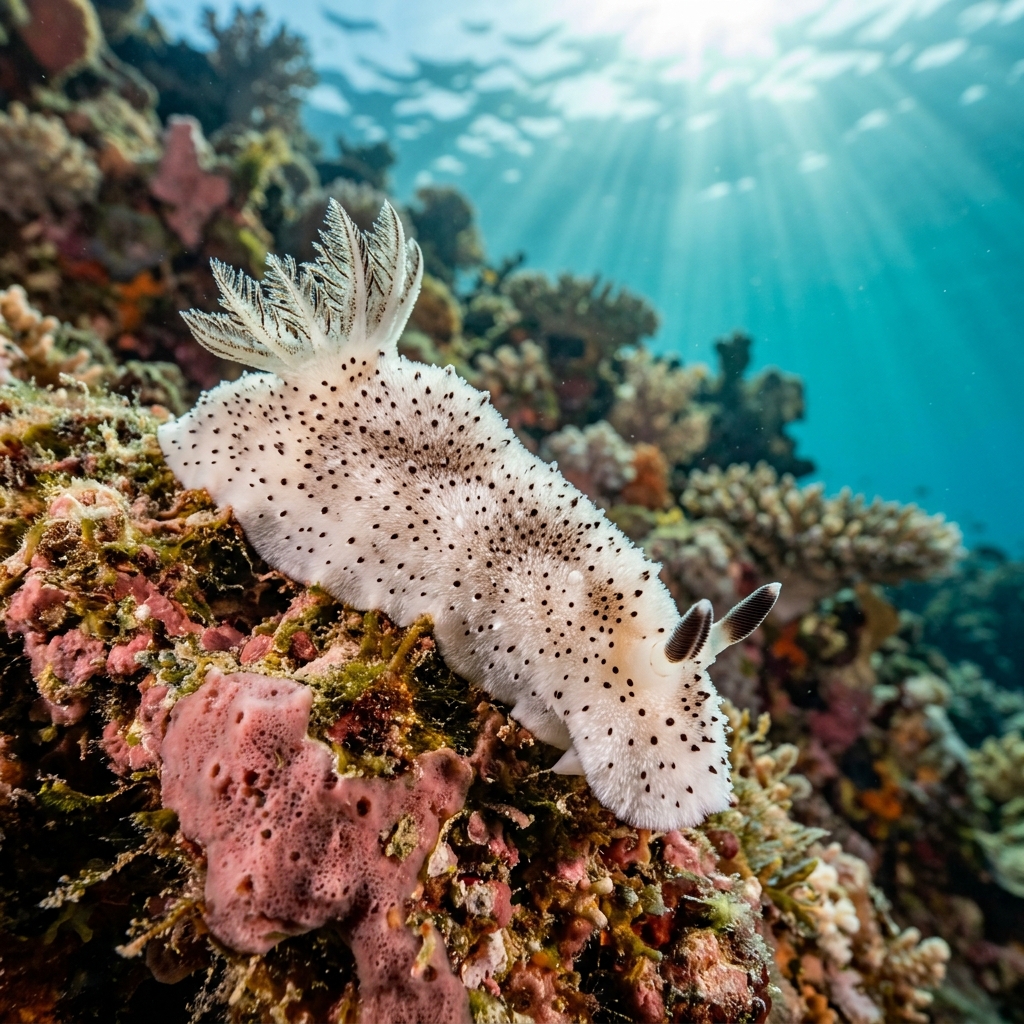
Reef neighbours a diver could mistake it for. Use the identification notes above to tell them apart.
Most reliably found on Mediterranean rock and sponge habitat, with the Balearic Islands in Spain standing out as the strongest area for sightings. The French Riviera and Provence coast in France is the other real pocket where divers log it, making this largely a western Mediterranean species from what's been recorded.
Mapping where Aegires Leuckartii is logged…
It's most consistently reported from the Balearic Islands in Spain, with a smaller but real presence along the French Riviera and Provence coast in France.
There's no detected season in the sighting data, and it's been logged across a wide temperature range of roughly 15 to 21 C, so any time of year on a Mediterranean rock dive is fair game.
Look for a very small white to cream nudibranch with a warty, tubercle-covered back, often with yellow tips on those bumps, sitting still on sponge-covered rock rather than swimming or crawling fast.
Exact size data isn't confirmed, but like most Aegiridae it's a small nudibranch, typically only a centimetre or two long, so you need to look closely to spot one on the reef.
No. It has no means of harming divers and simply sits on the rock or sponge it's feeding on, easily overlooked unless you're doing a slow macro-focused dive.
Site and sighting data is aggregated from diver logs, iNaturalist and GBIF. For taxonomy and conservation status:
Blue Dragon
3,163 sites