Halichoeres cosmetus
Small colourful wrasse logged most often around Saint-Paul and Saint-Leu, Reunion, in warm 25-29C reef water year-round.
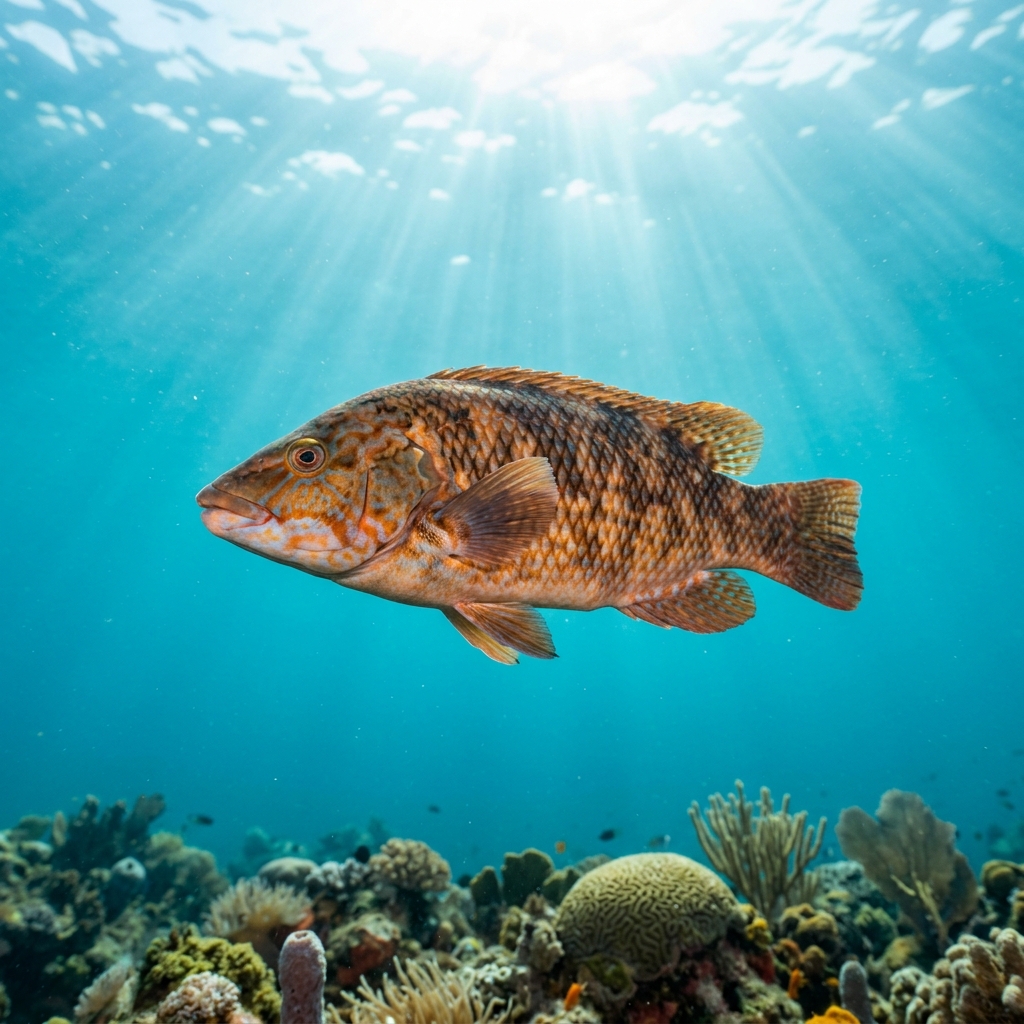
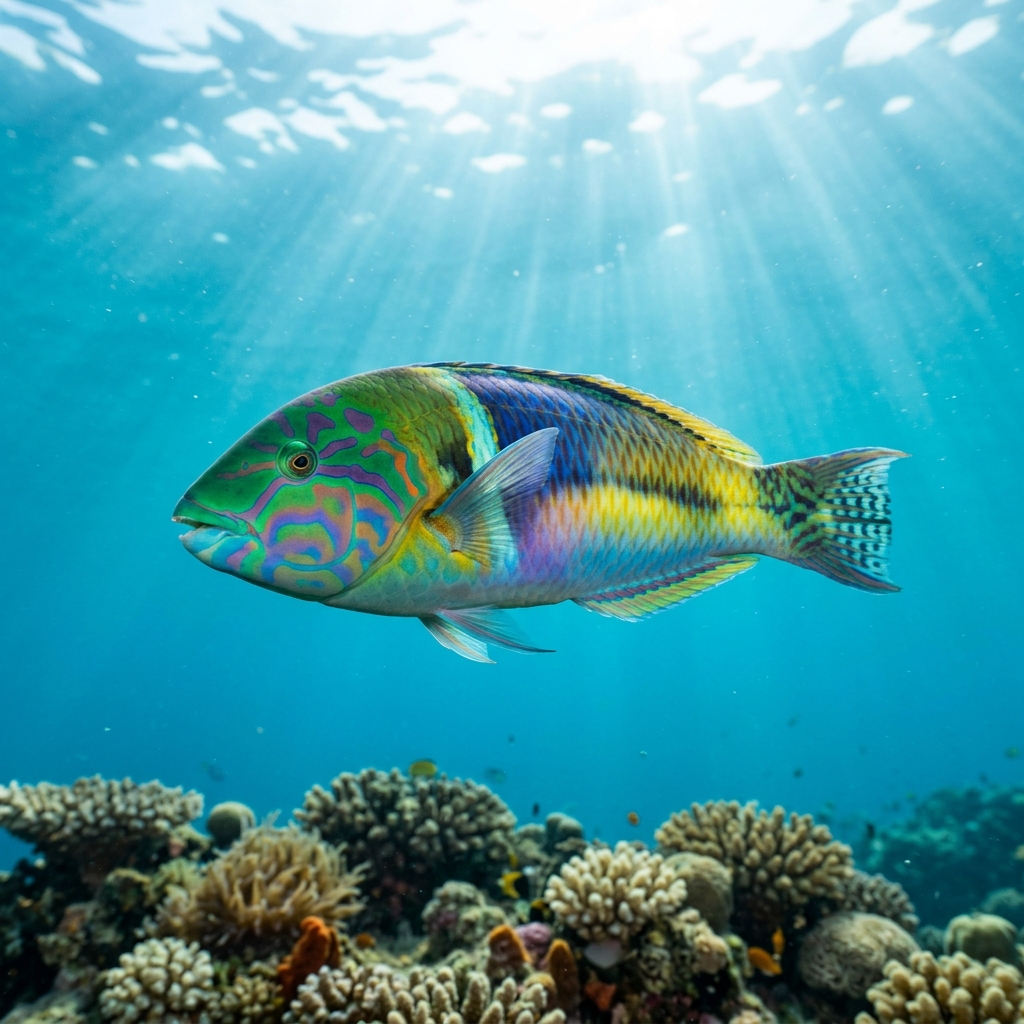
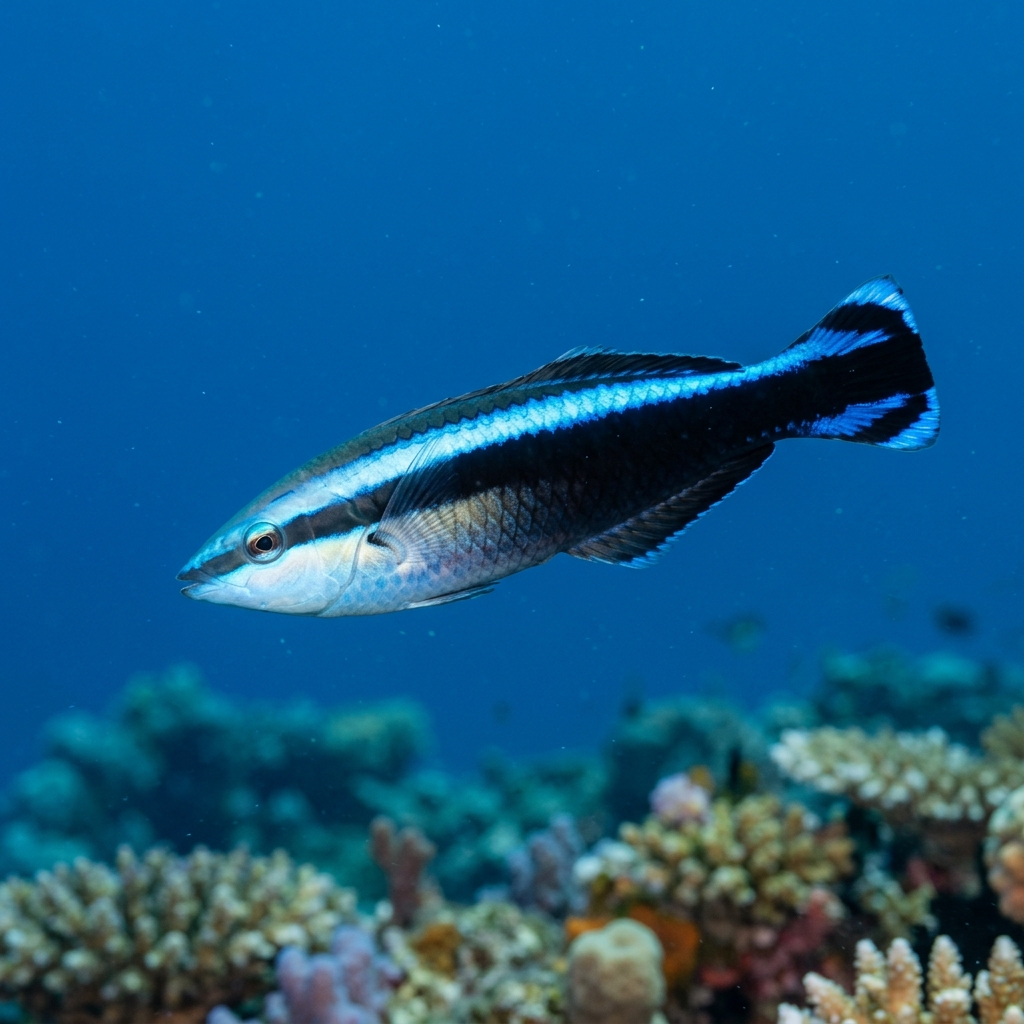
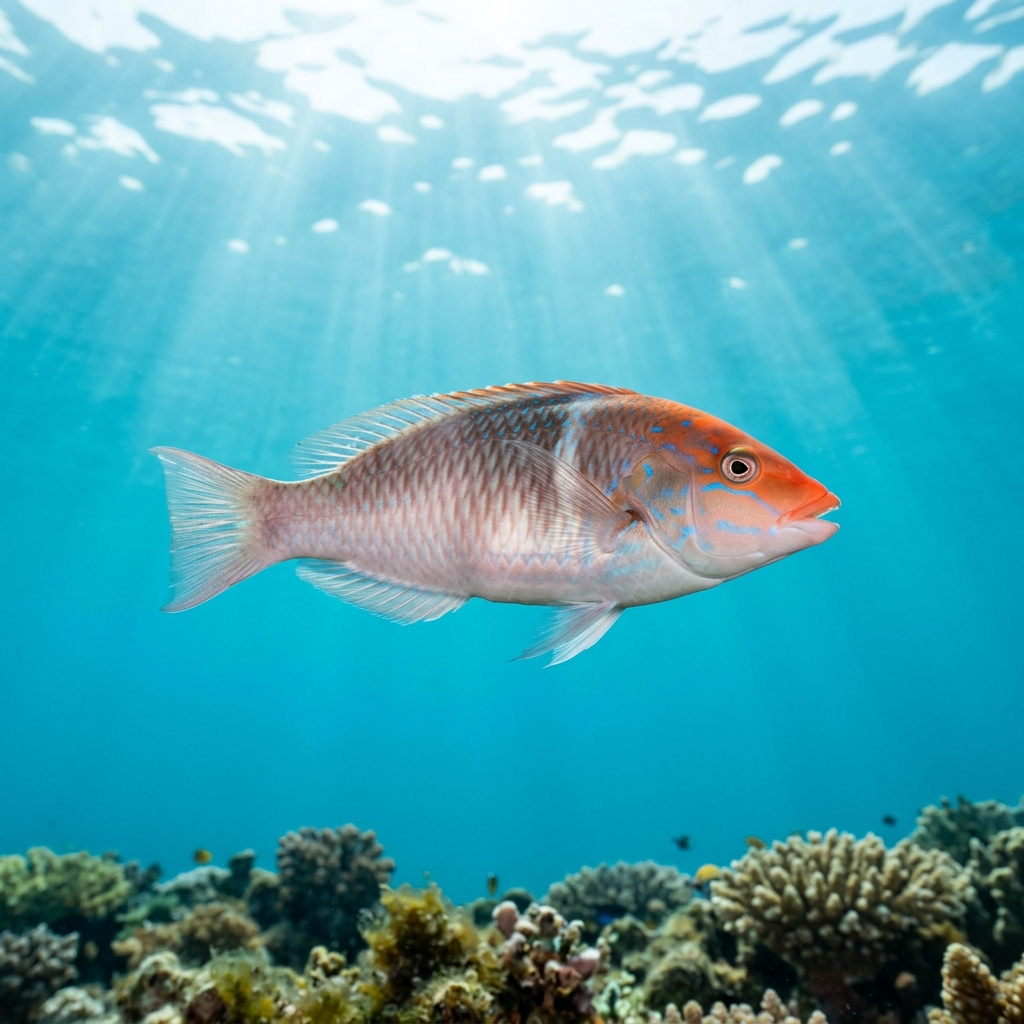
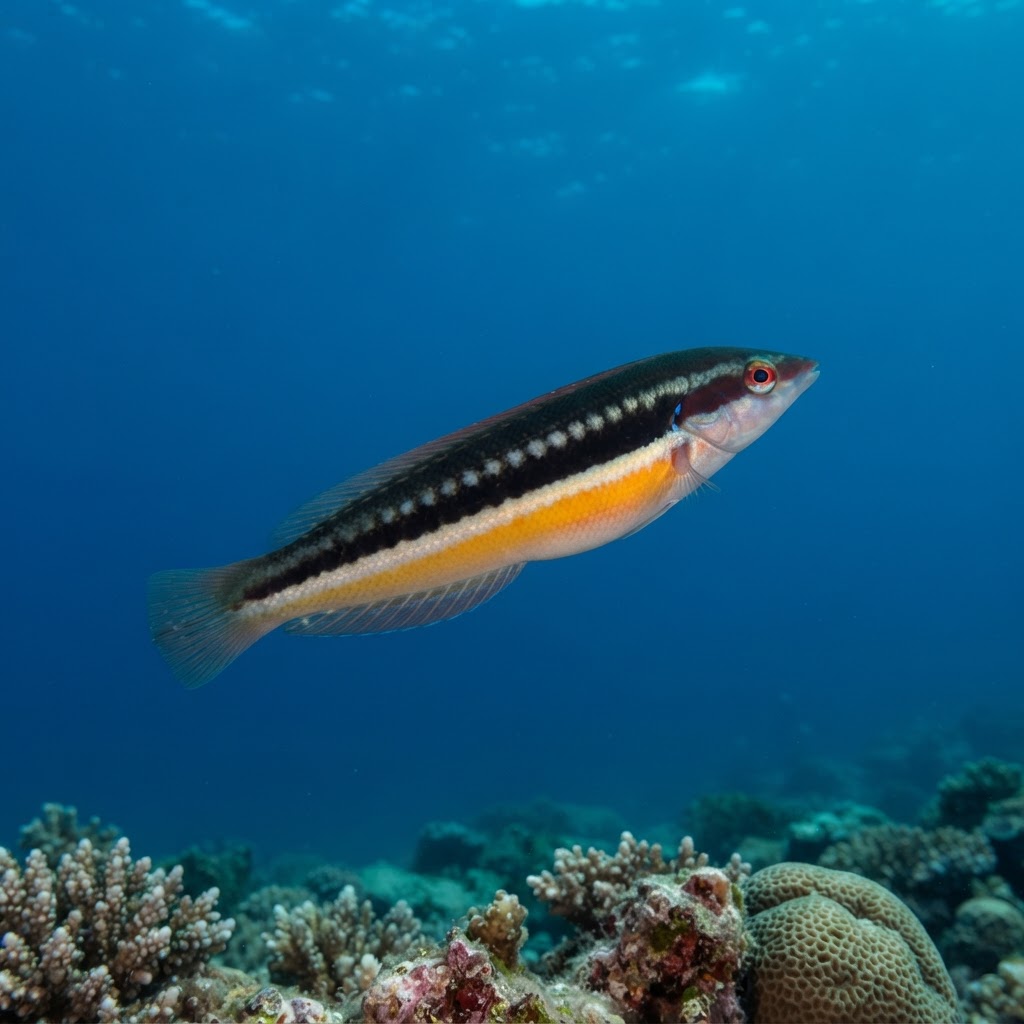
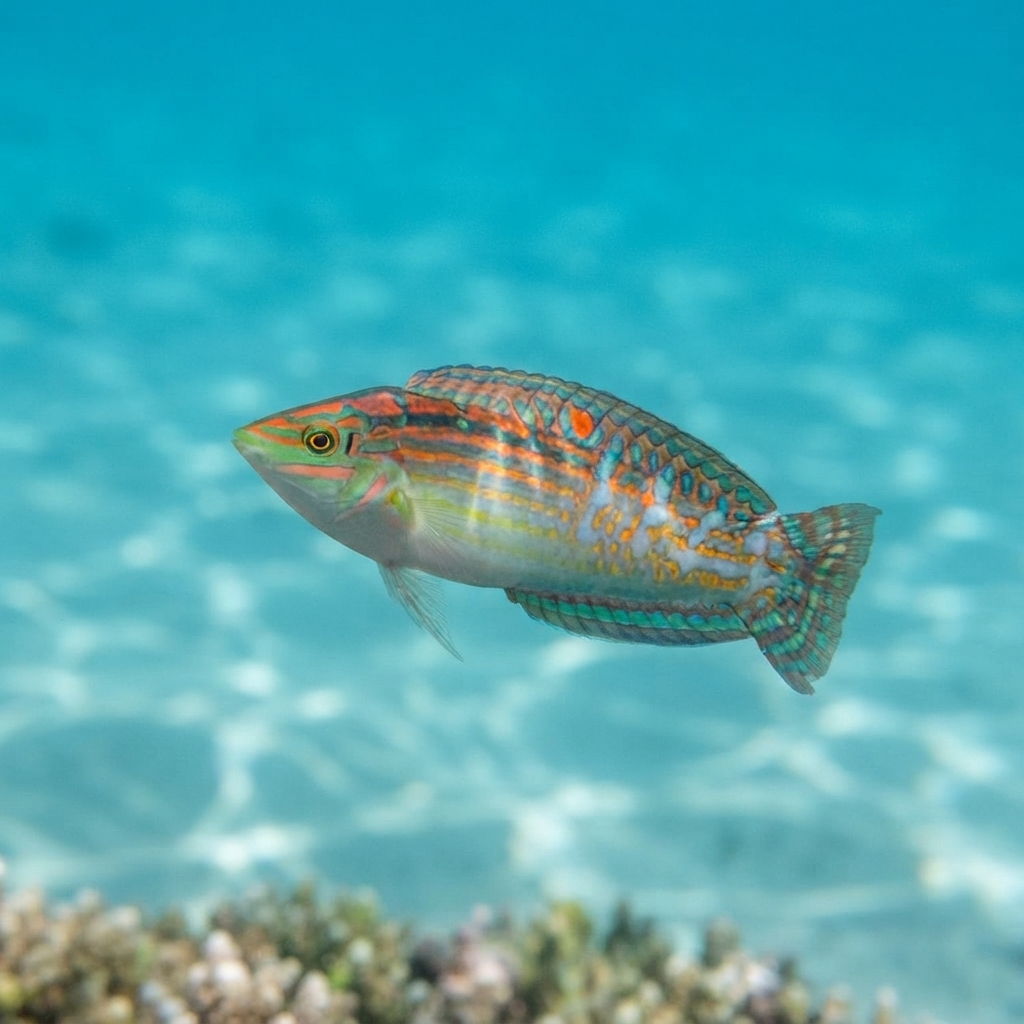
A small, slender wrasse topping out around 9 cm, built like a torpedo with the constant tail-flicking swim typical of the genus. Look for a greenish to yellow-green body with pink to reddish streaking around the head and a dark spot toward the rear of the dorsal fin. At this size it is easy to overlook among reef rubble and sand patches, so slow down and scan close to the substrate rather than out in open water.
Divers typically find it picking around sand patches, rubble, and the base of coral heads at uncommon to rare frequency, meaning it takes a bit of patient searching rather than showing up on every dive. It is not a fish that follows divers or reacts much to their presence, going about its business low on the reef, darting between small refuges as it forages.
Like many small wrasses in Halichoeres, it buries itself in sand at night and when startled, a defensive trick that also makes it vanish quickly if you get too close during the day.
No clear seasonal pattern shows up in the sighting data, and the 25.1 to 29.3C temperature niche it favours holds steady on these reefs most of the year, so it is a reasonable year-round target rather than a seasonal special.
Most reliably found around Reunion, especially the Saint-Paul and Saint-Leu regions, which between them account for the bulk of logged sightings. Mauritius is the other strong option, particularly around Trou aux Biches, with occasional records as far as Pemba Island in Tanzania.
Mapping where Adorned Wrasse is logged…
Reunion is the strongest bet, with sightings concentrated around Saint-Paul and Saint-Leu. Mauritius, especially Trou aux Biches, is also a solid option, with a scattering of records from Tanzania's Pemba Island.
There is no strong seasonal signal in the data, and its preferred water temperature of roughly 25 to 29C is present on these reefs most of the year, so any season works about equally well.
Look for a small, slender wrasse around 9 cm with a greenish body, pinkish head markings, and a dark mark near the back of the dorsal fin. It stays low over sand and rubble rather than swimming in open water.
They are a small species, typically reaching around 9 cm in length, which is one reason they are easy to miss on a reef unless you are looking closely.
No, they pose no danger to divers. They are small, non-aggressive fish that simply forage over the reef and keep their distance.
Like other Halichoeres wrasses, it can dive straight into soft sand to hide from predators or settle in for the night, disappearing almost instantly if it feels threatened.
Site and sighting data is aggregated from diver logs, iNaturalist and GBIF. For taxonomy and conservation status:
Bird Wrasses
3,632 sites