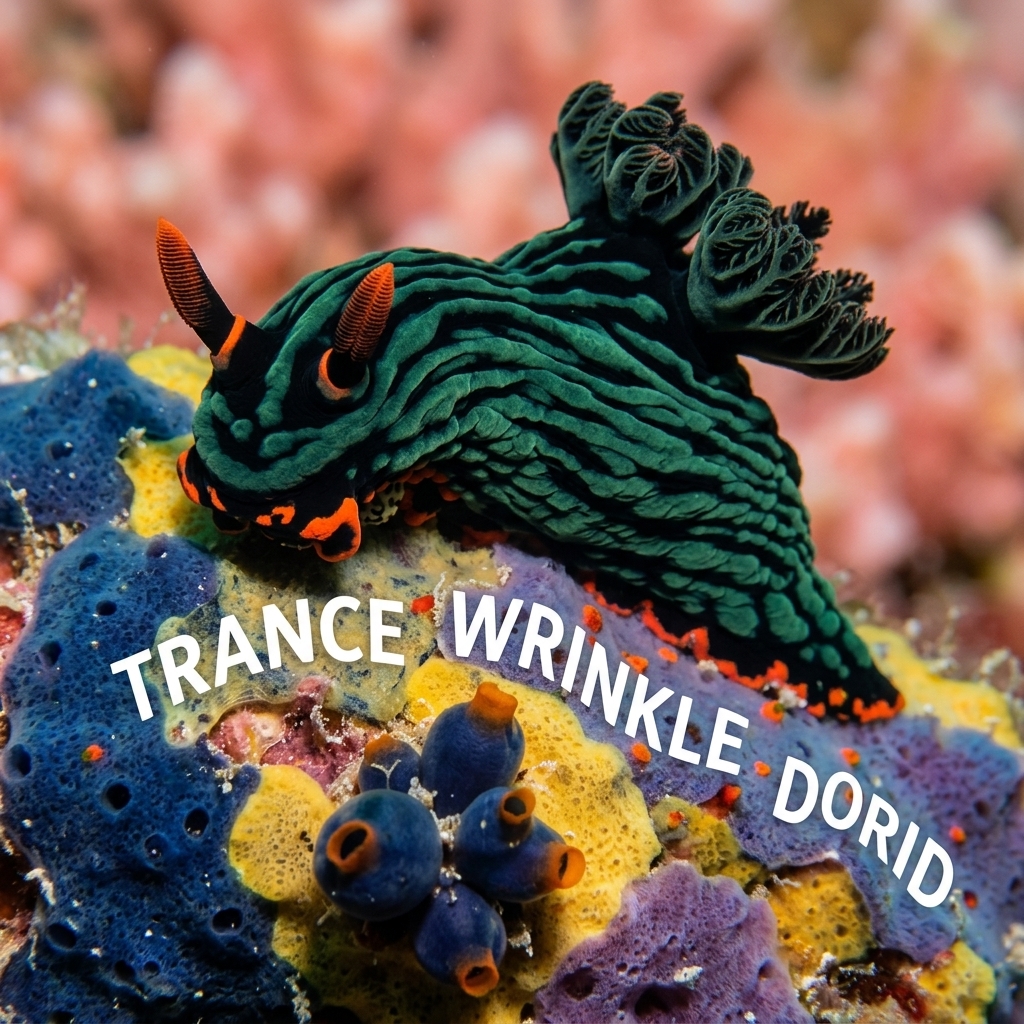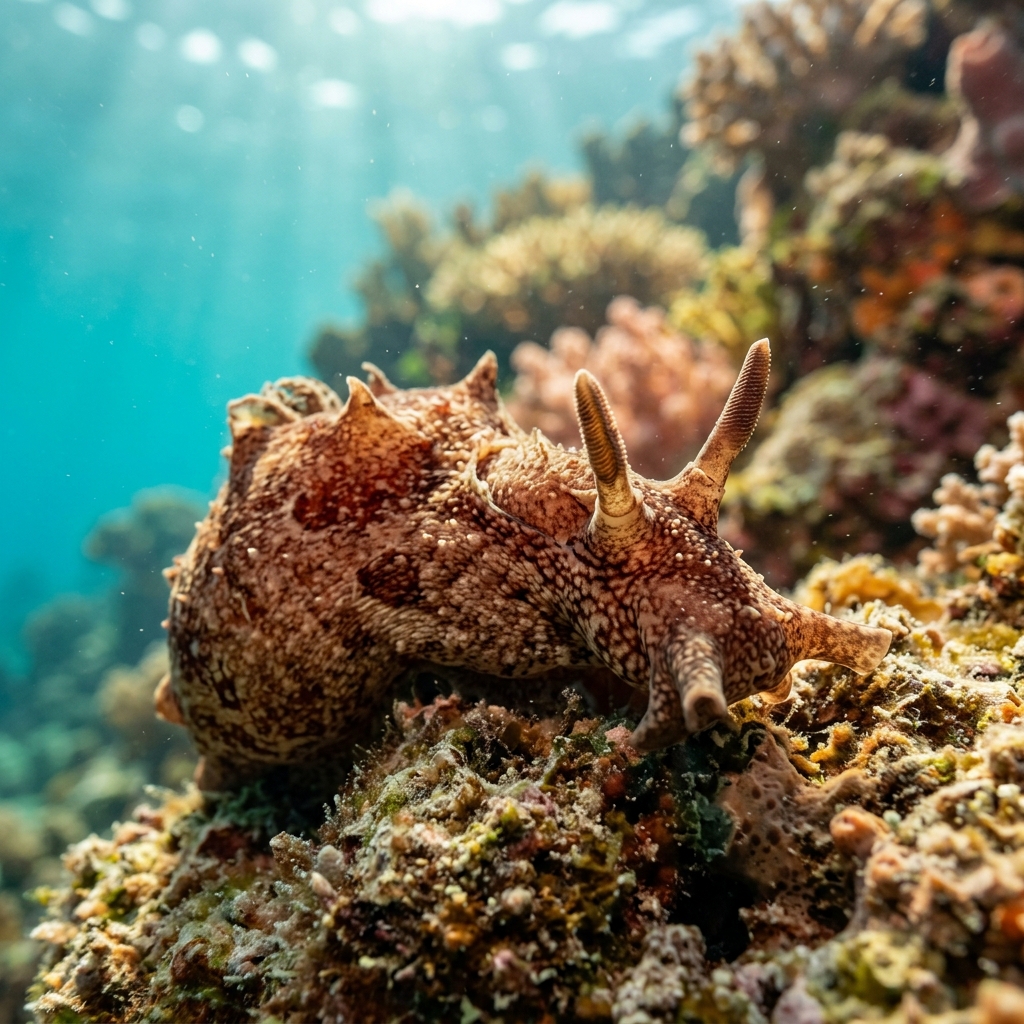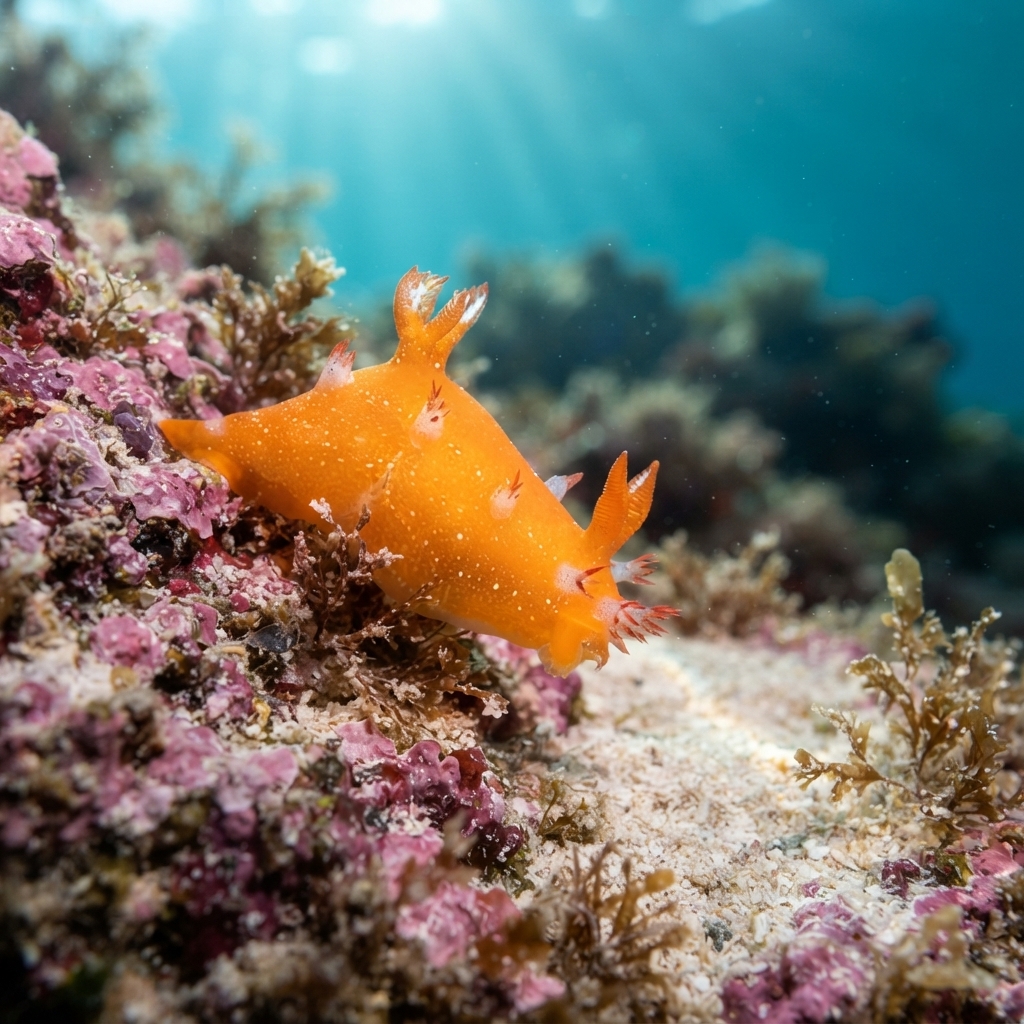
Kaloplocamus acutus
Small, spiky nudibranch most reliably logged around Sai Kung, Hong Kong, in warm water between 20 and 29 C. Here's how to find one.
Small, slender-bodied nudibranch with a translucent to pale body studded with raised bumps (tubercles) tipped in orange or yellow, giving it a spiky, textured outline rather than a smooth one. Look closely along the back and sides for the paired rows of these coloured points, plus a pair of rhinophores (sensory tentacles) that often carry the same orange tint. It sits low and slow on rock and rubble, small enough that most divers find it only when actively hunting the substrate rather than spotting it in open view.
Divers find it moving slowly over rock and rubble surfaces, grazing in the way most dorid nudibranchs do, unbothered by torch light or close observation. It's not a species that reacts to divers at all, being blind and effectively immobile as an escape strategy, so patience and a slow scan of the substrate matter more than approach technique. Most logs describe it as an uncommon find even at known sites, so it rewards divers who take time on macro-focused dives rather than cruising past.
Like other members of the Polyceridae family, its bright tubercle tips likely signal chemical defences to potential predators rather than serving any camouflage purpose, a classic nudibranch trade-off of being visible but unpalatable.
Sightings show no detectable seasonal pattern, and with a comfortable range of 20 to 29.4 C this species appears to be present across the year rather than tied to a particular season. Treat it as a year-round target at the sites where it's known, rather than planning a trip around a specific month.
Reef neighbours a diver could mistake it for. Use the identification notes above to tell them apart.
Most consistently logged around Sai Kung in Hong Kong, which accounts for the large majority of recorded sightings, with single confirmed records from Xiaoliuqiu in Taiwan and Luzon in the Philippines. Hong Kong is currently the strongest bet for a dedicated search, with the other two sites worth checking if you're already diving those regions.
Mapping where Acute Kaloplocamus is logged…
Sai Kung in Hong Kong is by far the most reliable region, with occasional records from Xiaoliuqiu in Taiwan and Luzon in the Philippines. Most confirmed sightings come from Hong Kong dive sites.
There's no clear seasonal pattern in the sightings, and its temperature range of 20 to 29.4 C spans most of the year at known sites, so it can turn up on any dive.
Look for a small, translucent-bodied nudibranch with rows of tubercles tipped in orange or yellow along its back, moving slowly across rock or rubble. The coloured tubercle tips are the main giveaway against similarly patterned dorids.
Exact size data isn't confirmed for this species, but like most Kaloplocamus nudibranchs it's small, likely in the centimetre range, and easy to miss without a close look at the substrate.
No, this nudibranch poses no risk to divers. It has no means of harming anything larger than the small invertebrates and organisms it feeds on.
Its bright tubercle tips likely warn predators of chemical defences, a common nudibranch strategy of standing out rather than hiding, since it moves too slowly to flee.
Site and sighting data is aggregated from diver logs, iNaturalist and GBIF. For taxonomy and conservation status:
Light-spotted Aegires
3,168 sites