Abramis brama
Divers log bronze bream most often in the Carinthia Lakes and Zeeland. Here's how to spot this deep-bodied freshwater fish and where it shows up reliably.
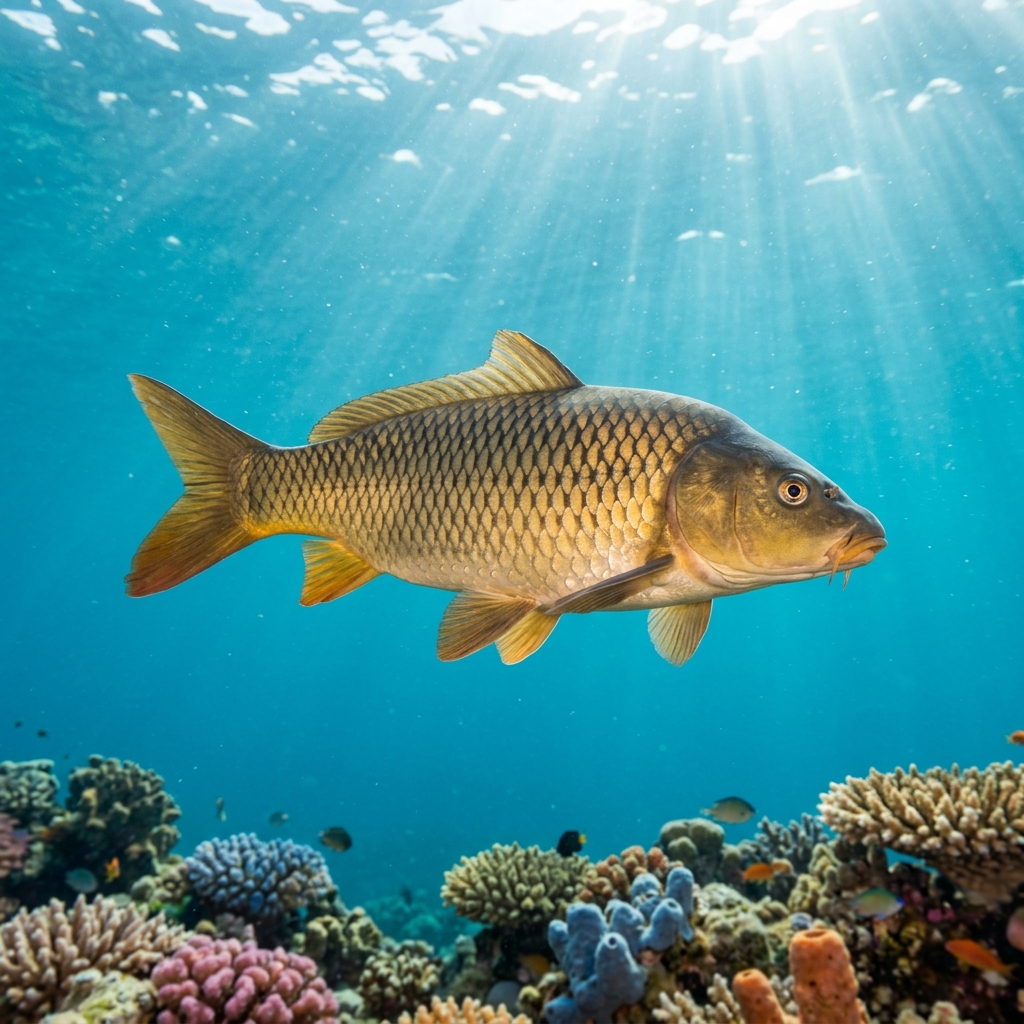
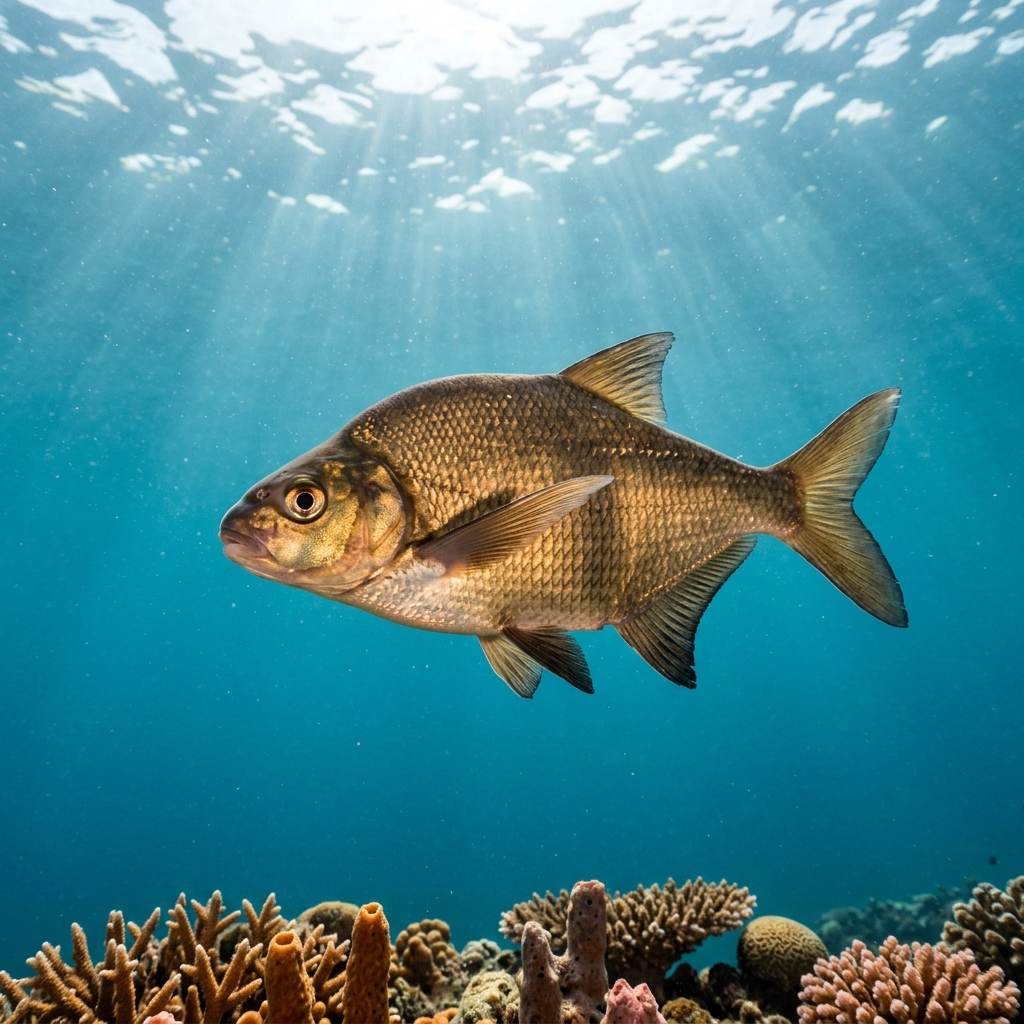
A noticeably deep, laterally compressed body gives this fish an almost disc-like profile that stands out among slender lake residents. Colouration is a dull bronze-silver on the flanks, shading to a pale, almost white belly, with dark-edged scales that give a subtle crosshatched look in clear water. The back is noticeably humped, the head small relative to the body, and the mouth is slightly downturned, pointing to its bottom-feeding lifestyle. In larger specimens that hump becomes quite pronounced, making it one of the more recognisable silhouettes in Central European lakes.
Bronze bream are typically encountered close to the bottom in lakes and slow-moving water, often in small groups rooting through sediment for invertebrates. They tend to be unhurried and relatively unbothered by divers, continuing to feed or drift slowly rather than bolting. Visibility permitting, patient, slow-moving divers have a good chance of a close approach.
Bronze bream can hybridise readily with other cyprinid species (members of the carp family) where their ranges overlap, and hybrid individuals in a dive site can look subtly different from pure-form fish, with slightly different body depth or fin placement.
There is not enough monthly sighting data to point to a particular season, so it should be treated as a year-round possibility. Water temperatures at logged sites range from about 6 to 19 °C, consistent with temperate lakes throughout the year, so any season can produce a sighting.
Most sightings come from the Carinthia Lakes in Austria and the Zeeland region of the Netherlands, where divers log it across a large number of sites. Central Switzerland is also a strong area, with observations spread across lakes in that region. Germany and Luxembourg each contribute a site, but Austria, the Netherlands, and Switzerland are clearly the places to plan a freshwater dive specifically for this species.
Mapping where Bronze Bream is logged…
The best places are the Carinthia Lakes in Austria, the Zeeland region of the Netherlands, and the lakes of Central Switzerland. These three areas account for the vast majority of diver sightings logged so far. Germany and Luxembourg each have at least one confirmed site as well.
There is no clear seasonal peak in the sighting data, so bronze bream appear to be a year-round prospect at their known sites. They are comfortable in cool water down to around 6 °C, so even winter dives in Central European lakes can produce encounters.
Look for a very deep, laterally flattened body with a distinctly humped back, a small downturned mouth, and dull bronze-silver flanks. That disc-like silhouette in open, dark lake water is the quickest give-away; most other fish in the same habitat are noticeably slimmer.
Bronze bream commonly reach 30 to 55 cm in length, with large individuals occasionally exceeding 70 cm. In the still, productive lakes of Austria and Switzerland where they are regularly dived, sizable fish are not unusual.
It is a freshwater species, found in lakes, reservoirs, and slow rivers across Central Europe. All diver sightings in the data come from inland freshwater sites, with no marine records. If you are planning a dive, think lake rather than sea.
Site and sighting data is aggregated from diver logs, iNaturalist and GBIF. For taxonomy and conservation status:
Sun Perch
2,182 sites