Ablabys taenianotus
Spot the Cockatoo Fish in the Philippines and Indonesia. A rare, leaf-mimicking scorpionfish relative found in warm tropical waters around 27-29 °C.
Safety warning
The spines carry venom and snap off easily in the skin. Do not touch it, and never rest a hand or knee on the reef near one; the spines drive in on the lightest contact.
If you're stung
Venomous spinesGeneral first-aid guidance, not a substitute for professional medical care. In an emergency, call your local emergency number.
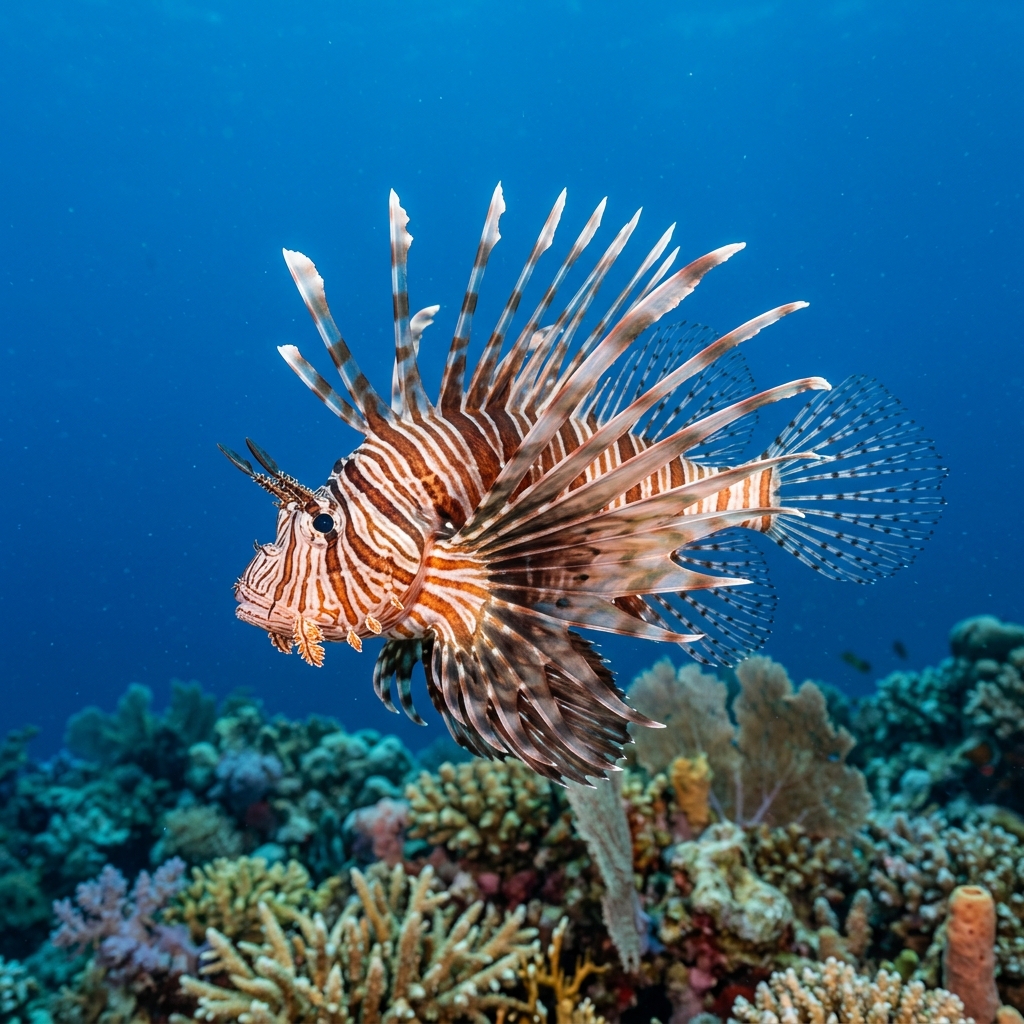
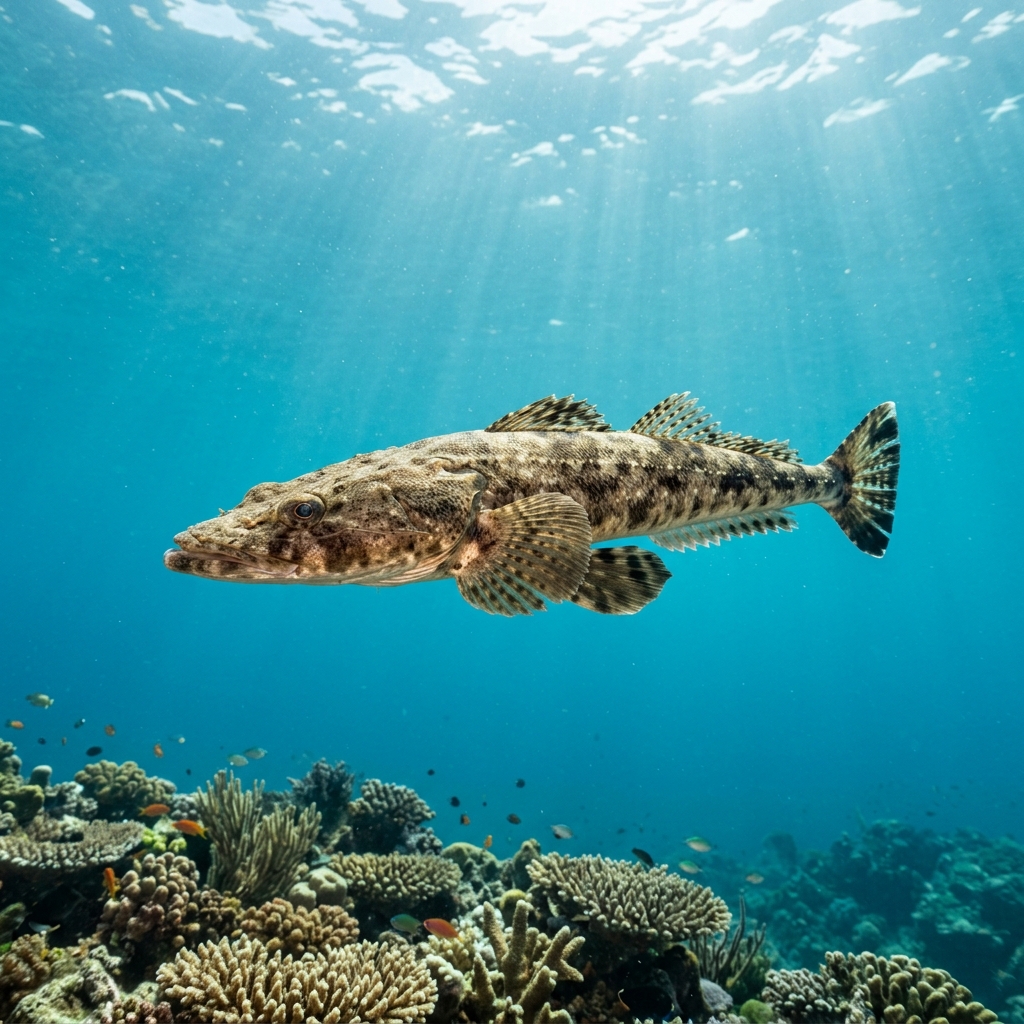
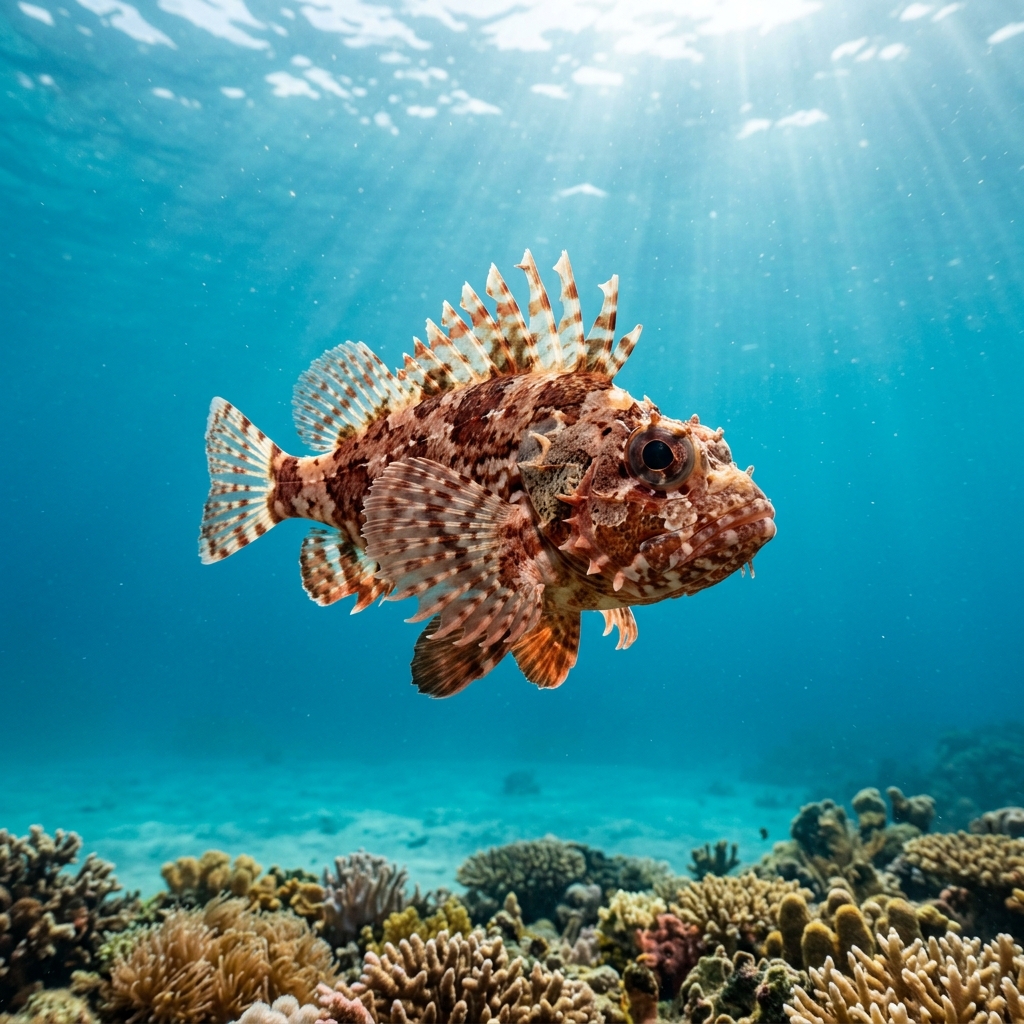
A small, laterally flattened fish that looks remarkably like a dead leaf resting on the seabed. Its most distinctive feature is a tall, sail-like dorsal fin (the fin running along the back) held erect like a cockatoo's crest, which gives the fish its name. Colouration is typically mottled brown, grey, or reddish-brown, often with ragged skin flaps that add to the leaf illusion. Look for the compressed body and the habit of swaying gently side to side, mimicking leaf movement in a current.
When you find one, it will almost certainly be sitting completely still on sand, rubble, or among algae, relying on camouflage rather than flight. It may sway its body slowly from side to side, selling the dead-leaf impression. Approached gently, it tends to hold its position rather than bolt, which is both what makes it findable and why it is so easy to overlook in the first place.
The side-to-side body-rocking behaviour is an active deception strategy, not a random fidget. It mimics the way a dead leaf drifts in a mild current, making the fish functionally invisible to both predators and the small fish it ambushes.
No strong seasonal pattern emerges from the data, so this is treated as a year-round resident. Its observed water temperature range of roughly 27 to 29 °C fits consistently warm tropical reef environments, suggesting it is present whenever those conditions hold.
Sightings are concentrated in the Philippines, particularly across sites in Luzon and the north, which account for the majority of logged records. Indonesia is the next most productive area, with observations spread across sites in Sulawesi. A single site in Northern Taiwan rounds out the confirmed range.
Mapping where Cockatoo Fish is logged…
The Philippines is the most productive destination, with sightings spread across sites in Luzon and the north. Indonesia follows, with records from sites in Sulawesi. A single confirmed site in Northern Taiwan also shows the species at the northern edge of its logged range.
Look for a small, flat, leaf-shaped fish sitting motionless on sand or rubble with a tall, erect dorsal fin raised like a crest. The mottled brown or grey colouration and irregular skin texture make it blend in perfectly with debris. A slow, rhythmic side-to-side sway is the key giveaway when nothing else is moving.
Typical size data is not recorded in diver observations, but the species is a small fish. In the water it reads as roughly palm-sized, which adds to how easy it is to miss against a sandy or rubble bottom.
No, Cockatoo Fish are not considered dangerous to divers. Although they belong to the scorpionfish family Synanceiidae, which includes venomous relatives, the Cockatoo Fish itself poses no recognised threat. Standard practice applies: look, do not touch.
There is no well-defined season based on available sighting data, and the species appears to be a year-round resident in its range. Targeting warm-water tropical sites in the Philippines or Sulawesi during periods of settled, calm conditions will give you the best chance of a careful, slow search paying off.
The rocking motion is a form of active camouflage called mimesis. By swaying like a dead leaf drifting in a gentle current, the fish becomes far harder for both predators and prey to detect. It is one of the more remarkable behavioural adaptations among tropical reef fish.
Site and sighting data is aggregated from diver logs, iNaturalist and GBIF. For taxonomy and conservation status:
Madeira Rockfish
2,773 sites