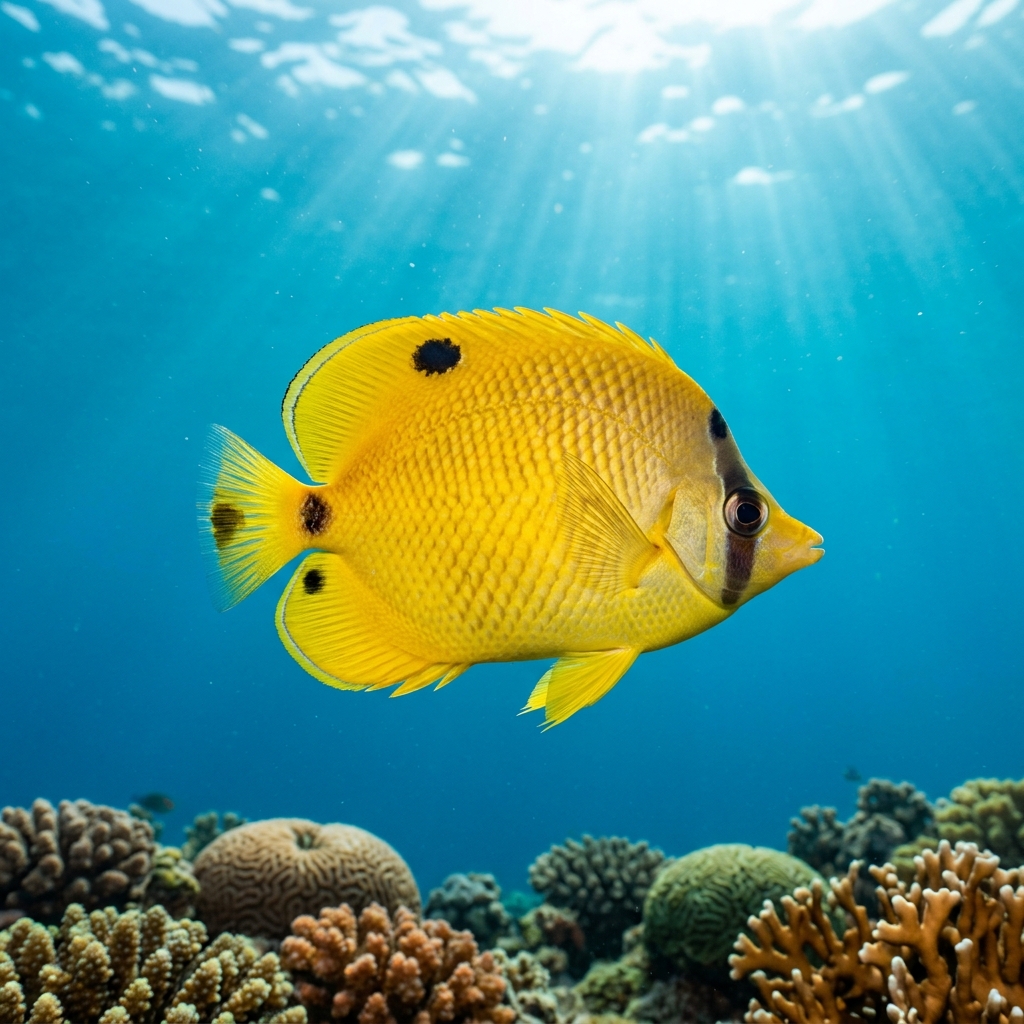
Chaetodon interruptus
Yellow-bodied reef regular of the Maldives' Northern Atolls, in 23-29°C water year-round, usually seen alone or in pairs.
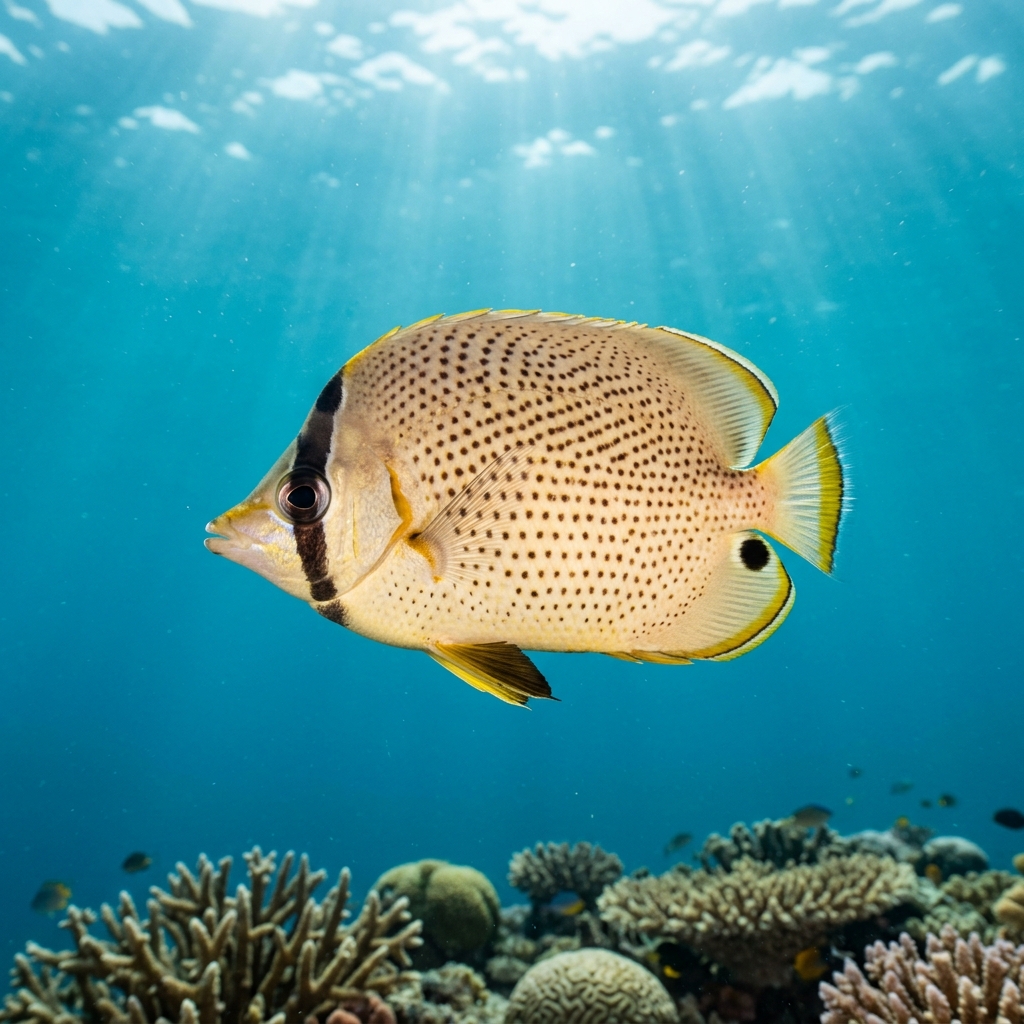
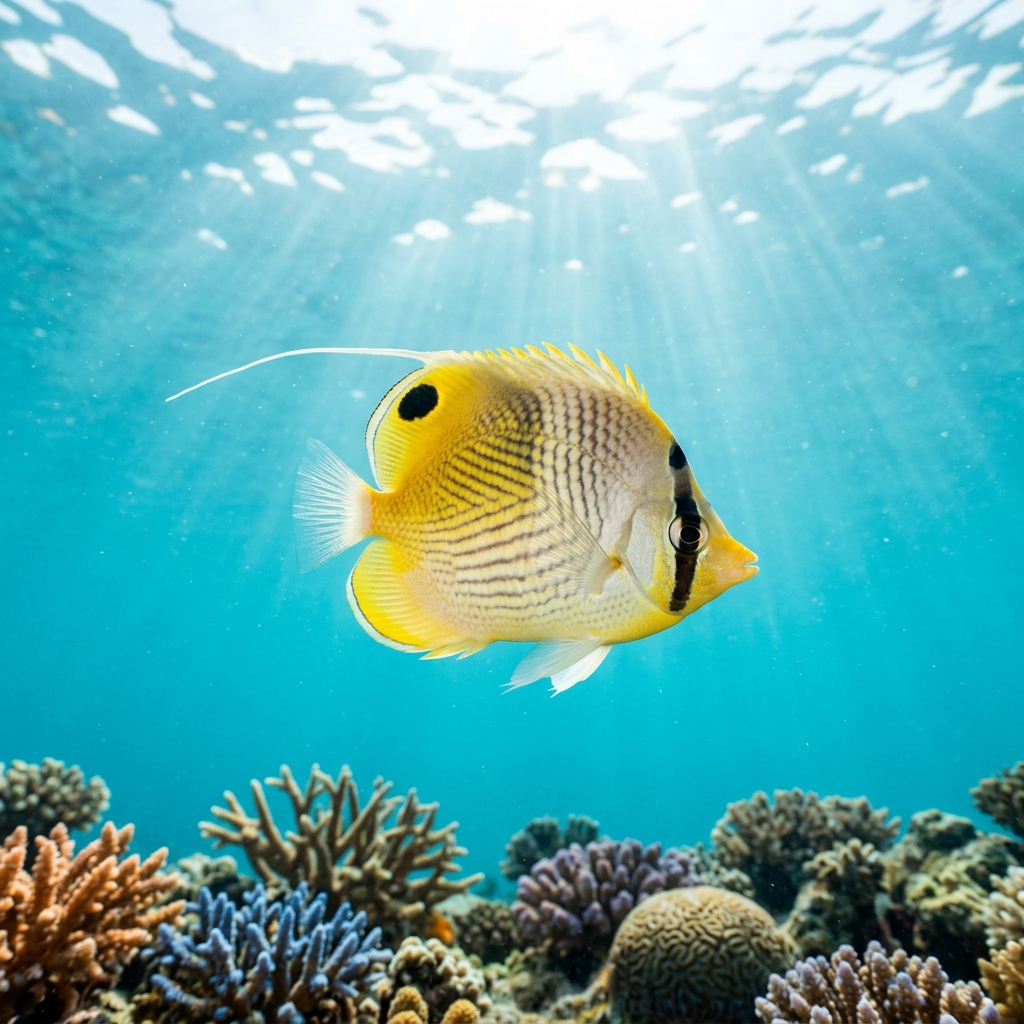
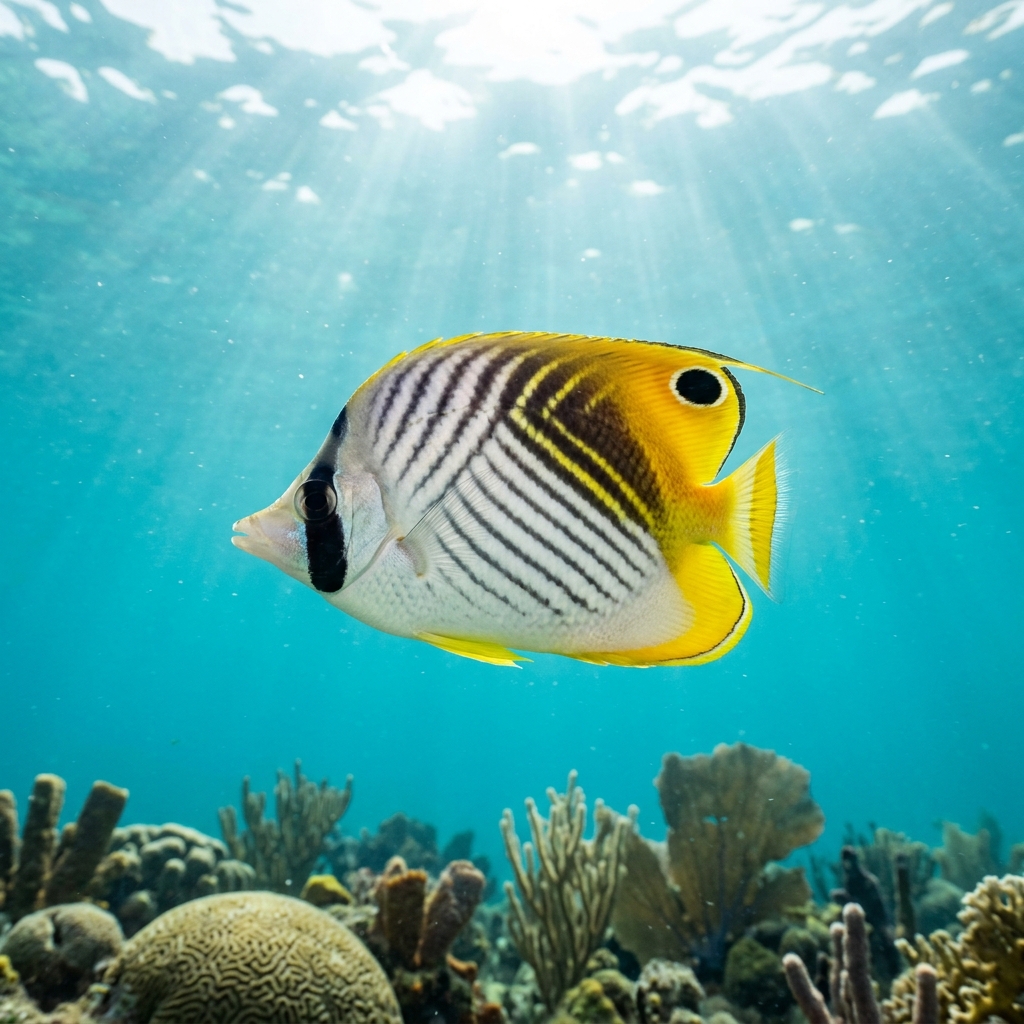
A compact, disc-shaped butterflyfish about 14 cm long, washed in pale to golden yellow with a dark diagonal band running back from behind the eye that breaks and interrupts across the body, giving the species its name. A vertical black bar cuts through the eye, and the tail is edged in a thin dark line. Body shape is the classic laterally flattened, coin-like chaetodontid profile, easy to pick out against reef structure even at a distance.
Usually spotted cruising alone or in loose pairs over reef flats and slopes, picking at coral polyps and algae rather than schooling in numbers. It keeps a fairly steady pace along the reef face and doesn't dart for cover the way some smaller reef fish do, letting divers get a reasonably close look before it moves off. Sightings span the full 10 to 40 m depth range, so it's not a species you need to chase into deep water for.
Like most butterflyfish, it likely pairs up for extended periods and may defend a patch of reef, a trait divers notice when the same two fish keep reappearing on repeat dives at a site.
No clear seasonal pattern shows up in the sightings, and its comfort range of roughly 23 to 29°C spans most of the tropical Indian Ocean's calendar, so it's a fair bet on any month you dive its range.
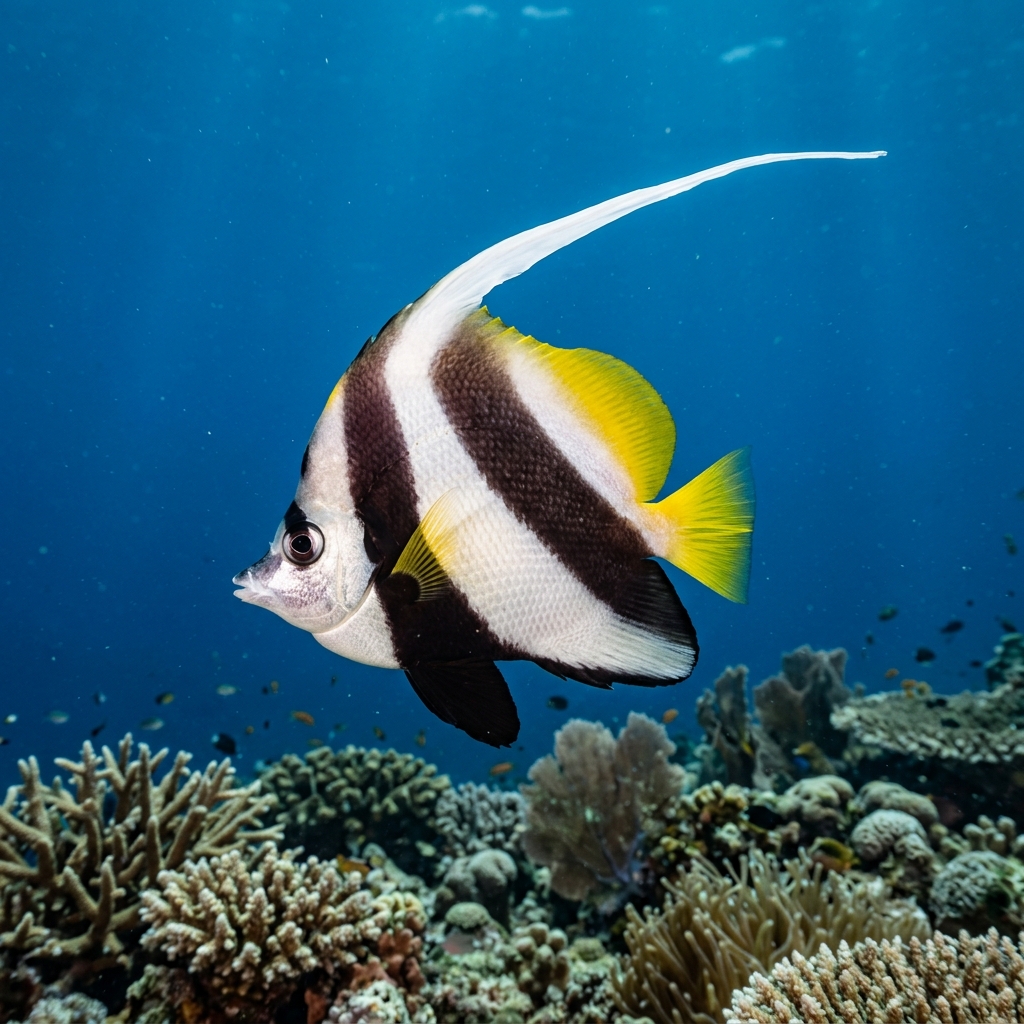
Reef neighbours a diver could mistake it for. Use the identification notes above to tell them apart.
Most reliably logged in the Maldives, especially the Northern, Southern and Central Atolls, where it turns up on a large share of reef dives. Beyond the Maldives, it holds solid populations along South Africa's KwaZulu-Natal coast and around Mauritius, Mozambique's Inhambane region, Reunion (Saint-Leu) and the Seychelles' Outer Islands, with a foothold in Madagascar and Kenya too.
Mapping where Yellow Teardrop Butterflyfish is logged…
The Maldives is the strongest bet, particularly the Northern, Southern and Central Atolls, where it's logged on the majority of reef dives. It's also a regular sighting in South Africa's KwaZulu-Natal, Mauritius, Mozambique and Reunion.
Sightings don't show a strong season, and the species tolerates a wide 23 to 29°C range, so it's present on reefs across its range year-round.
Look for a yellow, disc-shaped body around 14 cm with a broken diagonal dark band across the flank and a black vertical bar through the eye. The interrupted stripe pattern is the key giveaway that separates it from similar chaetodontids.
They reach around 14 cm in length, a typical size for reef-associated butterflyfish, making them easy to photograph without a wide-angle lens.
No. They're a harmless reef fish with no venomous spines or aggressive behaviour toward divers, and they're comfortable being observed at close range.
Site and sighting data is aggregated from diver logs, iNaturalist and GBIF. For taxonomy and conservation status: