Cadlina luteomarginata
Pale, warty and rimmed in gold: a cold-water nudibranch most often logged in British Columbia and California, year-round below 15C.
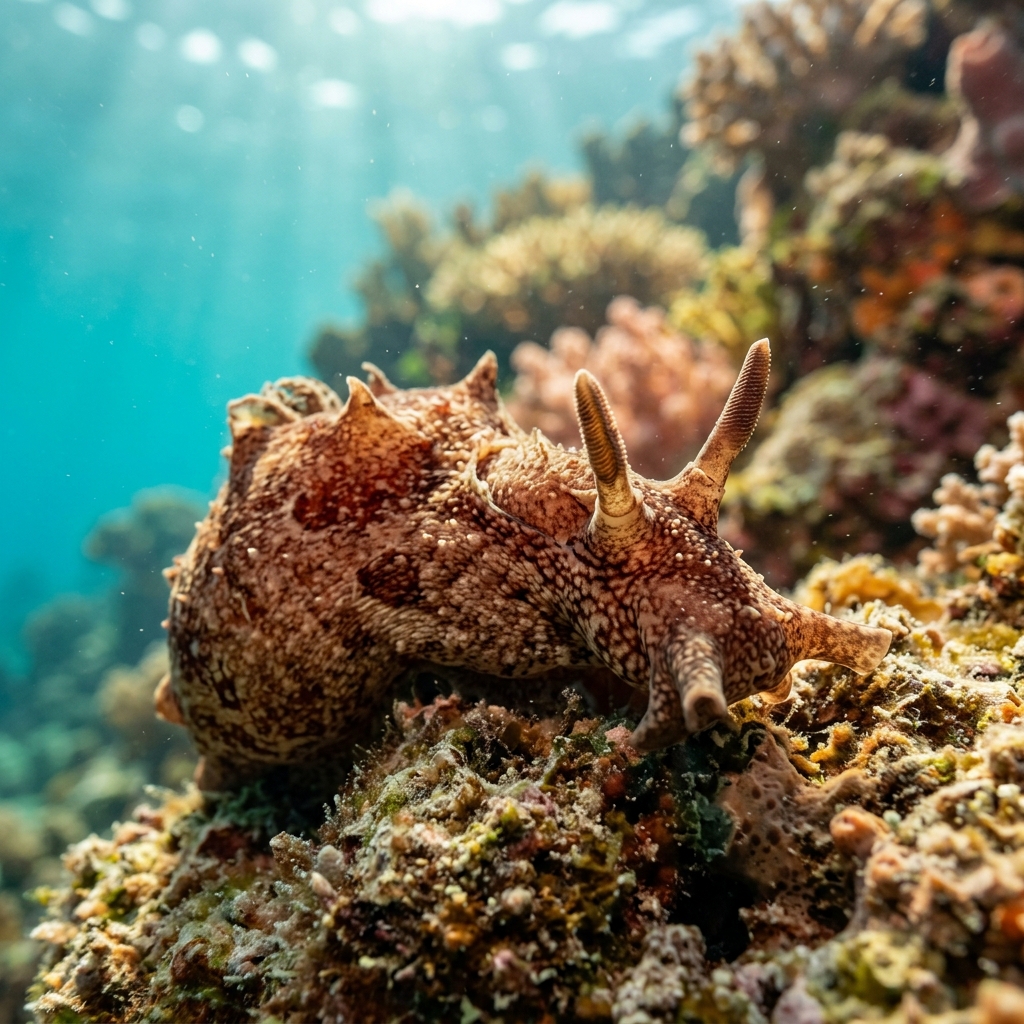
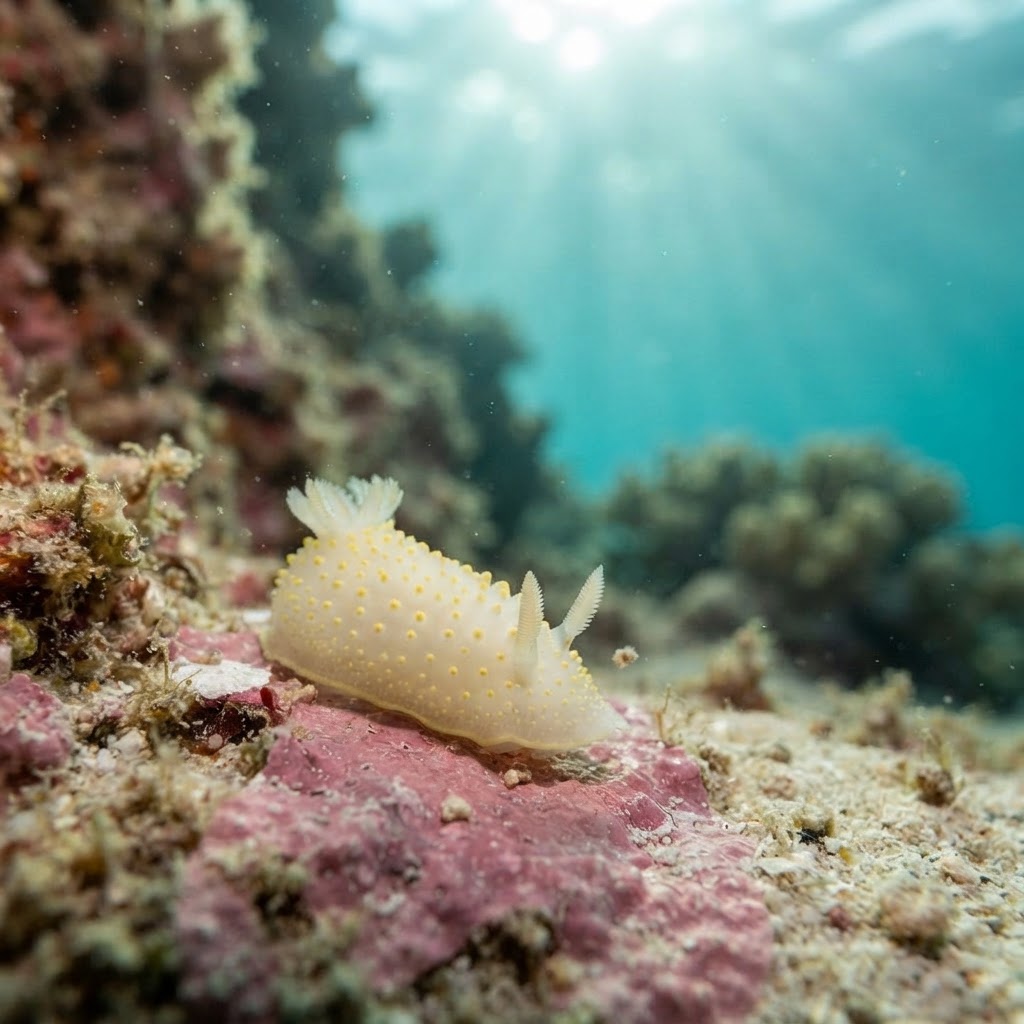
Look for a small, oval-bodied nudibranch about 3 cm long, pale white to cream, with a scattering of dark spots across a bumpy (tuberculate) back. The giveaway is the thin, bright yellow line tracing the entire edge of the mantle, which stands out sharply against the pale body even in low light. Two rhinophores (sensory tentacles) sit forward on the back, and a small gill cluster shows near the rear.
Found slowly grazing over rock and boulder reef, usually tucked into cracks or moving across encrusted surfaces where its sponge prey grows. It pays no attention to divers and makes no attempt to flee, so a slow approach and a careful eye on the substrate is all it takes to spot one. Most logs come from daytime dives on temperate reef, rather than night dives.
Like other dorid nudibranchs, it feeds on sponges and is thought to store or modify chemical compounds from that diet as a defence, which is likely why it moves across open rock in daylight without much cover.
Sightings run year-round with no detected seasonal spike, which fits its narrow, cold water-temperature niche of roughly 8.7 to 15.1C found on most Pacific Northwest and Californian dive sites through the year.
This is a cold-water Pacific species, most reliably found in British Columbia, Canada, and along the California coast in the United States, with occasional sightings further north in Alaska and the Pacific Northwest. Divers log it on rocky reefs and boulder slopes rather than tropical coral, and sightings are consistently described as uncommon to rare rather than a sure thing on any given dive.
Mapping where Yellow-edged Cadlina is logged…
It's most consistently reported in British Columbia, Canada, and along the California coast, with scattered records in Alaska and the wider Pacific Northwest. Look on rocky reef and boulder terrain rather than tropical coral sites.
There's no clear seasonal pattern in the data, so it's considered a year-round sighting wherever cold Pacific water sits between about 9 and 15C.
Check for a pale, warty-backed nudibranch around 3 cm long with dark spots and a thin, bright yellow line running around the entire edge of the mantle. That yellow border is the fastest way to confirm the ID underwater.
They typically reach about 3 cm in length, making them an easy animal to swim past if you're not scanning the rock closely.
No. They have no sting or bite of concern to divers and simply graze on sponge-covered rock, ignoring anyone nearby.
It's a sponge-feeding species, and like many dorid nudibranchs it's thought to draw or alter chemical defences from its sponge diet, which likely helps explain why it moves openly over exposed rock in daylight.
Site and sighting data is aggregated from diver logs, iNaturalist and GBIF. For taxonomy and conservation status:
Light-spotted Aegires
3,168 sites