Doto ussi
A macro find on Luzon reefs, uncommon but reliable in warm 25-31C water year-round in the Philippines and Nosy Be.
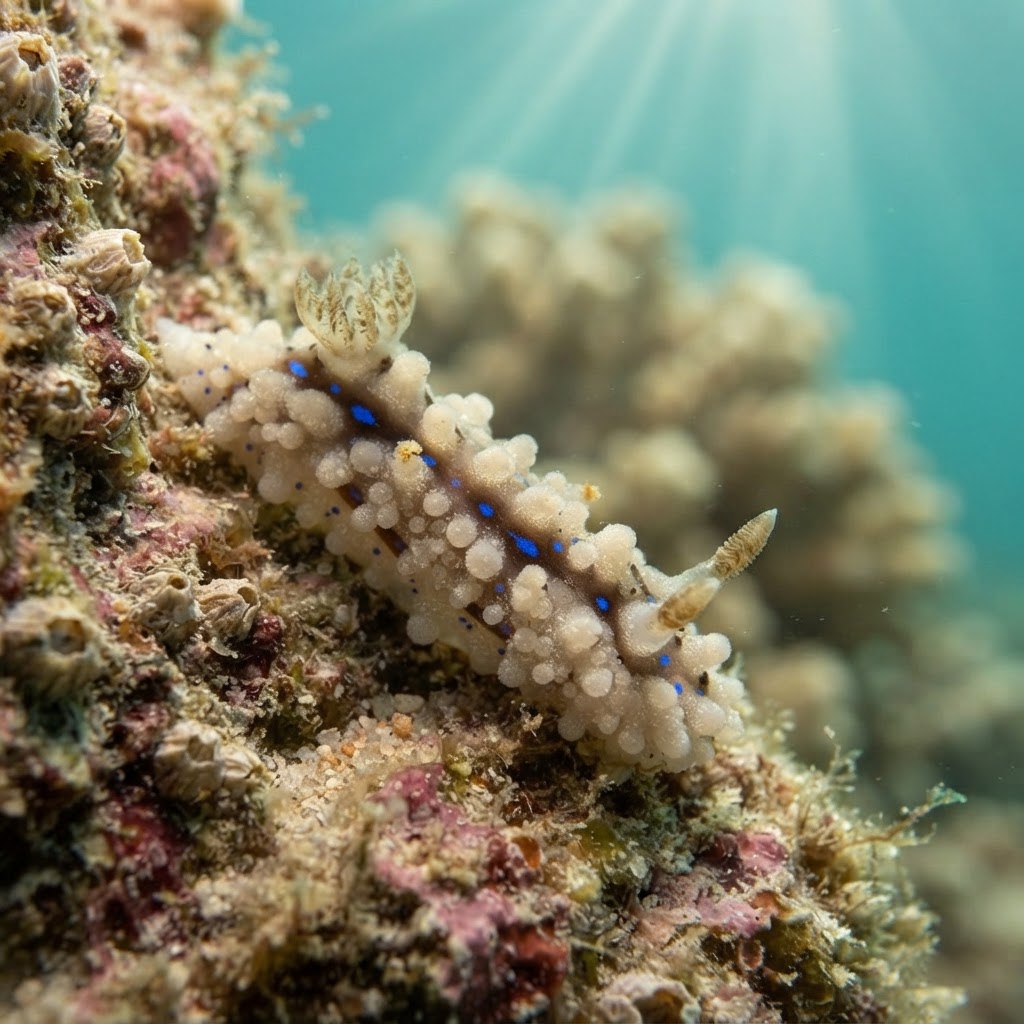
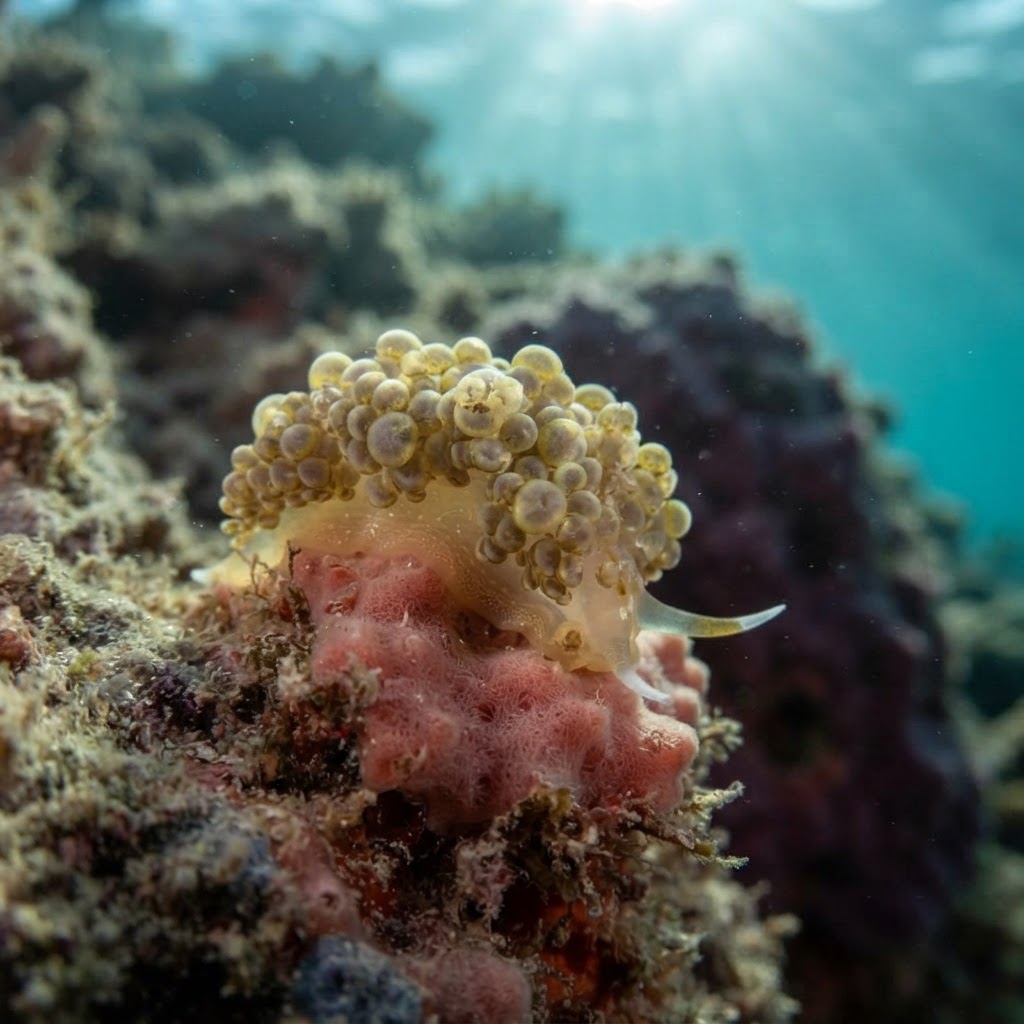
A tiny slug-shaped mollusc covered in club-like projections (cerata) tipped in bright yellow, giving it a beaded, grape-cluster look along the back. The body itself is usually pale to translucent, so the yellow tips are the main thing that catches a torch beam on a night or macro dive. Size stays small enough that most divers only notice it once a guide points it out on a branching hydroid or bryozoan colony.
Like most Doto species, it moves slowly over its food source, typically a hydroid colony, grazing rather than swimming, so divers usually find it stationary or barely shifting position when spotted. It shows no reaction to divers beyond simple avoidance if directly disturbed, and most logs come from slow macro-focused dives or night dives where torches pick out the yellow cerata against the hydroid branches.
Like other Doto nudibranchs, it feeds almost exclusively on hydroids, and its cerata (the beaded projections) often store stinging cells taken from that prey as a passive defence, which is part of why it clings so closely to its food colony.
Sightings sit in warm water between roughly 25.4 and 31.4C, and there is no clear seasonal pattern in the data, so it reads as a year-round find on tropical reefs rather than a seasonal specialty. Plan around good macro conditions and a sharp-eyed guide more than around a calendar month.
This is very much a Philippines species on the current data, with by far the strongest concentration of sightings across dive sites in Luzon. Outside the Philippines it turns up reliably in Nosy Be, Madagascar, and in smaller numbers around Bali and Sulawesi in Indonesia. Most logs describe it as uncommon rather than common, so treat any sighting as a real find rather than something you can expect on every dive.
Mapping where Yellow-beaded Grapedragon is logged…
The strongest sightings come from dive sites in Luzon, Philippines, with additional records from Nosy Be in Madagascar and from Bali and Sulawesi in Indonesia. It is logged as uncommon at most of these sites, so patient searching on a macro-focused dive gives the best odds.
There is no strong seasonal signal in the sighting data, and it is found across a wide warm-water range of about 25 to 31C, so it can turn up on tropical reefs at any time of year rather than during one specific season.
Look for a small, slow-moving nudibranch covered in club-shaped cerata tipped bright yellow, giving a beaded appearance along the back. The body itself is often pale or translucent, making the yellow tips the easiest feature to spot against dark reef structure with a torch.
Exact size data is not established for this species, but like most Doto nudibranchs it stays small, typically a matter of millimetres to a couple of centimetres, meaning divers usually need a guide's help or a sharp eye to find one at all.
It feeds on hydroids and, like related Doto species, likely stores stinging cells from its prey within its cerata as a form of passive defence. This close dependence on a single food source is why it is almost always found sitting directly on a hydroid colony.
Site and sighting data is aggregated from diver logs, iNaturalist and GBIF. For taxonomy and conservation status:
Light-spotted Aegires
3,168 sites