Phyllidia willani
Uncommon Phyllidia willani turns up on reefs in Sabah, Malaysia, year-round in warm 25-31C water. Here's how to spot one.
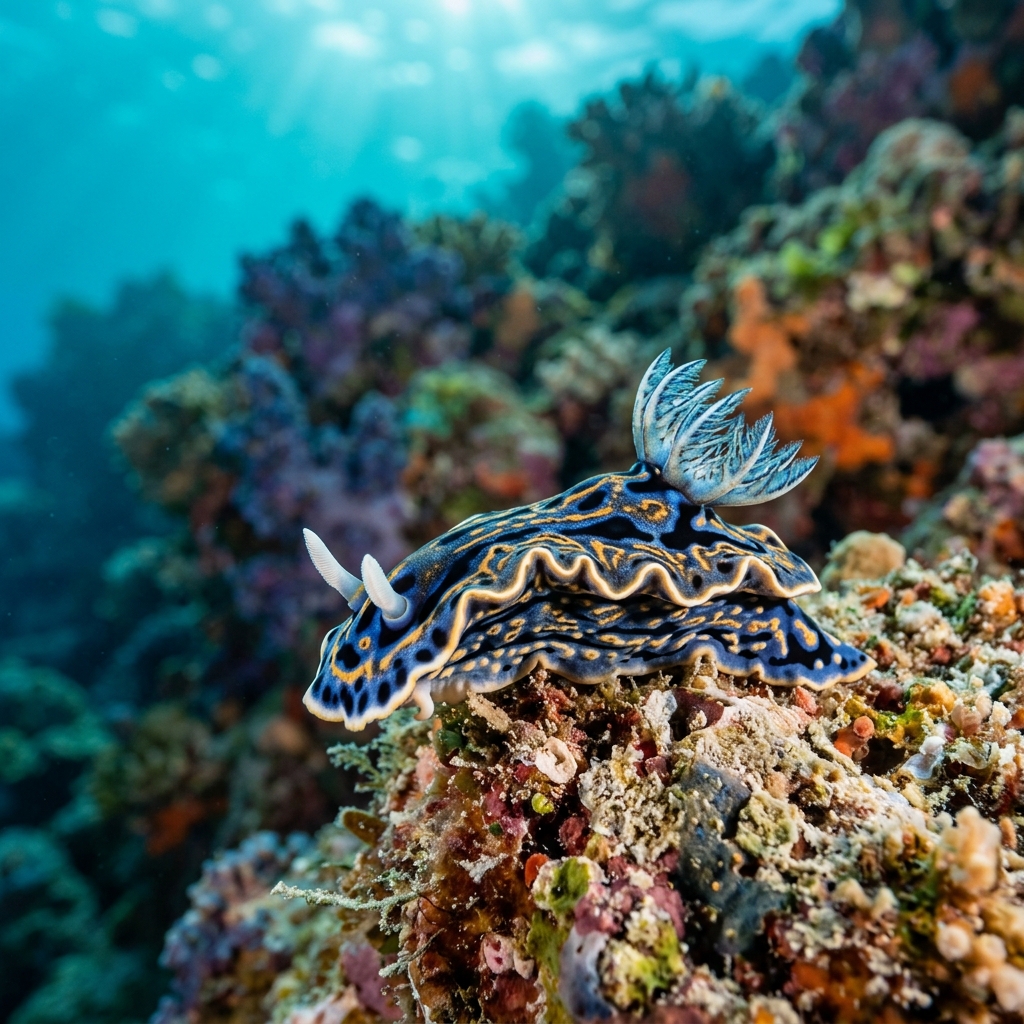
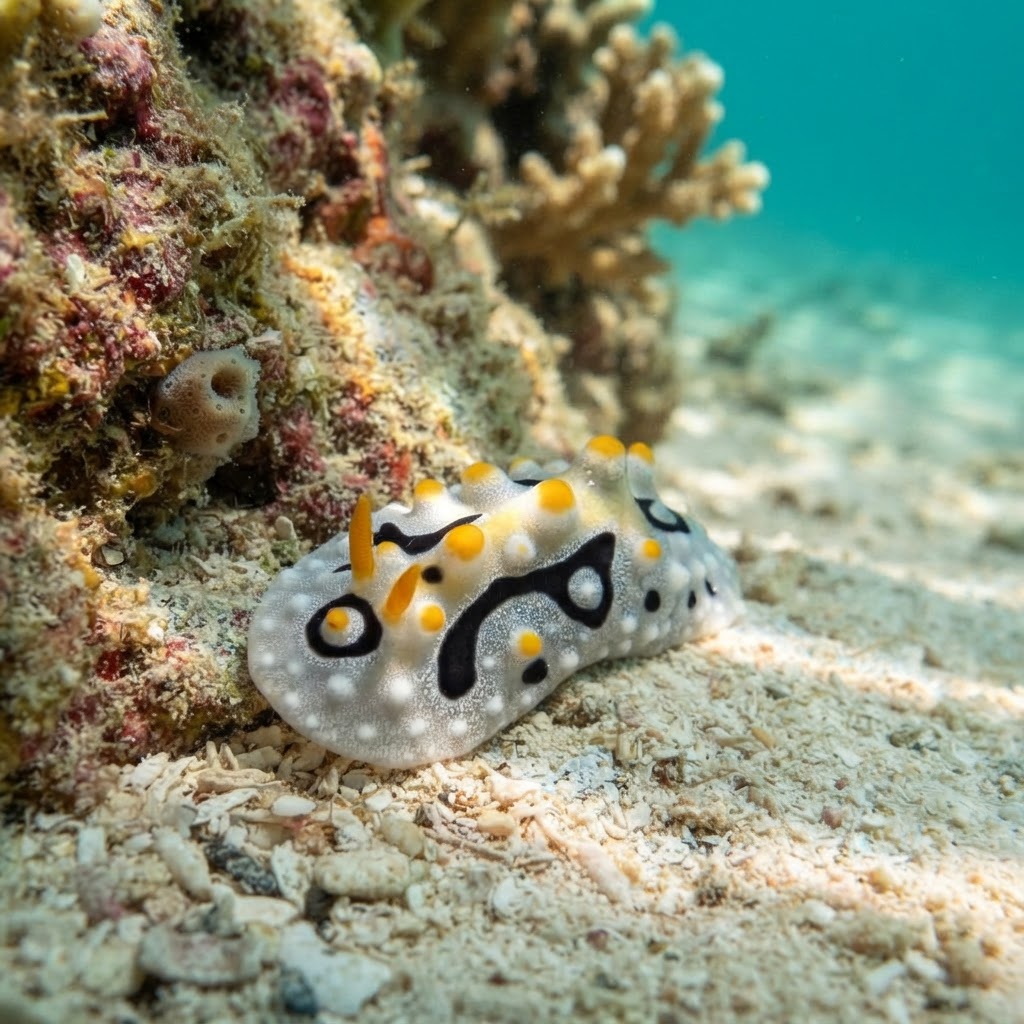
A small, warty-backed nudibranch (sea slug) with a firm, ridged body typical of the Phyllidia genus rather than a soft, flowing one. Look for a dark grey to black background scattered with raised pale tubercles (bumps), often with a paler stripe or patches running down the centre of the back. It moves slowly across hard substrate and reef rubble, and its rhinophores (the small paired sensory horns on the head) are usually the easiest feature to pick out in a close-up look.
Divers log this one crawling slowly over reef rock and rubble, usually spotted by torch light or a sharp-eyed guide during a macro-focused dive rather than swimming in open water. It doesn't react to divers beyond continuing its slow grazing pace, and like other phyllidiids it relies on toxic skin secretions rather than fleeing when disturbed.
Phyllidiids, including this species, are among the nudibranchs that cannot swim; they rely entirely on skin toxins for defence, which is why they can afford to be so slow and conspicuous on the reef.
No clear seasonal pattern shows up in the sightings, and the observed water temperature range of 25.2 to 31.2C covers Sabah's reefs all year, so it's a year-round find rather than a seasonal one.
Every logged sighting in the data comes from Sabah, Malaysia, making it the place to search this species out. Within Sabah, divers find it while working reef and rubble patches on regular macro-focused dives rather than as a headline sighting.
Mapping where Willan's Phyllidia is logged…
Sabah, Malaysia is the region where this species has been reliably logged by divers, typically on reef and rubble sections during macro-focused dives.
There's no detected seasonal pattern, and its warm-water niche of roughly 25 to 31C is present on Sabah's reefs year-round, so any month is fair game.
Look for a firm, warty-backed nudibranch with a dark grey to black body covered in pale raised tubercles, often with a lighter central stripe. Its stiff-bodied, slow crawl over hard substrate is a good first clue before you check the details.
Exact size data isn't available for this species, but like most Phyllidia nudibranchs it's a small, reef-crawling animal best spotted with a close, careful look rather than from a distance.
No. It poses no threat to divers; its toxins are a defence against predators, not something that affects people simply looking at or photographing it.
Like other phyllidiid nudibranchs, it can't swim away from danger, so it defends itself with toxic skin secretions instead, letting it move slowly and openly across the reef.
Site and sighting data is aggregated from diver logs, iNaturalist and GBIF. For taxonomy and conservation status:
Blue Dragon
3,163 sites