Rostanga lutescens
A rare nudibranch find logged in Kwajalein Atoll, Marshall Islands, in reef water between 25.5 and 31.5 C.
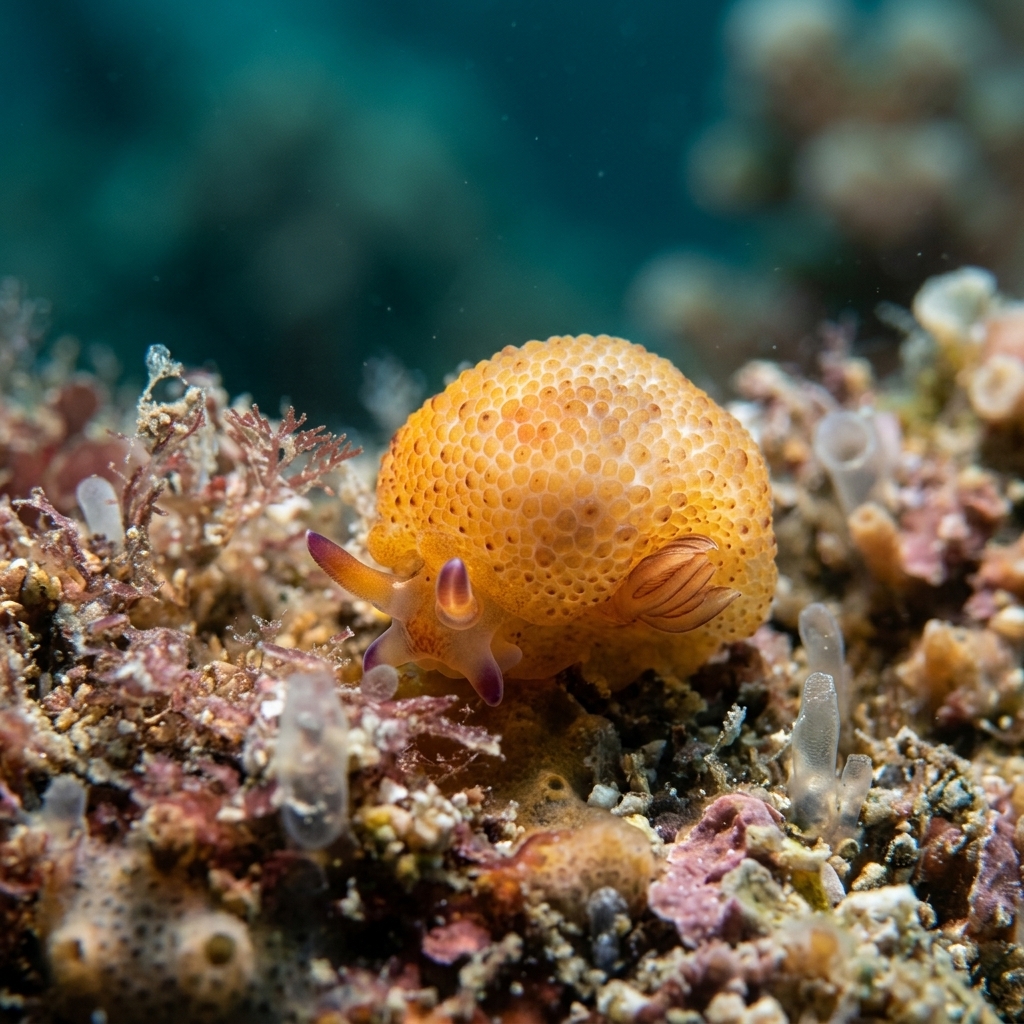
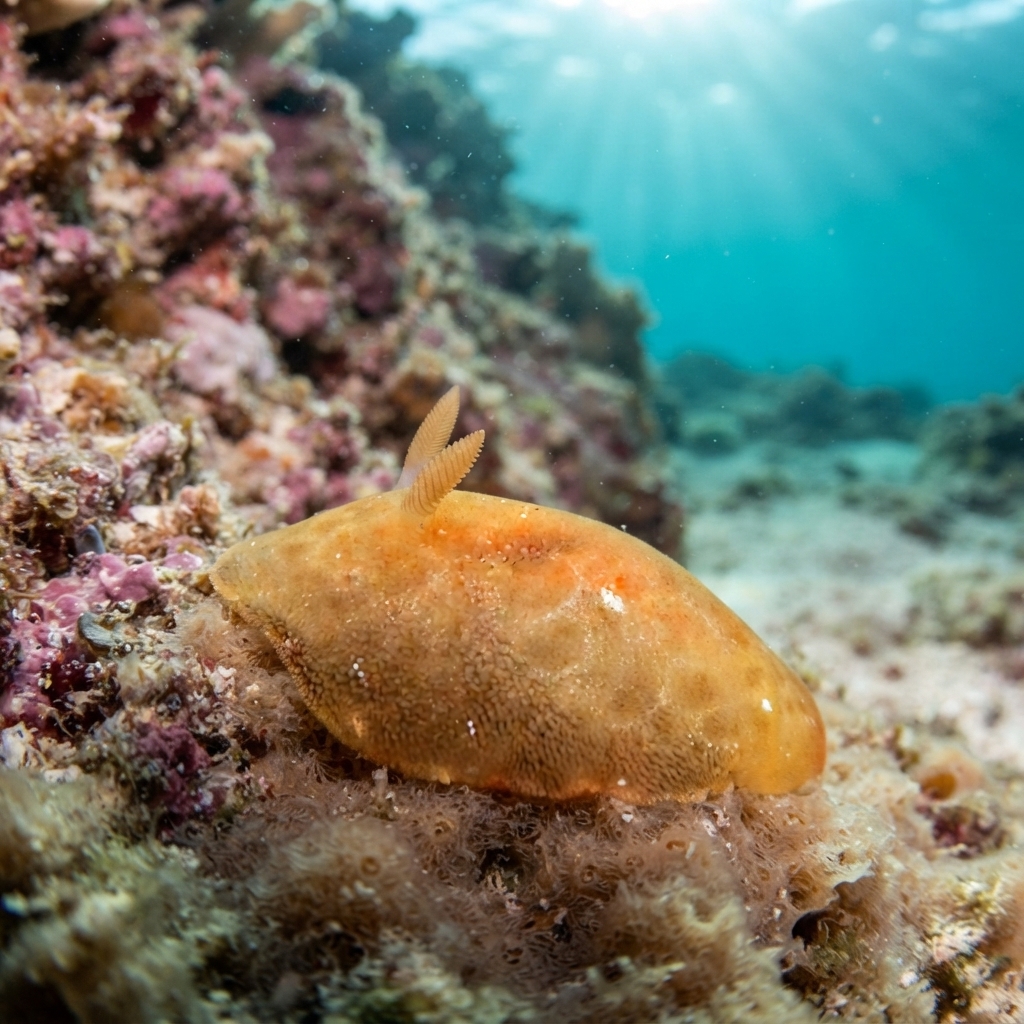
A small, low-profile nudibranch with an orange to red body covered in fine white speckling, which gives it its common name. It stays close to the sponges it feeds on, often blending into their colour and texture, and its rhinophores (the small sensory horns on the head) and gill cluster on the back are the same speckled orange as the body. Look for it moving slowly across sponge crusts rather than open coral or rock.
Divers who find this one usually spot it sitting still or creeping slowly across a sponge patch, since sponges are both its camouflage and its food source. It shows no reaction to divers beyond staying put, and searching sponge-covered walls and overhangs with a slow, close look is the main way to turn one up. Given how rarely it is logged, most sightings likely happen by chance during a macro-focused dive rather than a targeted search.
Its orange and white speckled colouring is not just camouflage: many Rostanga species feed directly on orange sponges and take on pigments from that diet, which helps explain the close colour match between the slug and its background.
There is not enough logged data to show a clear season, and the observed water temperature range of 25.5 to 31.5 C spans the warm, stable conditions typical of Marshall Islands reefs year-round, so treat sightings as possible any month.
Right now the only logged sighting comes from Kwajalein Atoll in the Marshall Islands, making this a Pacific atoll find rather than a species with a broad diver track record. Anyone diving the reefs around Kwajalein has the best documented shot at finding one, though its small size and sponge-matching colour mean it is easy to miss even where it occurs.
Mapping where White-speckled Sponge Dorid is logged…
The only confirmed sighting logged so far is from Kwajalein Atoll in the Marshall Islands. It has not been documented at other dive destinations to date, so this Pacific atoll is currently the known spot to look.
There is not enough data to pin down a season, and the water temperatures where it has been recorded, 25.5 to 31.5 C, are typical of tropical reefs all year, so it is best treated as a year-round possibility.
Look for a small nudibranch with an orange to red body scattered with fine white speckles, sitting on or near sponge growth. Its rhinophores and back gills share the same speckled orange colouring, helping it blend into its sponge food source.
Exact size data is not available for this species, but Rostanga nudibranchs are generally small, typically only reaching a centimetre or two in length, which makes them easy to overlook on a reef.
It lives on and feeds on orange sponges, and many Rostanga species pick up pigment from that sponge diet, which is thought to help their colouring match the sponge surface so closely.
Site and sighting data is aggregated from diver logs, iNaturalist and GBIF. For taxonomy and conservation status:
Blue Dragon
3,163 sites