Dendronotus albus
Look for this frilly white nudibranch on Pacific Northwest and California dives in 8.5-14.5C water, year-round and uncommon.
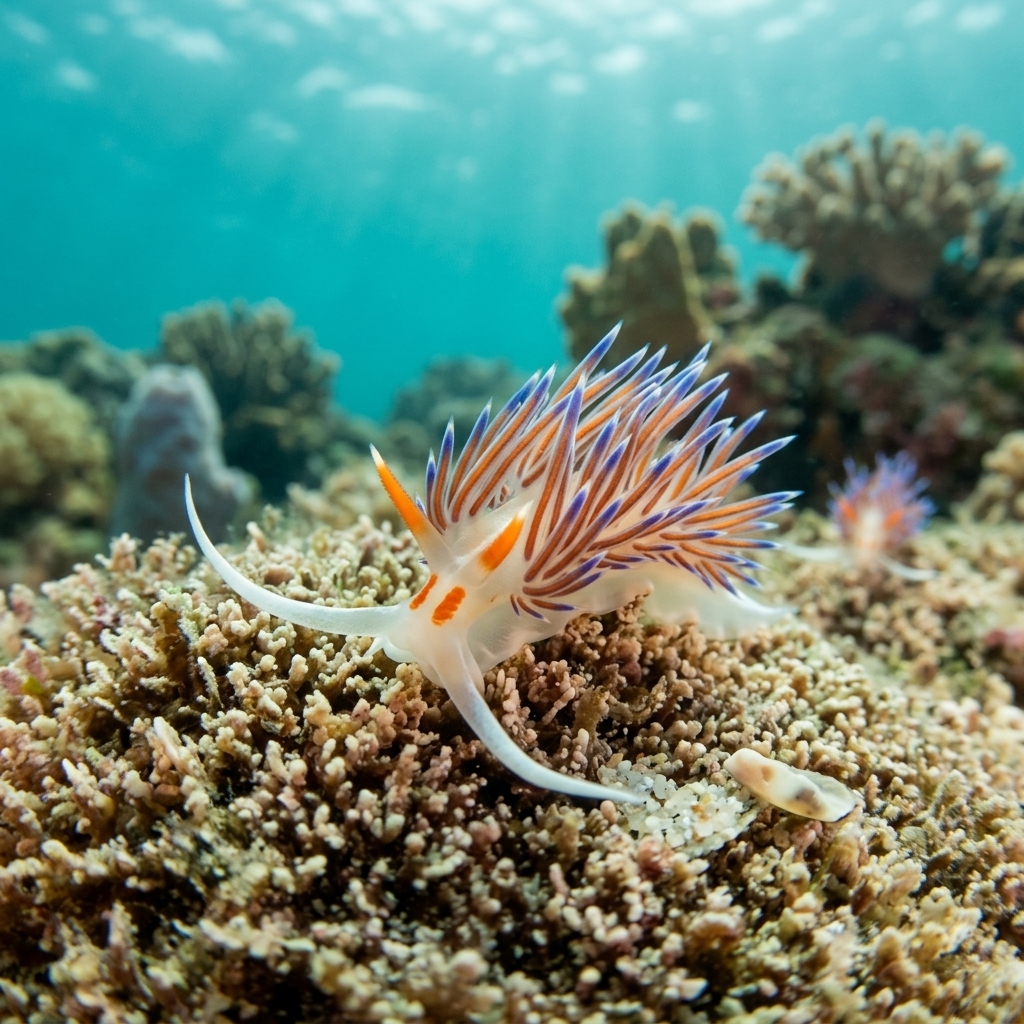
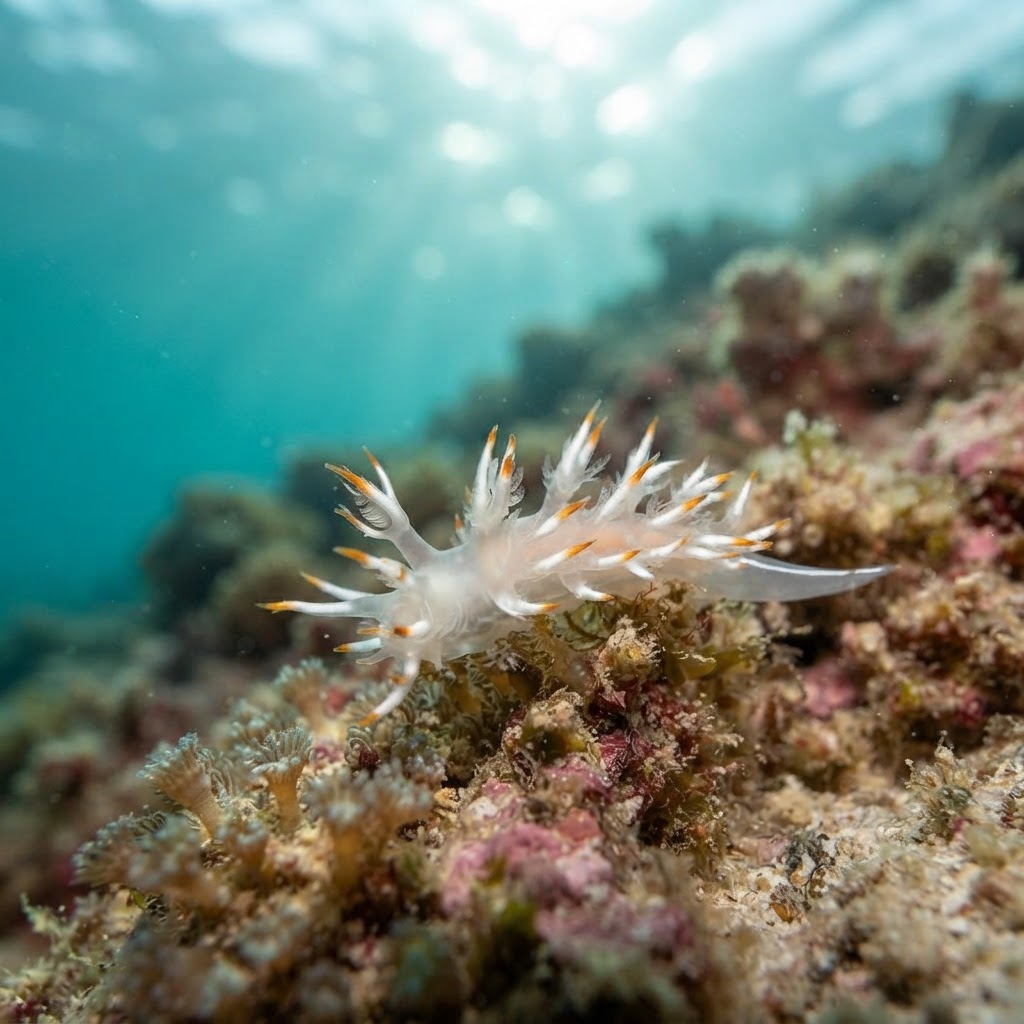
A slender, translucent white sea slug about 3 cm long, with a row of finely branched, tree-like gills (cerata) running down its back, often tipped in orange or yellow. The body is soft and almost see-through, so the internal organs sometimes show faintly through the skin. Look for the distinctive antler-like projections along the back rather than smooth bumps, which is what separates it from most other small dorid-type nudibranchs on the same rock.
Found slowly grazing over hydroids and bryozoans on rock walls, pilings and rubble patches, usually tucked in among the very prey it is eating, which makes it easy to miss unless you are scanning closely. It shows no real reaction to divers beyond continuing to feed, so a slow approach and a macro lens are all that is needed for a good look. Most logs come from typical daytime temperate dives rather than night dives, though nudibranchs in this genus are often more active after dark.
Like other Dendronotus species, it feeds almost exclusively on hydroids, and the branching cerata on its back likely help it blend into the very hydroid colonies it grazes on.
Sightings run year-round with no clear seasonal spike in the data, which fits its cold-water niche of roughly 8.5 to 14.5C found on many temperate Pacific coast dives throughout the year.
Most reliably found on cold-water dives in the United States, with strong logs from the Pacific Northwest and California, and a smaller but consistent presence in British Columbia, Canada. It shows up scattered across many sites rather than concentrated in one famous spot, so it rewards divers who search hydroids and rubble carefully rather than expecting a set-piece encounter.
Mapping where White Dendronotid is logged…
It turns up most often on cold-water dives in the Pacific Northwest and California in the United States, with additional sightings logged in British Columbia, Canada. Expect scattered rock and rubble sites rather than one single hotspot.
Sightings are logged year-round with no strong seasonal pattern, matching its comfort range of about 8.5 to 14.5C found on Pacific coast dives through most of the year.
Look for a small translucent white slug around 3 cm long with a row of branching, tree-like gills down its back, often tipped orange or yellow. The frilly, antler-shaped cerata are the main giveaway compared to smoother nudibranchs nearby.
They stay small, typically around 3 cm long, so a careful eye and a macro lens help when searching rock and rubble for them.
It feeds almost entirely on hydroids, and its branching back projections likely act as camouflage within the same hydroid colonies it grazes on.
No, they pose no danger to divers and can be observed and photographed up close without any risk.
Site and sighting data is aggregated from diver logs, iNaturalist and GBIF. For taxonomy and conservation status:
Nudibranch
3,168 sites