Dischistodus perspicillatus
Pale, sand-loving damselfish common on shallow reefs from Sabah to Koh Lipe, active year-round in 25-29 C water.
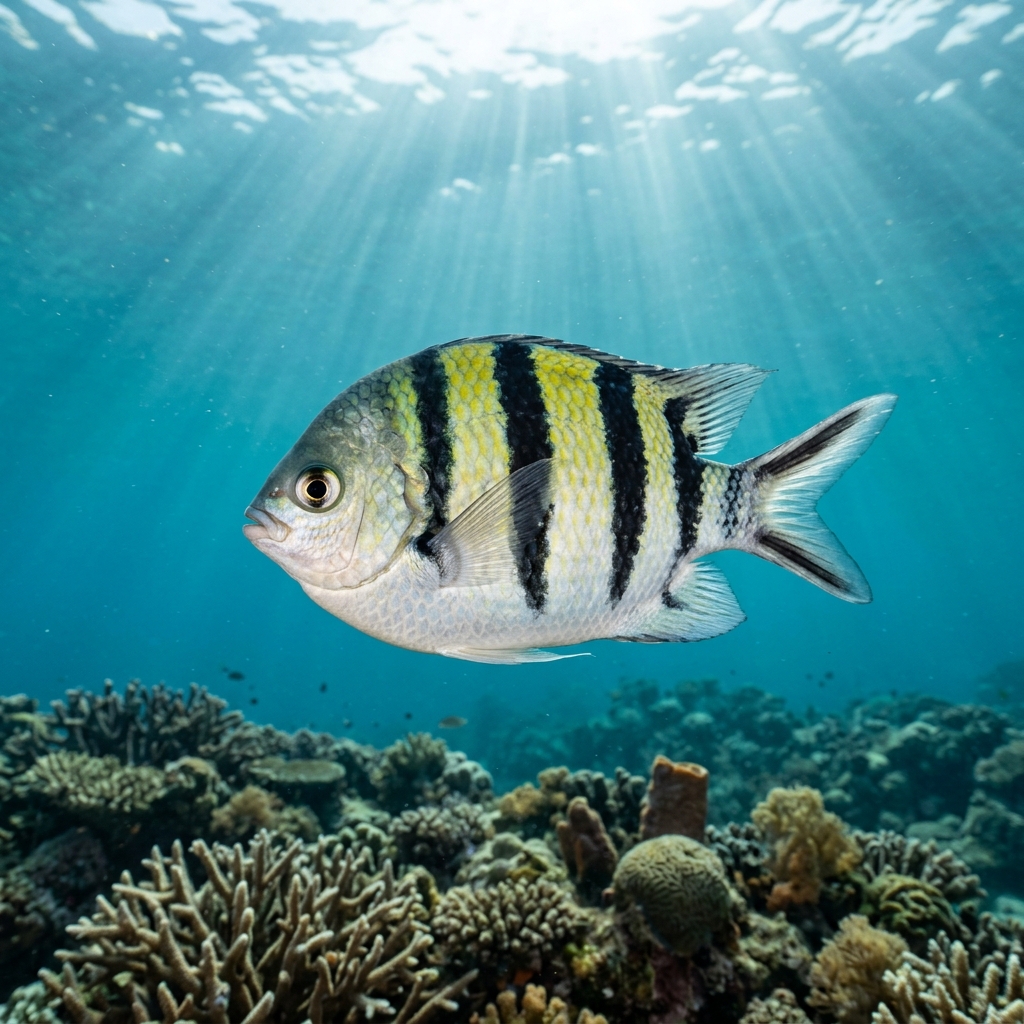
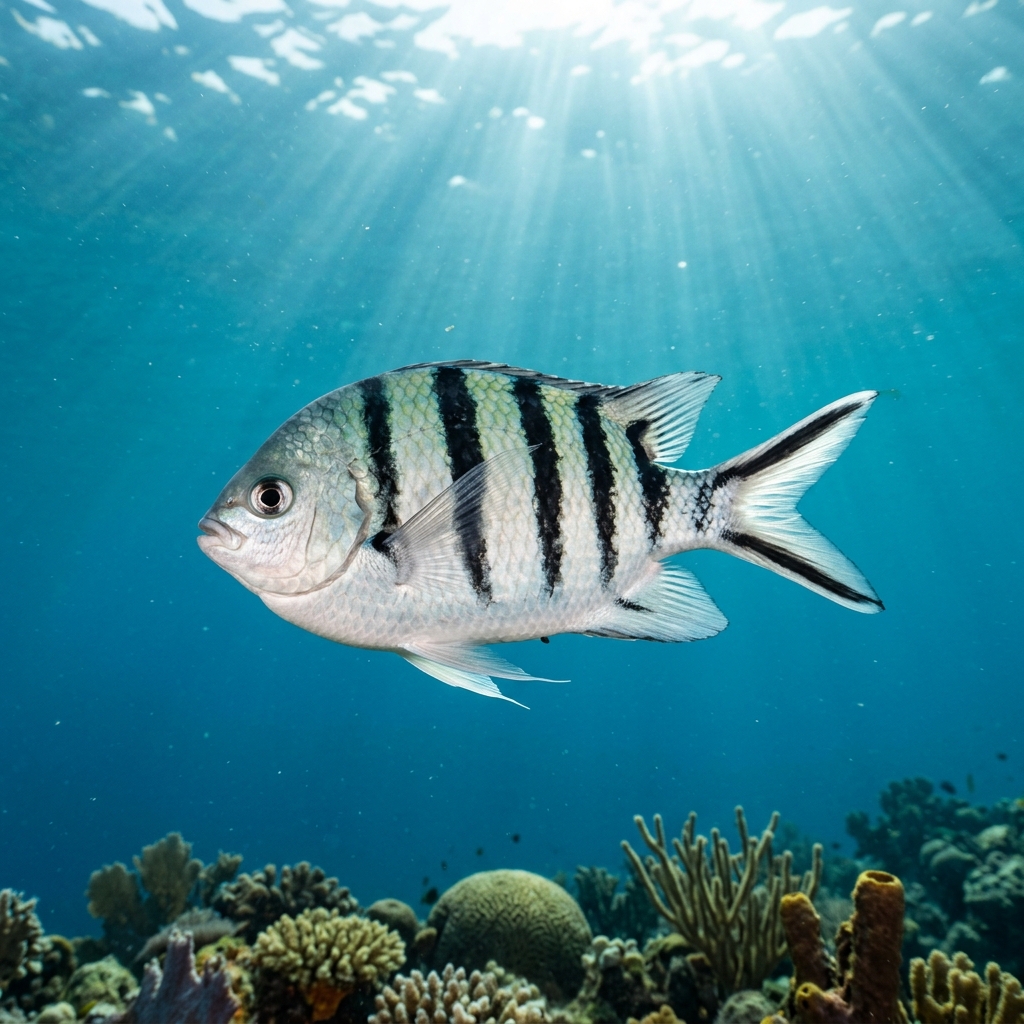
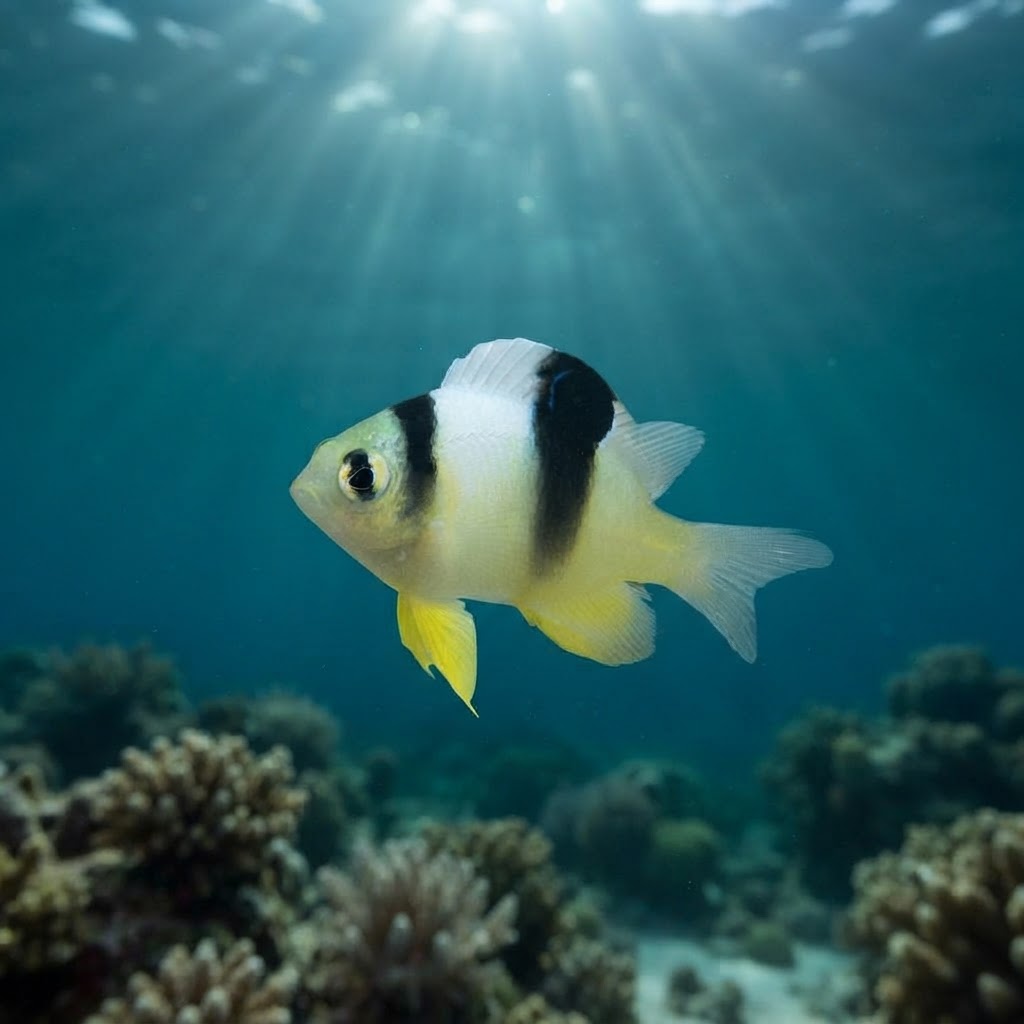
Grows to around 12 cm, with a boxy, deep-bodied shape typical of damselfish. Colouring is pale grey to whitish overall, often with a faint darker smudge or bar near the tail base and a plain, unremarkable face compared to more boldly marked reef damsels. Look for it hovering close to a patch of sand or rubble it's clearly guarding rather than roaming freely over the reef.
Spend most of a dive parked over a small patch of sand or rubble in shallow water, usually 1 to 10 metres, tending an algae patch it treats as its own. It's territorial for its size and will dart out at intruders, fish and divers alike, though it poses no real threat and mostly just wants you to move along. Most sightings are logged as uncommon rather than abundant, so it tends to be a single-fish encounter rather than a shoal.
Like other Dischistodus damselfish, it actively farms a patch of filamentous algae on the reef floor, weeding out anything it doesn't want to eat and chasing off grazers that try to move in on the plot.
No clear seasonal pattern shows up in the data, and with a comfortable range of 25.4 to 29.3 C it's present on these tropical reefs all year round. Plan around your destination's general dive season rather than chasing a window for this fish specifically.
Most reliably logged on reefs across Malaysia, especially the Peninsular Malaysia east coast and Sabah, with strong numbers also turning up in Thailand around Koh Lipe and in Indonesia's Java. It's a familiar sight too in the Philippines (Visayas, Palawan), Queensland in Australia, and around Koror & Malakal in Palau.
Mapping where White Damselfish is logged…
They turn up widely across Southeast Asia, most often logged in Malaysia (Peninsular east coast and Sabah), Thailand's Koh Lipe, Indonesia's Java, and the Philippines' Visayas and Palawan. Queensland in Australia and Palau's Koror & Malakal area also have steady sightings.
There's no strong seasonal pattern in sightings, and the water temperatures they're found in (25.4 to 29.3 C) hold steady on tropical reefs year-round, so you can look for them on any dive trip to their range.
Look for a small, deep-bodied damselfish around 12 cm, pale grey to whitish, often with a faint dark smudge near the tail. It's usually hovering over a patch of sand or rubble it's actively guarding, which is a good behavioural tell alongside its plain colouring.
They max out at around 12 cm, a typical size for reef damselfish, so don't expect a large or conspicuous fish, they're easy to miss if you're not scanning the sand patches.
No. They can be territorial and will chase off intruders near their algae patch, but this is just posturing at your fins or mask, not a real hazard to divers.
It cultivates a patch of algae on the reef floor, weeding out unwanted species and defending the crop from other grazing fish. This farming habit is shared across the Dischistodus genus and explains why you'll usually find one parked over the same sandy patch each dive.
Site and sighting data is aggregated from diver logs, iNaturalist and GBIF. For taxonomy and conservation status:
Dascyllus
3,697 sites