Cadlina laevis
A small white nudibranch with yellow-tipped tubercles, logged year-round in Norway's Østlandet and Bohuslän, Sweden in cold water down to 8.7C.
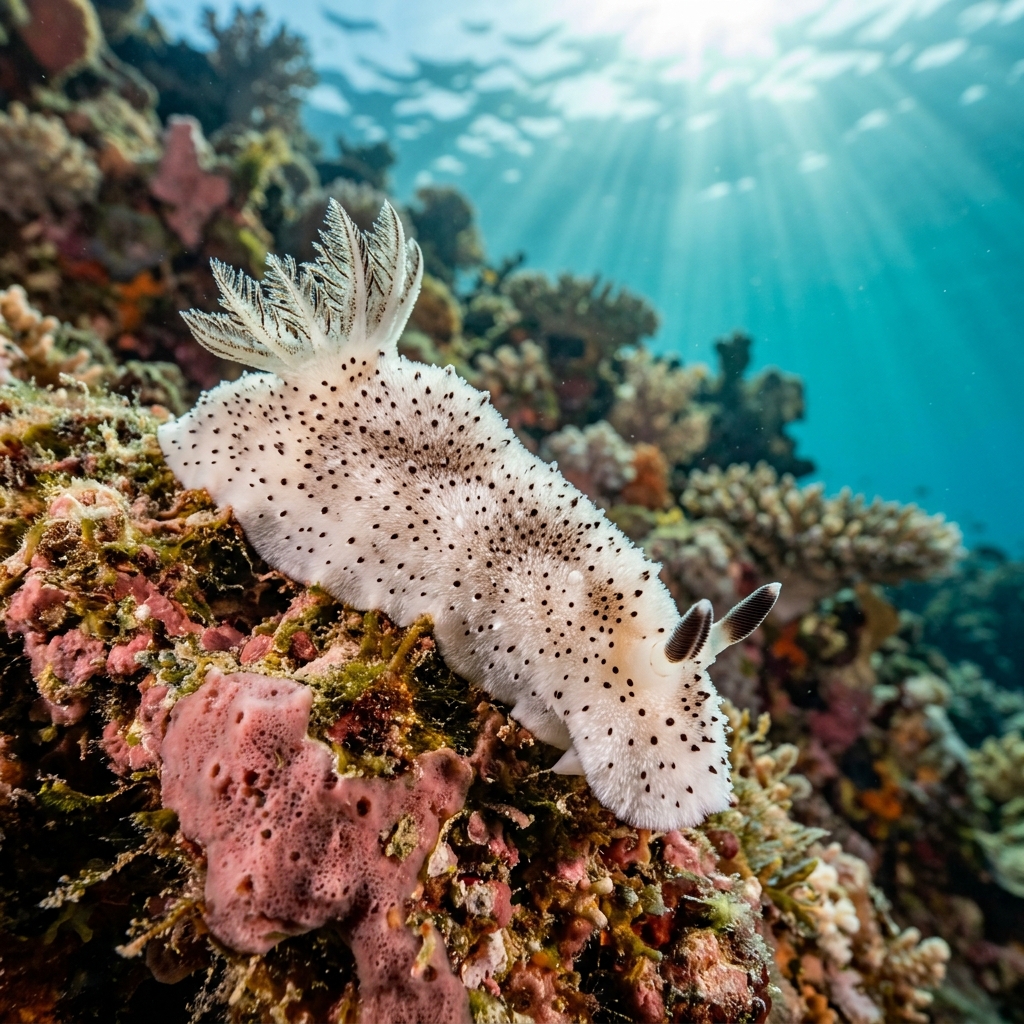
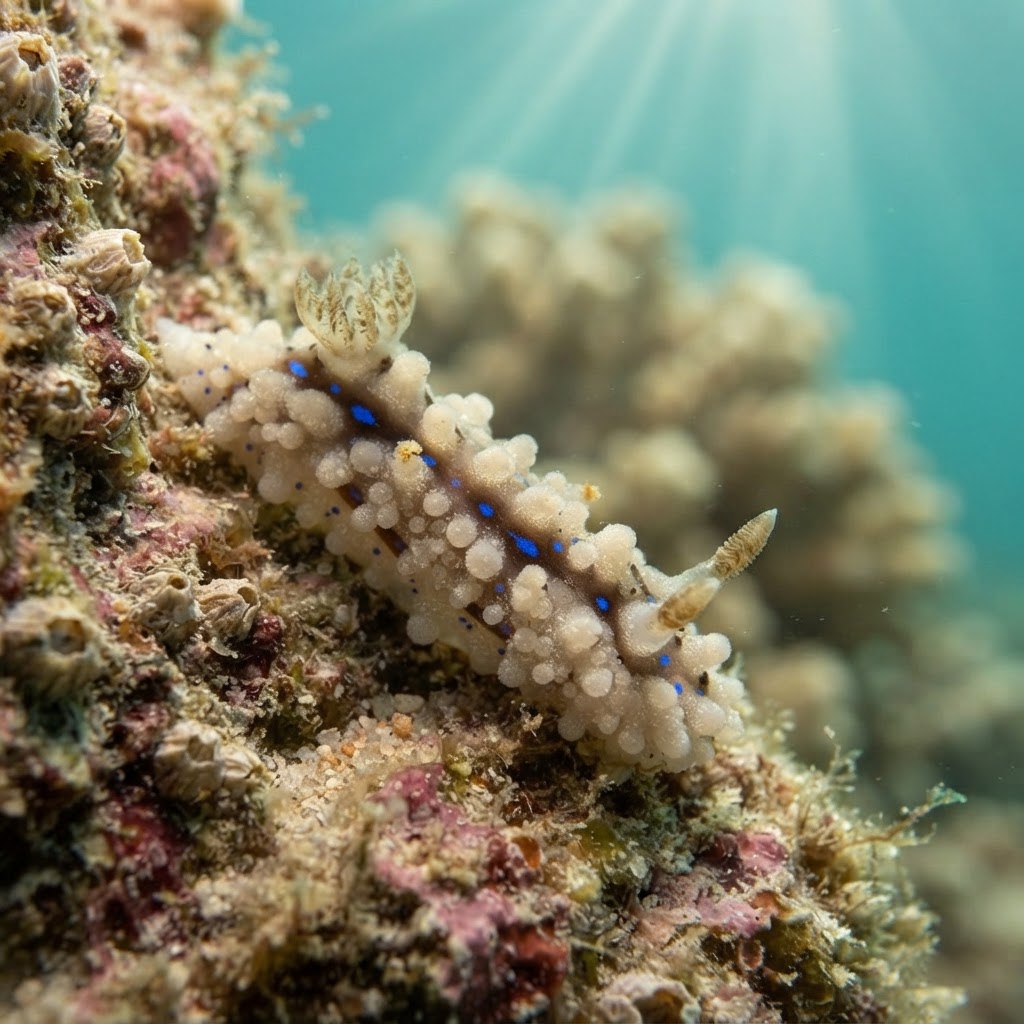
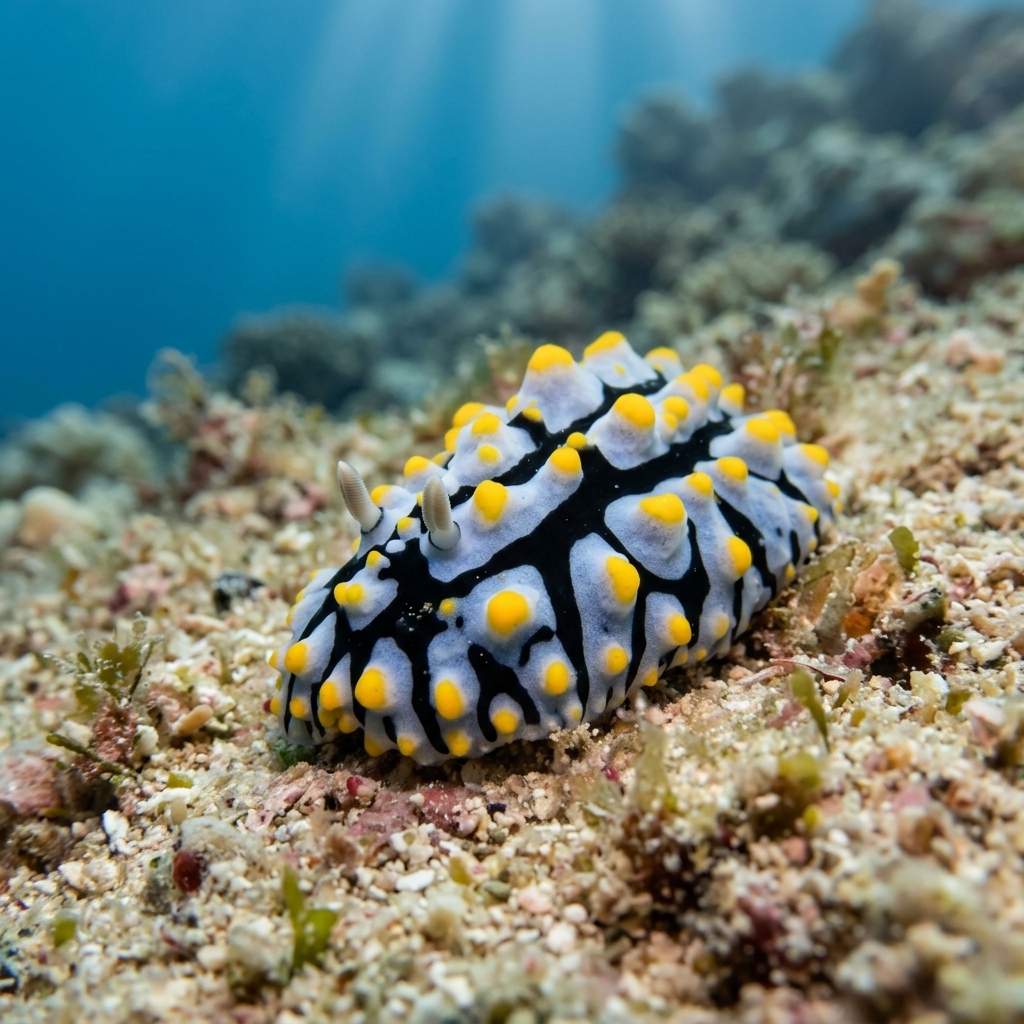
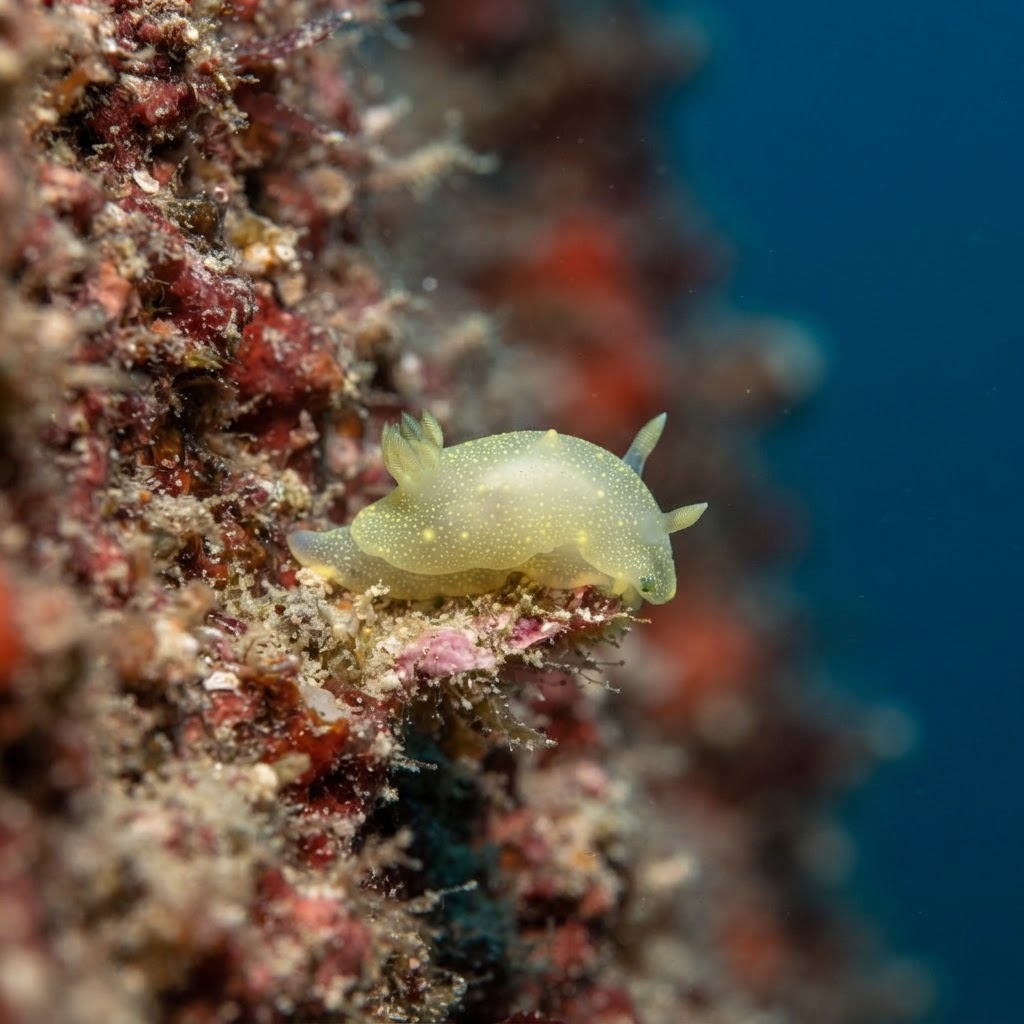
A pure white, oval-bodied nudibranch topped with rows of small rounded tubercles, each tipped in pale yellow, giving it a stippled look under torchlight. It tops out around 2 cm, so it takes a slow, close-focus eye to spot against rock and coralline algae. Two pale rhinophores (the paired sensory horns on the head) and a small cluster of gills toward the rear are the two features to check when confirming ID.
Divers most often find this one sitting still or grazing slowly across rock faces and under ledges, feeding on the encrusting bryozoans and sponges it favours. It shows no reaction to a diver's presence beyond its usual unhurried pace, since it has no eyes to speak of and no real predators to flee from at this size. Most sightings come from careful macro-hunting rather than a chance pass, since at 2 cm it blends into pale rock and algae until a torch beam catches those yellow tubercle tips.
Like many dorid nudibranchs, it likely stores distasteful or toxic compounds gathered from its sponge and bryozoan diet in those tipped tubercles, a defence that lets it sit exposed on open rock without needing to hide.
There is not enough seasonal data to point to a particular month, and the wide temperature range it tolerates, from 8.7 to 17.7C, suggests it can be found across the diving season wherever it occurs. Treat it as a year-round find rather than something tied to a specific window.
This is a cold-water species, most reliably logged in Norway, particularly around Østlandet, with further strong records in Vestlandet and Sørlandet. Outside Norway it turns up regularly in Northern Ireland, in Bohuslän on Sweden's west coast, and along Brittany in France, with a smaller but real presence on Portugal's Lisbon Coast. Expect it on rock and rubble bottoms rather than tropical reef structure.
Mapping where White Atlantic Cadlina is logged…
It is most consistently found in Norway, especially Østlandet, Vestlandet, and Sørlandet, and is also a regular find in Northern Ireland and Bohuslän, Sweden. Smaller populations are logged in Brittany, France, and Portugal's Lisbon Coast.
There is no strong seasonal pattern in the sightings, and its wide temperature tolerance from around 9 to 18C suggests it can be seen across the dive season rather than in one narrow window.
Look for a small white oval-bodied nudibranch, only about 2 cm long, covered in rounded tubercles tipped with pale yellow. Two pale rhinophores on the head and a small gill tuft near the tail help confirm the ID against similar small white slugs.
It stays small, typically reaching around 2 cm in length, which makes it a target for divers doing slow, close-focus macro searches rather than something you spot from a distance.
No, it poses no danger to divers. It has no means of harming a diver and simply grazes on encrusting invertebrates, easily observed and photographed at close range without any risk.
It feeds on encrusting bryozoans and sponges found on rock and rubble seabeds, grazing slowly across these surfaces, which is usually how divers catch it sitting still long enough to photograph.
Site and sighting data is aggregated from diver logs, iNaturalist and GBIF. For taxonomy and conservation status:
Light-spotted Aegires
3,168 sites