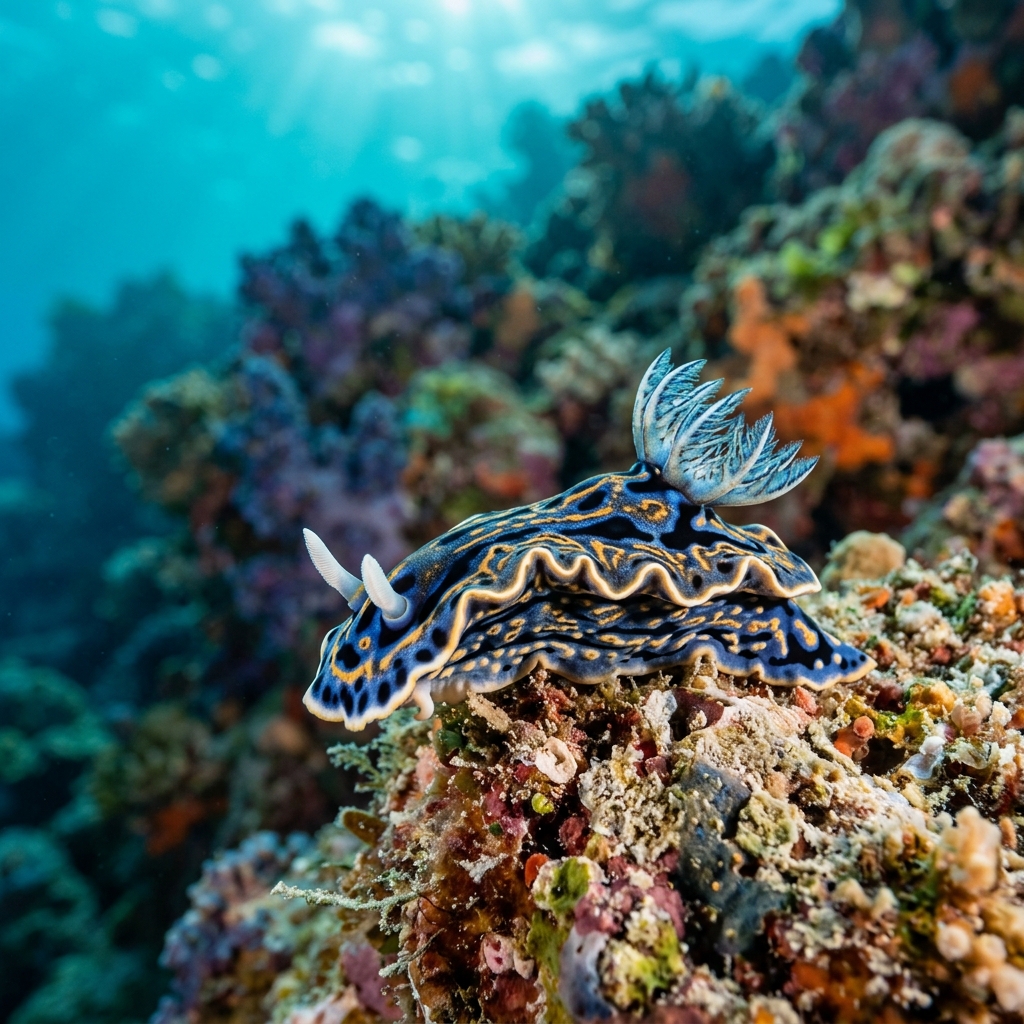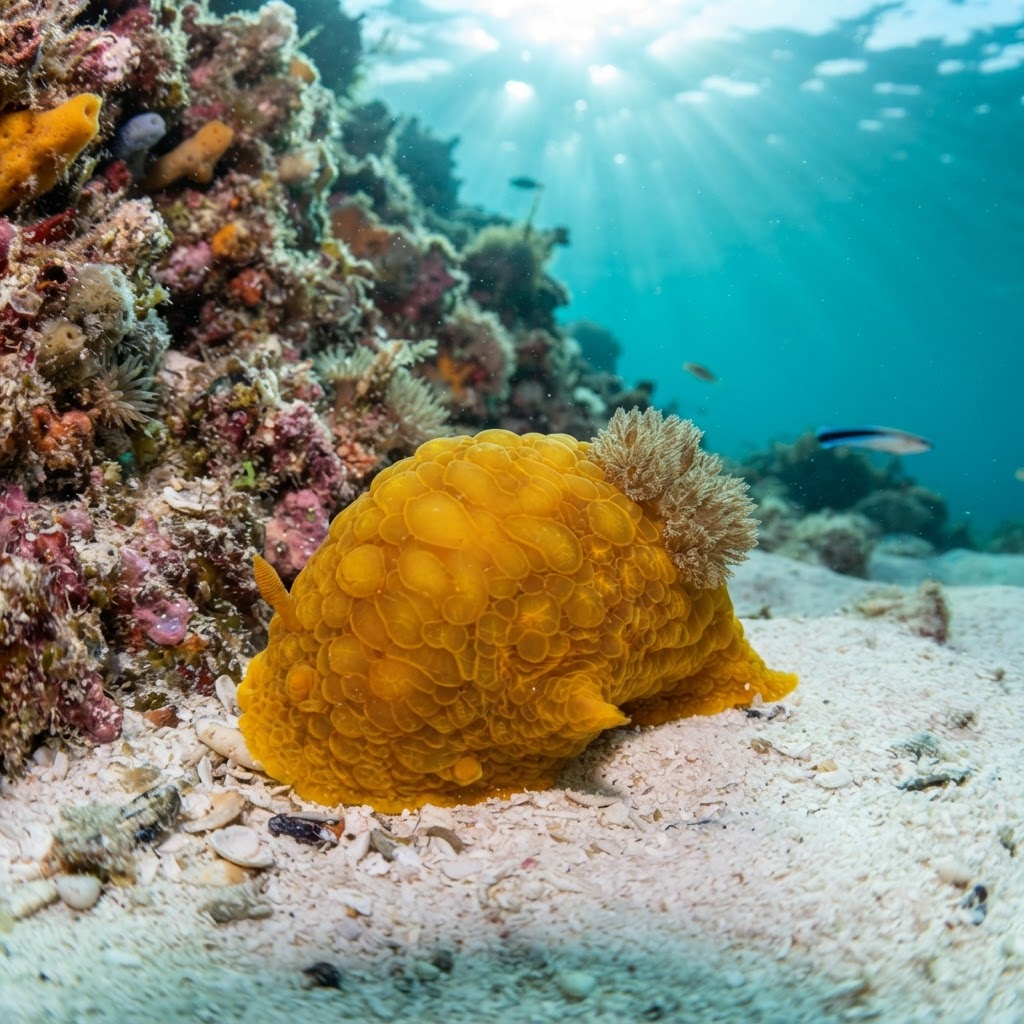
Doris wellingtonensis
A rare, chunky nudibranch found on cool reefs across New Zealand, from 10.5 to 16.5 C, year-round on both islands.
A large, robust nudibranch reaching around 14 cm, noticeably bigger and bulkier than most reef slugs you will run into on a New Zealand dive. The body is covered in dense, warty tubercles (small raised bumps) giving it a rough, sponge-like texture rather than a smooth or glossy look. Colour runs through mottled greys, browns and creams, which lets it blend into the rocky, encrusted surfaces it sits on, so divers usually spot it by shape and bulk before colour.
Divers typically find it sitting still or moving slowly over rocky, encrusted substrate, doing exactly what most large dorid nudibranchs do: grazing quietly and ignoring anything happening around it. It shows no reaction to divers beyond its usual unhurried crawl, so a slow scan of rock crevices and encrusted walls is the best way to pick one out. Most logs describe it as an occasional find rather than something turning up on every dive, so patience pays off more than timing.
Like other dorid nudibranchs, it almost certainly feeds on sponges, using its warty, camouflaged body to sit exposed on rock faces without needing to hide.
Sightings are scattered across the year with no clear seasonal peak, which fits its cool-water niche of 10.5 to 16.5 C, a range that New Zealand's temperate reefs sit in for most of the year. Treat it as a year-round possibility rather than a species tied to a particular month.
This one is a New Zealand speciality, logged at sites spread across both islands with no other countries reporting it in the data. Sightings are split evenly between the South Island and North Island, so it is worth watching for on temperate rocky reefs wherever you dive in New Zealand rather than at one standout hotspot.
Mapping where Wellington Archidoris is logged…
It has only been logged in New Zealand, with sightings spread fairly evenly between the South Island and North Island. There is no single hotspot in the data, so it turns up at rocky reef sites around both islands.
There is no detected seasonal pattern, so it can be found year-round. It suits cool water between roughly 10.5 and 16.5 C, which covers most of the diving year in New Zealand.
Look for a large, bumpy nudibranch around 14 cm long with a mottled grey-brown, warty body that blends into rocky, encrusted surfaces. Its size and rough texture set it apart from the smaller, smoother nudibranchs on the same reefs.
They reach around 14 cm, making them one of the larger nudibranchs a diver is likely to see on a New Zealand reef.
Yes, most sites report it as a rare find, with a smaller number logging it as uncommon and only one site calling it common. Spotting one usually takes a slow, deliberate look over rocky substrate rather than a chance glance.
Site and sighting data is aggregated from diver logs, iNaturalist and GBIF. For taxonomy and conservation status:
Blue Dragon
3,163 sites