Aphelodoris varia
Spot this cream-and-brown nudibranch on New South Wales reefs year-round in 17-23C water, most often logged as an uncommon find.
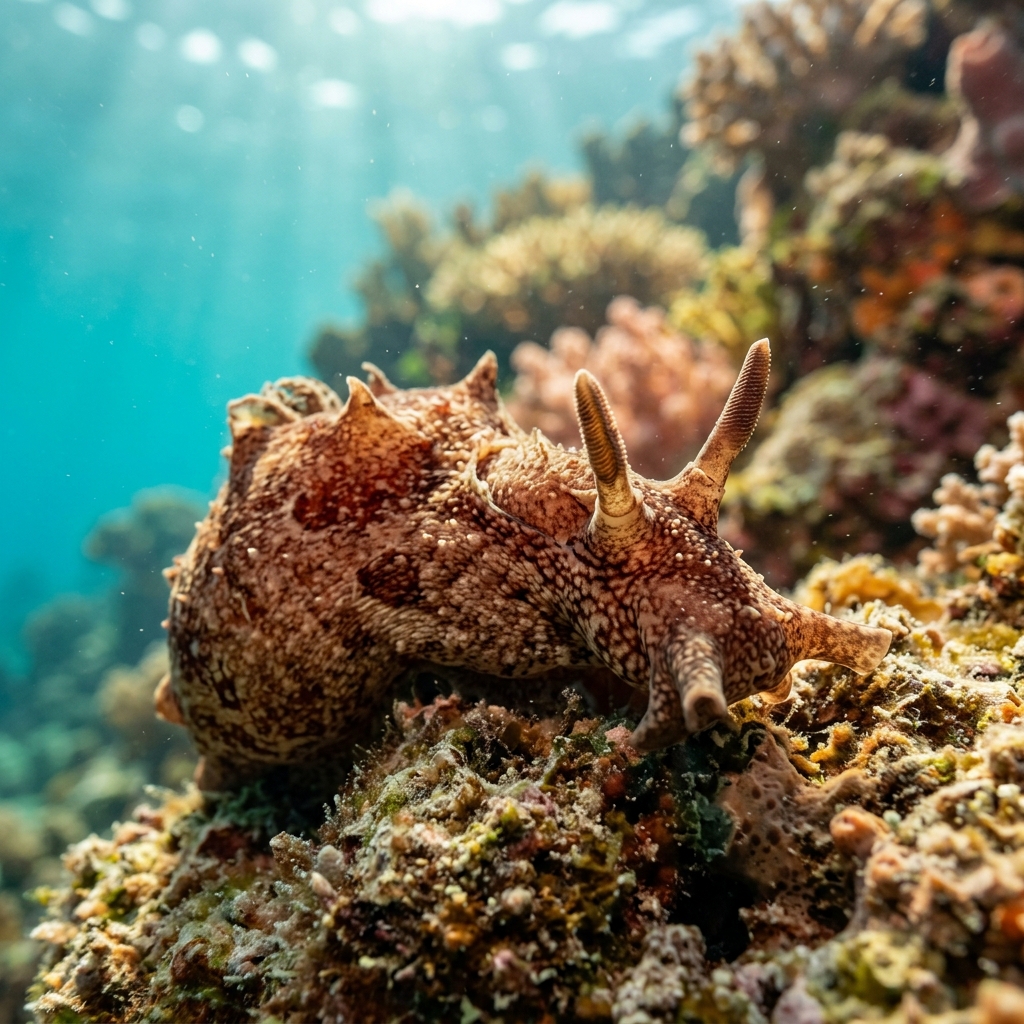
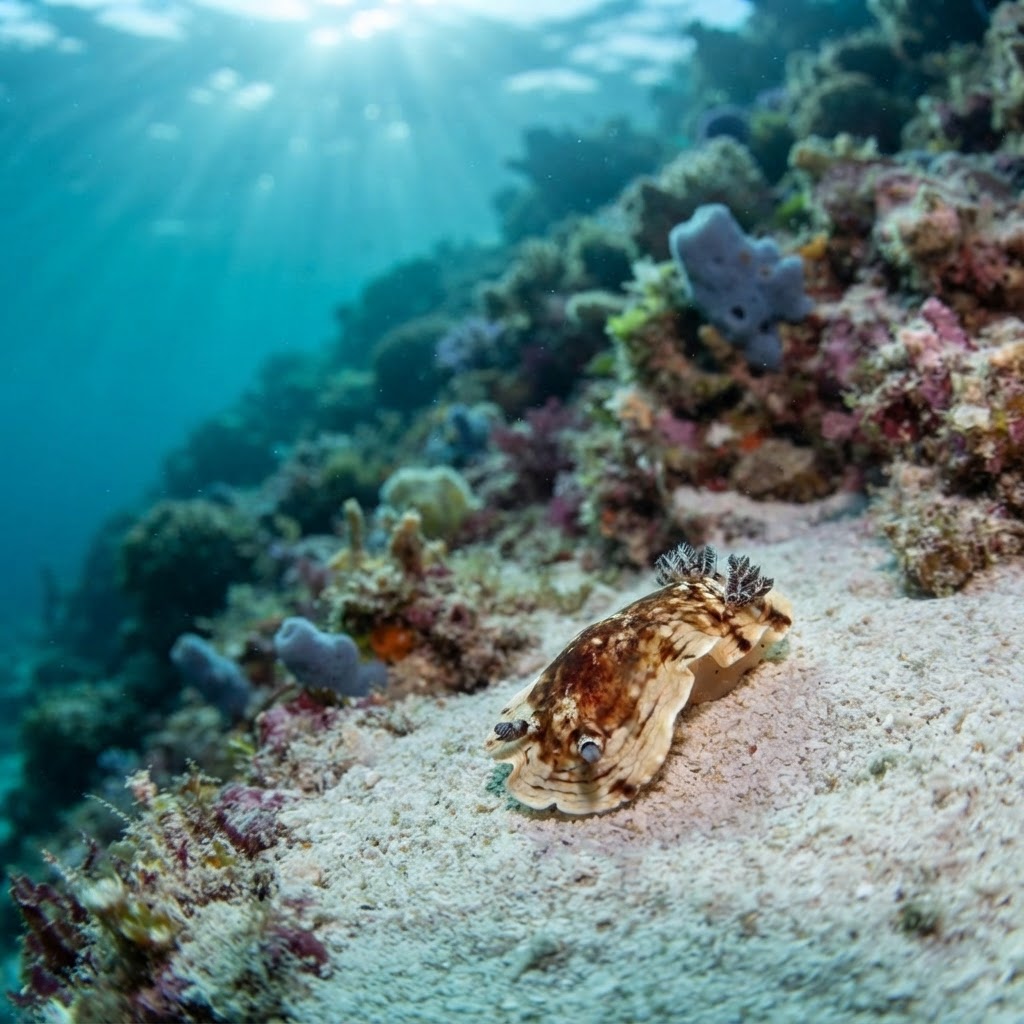
A small, soft-bodied nudibranch reaching about 3 cm, with a mottled cream, tan and brown pattern spread across its back that gives it the 'variable' name since no two individuals look quite alike. Look for the low, rounded body typical of discodorid sea slugs and the pair of gently ridged rhinophores (sensory horns) up front. Its irregular blotchy camouflage against rock and sponge is the main giveaway, rather than any single bold stripe or spot.
Divers find it slow-crawling over rock and rubble, usually tucked close to sponges and encrusting growth it's thought to graze on. It shows no reaction to divers beyond its usual unhurried pace, making it an easy subject for a close macro shot once spotted. Most sightings are during daylight dives rather than night dives, on the reef substrate rather than in open water.
Like other discodorid nudibranchs, its mottled colouring is a form of camouflage that lets it blend into the encrusting sponges it likely feeds on, so a still eye and a slow scan of sponge-covered rock is often the only way to pick one out.
No clear seasonal pattern shows up in the data, and with a comfortable range of 17 to 23C it's a reasonable year-round find on NSW reefs. Rather than chasing a season, focus on sites known for regular sightings.
This is very much a New South Wales speciality, with divers logging it across a wide spread of Australian sites concentrated in that region. It turns up at rock reef and sponge-covered sites along the NSW coast, most often as an uncommon find but with pockets where it's common to very common.
Mapping where Variable Aphelodoris is logged…
It's essentially a New South Wales find, logged across a broad spread of dive sites along that stretch of the Australian coast. Rock reef sites with sponge cover give the best odds.
There's no strong season in the sighting data, and its comfortable temperature range of 17 to 23C means it can turn up on NSW reefs any month of the year.
Check for a small, soft nudibranch around 3 cm long with a blotchy cream, tan and brown pattern and no two individuals patterned quite the same. It has the low, rounded profile typical of discodorid sea slugs, usually found crawling slowly over sponge-covered rock.
They're small, topping out at around 3 cm, so a slow careful scan of the substrate is usually needed to spot one.
No, they pose no danger to divers. They're slow-moving, harmless grazers that can be safely observed and photographed up close.
Its blotchy, irregular colour pattern varies so much between individuals that it gives the species its common name, and likely works as camouflage against the sponges it feeds on.
Site and sighting data is aggregated from diver logs, iNaturalist and GBIF. For taxonomy and conservation status:
Light-spotted Aegires
3,168 sites