Fistularia tabacaria
Ultra-thin and 140cm long, this cornetfish turns up year-round off Rio de Janeiro and Dakar in water from 15 to 27.5C.
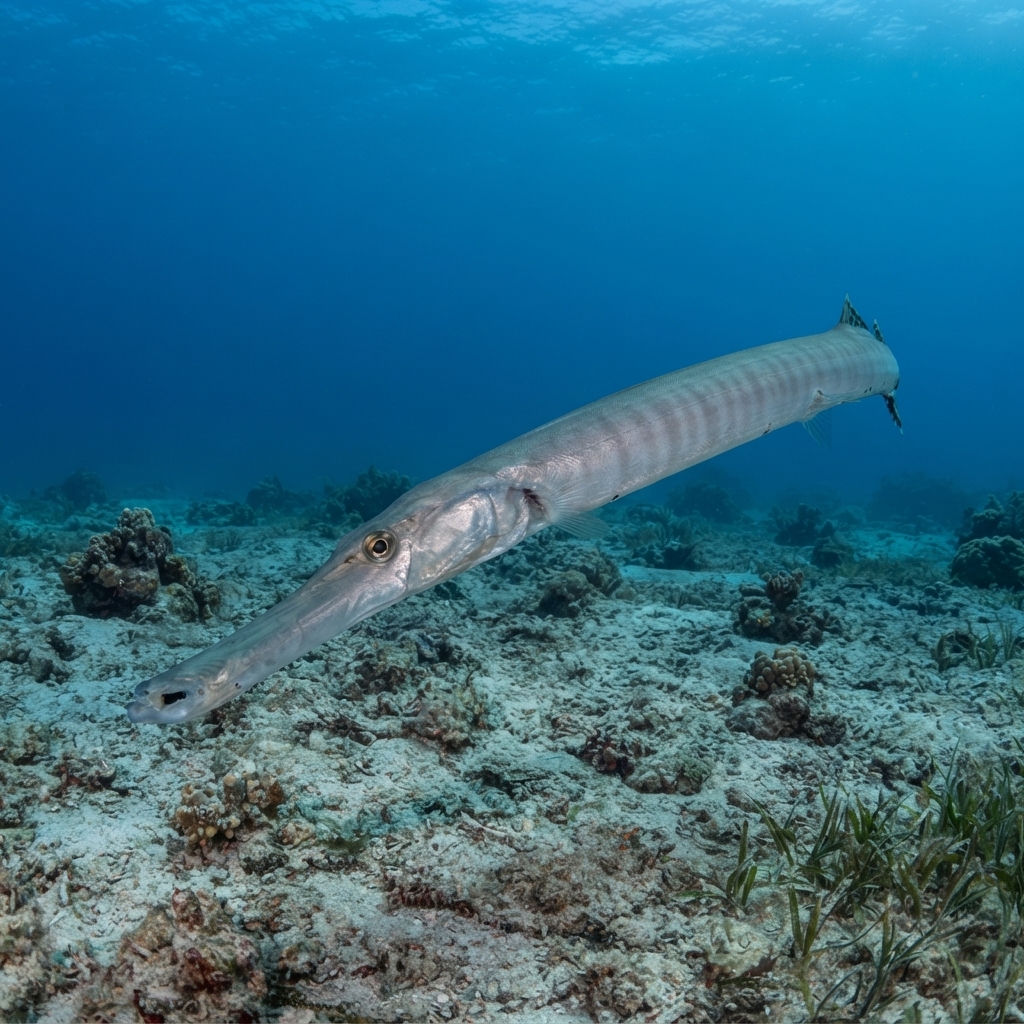
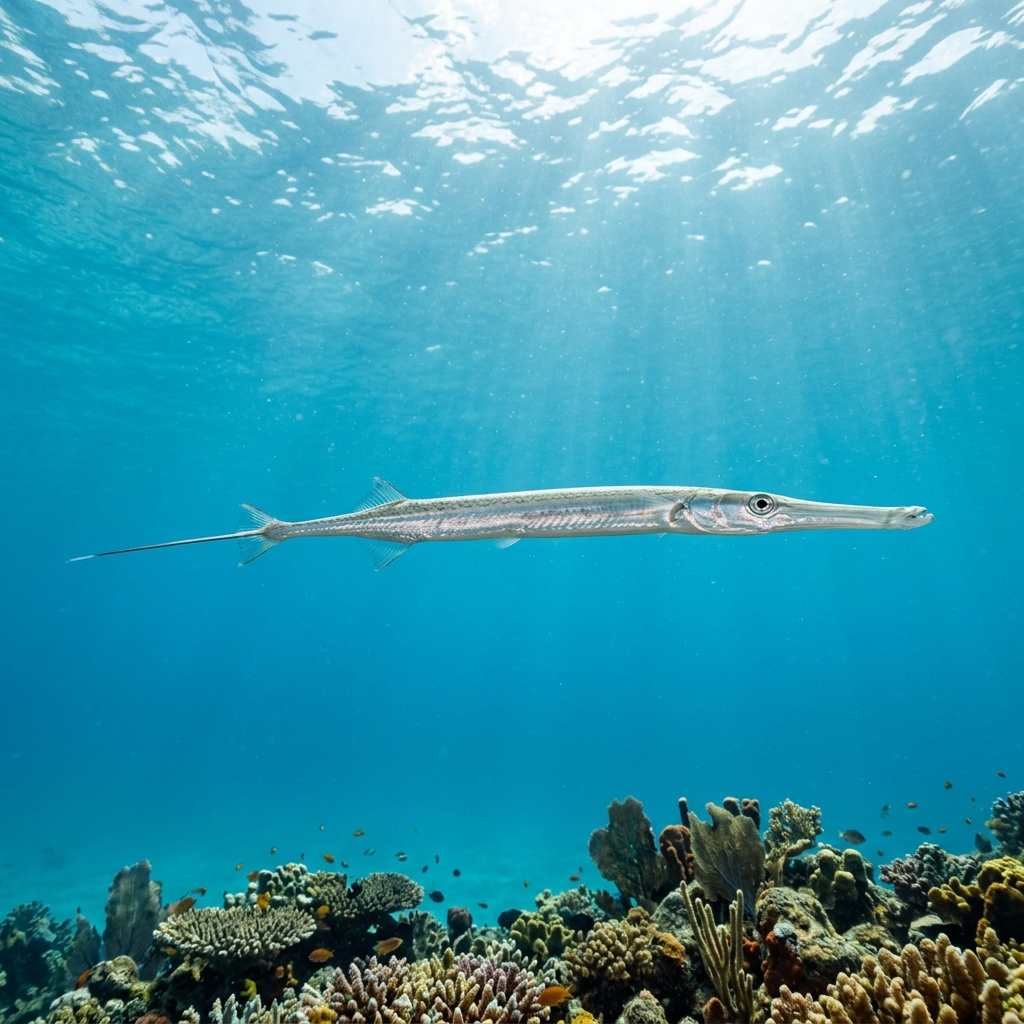
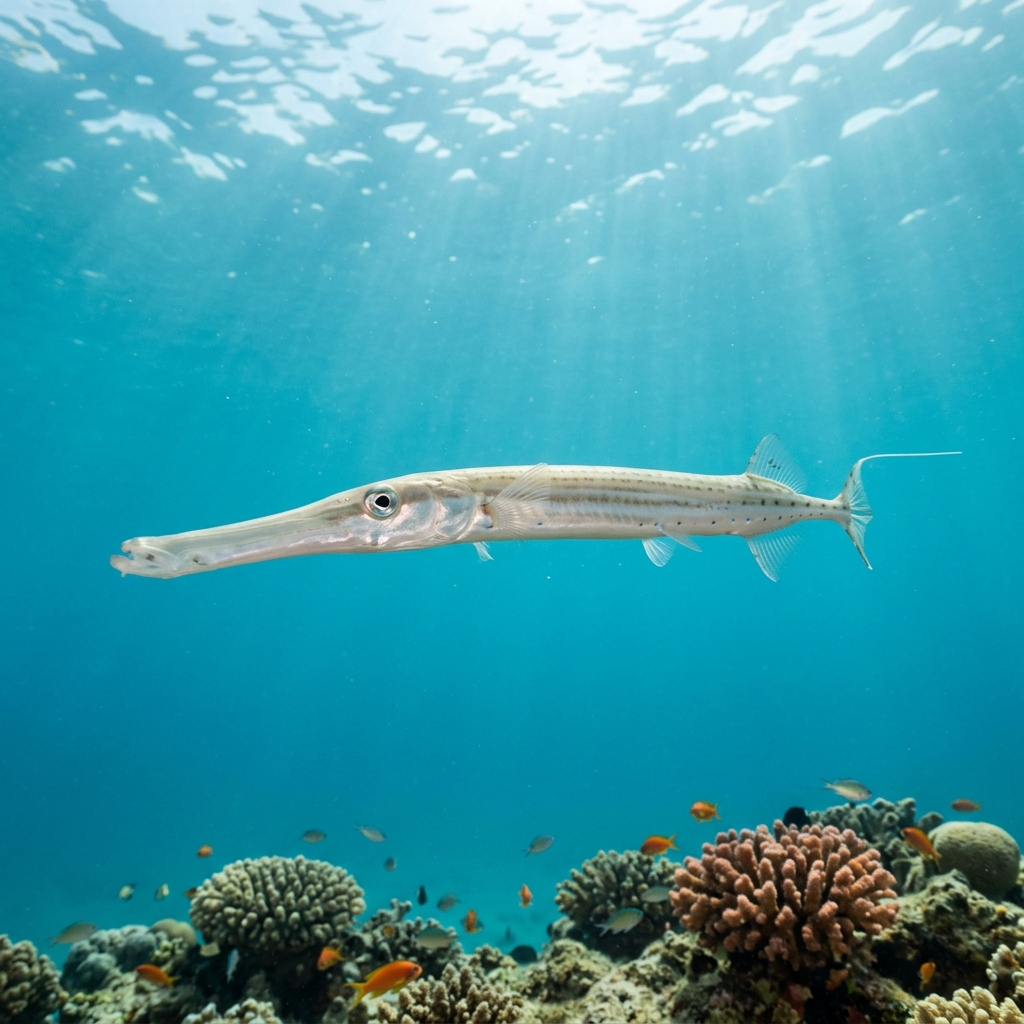
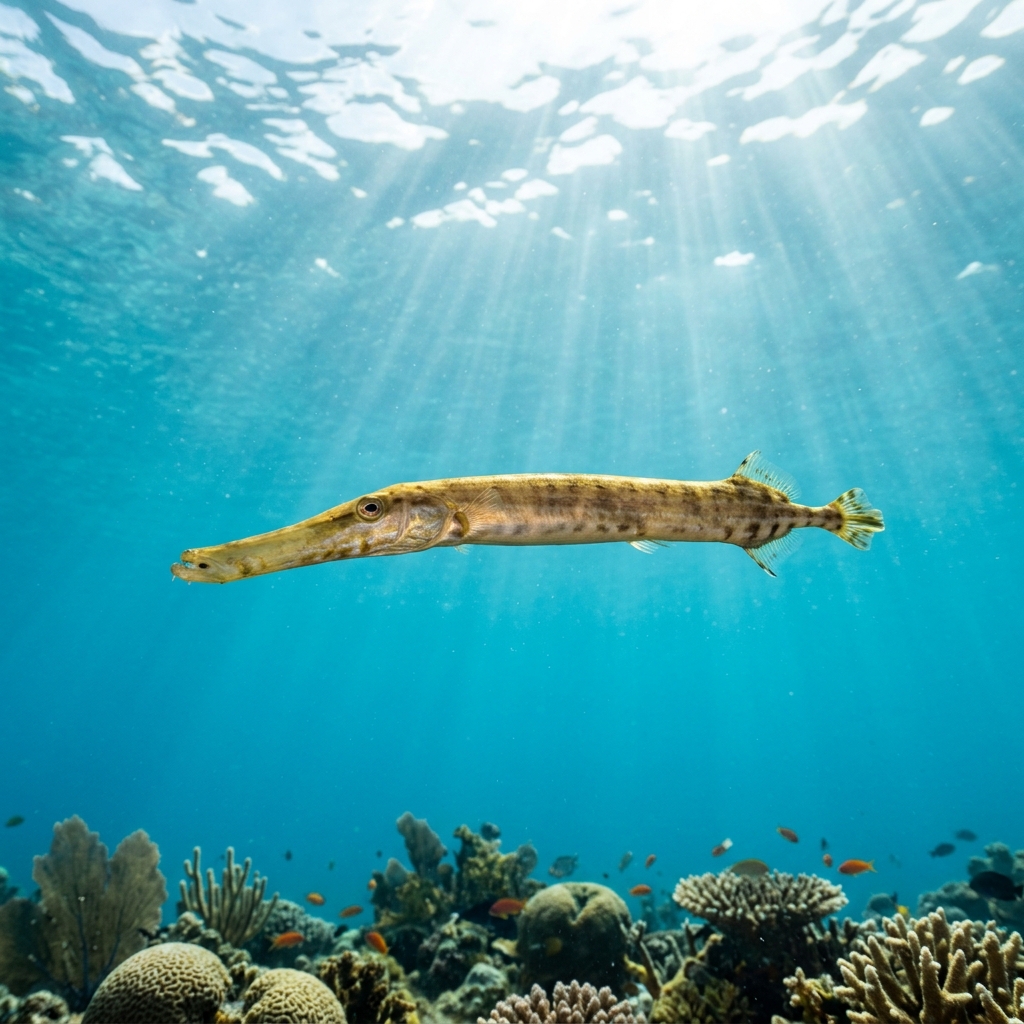
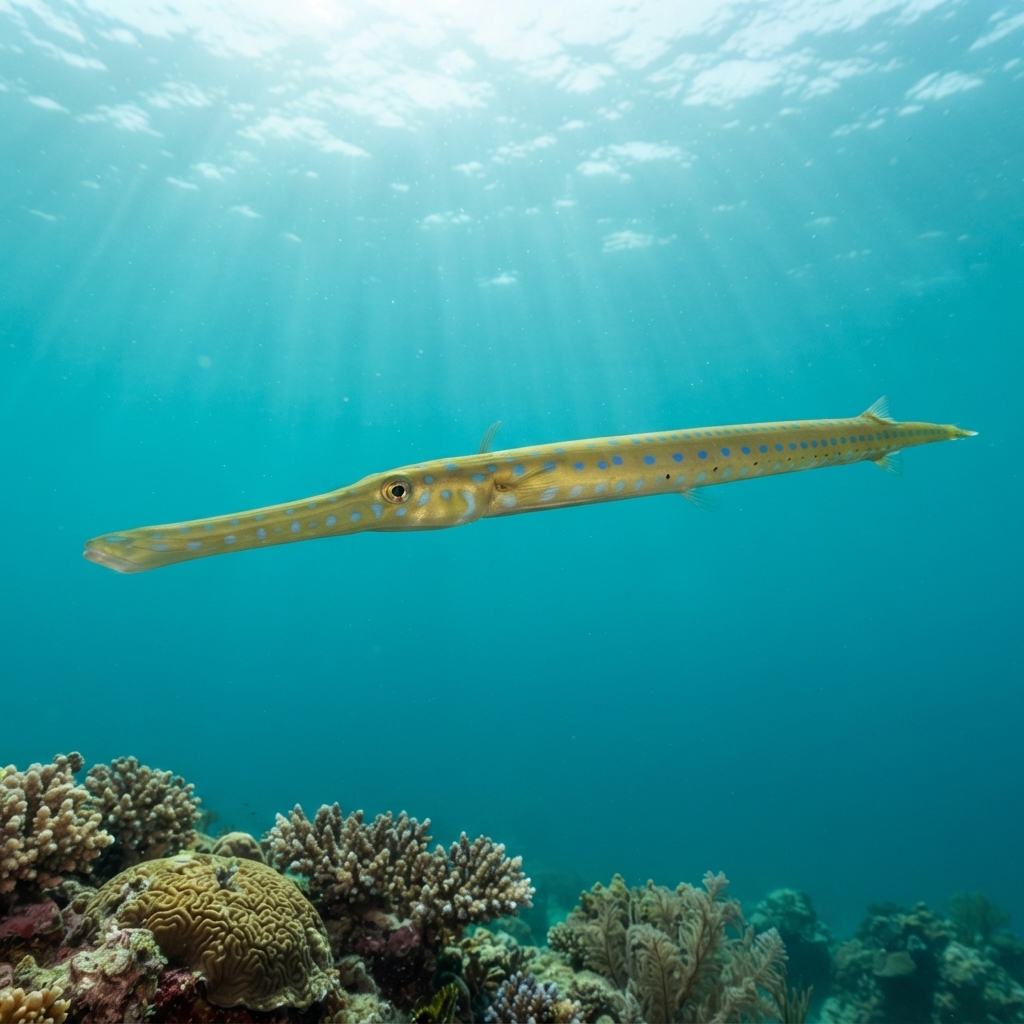
Look for an extremely elongated, almost pencil-thin body reaching up to 140 cm, tapering into a long tubular snout with the mouth right at the tip. The skin is silvery to olive-brown scattered with pale blue spots along the back, and a long whip-like filament trails off the centre of the tail fin. Because the body is so narrow, it can be easy to miss head-on, side-on is when the shape and spotting give it away.
Usually seen hanging motionless in midwater or drifting just above sand and rubble patches, often angled nose-down as it stalks small fish. It relies on that thin profile to stay inconspicuous, and will often let divers approach fairly close before drifting off with a slow, almost lazy swimming motion. Most reports describe single fish rather than groups, seen over open bottom near reef edges rather than tucked into structure.
That long tubular snout works like a pipette: it creeps up on small fish and baitfish, then flicks its mouth open to suck prey in with a sudden burst of suction rather than chasing it down.
Sightings don't show a strong season, and with a temperature range spanning 14.6 to 27.5C it tolerates both cooler temperate water and warm tropical reefs, so divers log it across the year at these sites.
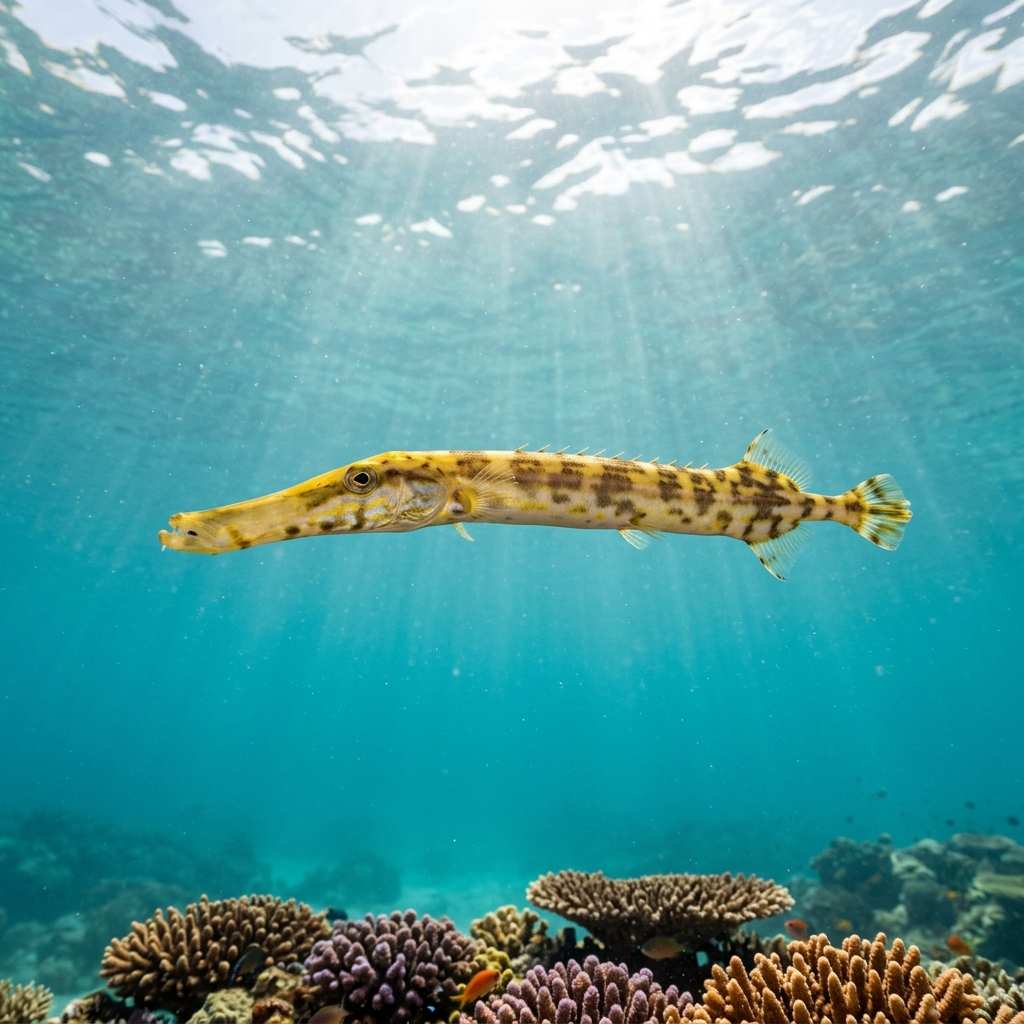
Reef neighbours a diver could mistake it for. Use the identification notes above to tell them apart.
Most reliably logged off Brazil, especially around Rio de Janeiro and Santa Catarina, with a strong presence off Dakar in Senegal and around Sal in Cape Verde. Smaller numbers turn up along the northeast United States, so it has a wide Atlantic spread rather than one hotspot.
Mapping where Atlantic Bluespotted Cornetfish is logged…
Brazil is the strongest area, particularly Rio de Janeiro and Santa Catarina, with reliable sightings also logged off Dakar in Senegal and Sal in Cape Verde, plus occasional reports along the northeast United States.
There's no clear seasonal pattern in sightings, and it's recorded in water from 14.6 to 27.5C, so it's treated as a year-round find at these sites rather than tied to a particular month.
Check for an extremely thin, elongated body up to 140 cm long with a tubular snout and a whip-like tail filament, plus faint blue spots along the back. The narrow, straight-line profile is the biggest giveaway compared to bulkier reef fish nearby.
They can reach around 140 cm in length, though most of that is the slender body and tail filament rather than bulk, so they look far more like a length of pipe than a typical fish silhouette.
No, they're not considered dangerous to divers. They tend to hold still or drift away calmly rather than react defensively when approached.
Site and sighting data is aggregated from diver logs, iNaturalist and GBIF. For taxonomy and conservation status:
Trumpetfish
2,093 sites