Fistularia commersonii
Spot Bluespotted Cornetfish year-round across the Maldives, Egyptian Red Sea and Philippines. ID tips, best sites and what to expect underwater.
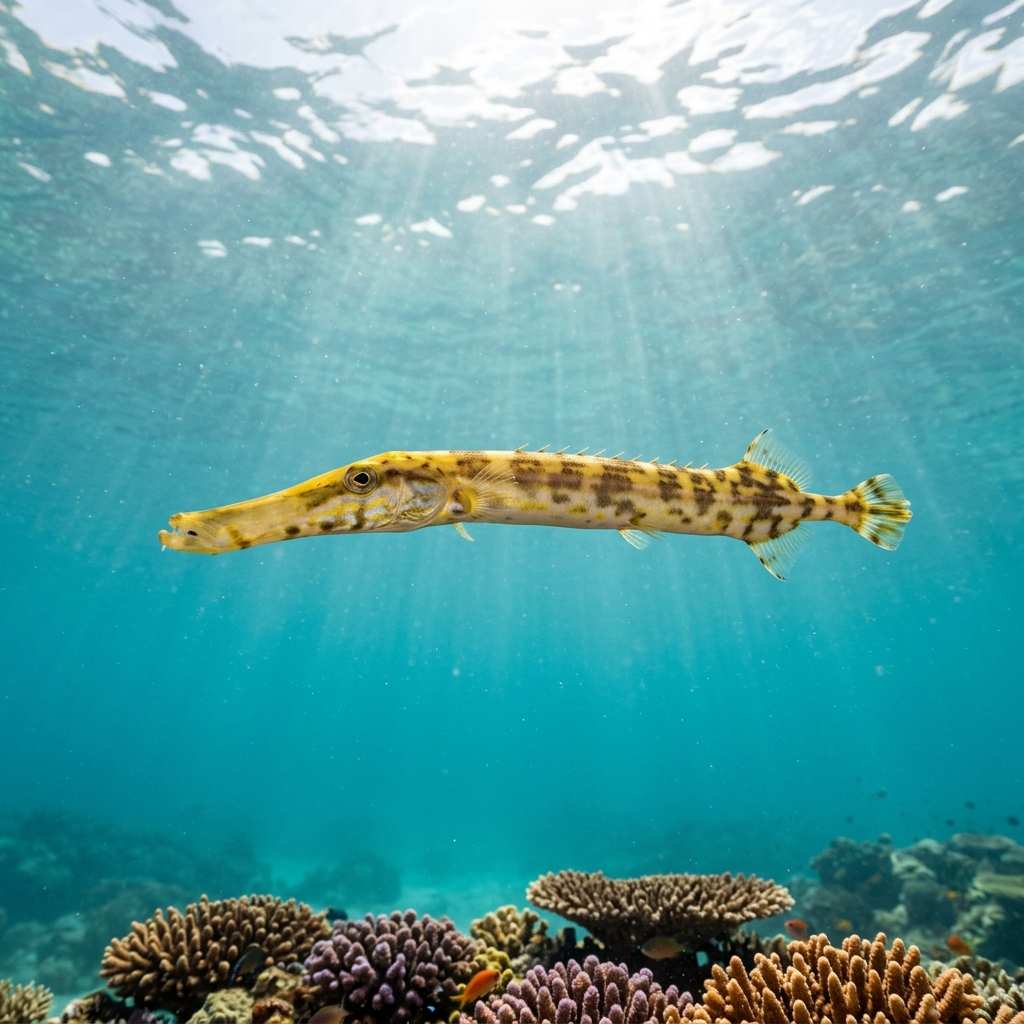
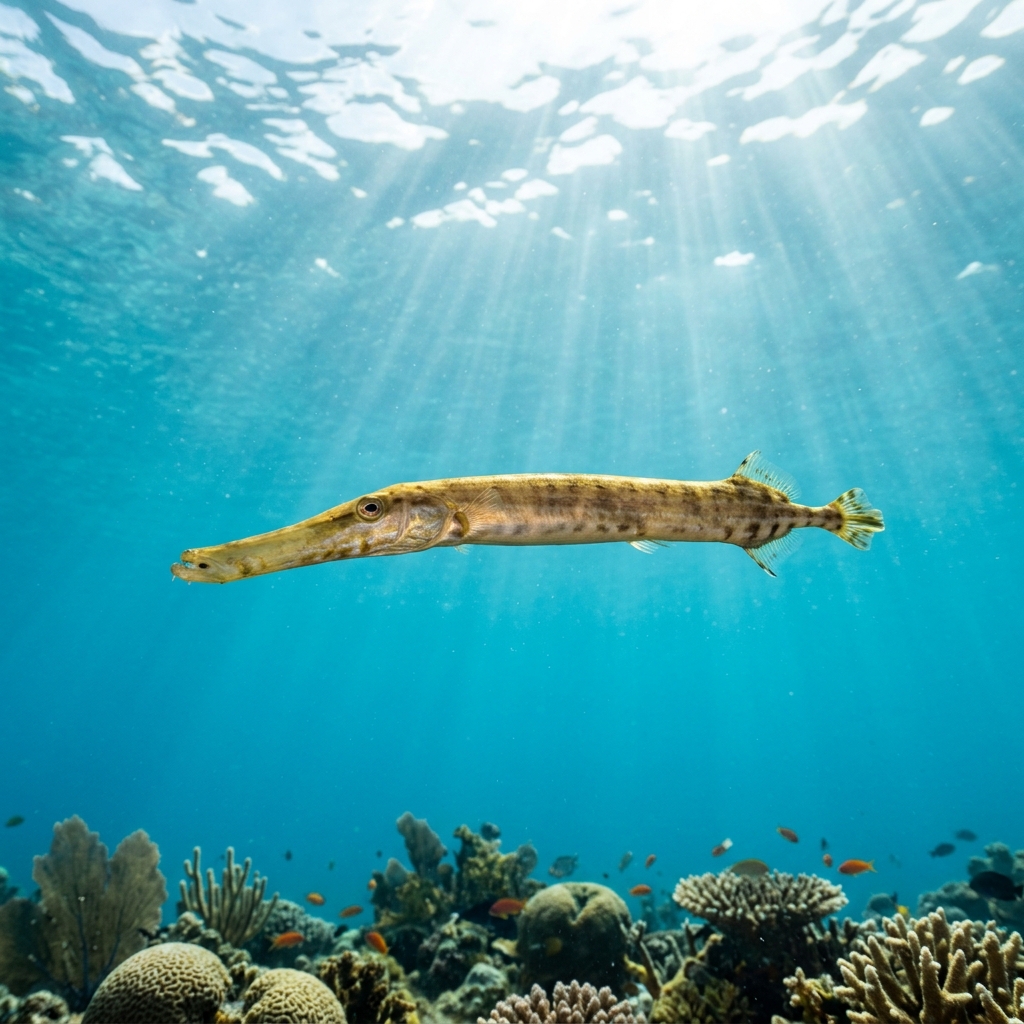
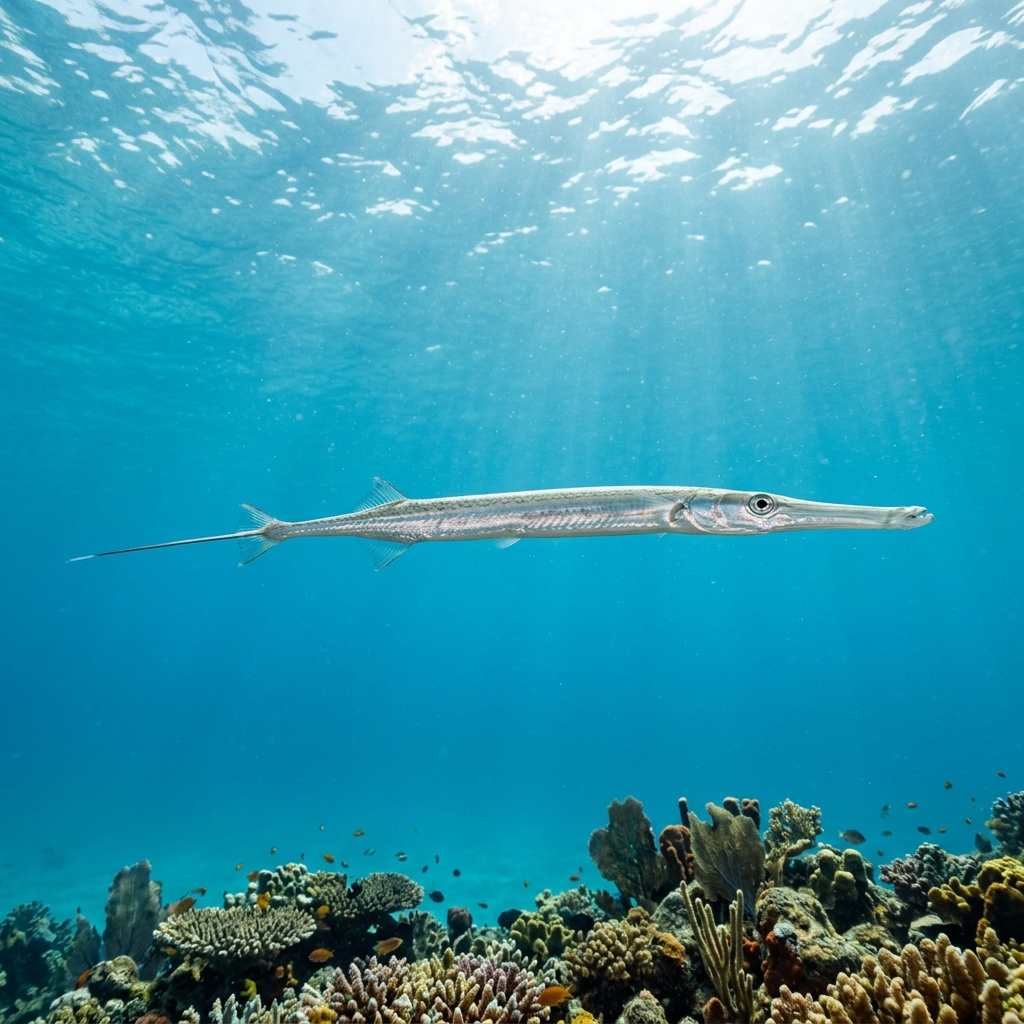
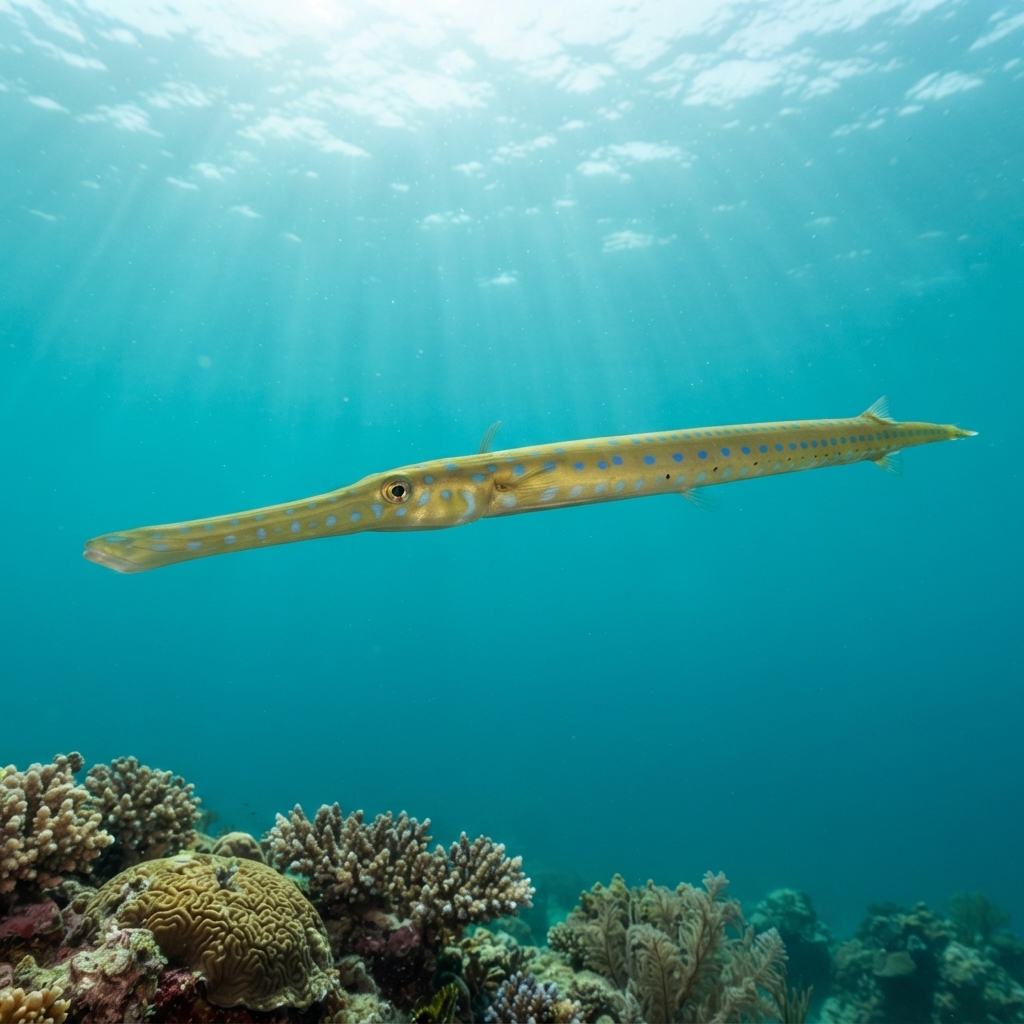
One of the longest bony fish you will encounter on a reef, reaching well over a metre and tapering into a distinctive long filament at the tail. The body is elongated and pipe-like with a tubular snout, silver-green above and pale below, scattered with small iridescent blue spots that catch the light. It typically holds itself rigid and near-horizontal close to the reef surface, which makes it stand out from the background clutter once your eye is trained. The blue spots and tail filament together are the key field marks that distinguish it from similar species.
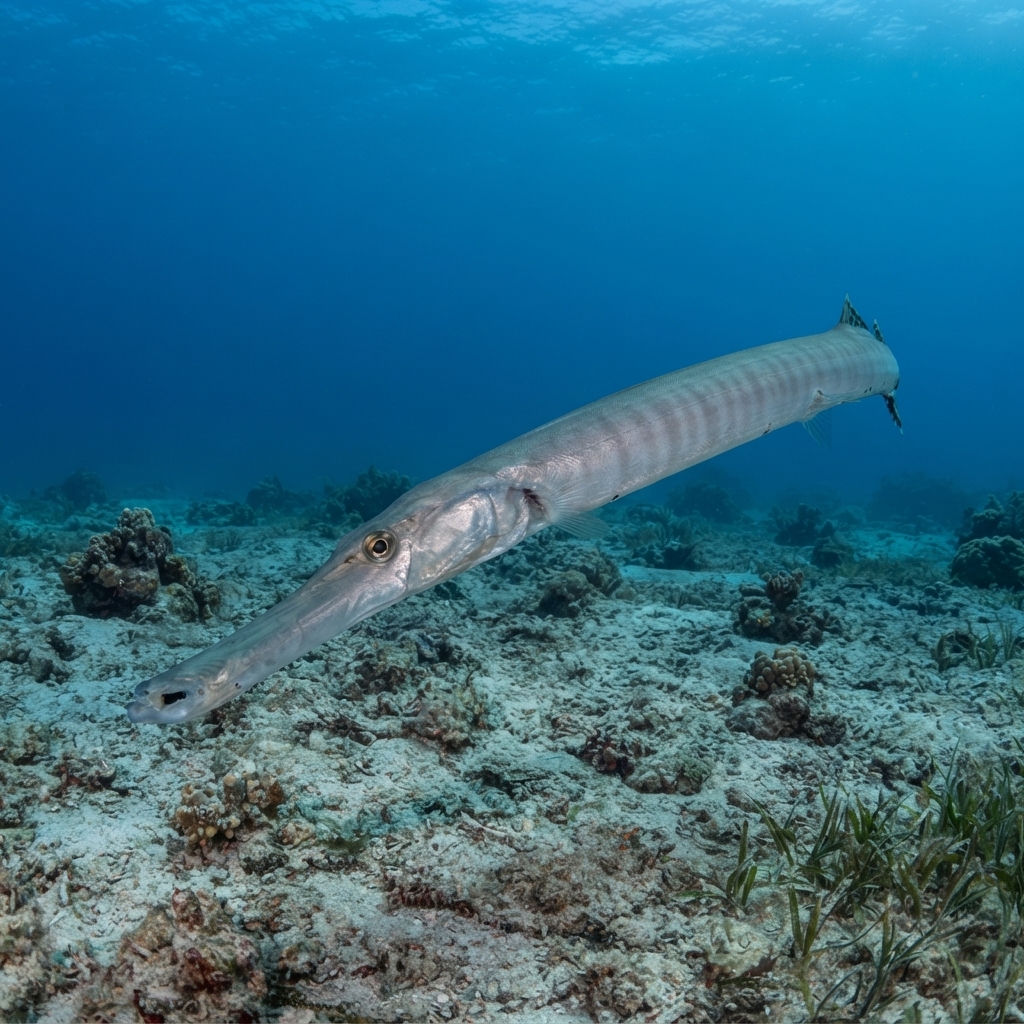
Typically seen hovering just above the reef or drifting slowly along reef edges, often orienting itself parallel to ledges or among soft coral branches in an apparent attempt at ambush camouflage. It is an active predator that uses its tubular snout to create rapid suction, vacuuming up small fish and crustaceans. Most divers find it unhurried and indifferent to their presence, holding position long enough for a good look before gliding away with slow, sculling movements.
Despite its gentle drift, it is a remarkably fast striker: the elongated snout works like a pipette, generating a burst of suction that can engulf small prey fish faster than the human eye can follow.
Present year-round in both hemispheres with no concentrated season, which aligns with its preference for warm tropical water in the 22 to 29 °C range. If a destination holds that temperature, there is no better or worse month to look for one.
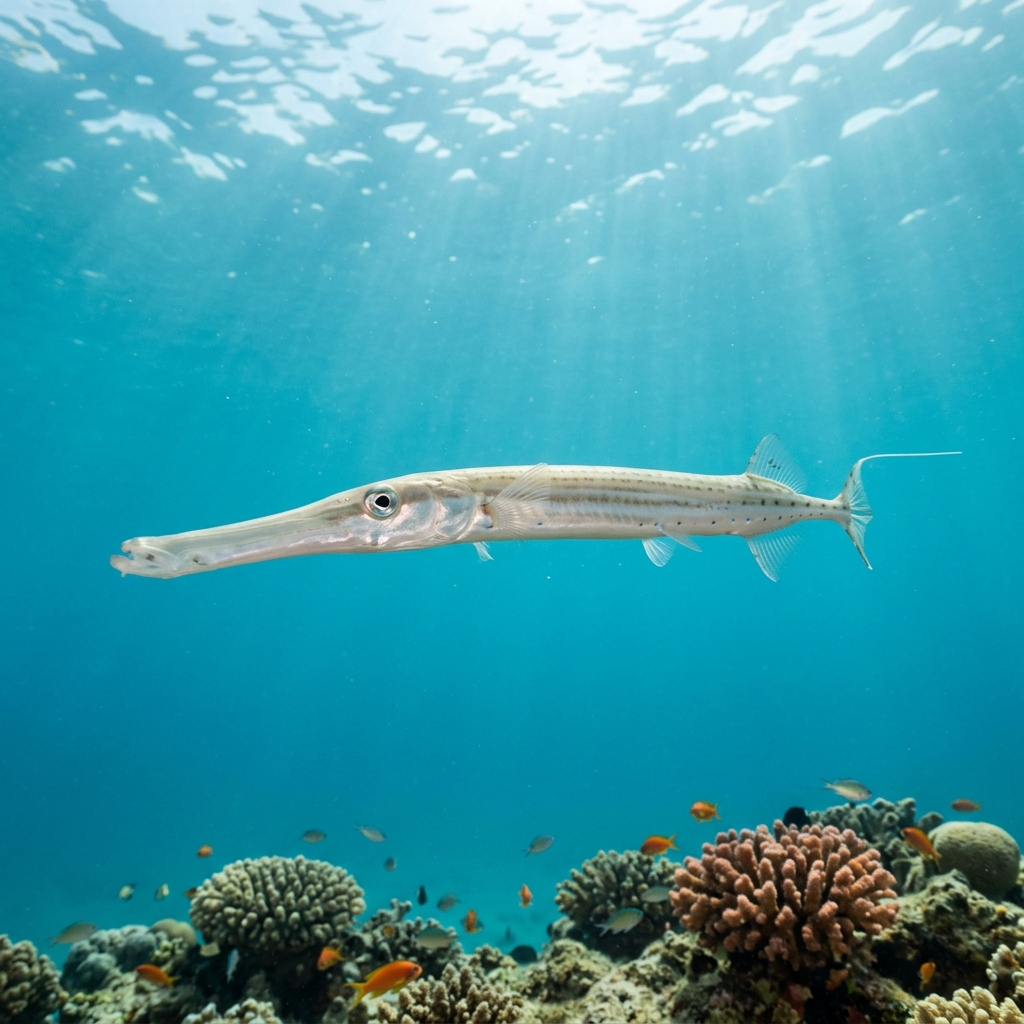
Reef neighbours a diver could mistake it for. Use the identification notes above to tell them apart.
Most commonly logged in the Maldives and the Egyptian Red Sea, particularly around Male and Ari Atolls and the reefs of Sharm el Sheikh. Strong records also come from the Philippines, Indonesia and Australia, with Hawaii standing out as a reliable sighting destination within the United States. In total it has been logged across a wide sweep of Indo-Pacific and Red Sea sites, making it one of the most geographically widespread reef fish a diver will encounter.
Mapping where Bluespotted Cornetfish is logged…
The species is most reliably logged in the Maldives, the Egyptian Red Sea around Sharm el Sheikh, and across the Philippines and Indonesia. Hawaii is also a strong site for sightings within the US. Its range spans much of the Indo-Pacific and Red Sea.
Any time of year. Sighting data from both hemispheres show no concentrated season, and the species is comfortable across the warm tropical temperatures found year-round at its top destinations.
Look for an extremely elongated, pipe-like body over a metre long, silver-green with scattered iridescent blue spots, and a long whip-like filament at the tail. That combination of length, tube snout, blue spots and tail filament is distinctive. It usually holds still near the reef, which helps.
Typical adults reach around 112 cm, though larger individuals are recorded. That makes it one of the longer bony fish commonly seen on Indo-Pacific reefs, and its slender shape makes it look even bigger than it is.
No. They pose no threat to divers and are generally calm around people. Like any wild animal they should not be harassed or handled, but an encounter is entirely safe.
Site and sighting data is aggregated from diver logs, iNaturalist and GBIF. For taxonomy and conservation status:
Atlantic Cornetfish
464 sites