Fistulariidae spp.
Spot flutemouths on reefs from Florida to the Maldives and Philippines. Learn how to tell them apart from trumpetfish in warm 21-29 °C waters.
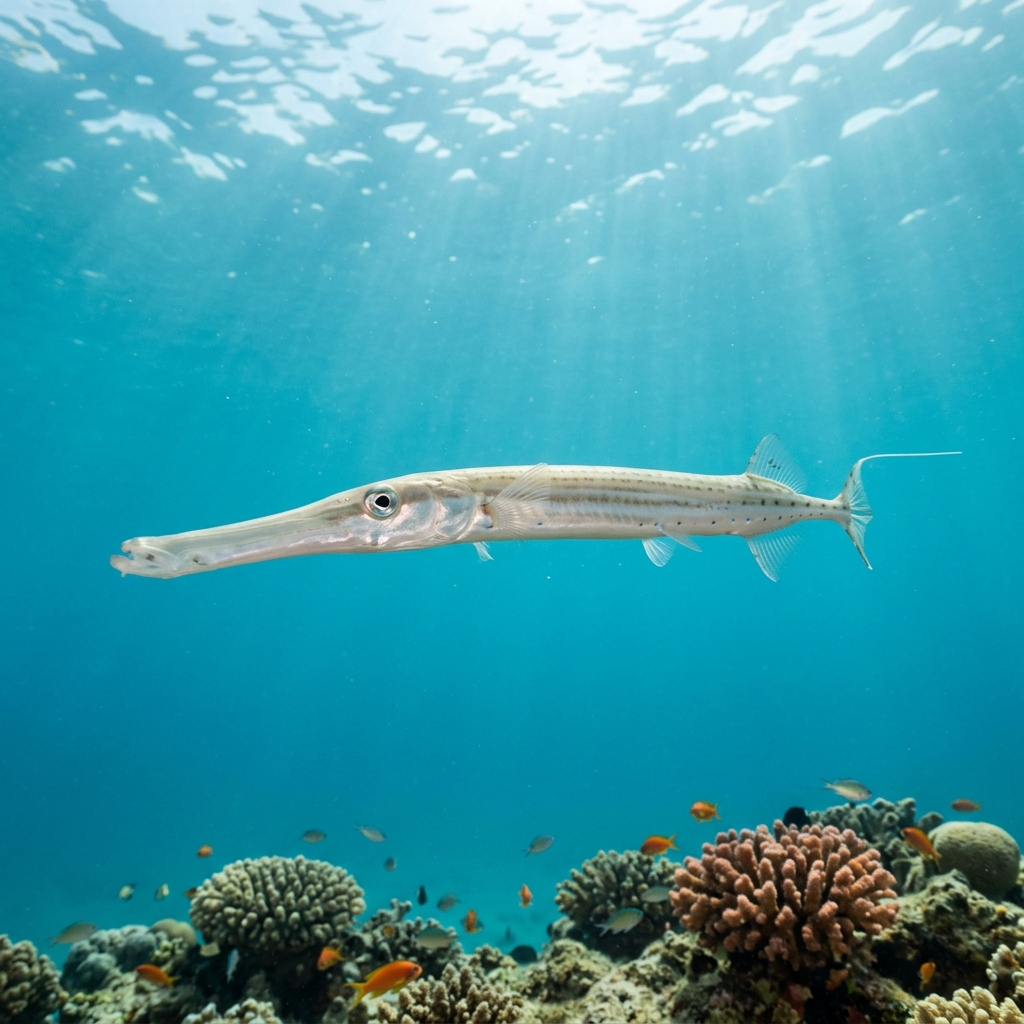
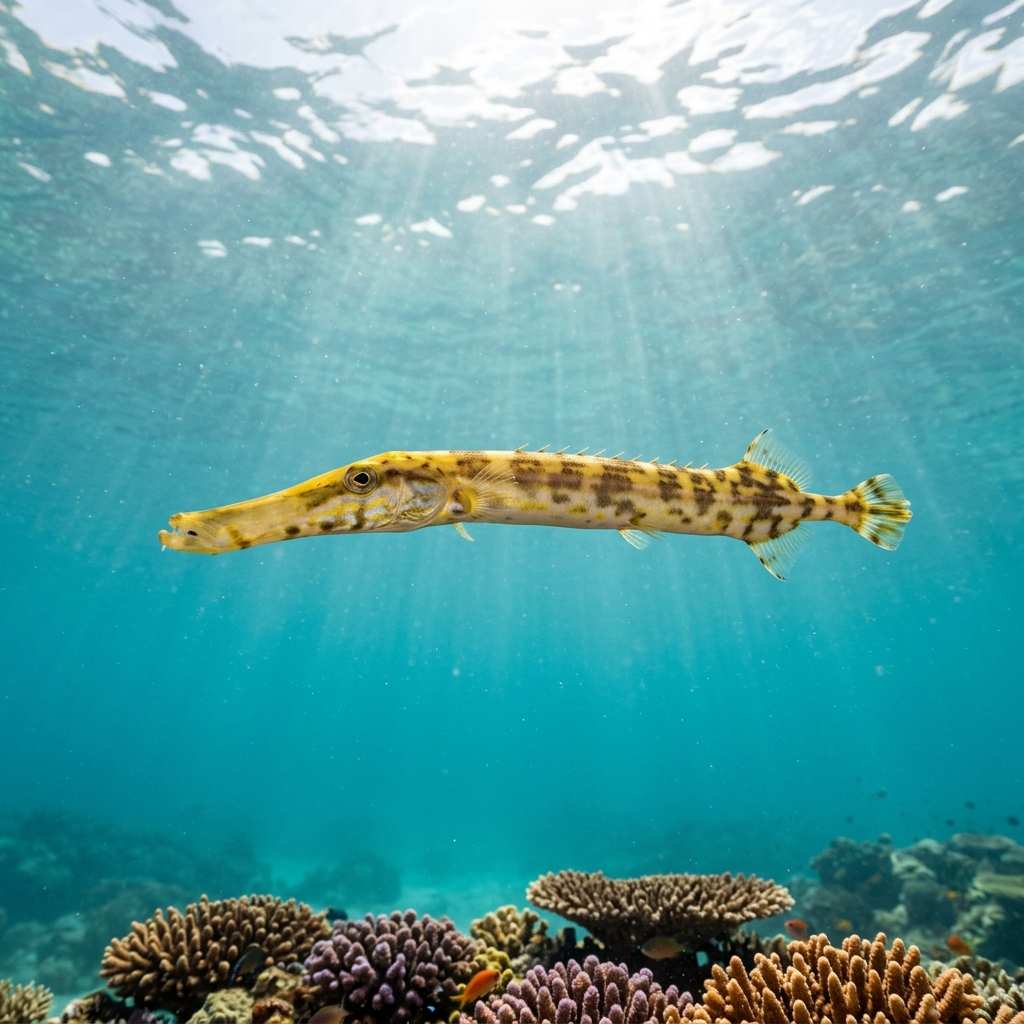
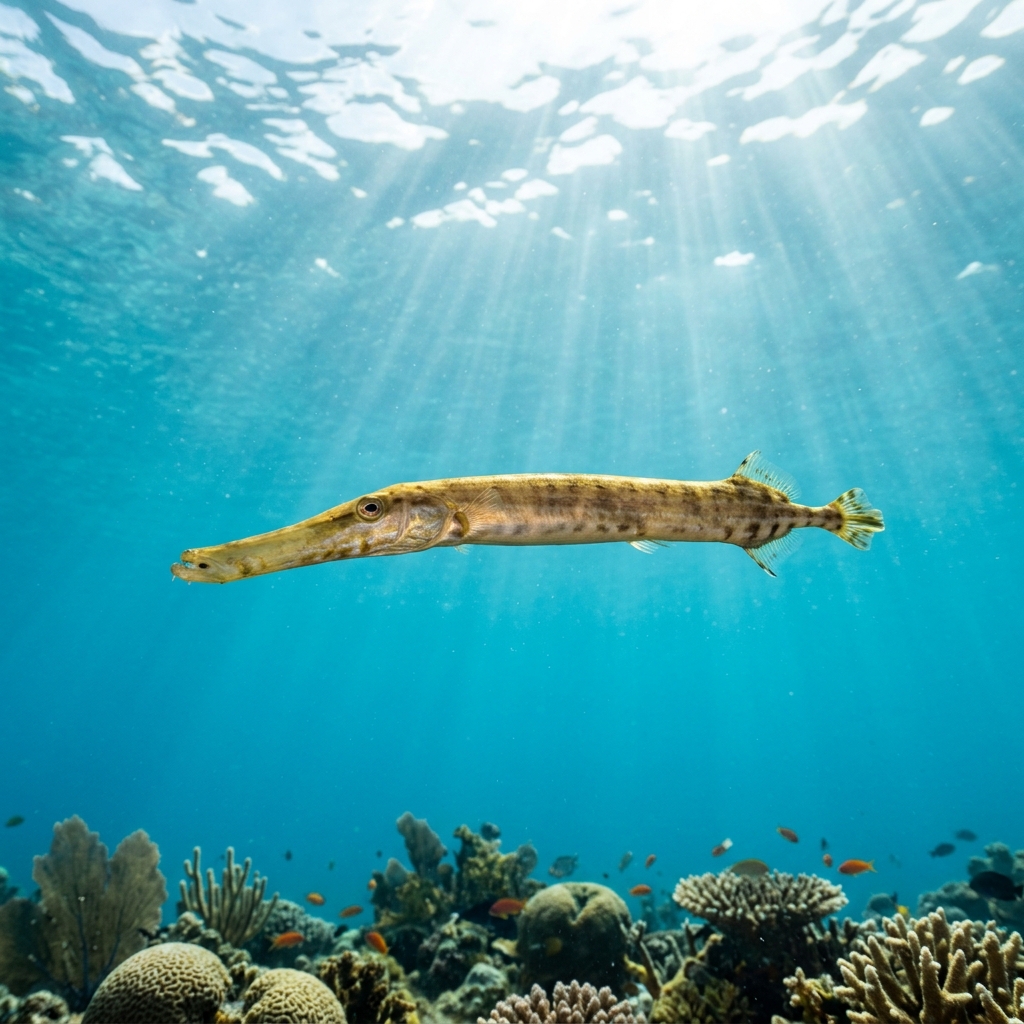
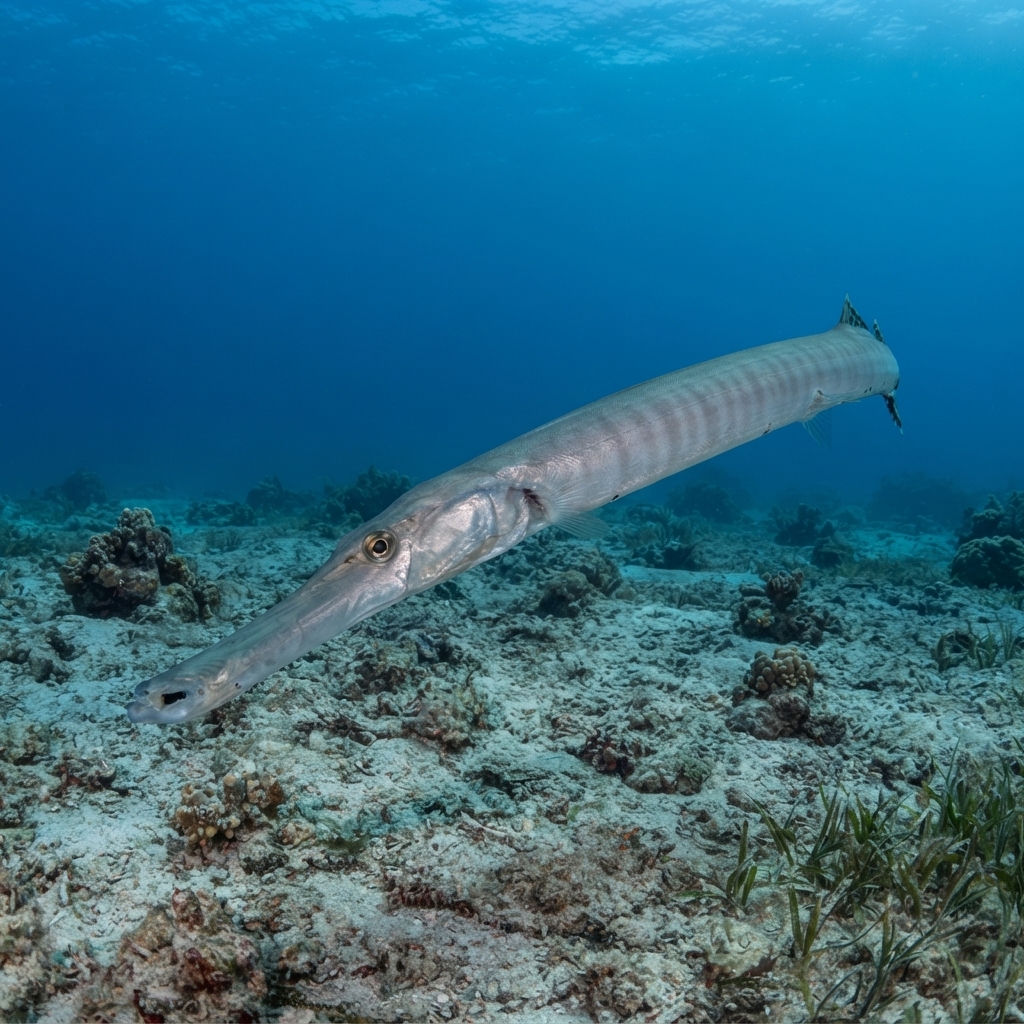
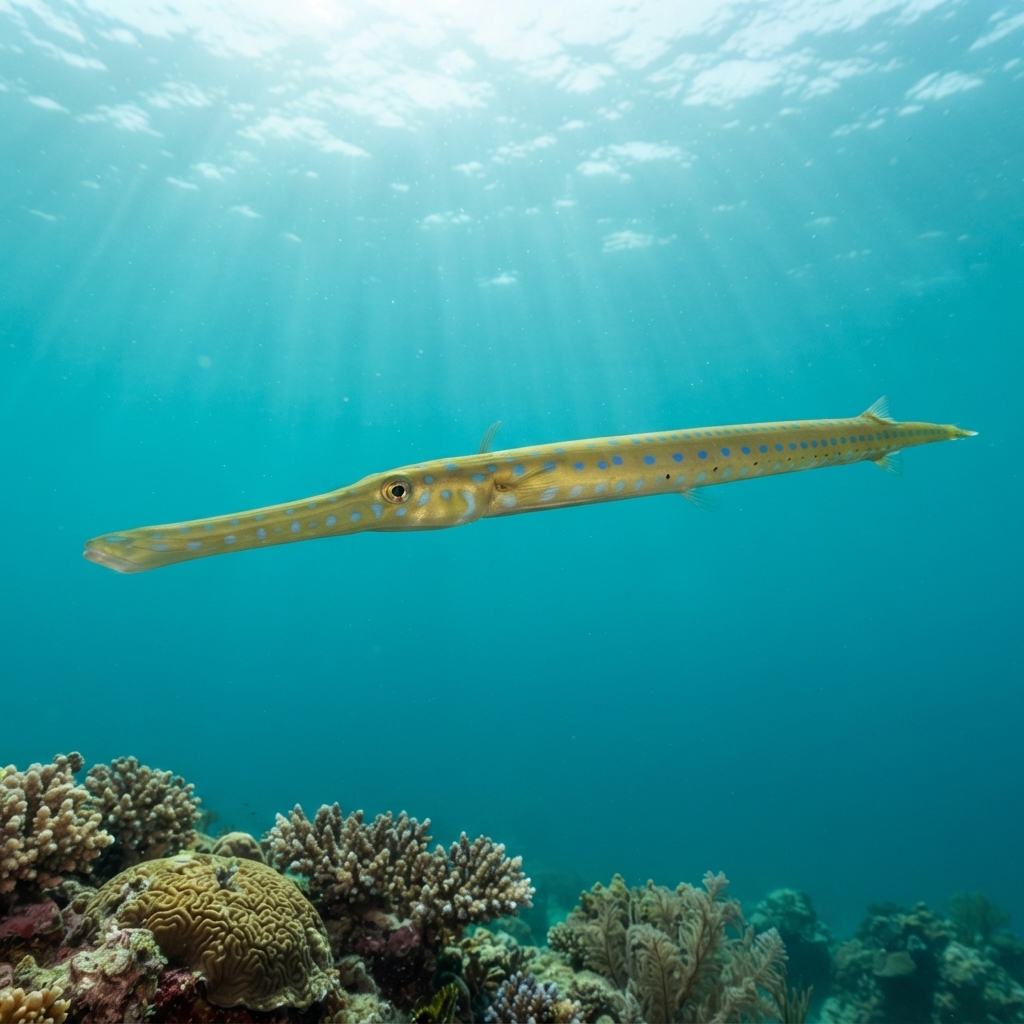
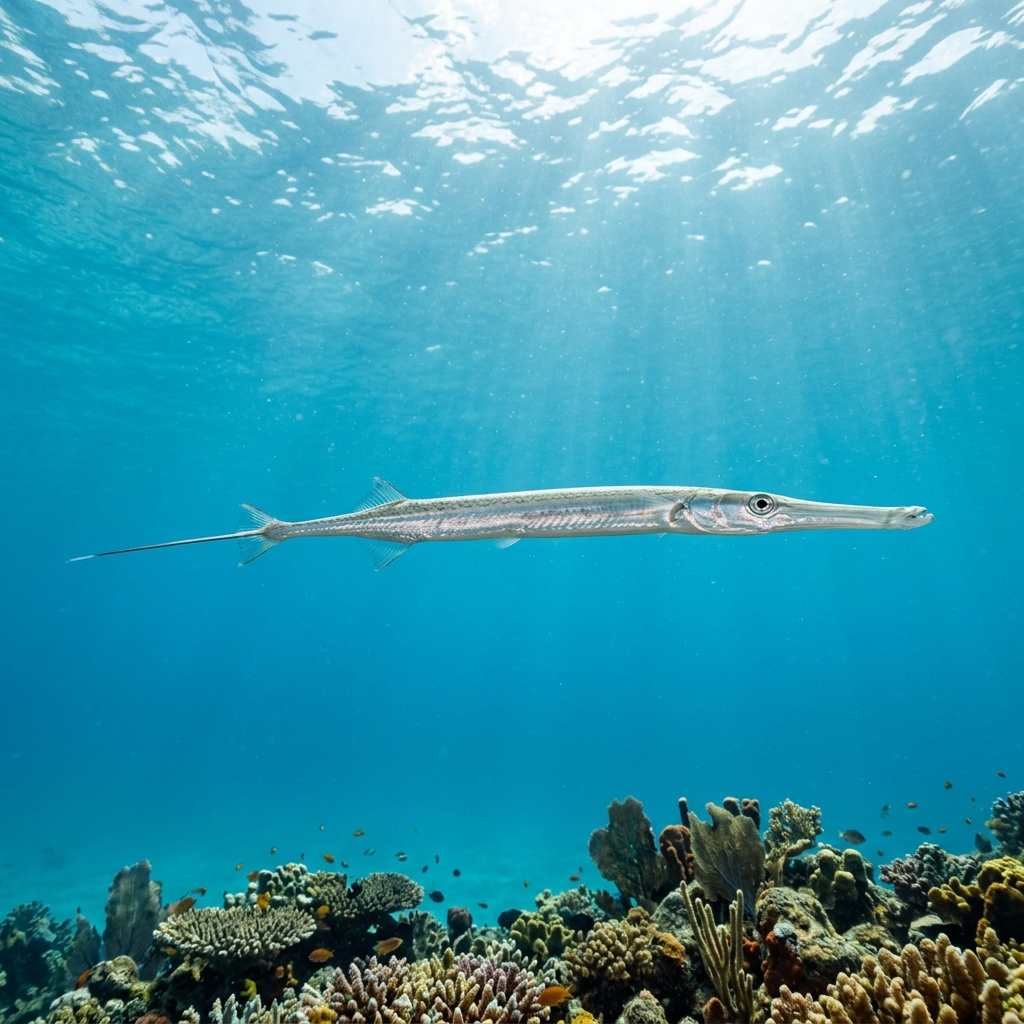
Long, pipe-like body with a needle-thin snout and a distinctive trailing filament extending from the tail gives flutemouths an unmistakable silhouette underwater. Colouration varies by species but runs from silvery-green to brownish or bluish, often with faint lateral stripes. They typically hover at an angle to the reef or drift slowly just above the substrate, which makes them easier to spot once you know the posture to look for.
Flutemouths are unhurried predators, drifting slowly above the reef or lurking in the water column with their body angled downward, scanning for small fish and crustaceans below. They are not skittish around divers and will often hold position or drift alongside you at a comfortable distance. Look for them in mid-water just above coral gardens or rubble flats, typically as solitary individuals rather than in groups.
Flutemouths are known to shadow larger fish such as parrotfish or surgeonfish, using them as unwitting cover to ambush small prey that would otherwise flee a lone predator approaching in open water.
No strong seasonal pattern emerges from the data, and flutemouths are observed across a water-temperature range of roughly 22 to 29 °C, putting them comfortably on tropical and warm subtropical reefs year-round. Any month is worth looking.
Reef neighbours a diver could mistake it for. Use the identification notes above to tell them apart.
Flutemouths are logged across a wide range of tropical and subtropical destinations, with the strongest records coming from Florida and the US Southeast, the Maldives, the Philippines, Indonesia, and Brazil. The Visayas and Palawan in the Philippines, Queensland and Western Australia, and the Rio de Janeiro coast of Brazil are all reliable regions. They turn up across the Caribbean too, with Cuba among the more frequently cited sites.
Mapping where Cornetfish is logged…
Flutemouths are logged across a broad range of tropical regions. The strongest concentrations of sightings come from Florida, the Maldives, the Philippines (particularly the Visayas and Palawan), Indonesia, and the Brazilian coast around Rio de Janeiro and São Paulo. They also appear regularly across the Caribbean, including Cuba, and throughout Queensland and Western Australia.
There is no single peak season, flutemouths are encountered year-round across their range. They are comfortable in water temperatures from around 22 to 29 °C, which covers most tropical reef destinations at any time of year, so you do not need to time a trip specifically around them.
The key feature is the extremely elongated, tube-like body capped by a long tubular snout, with a fine filament trailing from the tail. Colouration is usually silvery-green to brownish. Flutemouths tend to hover diagonally or drift slowly in mid-water, which is a useful behavioural cue as well as a visual one.
Depending on the species, flutemouths can reach up to around 1.5 metres in total length, much of that accounted for by the elongated body and tail filament. In the water they often look longer than you expect because the tail filament is transparent and easy to miss.
No. Flutemouths pose no threat to divers. They are slow-moving, non-aggressive predators that feed on small fish and crustaceans. They will generally ignore you or drift away at a leisurely pace.
Site and sighting data is aggregated from diver logs, iNaturalist and GBIF. For taxonomy and conservation status:
Atlantic Cornetfish
464 sites