Aulostomus strigosus
A slender, tube-mouthed hunter logged at reefs across Tenerife and Gran Canaria year-round in 15.5-27.7C water. Here's how to find and ID one.
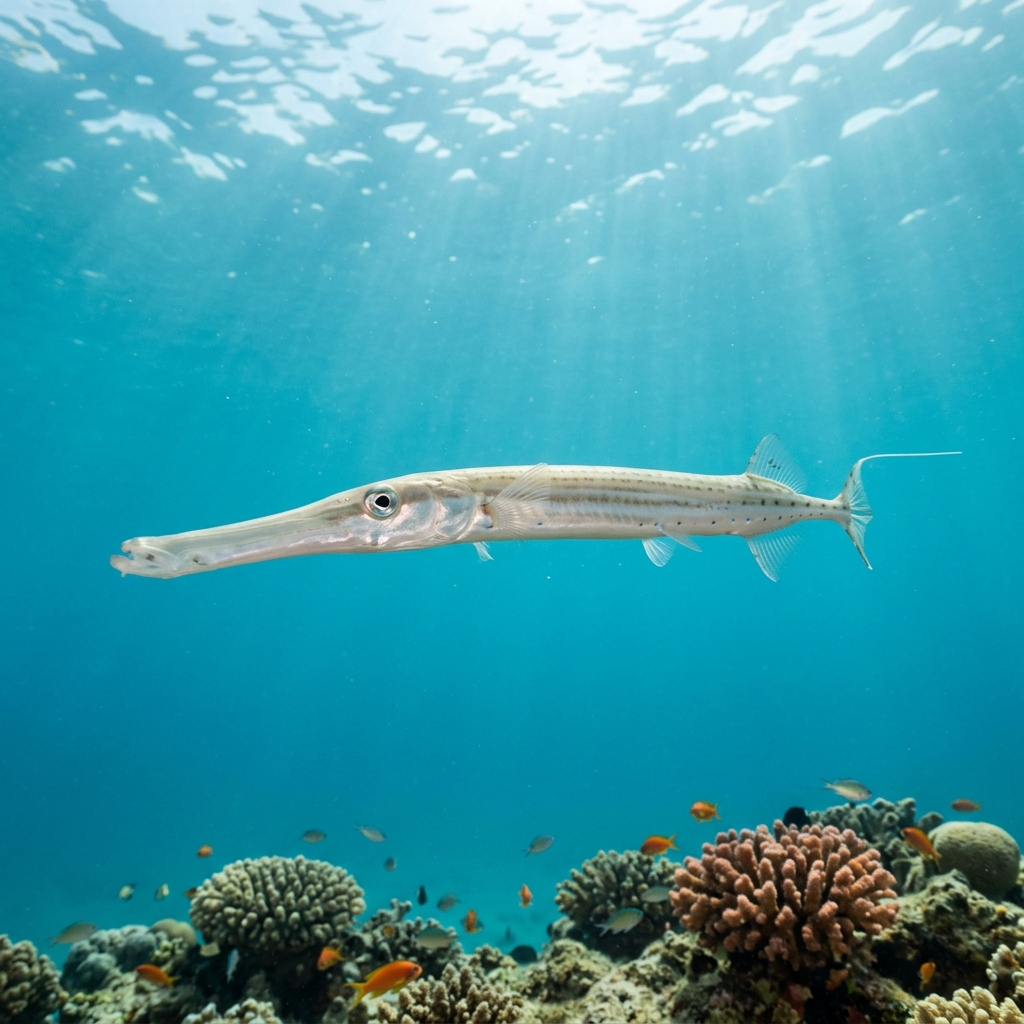
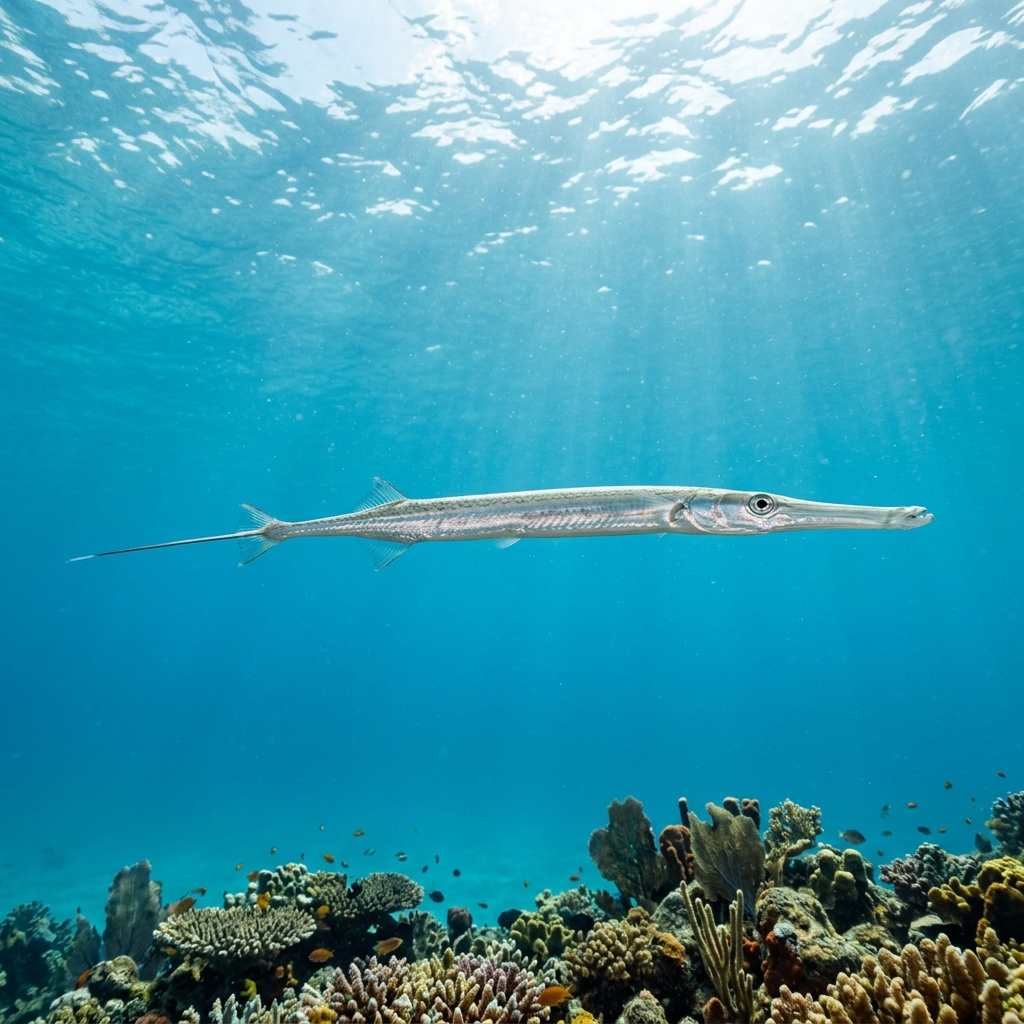
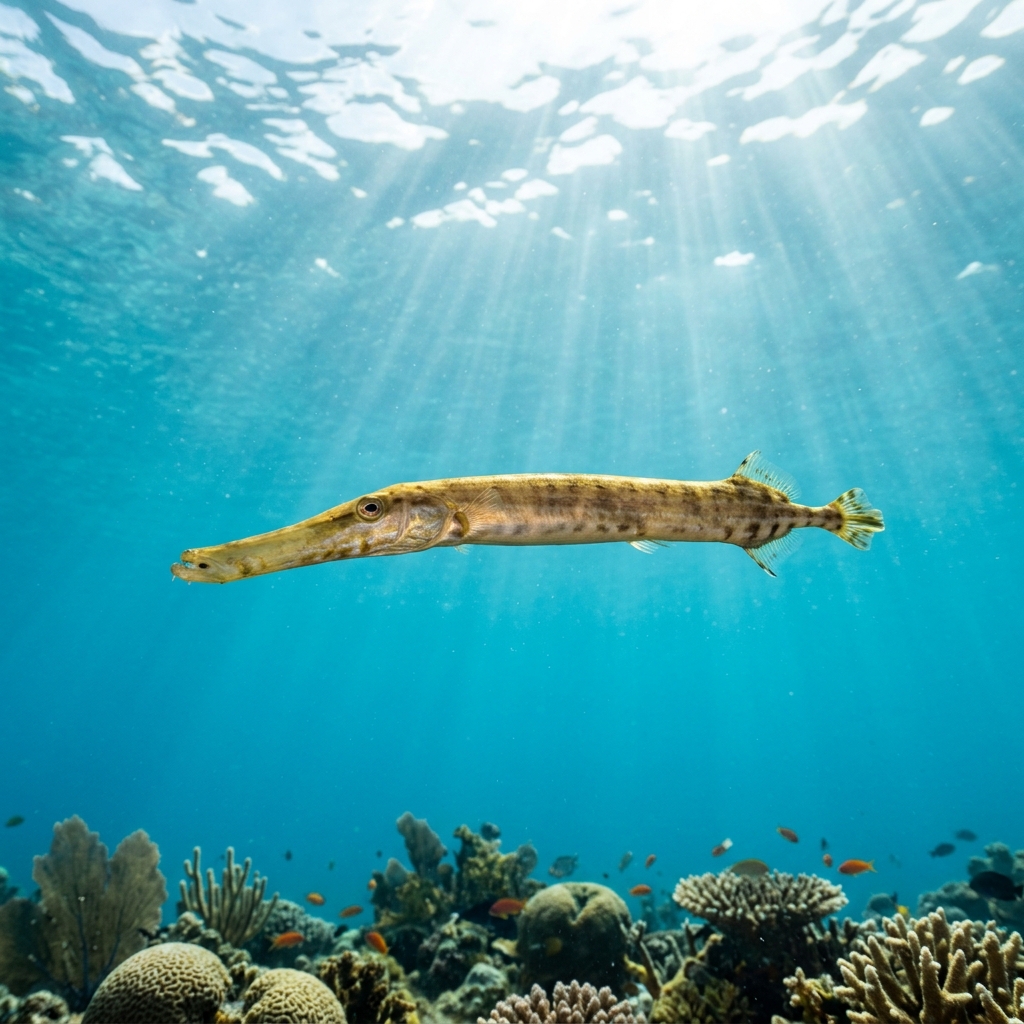
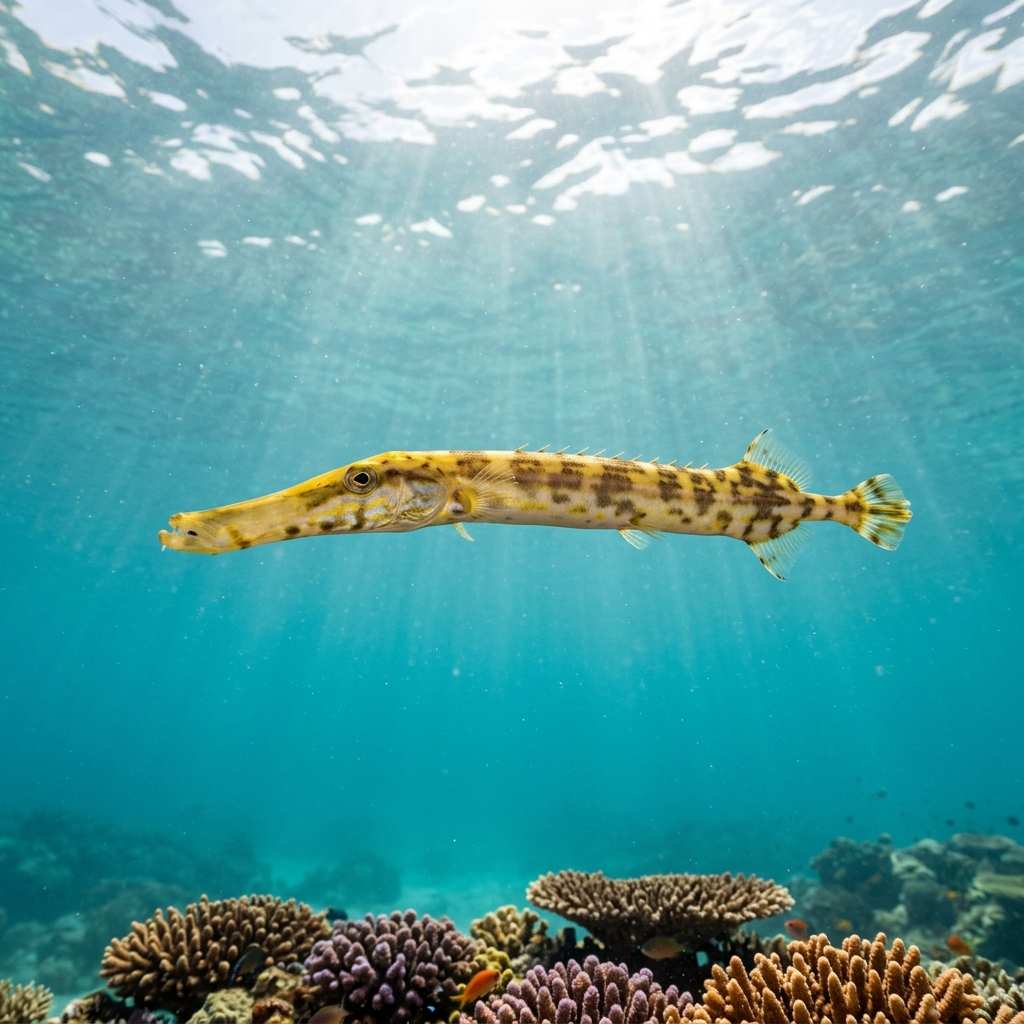
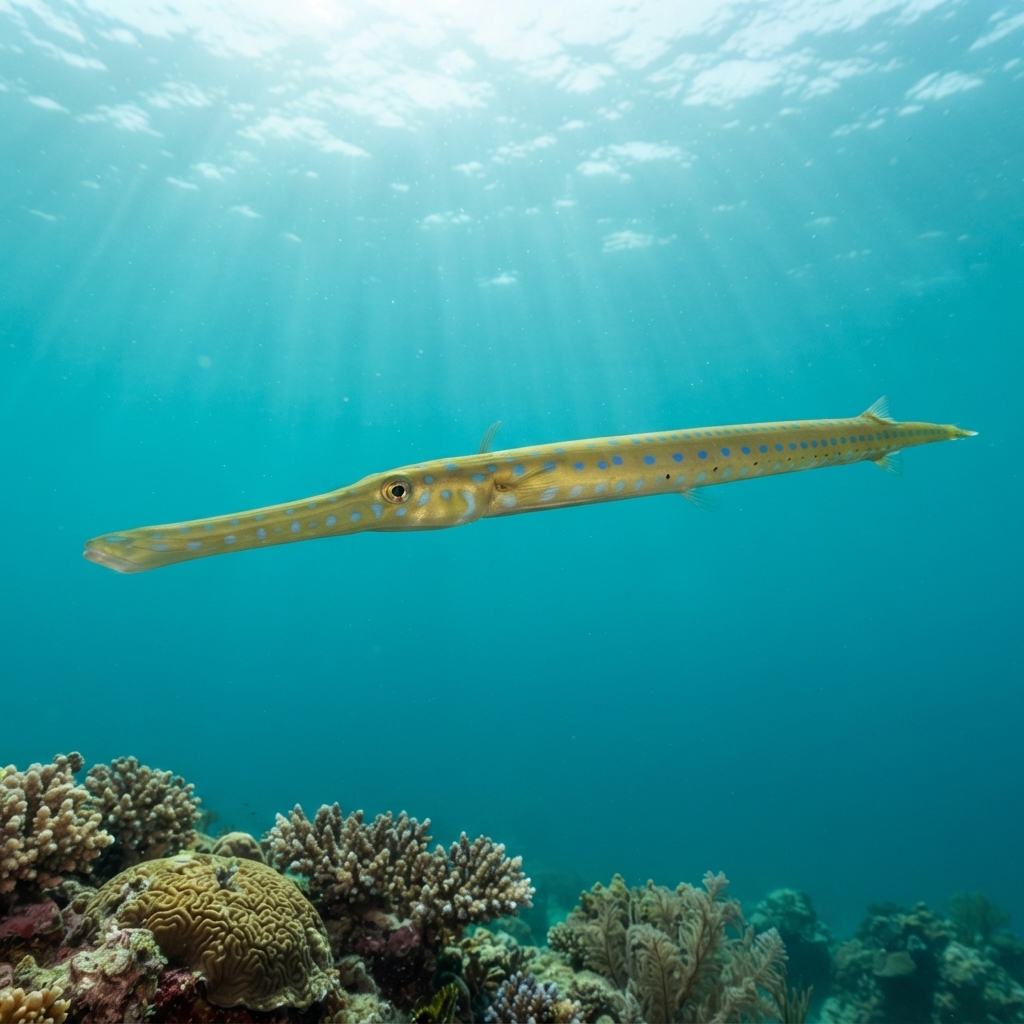
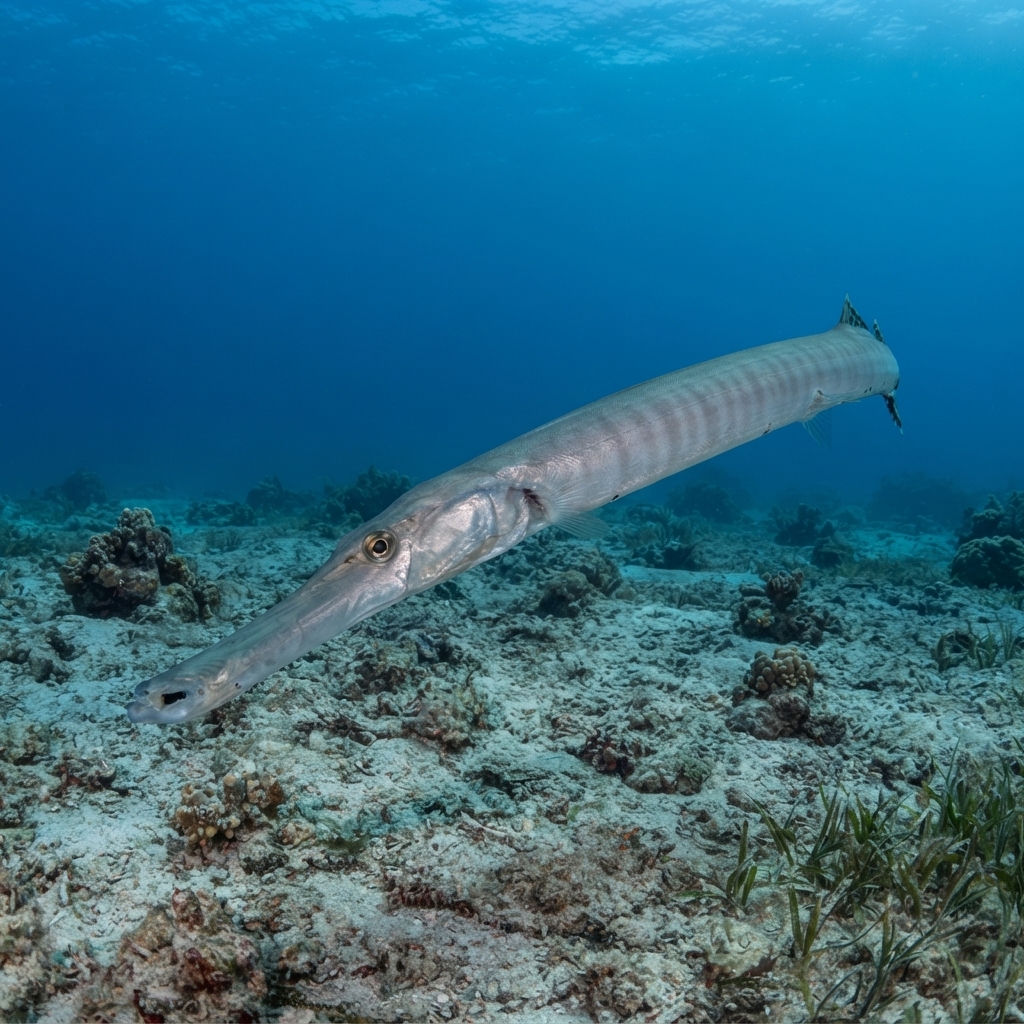
Look for an extremely elongated, almost stick-like body with a long tubular snout ending in a small upturned mouth, built for sucking in small prey at close range. Colouration runs from mottled brown to greenish-grey, often with faint dark streaks along the flanks that help it disappear against rock and rubble. It typically hangs in the water at an odd, motionless diagonal, sometimes head-down, which is often the biggest giveaway before you clock the shape. At around 52 cm it's slimmer than it looks in photos, more like a length of drifting rope than a typical reef fish.
Divers most often find it hovering motionless near rock walls or sandy patches, using its shape and drab colouring to blend in while it waits to ambush small fish and shrimp. It tends to hold still or drift slowly rather than bolt when a diver approaches, sometimes tilting into that head-down posture to mimic a piece of debris. Most logs describe it as an uncommon-to-common encounter, so it rewards divers who scan open, low-relief ground rather than just the busiest coral heads.
That tube-shaped snout works like a pipette: it creates sudden suction to pull small fish and crustaceans in from a short distance, which is why it can stay almost perfectly still and still feed successfully.
Sightings show no clear seasonal pattern, and with a comfortable range of 15.5 to 27.7C it's encountered on these reefs across the year rather than in one particular window.
Reef neighbours a diver could mistake it for. Use the identification notes above to tell them apart.
This is a Canary Islands fish first and foremost, with the densest logging on Tenerife, Gran Canaria, Lanzarote, Fuerteventura, El Hierro and La Palma. It's also a reliable find off Madeira Island and around São Vicente in Cape Verde, making the eastern Atlantic islands the core range for divers chasing this species.
Mapping where Atlantic Cornetfish is logged…
The Canary Islands are the stronghold, especially Tenerife, Gran Canaria, Lanzarote, Fuerteventura, El Hierro and La Palma. It's also logged consistently off Madeira Island and around São Vicente in Cape Verde.
There's no strong season in the sighting data, and its comfort range of 15.5 to 27.7C means it's present on eastern Atlantic reefs throughout the year, so any time you're diving the Canaries or Madeira is fair game.
Check for a long, thin, tube-snouted body, usually brownish or greenish with faint streaking, hanging motionless at an angle near rock or sand. The elongated shape and habit of drifting head-down are the clearest tells.
They typically reach around 52 cm, appearing as a slender, elongated shape in the water rather than a bulky fish.
Its tubular snout works like a suction pipette, letting it snap up small fish and shrimp from close range without needing to chase them, which is why it can stay almost still for long stretches.
Site and sighting data is aggregated from diver logs, iNaturalist and GBIF. For taxonomy and conservation status:
Trumpetfish
2,093 sites