Tritonia hombergii
A bulky cold-water nudibranch logged across Bohuslän, Sweden and Østlandet, Norway in waters near 7 to 13 C, seen year-round.
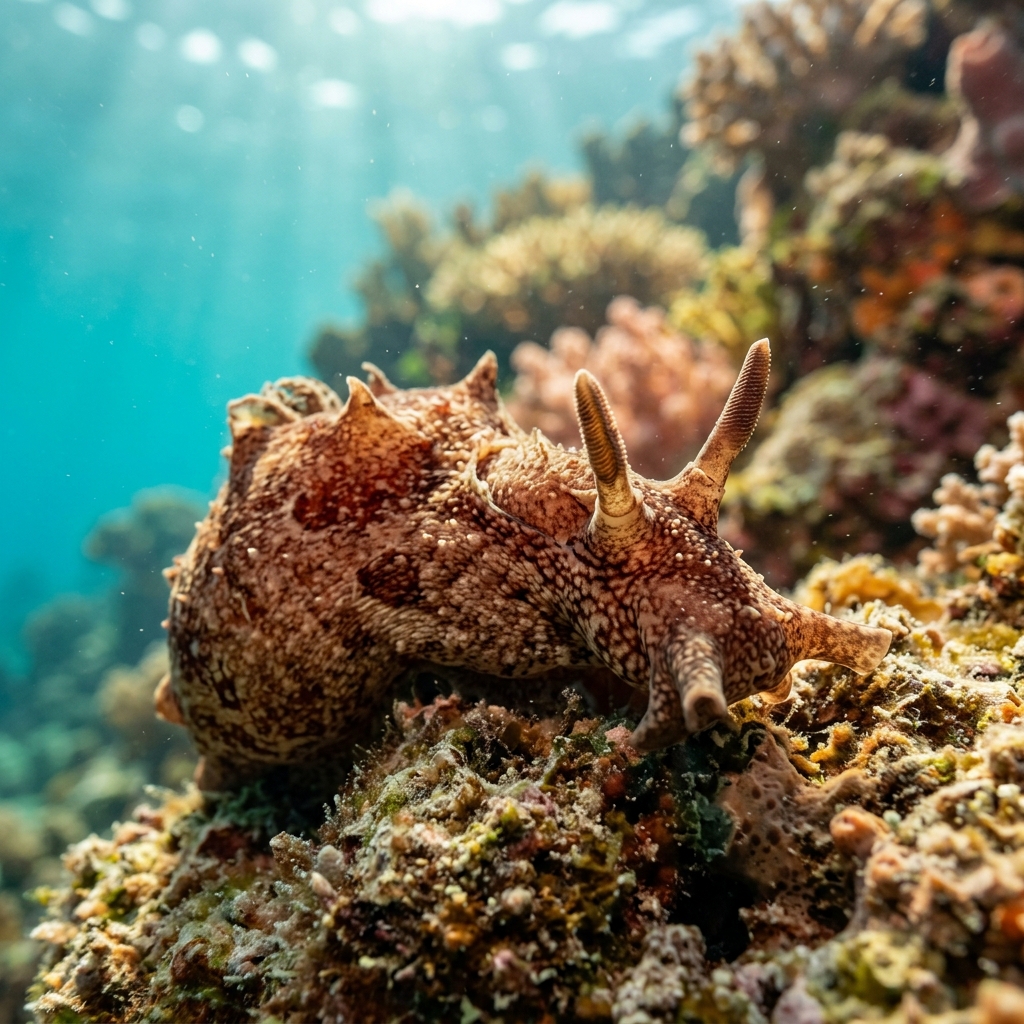
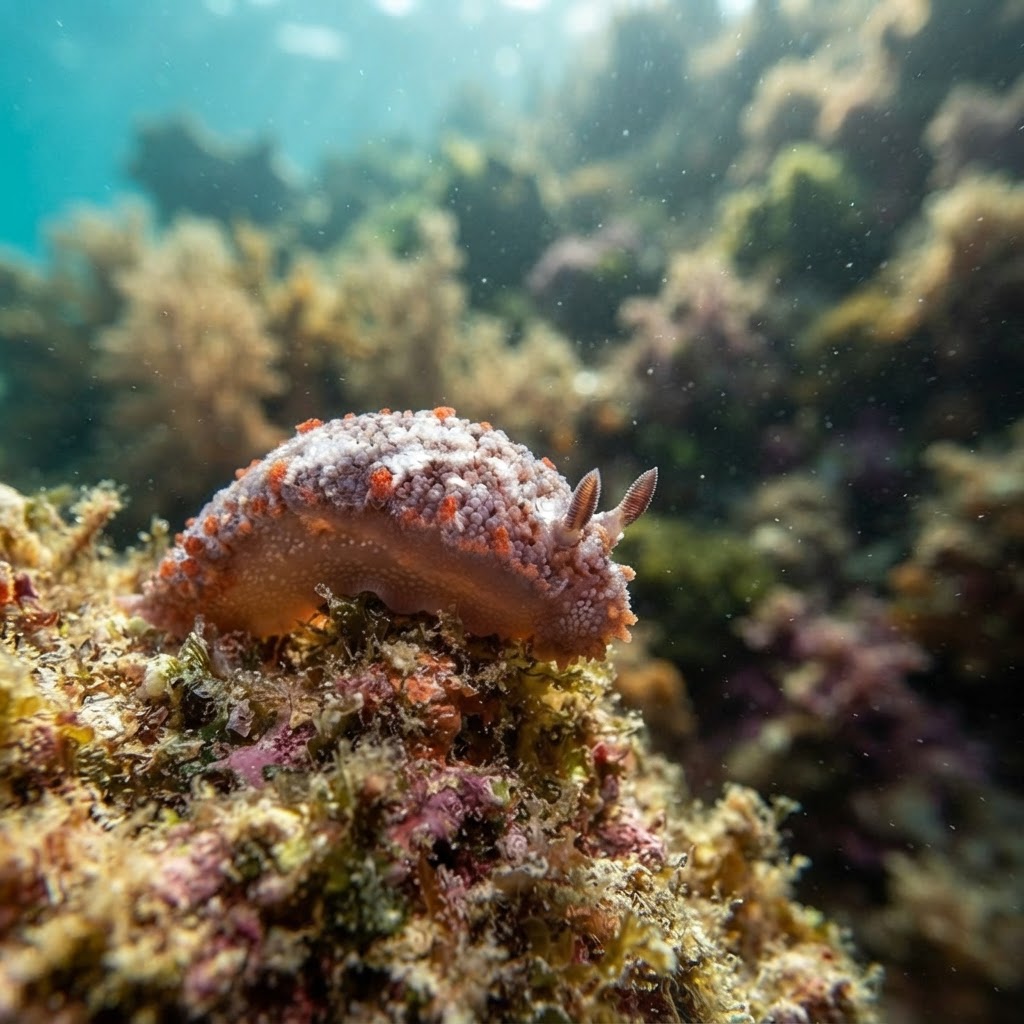
Bulky and soft-bodied, growing far larger than most nudibranchs divers encounter, with a mottled grey, brown or purplish-grey colour that blends into rock and gravel seabeds. The back carries rows of branching, tree-like gill tufts running down each side, giving it a rough, frilly outline rather than a smooth slug shape. Its head end is broad and flattened with short, stubby tentacles, and it tends to sit heavily on the substrate rather than swim.
Divers usually find it parked on rock, gravel or mixed ground, moving slowly and showing little reaction to torches or close approaches. It is most often spotted during a deliberate, slow-paced reef scan rather than a swim-through, since its colouring blends easily with the seabed. Look along ledges and boulder fields where soft corals and hydroids grow, as these areas seem to turn up sightings most often.
It is one of the larger nudibranchs divers will meet in north Atlantic and Scandinavian waters, and its size alone often surprises divers used to spotting smaller, brighter species elsewhere.
Sighting logs show no clear seasonal pattern, and its comfort range of roughly 7 to 13 C matches cold, temperate water year-round in Scandinavia and the UK, so any month with a dive plan works.
Most reliably found in Bohuslän, Sweden and around Østlandet in Norway, with a strong showing across England and Scotland in the UK. Norway offers the broadest spread of logged sites, including sightings further north in Nordland, but Bohuslän's rocky, current-swept ground is where divers most consistently report it as common.
Mapping where Homberg's Triton is logged…
It turns up most consistently in Bohuslän, Sweden and Østlandet, Norway, with further sightings across England and Scotland. Norway's coastline offers the widest spread of logged sites, including areas as far north as Nordland.
There is no strong seasonal pattern in sighting logs, so it is considered a year-round find. It sits comfortably in cold water between about 7 and 13 C, which covers most of the diving season in Scandinavia and the UK.
Look for a large, heavy-bodied nudibranch in mottled grey or brown tones with rows of frilly, branching gill tufts down its back. It sits low and moves slowly on rock or gravel, often blending into the seabed until you look closely.
Exact size figures are not well documented, but divers consistently note it as noticeably larger and bulkier than the small, brightly coloured nudibranchs typical of warmer reefs.
No, it poses no risk to divers. It has no sting or bite of concern and simply sits or moves slowly across the seabed when encountered.
Site and sighting data is aggregated from diver logs, iNaturalist and GBIF. For taxonomy and conservation status:
Light-spotted Aegires
3,168 sites