Tritonia exsulans
A small, uncommon nudibranch logged in cold California waters around 12 to 19 C, year-round with no clear season yet detected.
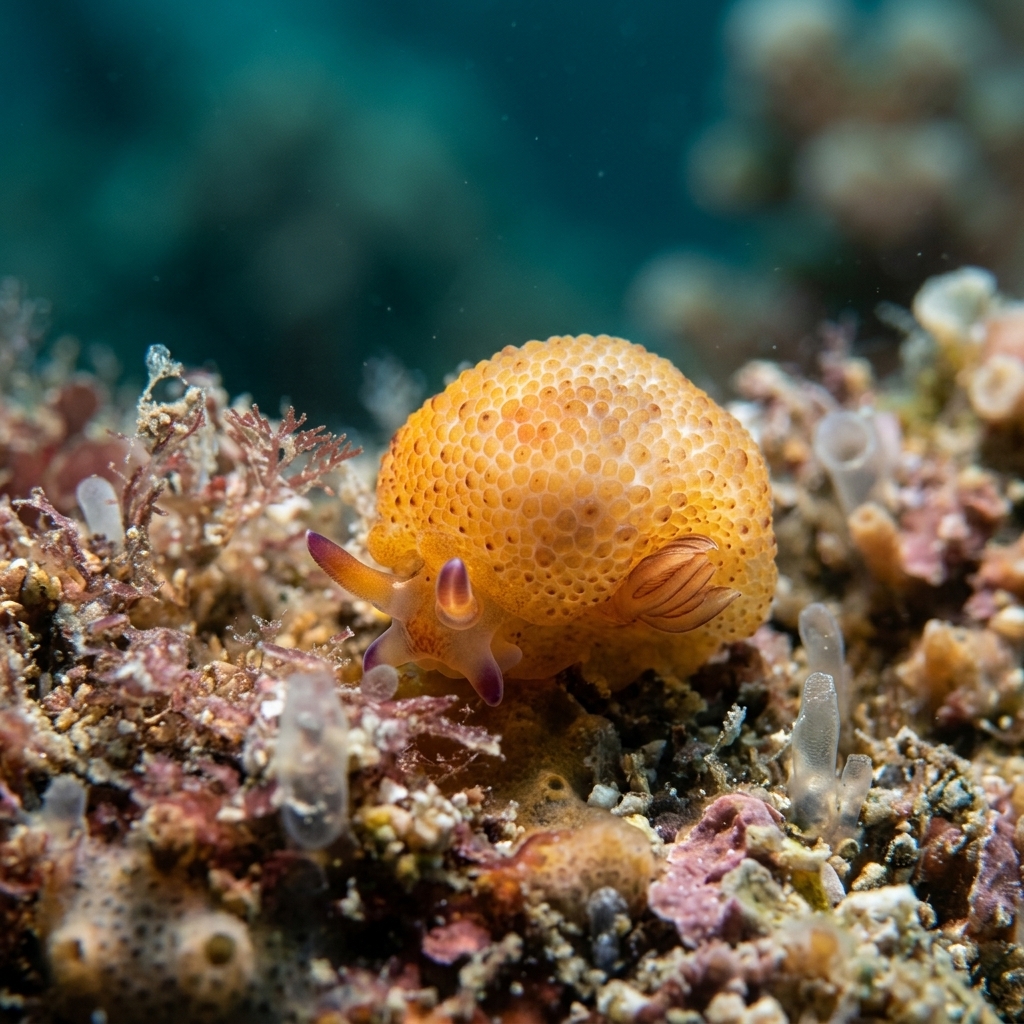
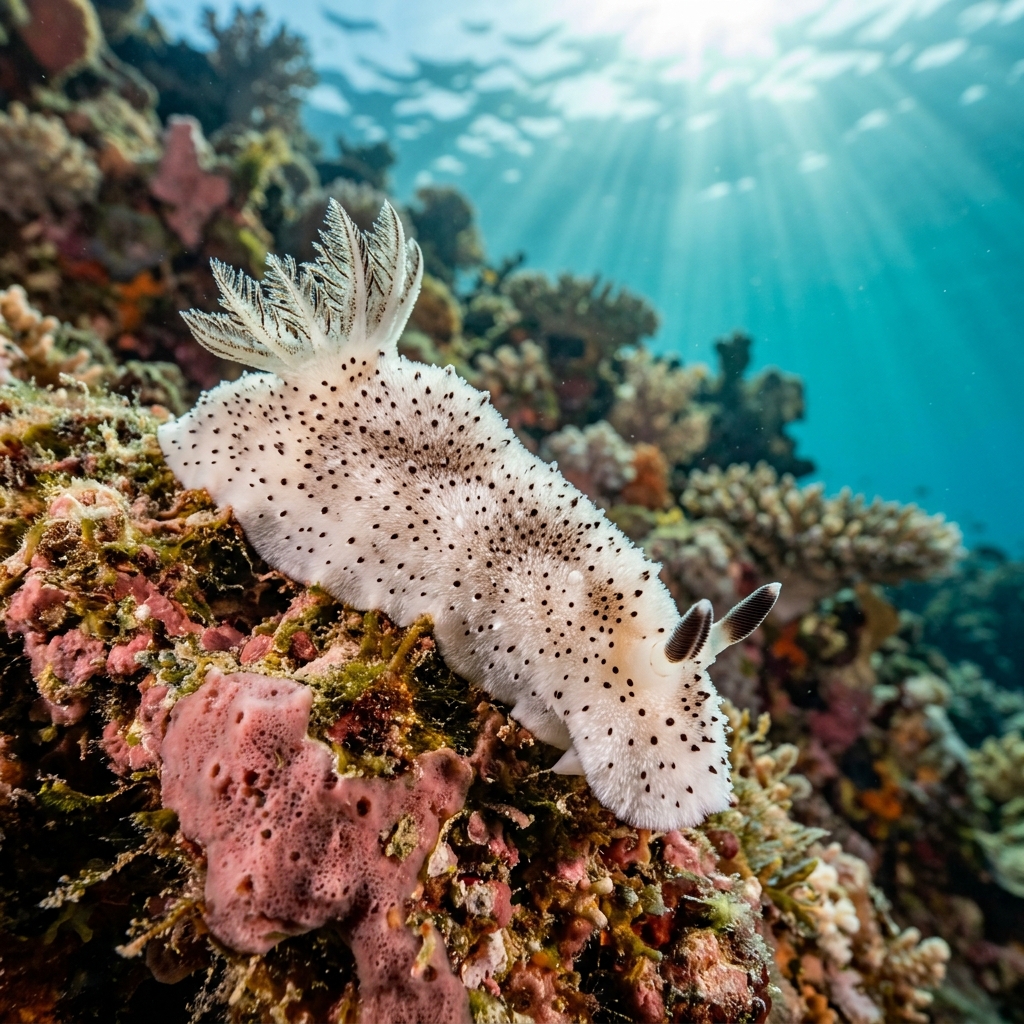
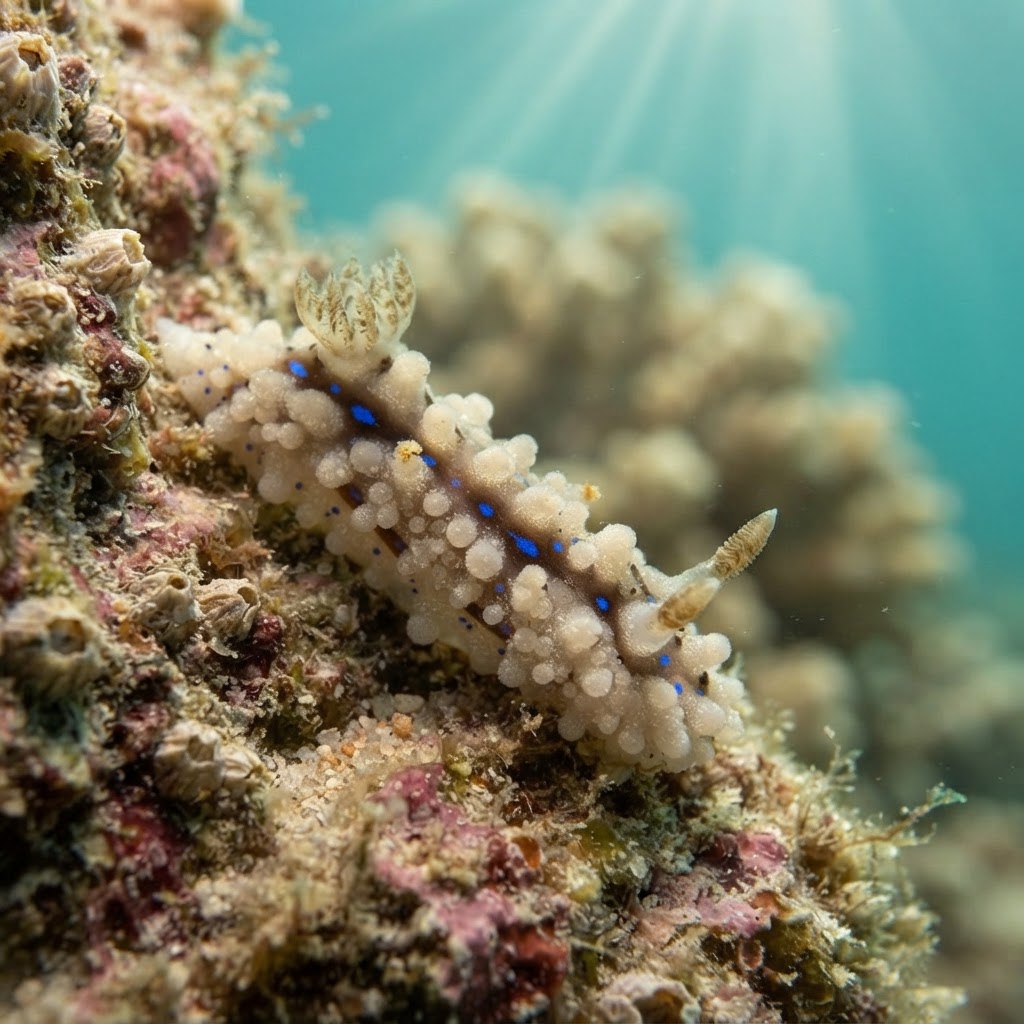
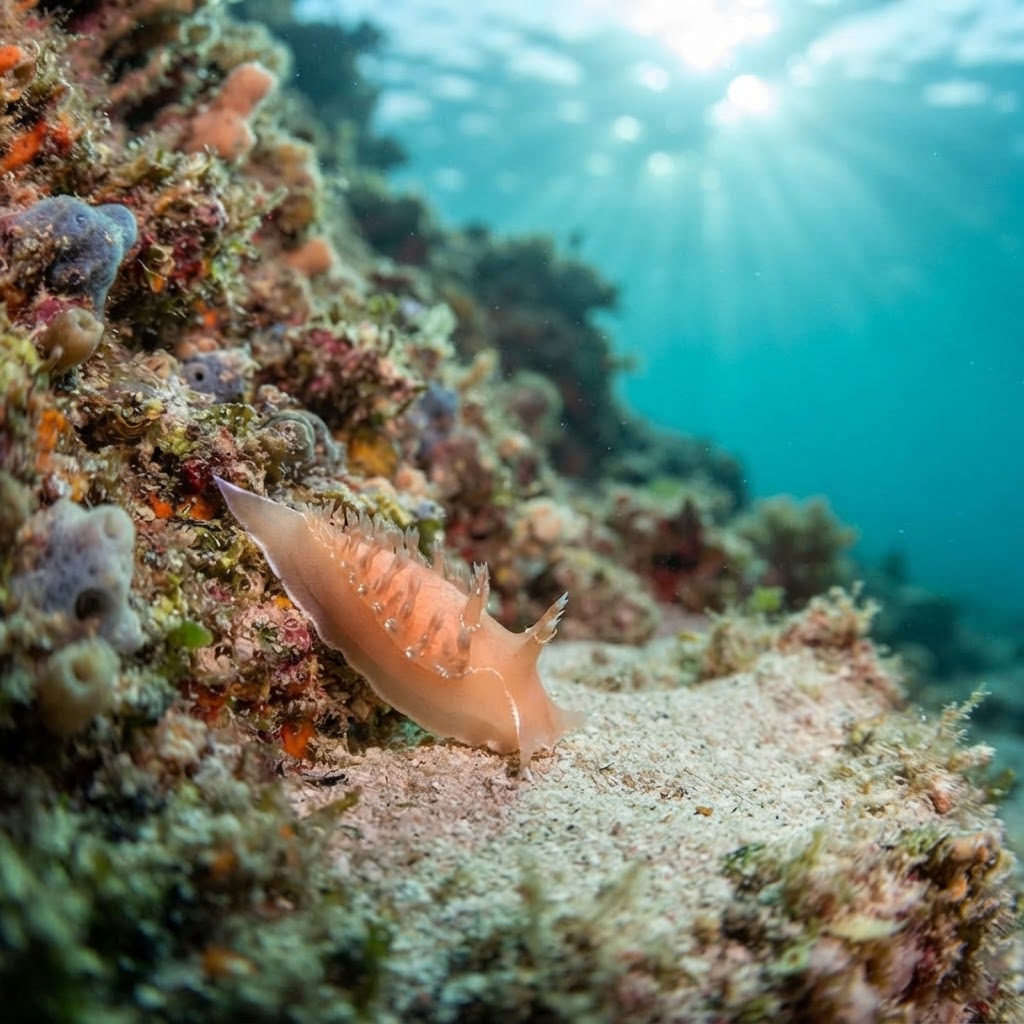
A slug barely 3 cm long, pale and translucent with a soft, ridged body and a row of feathery, branch-like gills running down each side of its back. The head end carries two rhinophores (sensory tentacles) that look like small clubs, and the overall shape is elongated and slug-like rather than flattened. There is no bold colour pattern here, so divers key on the frilly gill tufts and the muted, almost see-through body against dark rock or algae.
Divers find it tucked low on rocky reef, moving slowly over algae and hard surfaces the way most nudibranchs do, unbothered by torch light or a close approach. It is logged as uncommon even at the one site where it has been recorded, so spotting one usually means a slow, deliberate scan of nooks and crevices rather than a chance encounter mid-water. Look during the day on macro-focused dives, since its small size and pale colouring make it easy to miss in open water.
Like other tritoniid nudibranchs, it likely feeds on soft corals or related cnidarians, using its feathery gills both to breathe and to help it blend into similarly textured background.
There is not enough seasonal data yet to call a peak month, so treat sightings as possible year-round. It has been logged in water between 12.3 and 18.9 C, a range that spans much of California's diving season, so cooler months are not ruled out.
Every logged sighting so far comes from California, in the United States, making it the only confirmed spot to look for this species. If you are diving cold-water California reefs and searching rock crevices or algae-covered walls, this is where the record currently points.
Mapping where Tritonia Exsulans is logged…
The only confirmed sightings so far are from California, in the United States, so that is currently the place to search for it on rocky, cold-water reefs.
There is not enough data to identify a season, so it is treated as a year-round possibility. It has been recorded in water from about 12.3 to 18.9 C.
Look for a small, pale, almost translucent slug around 3 cm long with feathery, branching gills running along each side of its back and two club-shaped rhinophores on its head.
It stays small, typically around 3 cm long, so it is easy to overlook unless you are scanning closely for macro life on the reef.
No, this nudibranch poses no danger to divers. It has no means of harming humans and simply goes about its business on the reef if left undisturbed.
Site and sighting data is aggregated from diver logs, iNaturalist and GBIF. For taxonomy and conservation status:
Blue Dragon
3,163 sites