Triopha modesta
Cold-water nudibranch logged across British Columbia and the Pacific Northwest, most reliably in 7.6 to 13.6C water year-round.
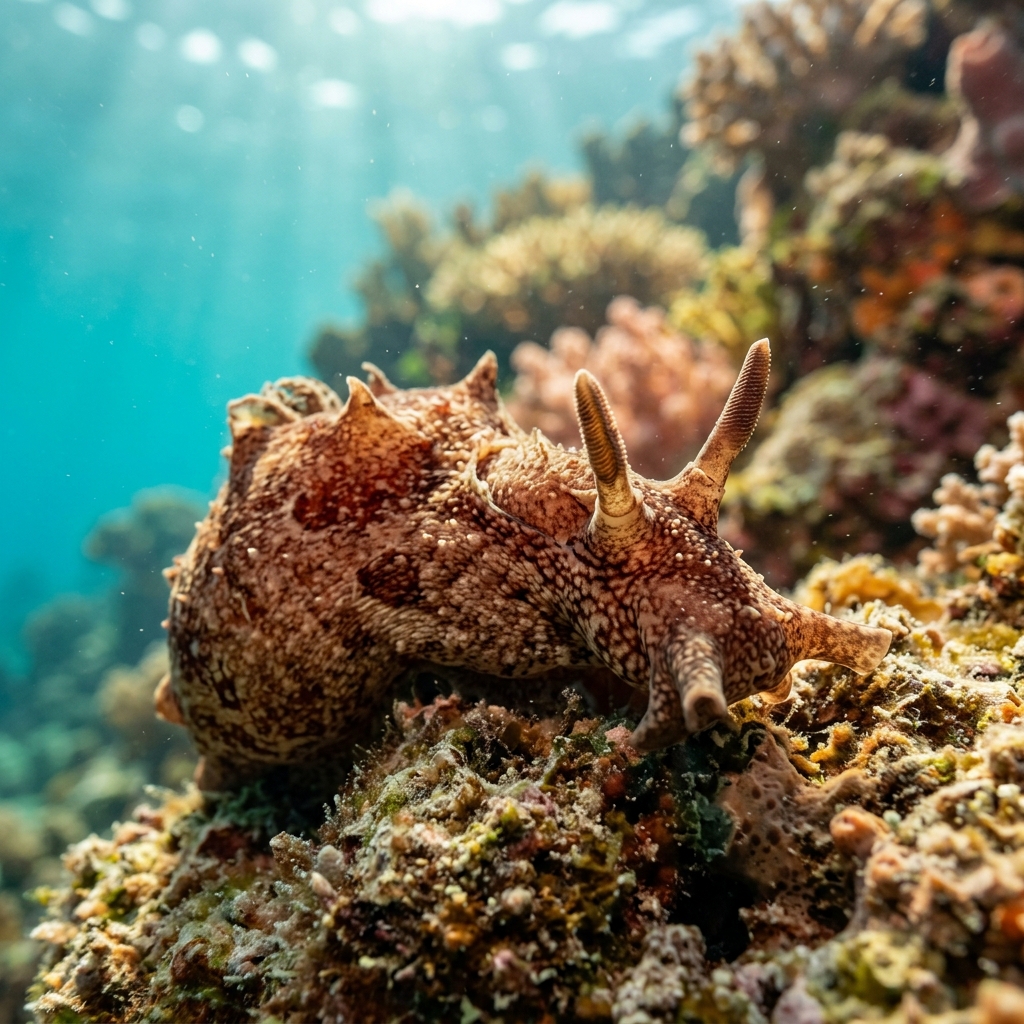
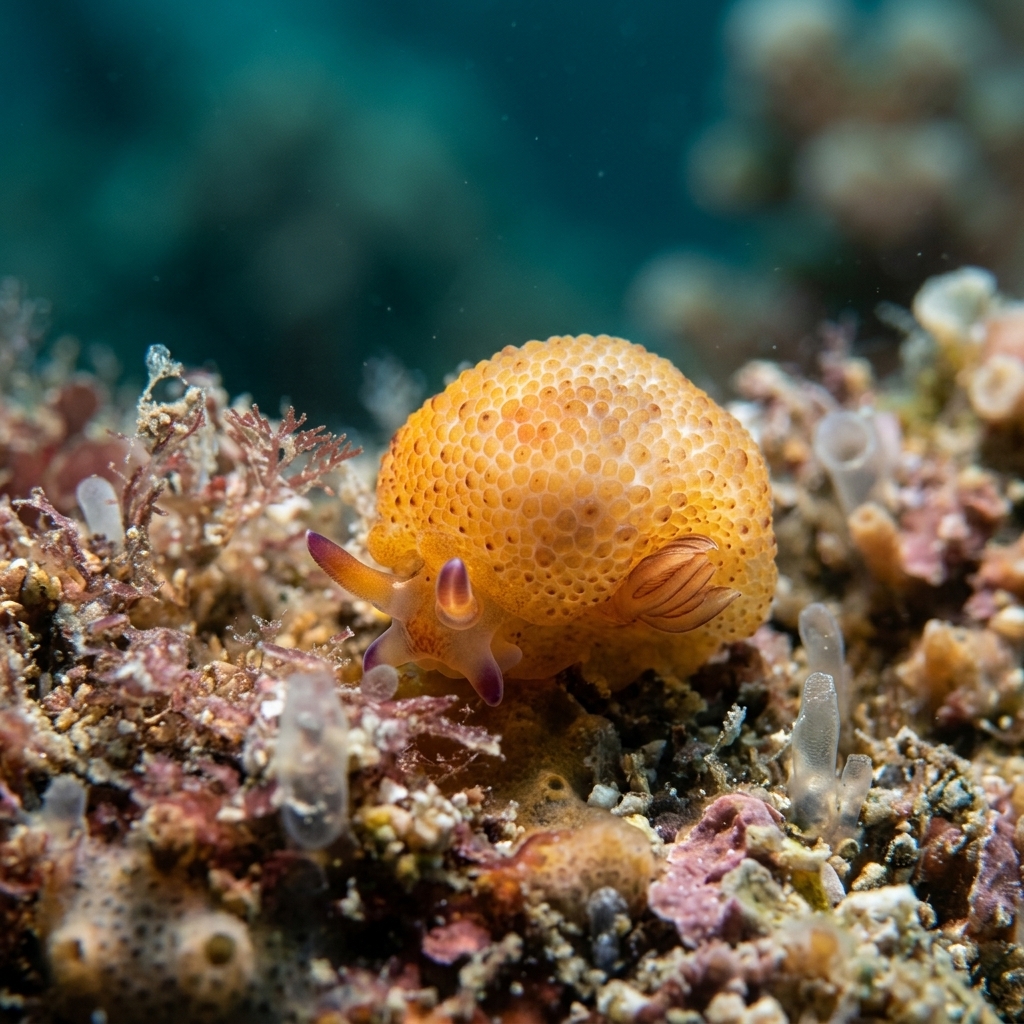
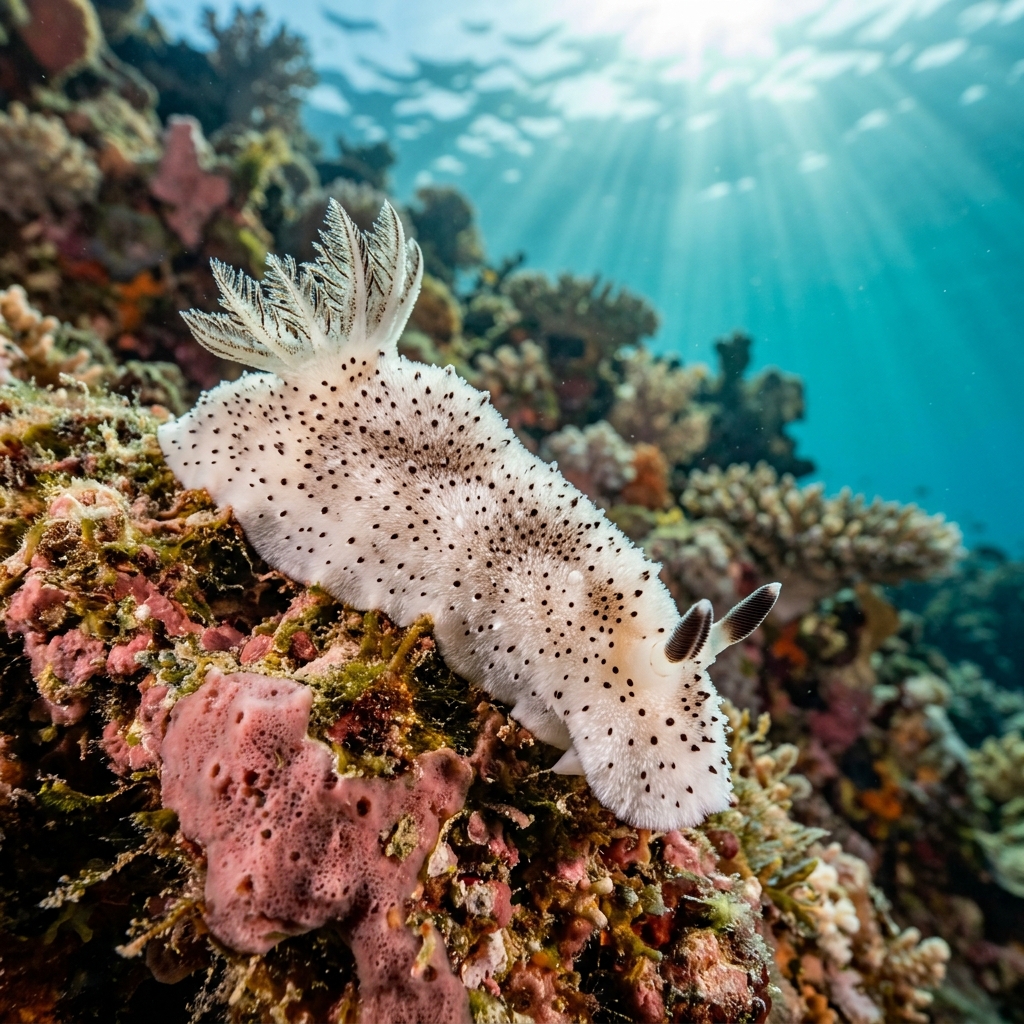
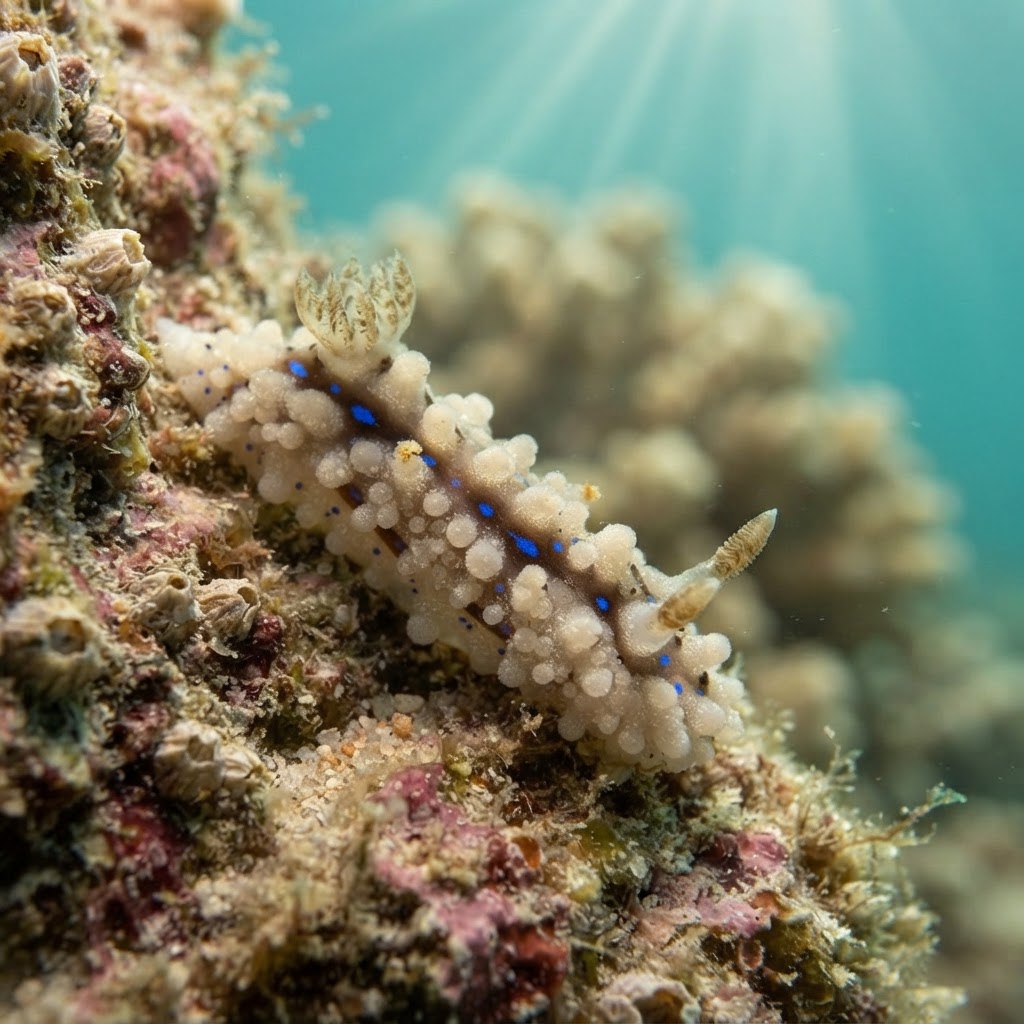
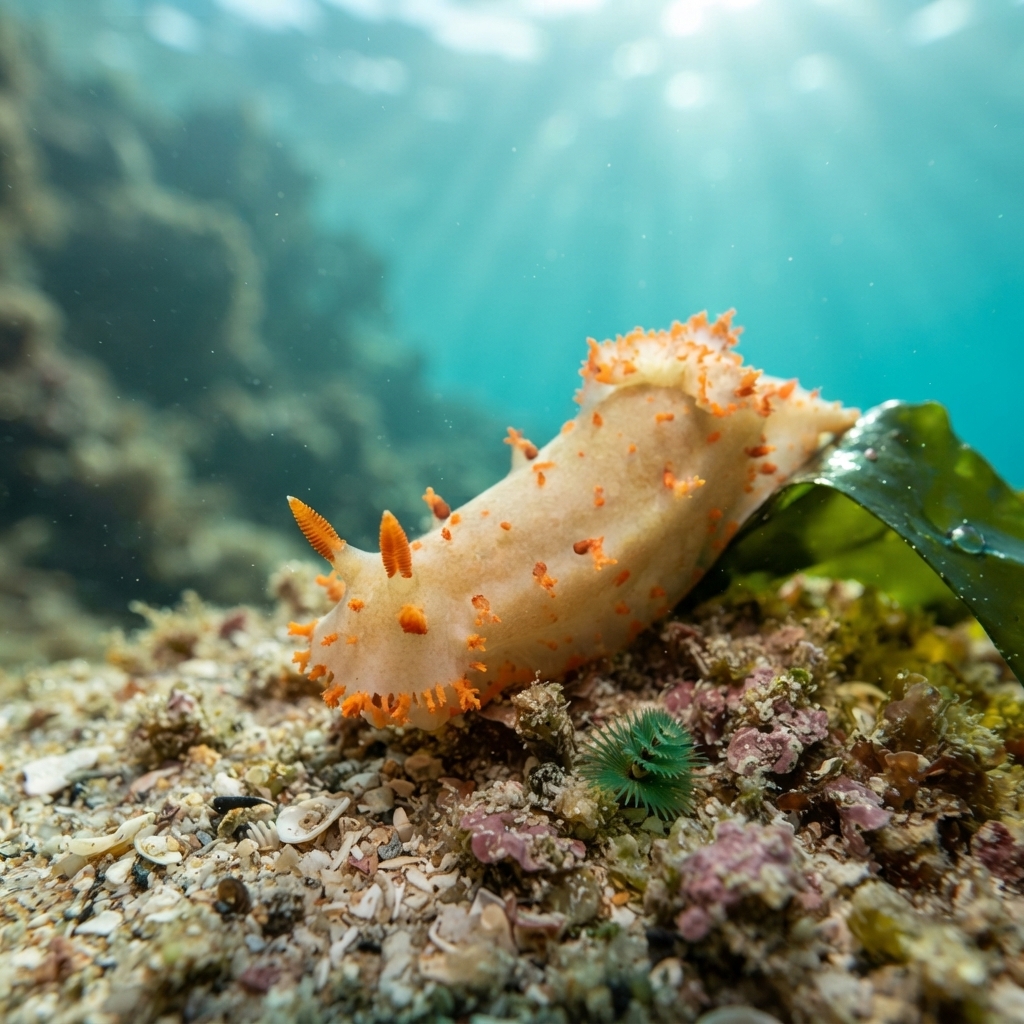
A small, pale white to cream nudibranch with distinctive orange or reddish-orange tips on the tubercles running down its back and on its rhinophores (the sensory horns on its head). The body is soft-bodied and slug-like, usually just a few centimetres long as seen in the water, with the orange-tipped bumps standing out clearly against cold, often dark green water. Its gills form a rosette near the tail end, also often edged in the same orange tone.
Divers most often spot it grazing slowly across rock and encrusting growth, moving at the unhurried pace typical of nudibranchs as it feeds. It shows no reaction to the presence of divers and will not flee or retract when approached closely with a light or camera. Most logs describe it as an uncommon find rather than a guaranteed one, so it rewards divers who take time scanning rocky surfaces rather than swimming past quickly.
Like other nudibranchs, it likely gets its colour and chemical defences from the sponges or other invertebrates it feeds on, storing compounds from its diet as a deterrent to predators.
Sightings show no clear seasonal pattern, so treat this as a year-round find on cold-water dives in British Columbia and the Pacific Northwest. It sits comfortably in the 7.6 to 13.6C range typical of these waters most of the year, which likely explains the lack of a strong seasonal signal.
This is a cold-water species with strong populations along British Columbia, Canada, where it turns up far more often than anywhere else divers log it. It is also a reliable sighting across the Pacific Northwest coast of the United States, making the Salish Sea and adjacent British Columbia waters the best bet for finding it.
Mapping where Modest Clown Dorid is logged…
It is most commonly logged in British Columbia, Canada, with a smaller but reliable presence along the Pacific Northwest coast of the United States. These cold-water rocky reef sites are the best places to look for it.
There is no detected seasonal peak, so it can be found year-round in its cold-water range. Water temperatures where it is seen typically sit between 7.6 and 13.6C throughout the year.
Look for a small, pale white to cream nudibranch with orange-tipped tubercles along its back and orange-tipped rhinophores on its head. It moves slowly over rock and encrusting life and rarely reaches more than a few centimetres long.
Exact size data is not confirmed, but as with related nudibranchs in the genus, adults are typically small, usually only a few centimetres in length, making close-focus photography the best way to appreciate the detail on their tubercles.
No, this nudibranch poses no danger to divers. It has no means of harming a diver and simply continues grazing when approached.
Like many nudibranchs, it likely derives its colouring and chemical defences from the invertebrates it feeds on, using stored compounds to deter predators rather than relying on speed or camouflage.
Site and sighting data is aggregated from diver logs, iNaturalist and GBIF. For taxonomy and conservation status:
Light-spotted Aegires
3,168 sites