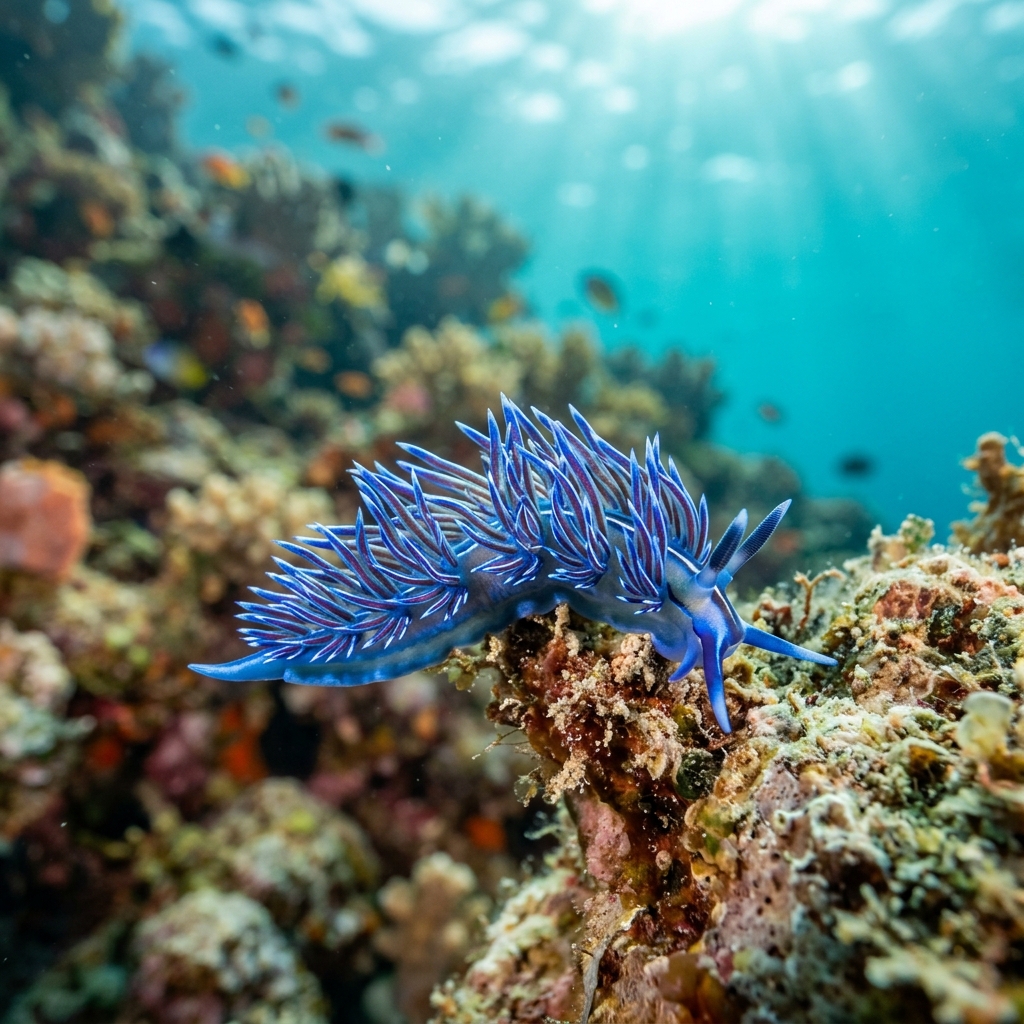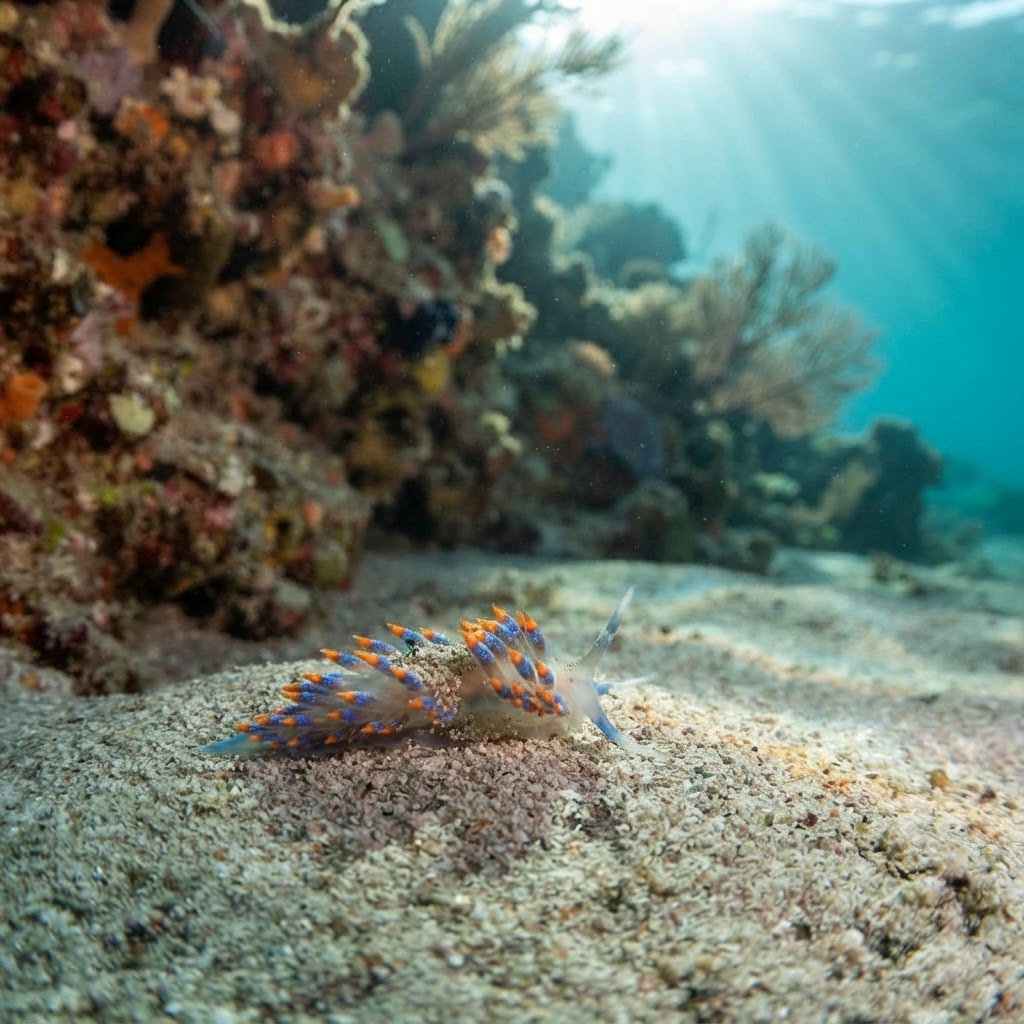
Trinchesia caerulea
Blue-tipped micro nudibranch turning up on macro dives across the French Riviera, Corsica and Catalonia in cool 14 to 20C water.
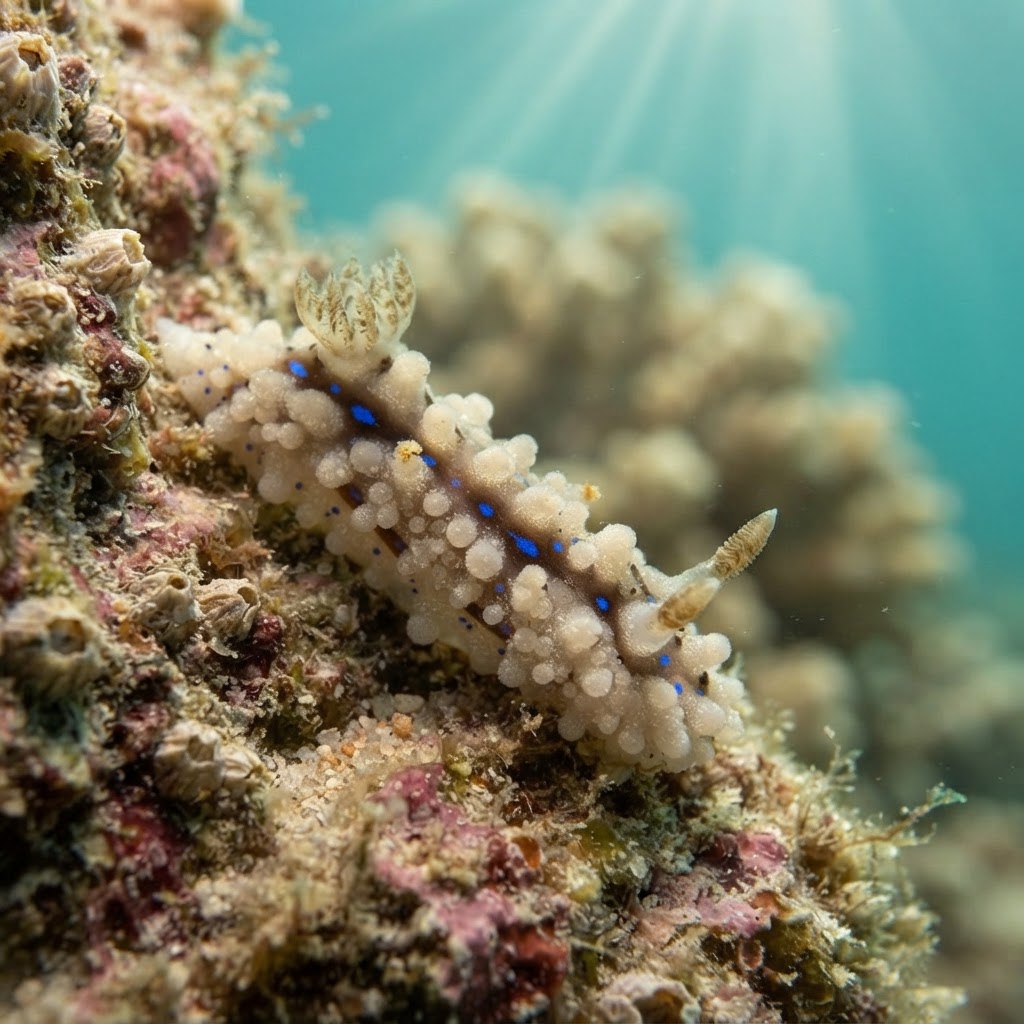
Look for a slender, translucent white to pale body only a centimetre or two long, covered in finger-like projections (cerata) tipped in electric blue with orange-brown cores. The blue tips catch a torch beam even at a distance, which is usually how divers first spot it against rock or algae. No dramatic pattern change between individuals has been recorded, so any blue-tipped, orange-cored ceratal cluster on a small elongated body is your cue.
Divers find it slow-moving over rock, algae and sponge-encrusted surfaces, usually on a dedicated macro or muck dive rather than a drift or wreck. It pays no attention to divers and will not flee or hide, so a steady hand and a macro lens are all you need for a close look. Most sightings come from experienced macro spotters working slowly over a small patch of substrate rather than covering ground.
Like other aeolid nudibranchs, it likely feeds on hydroids and can recycle stinging cells from its prey into those blue-tipped cerata, using them defensively rather than growing its own venom.
No clear seasonal peak shows up in the sightings, so treat it as a year-round find on Mediterranean macro dives. It has been logged in water from 14.1 to 20.1C, which covers most of the region's diveable range outside the height of summer stratification.
Most consistently logged along the French Riviera and Provence coast, with a solid secondary presence around Corsica. Catalonia in Spain also turns up sightings, making the western Mediterranean the reliable stretch of coastline for this species.
Mapping where Blue Trinchesia is logged…
It is most reliably found along the French Riviera and Provence coast, with further sightings around Corsica and in Catalonia, Spain. It is a western Mediterranean speciality rather than a widespread find.
Sightings show no strong seasonal pattern, so it can be found across the year. It has been recorded in water from 14.1 to 20.1C, spanning most of the Mediterranean diving season.
Look for a small, slender, pale to translucent body covered in cerata tipped bright blue with orange-brown centres. It moves slowly over rock and algae and rarely reaches more than a couple of centimetres.
Exact size data is not confirmed, but like most members of the Trinchesiidae family it stays small, typically in the range of a centimetre or so, making it a dive worth going slow for.
No. It poses no risk to divers and has no means of harming anything larger than the small invertebrates it feeds on.
It is thought to feed on hydroids and repurpose their stinging cells inside its blue-tipped cerata, turning a would-be predator's tools into its own defence.
Site and sighting data is aggregated from diver logs, iNaturalist and GBIF. For taxonomy and conservation status:
Light-spotted Aegires
3,168 sites