Trapania toddi
A rare goniodorid nudibranch logged along Malaysia's Peninsular East Coast in warm 24-30C water year-round.
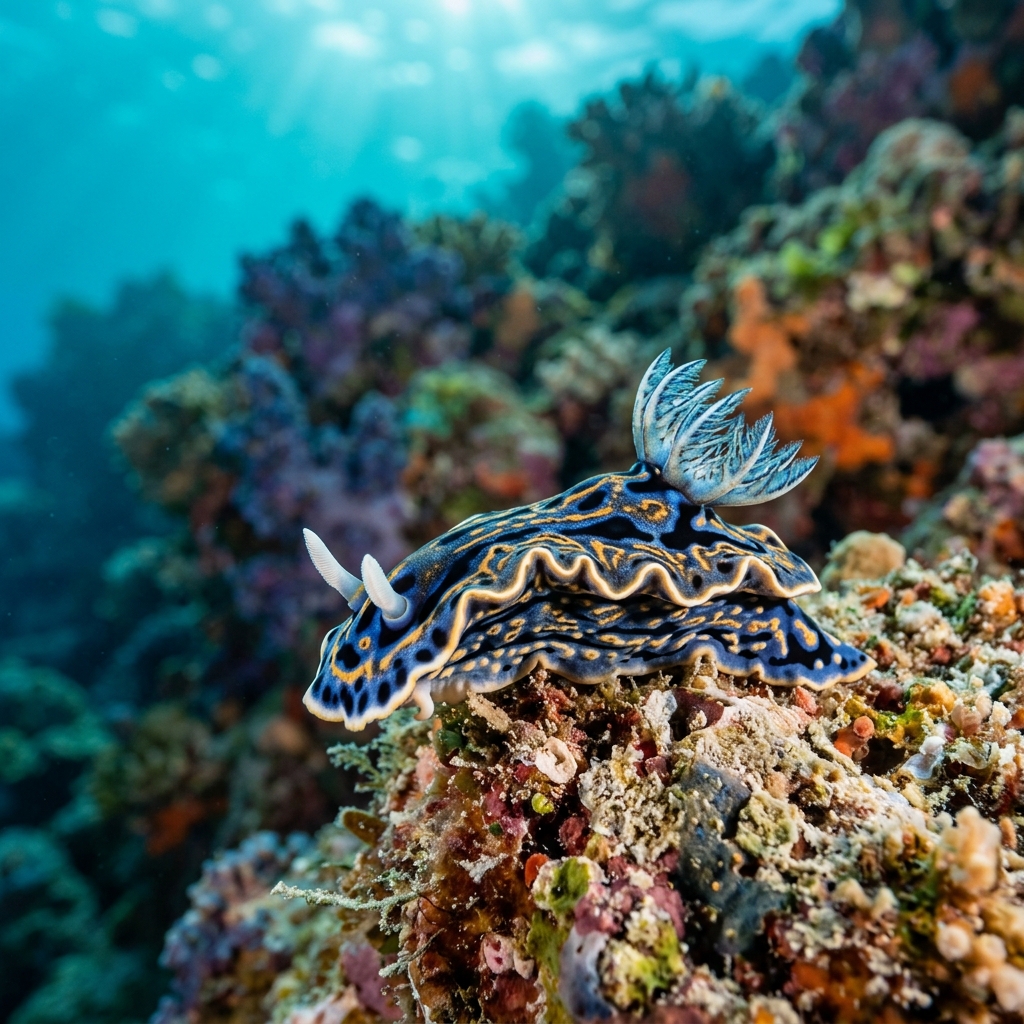
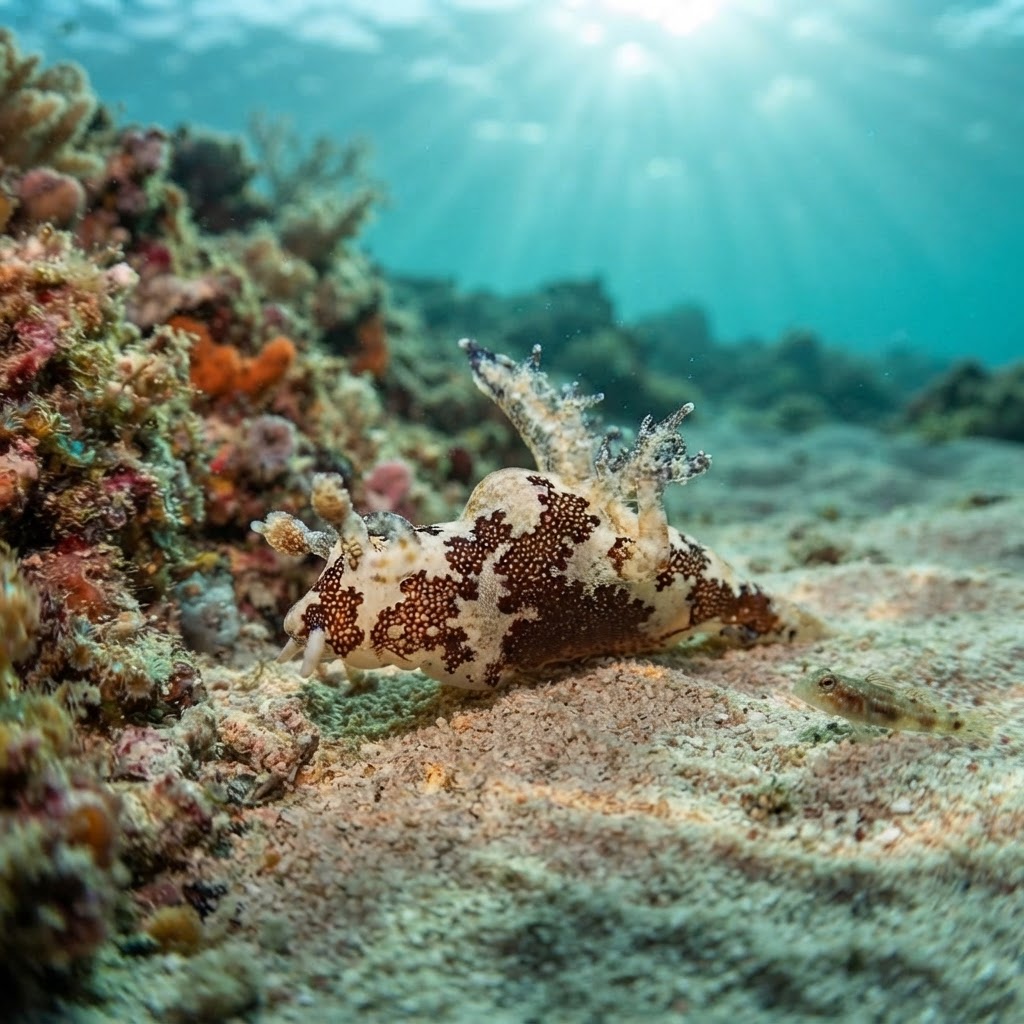
A small goniodorid nudibranch (a family of tentacle-fringed sea slugs) with the slender, elongated body typical of the genus Trapania, tapering at both ends with distinct rhinophores and oral tentacles projecting from the front and rear. Divers typically spot it tucked against sponge-encrusted rubble or reef crevices rather than out in the open, so a careful, slow scan of the substrate is usually required. Size and exact colour pattern are not well documented, so look for the characteristic slug shape and paired projecting tentacles rather than relying on colour alone.
Like other Trapania species, it moves slowly over sponge-covered rock and rubble, grazing on the encrusting invertebrates it feeds on rather than swimming or drifting. Divers who find it tend to do so on slow macro-focused dives, working torch or naked eye along ledges and crevices rather than mid-water. It shows little reaction to divers beyond the usual slow retreat of a grazing sea slug.
Like its Trapania relatives, it almost certainly feeds on bryozoans or similar encrusting colonial animals, using specialised mouthparts to graze them directly off the substrate rather than hunting anything mobile.
Water in the 23.9 to 29.9C range it has been logged in stays warm year-round on this coast, and there is not enough seasonal data yet to point to a particular month. Treat it as a year-round possibility rather than a seasonal target.
This one is currently a Malaysia specialty on Fin's logs, with sightings concentrated along Peninsular Malaysia's East Coast. It has not turned up elsewhere in diver records yet, so if you are chasing it, the East Coast sites are the place to start.
Mapping where Trapania toddi is logged…
Sightings on record come from Peninsular Malaysia's East Coast, making Malaysia the only confirmed country for this species so far among logged dives.
There is no clear seasonal pattern in the sighting data. Given the warm 24 to 30C water it has been recorded in, it is best treated as a year-round find rather than tied to a specific month.
Look for the slender, tapered body shape shared by Trapania nudibranchs, with rhinophores and extended oral tentacles at each end. It is small and easily missed, usually found resting on sponge-covered rubble or reef crevices rather than out in open water.
Exact size has not been well documented for this species, but like other members of the genus Trapania it is a small nudibranch, likely only a centimetre or two long, making it an easy one to overlook on a reef.
No. It poses no danger to divers; it is a tiny, slow-moving grazer with no venom or defensive behaviour that affects people.
It most likely grazes on encrusting invertebrates such as bryozoans, scraping them from rock and rubble surfaces, a feeding style typical across the Trapania genus.
Site and sighting data is aggregated from diver logs, iNaturalist and GBIF. For taxonomy and conservation status:
Blue Dragon
3,163 sites