Trapania scurra
A tiny, uncommon nudibranch logged on reefs in Bali, Indonesia, in warm 25.5-31.5C water year-round.
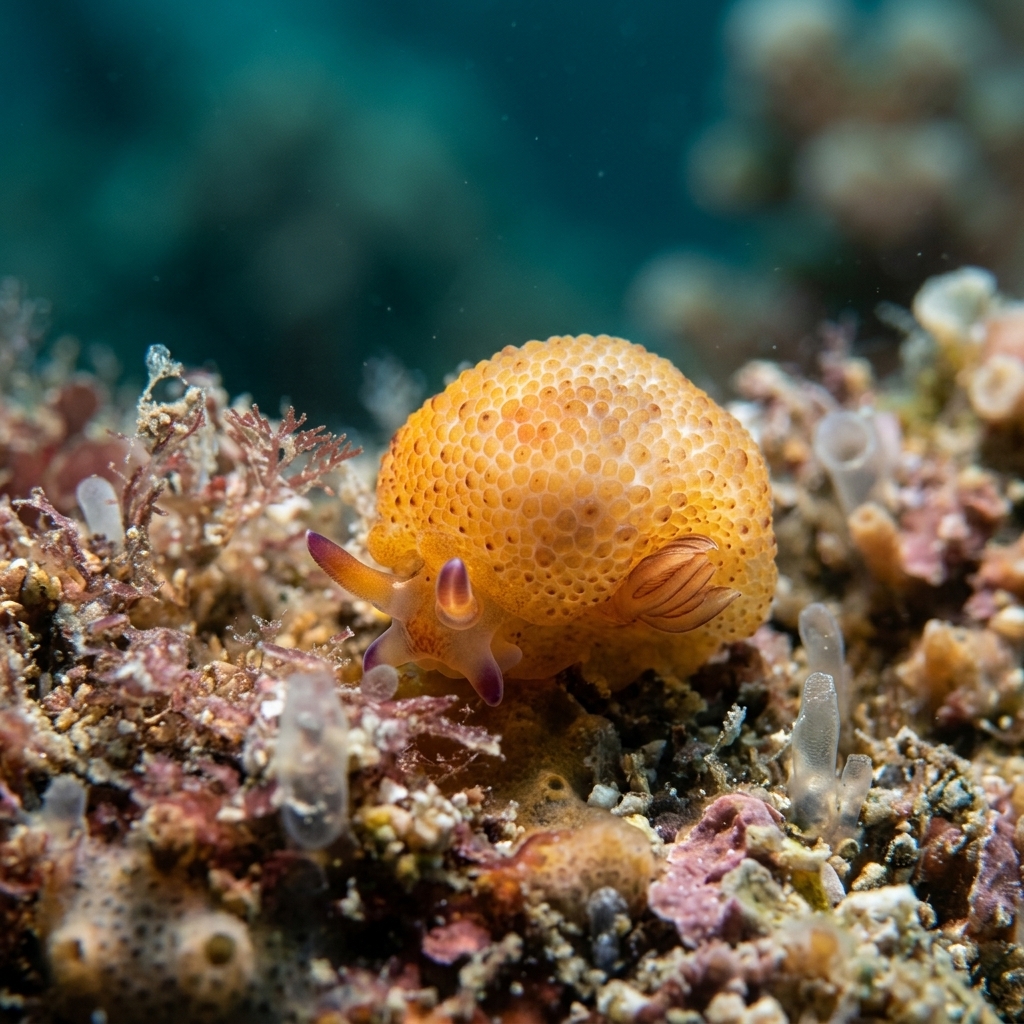
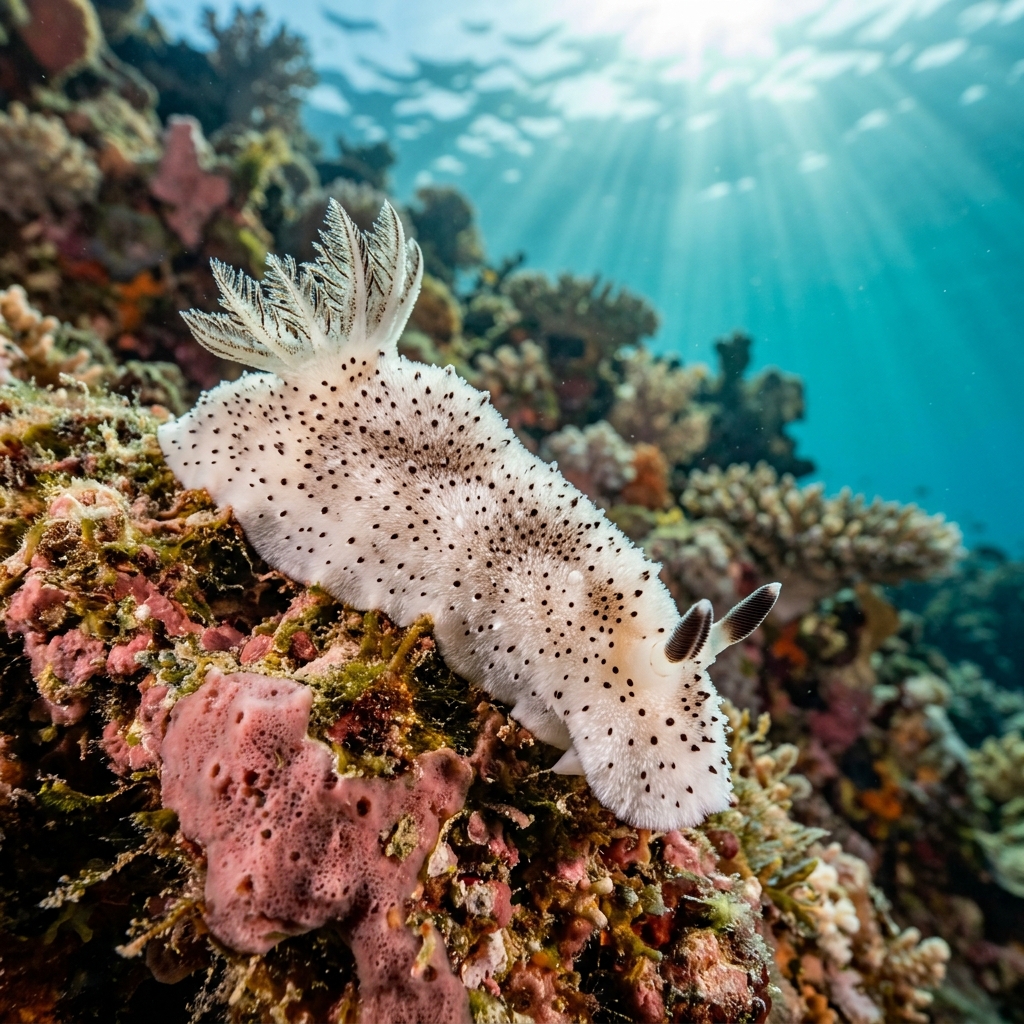
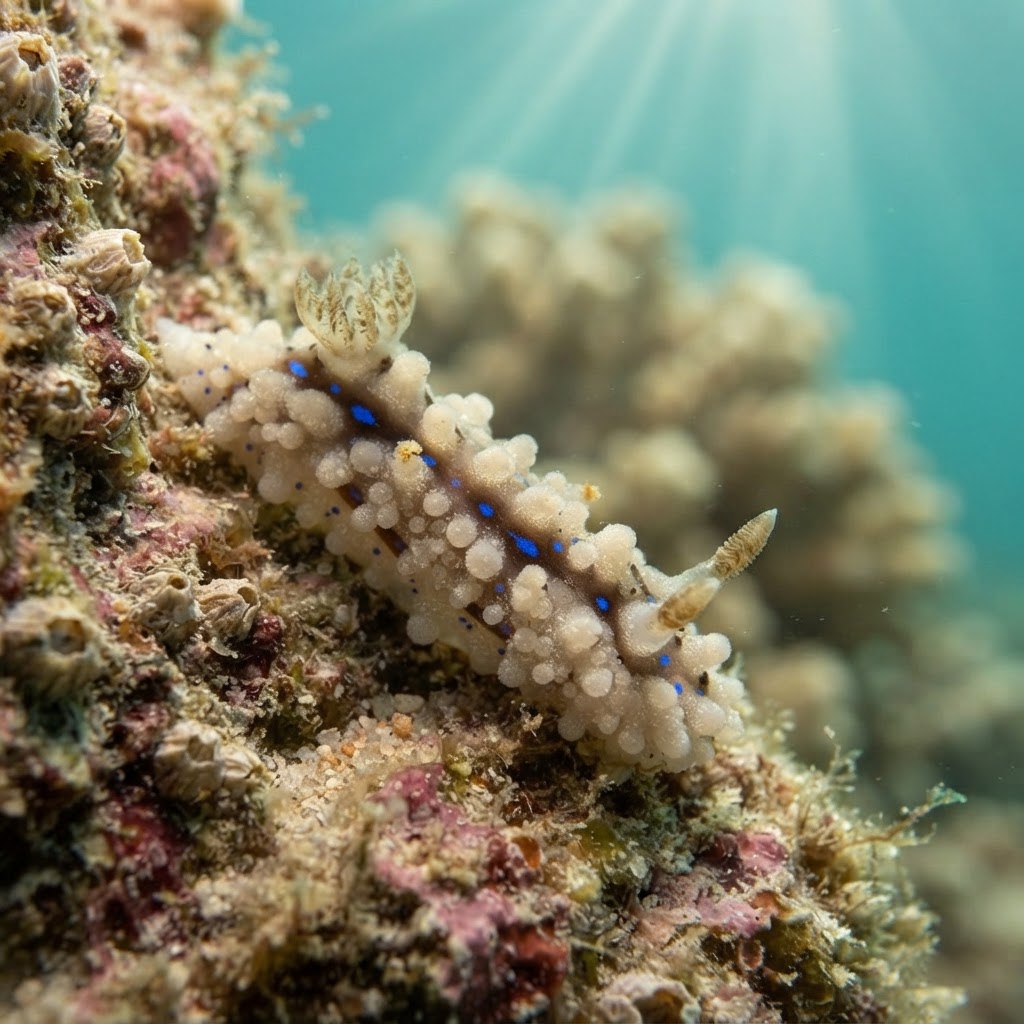
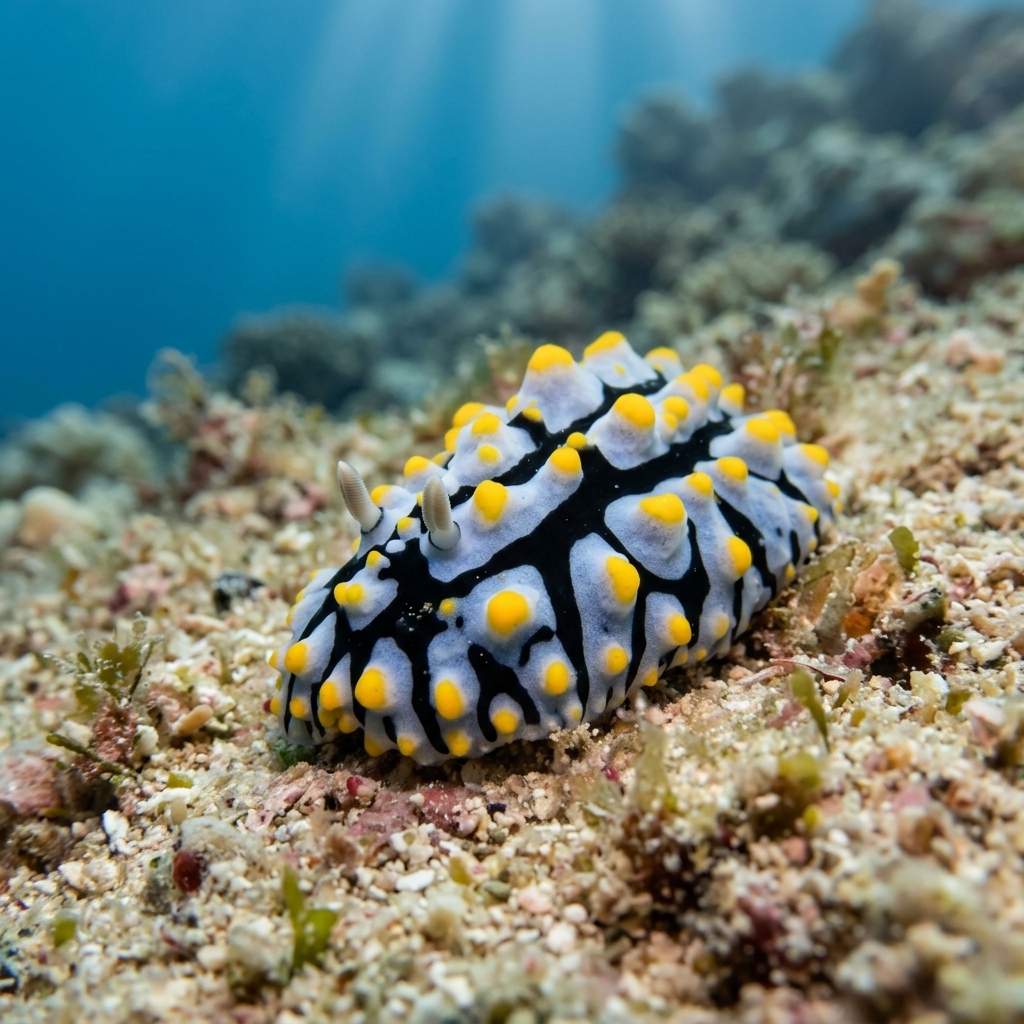
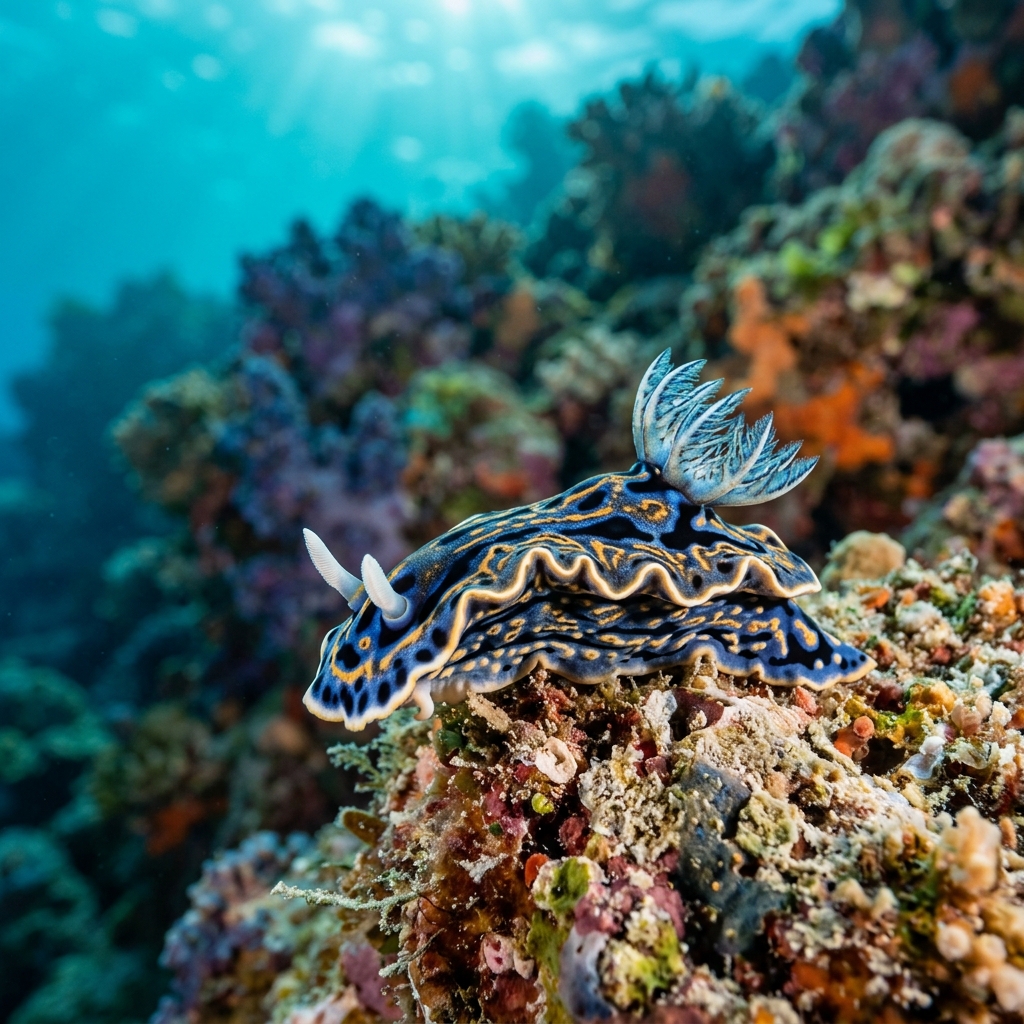
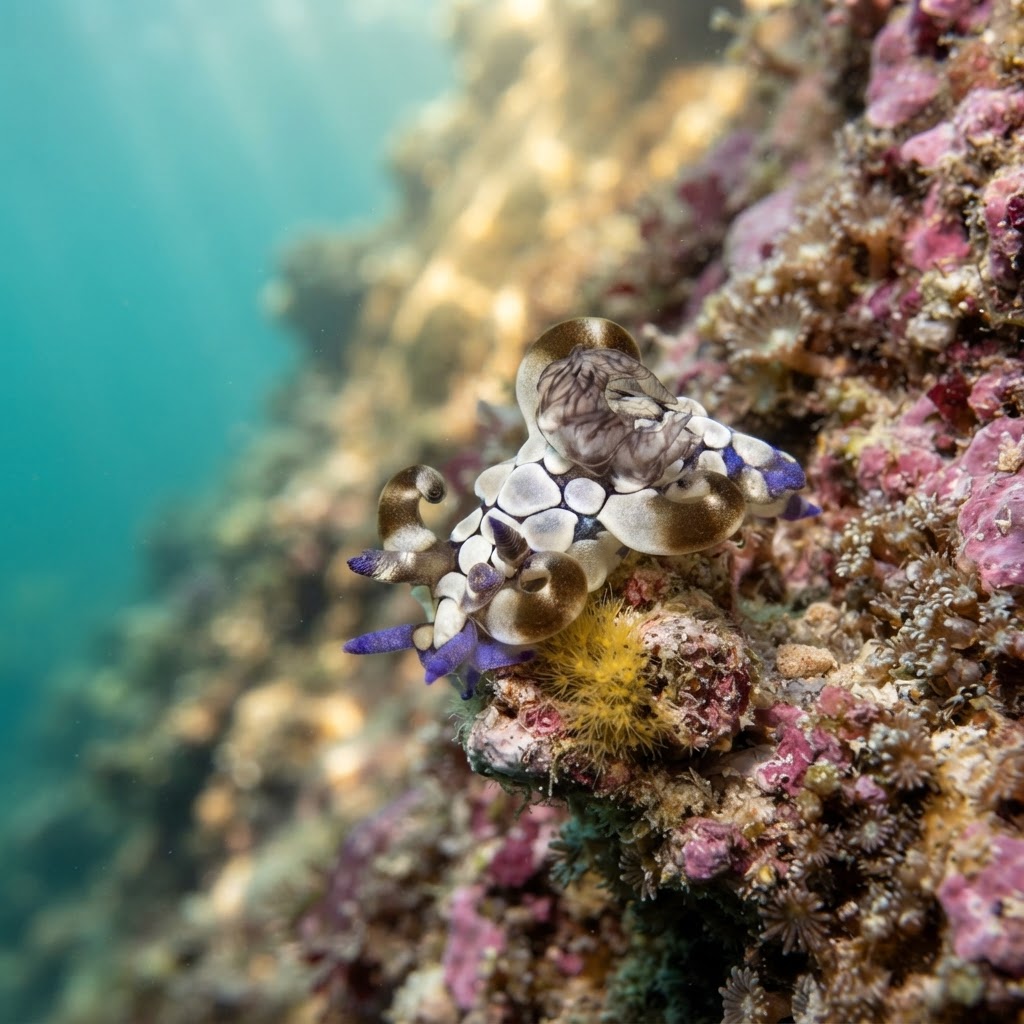
A small, slender nudibranch built along the classic Trapania body plan: a narrow white to translucent body carrying dark patches or spots along the back, with the extra pair of long, whip-like mantle appendages (extensions on the sides of the body) that separate this genus from most other dorid nudibranchs at a glance. Rhinophores (the paired sensory stalks on the head) and gill tufts are typically tipped in a contrasting colour, which is often the first thing that catches your eye against the pale body. It is tiny even by nudibranch standards, so divers usually spot it only when specifically hunting the substrate with a torch or macro lens.
Divers encounter this one moving slowly over reef substrate or under ledges, doing the unhurried grazing typical of small dorid nudibranchs rather than anything dramatic. It shows no reaction to divers beyond the usual slow retreat if disturbed, and because of its small size and uncommon sighting rate, most encounters happen during deliberate slow, close-focus searches rather than casual reef swims.
Like other Trapania species, it likely feeds on encrusting bryozoans, using its slow grazing pace and camouflage-adjacent colouring rather than speed to avoid predators.
Sighting logs don't show a clear seasonal pattern, and the warm 25.5 to 31.5C water it's been found in is typical of Bali's reefs year-round, so there's no strong reason to time a trip around a particular month.
Currently a Bali speciality on Fin's logged sightings, with its one confirmed site sitting in Indonesia's Bali region. If you are hunting for this species, Bali's muck and reef dive sites are the place to start, ideally with a guide experienced in small-nudibranch spotting.
Mapping where Trapania scurra is logged…
The only confirmed sightings logged so far are in Bali, Indonesia, making it a species to look for specifically on Balinese muck and reef dives rather than something you'll stumble across widely.
There's no detected seasonal pattern in current sightings, and it has been found in warm water between 25.5 and 31.5C, which matches Bali's reefs year-round.
Look for a tiny, pale to translucent nudibranch with dark markings along the back and the long, thread-like mantle appendages typical of the Trapania genus. Contrasting tips on the rhinophores and gills help confirm the ID against similar small dorids.
Exact size data isn't confirmed, but Trapania species as a genus are small nudibranchs, typically only a centimetre or two long, so this one is a macro-lens subject rather than something spotted from a distance.
It's logged as uncommon at the one site where it has been recorded, meaning divers who find it are usually searching specifically for small nudibranchs rather than spotting it by chance.
Site and sighting data is aggregated from diver logs, iNaturalist and GBIF. For taxonomy and conservation status:
Blue Dragon
3,163 sites