Trapania kamagong
A rare find on macro dives in Bali, Indonesia, this tiny nudibranch turns up on reefs between 25.6 and 31.6 C water.
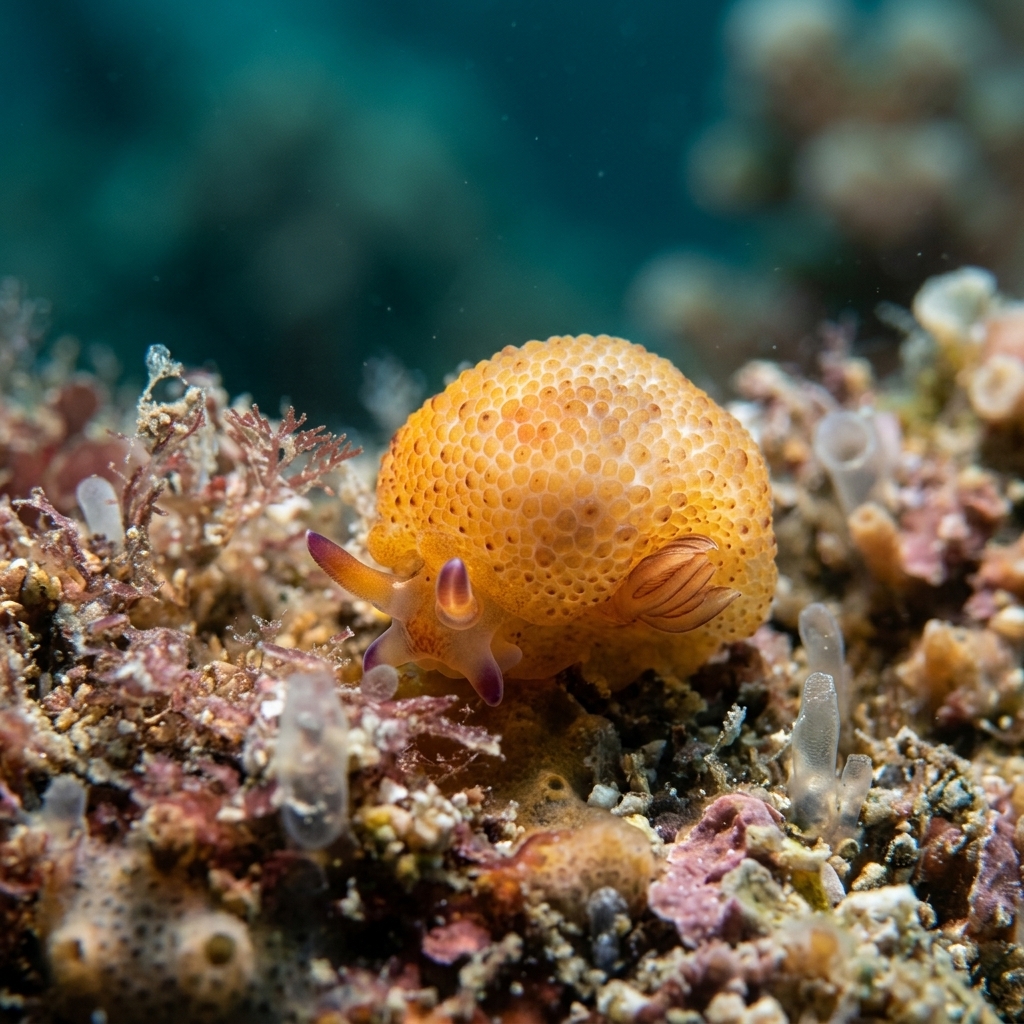
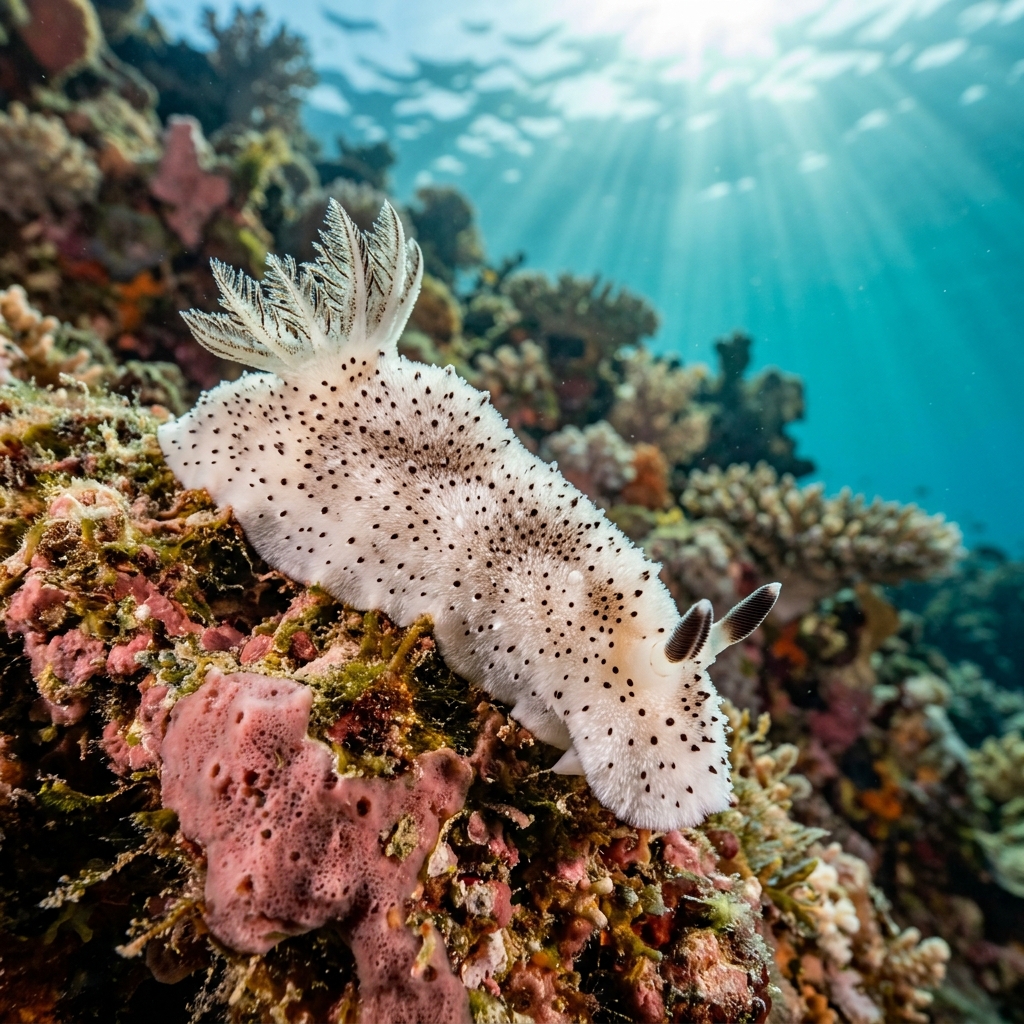
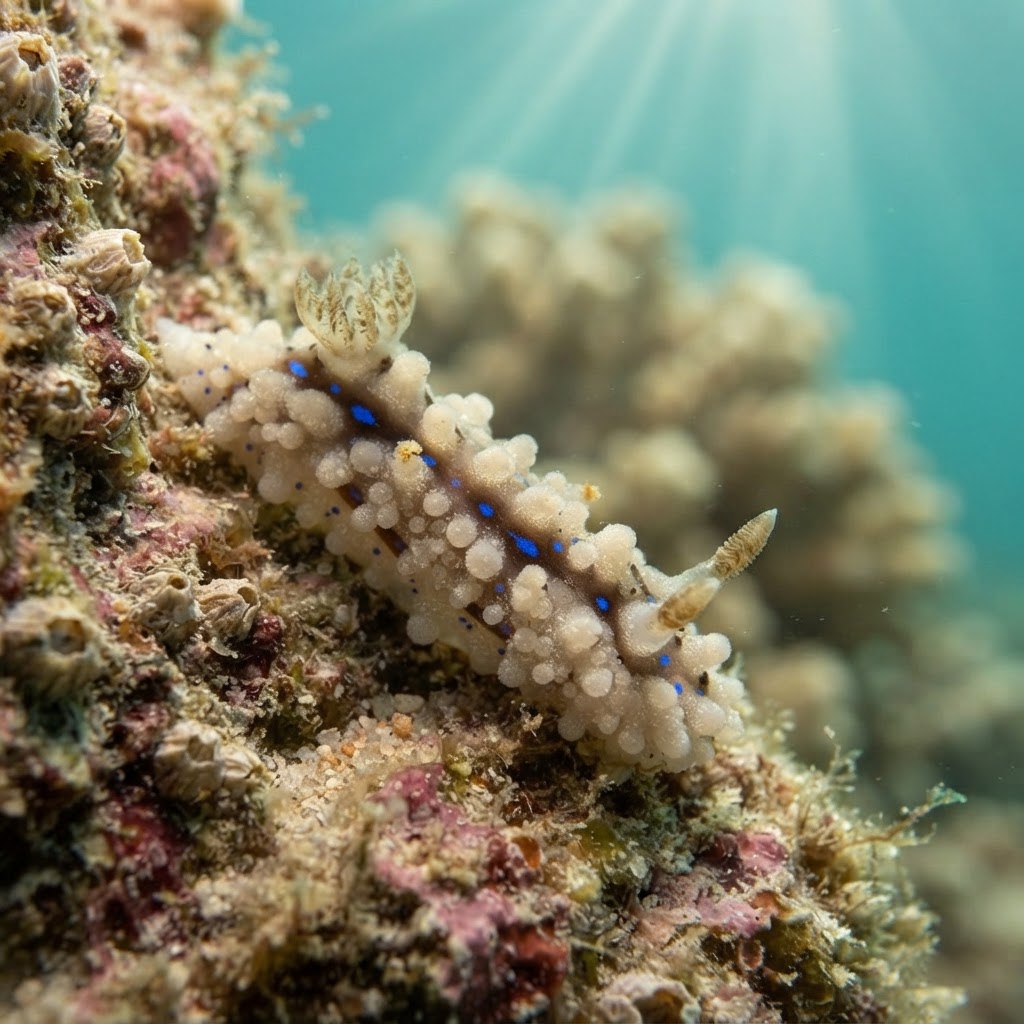
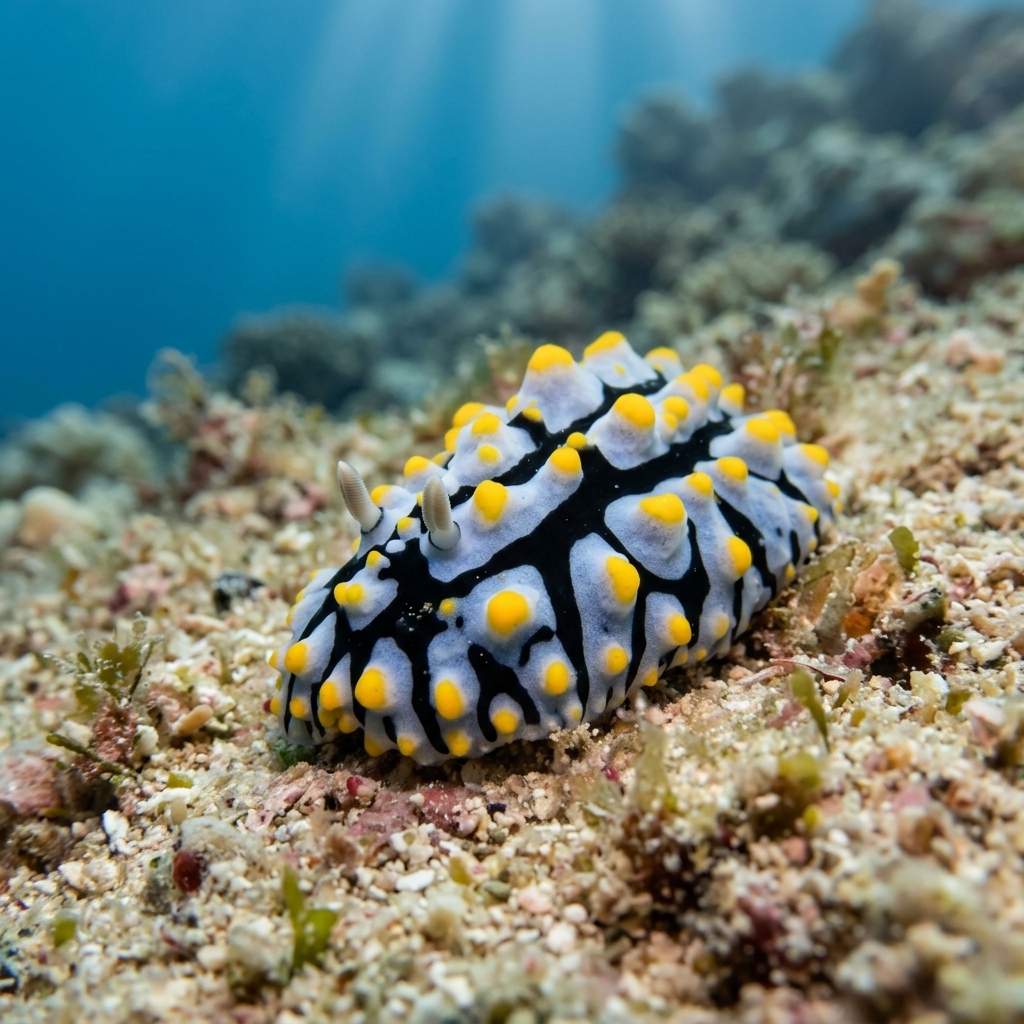
A small goniodorid nudibranch best spotted by scanning rubble and sponge-covered reef slowly with a torch, since it is easy to swim straight past. Look for the paired tentacle-like projections (rhinophores) up front and the extra fringing papillae along the sides of the body, a trait that separates Trapania species from smoother-bodied nudibranch groups. Exact colour patterning is best confirmed with a macro shot, as it is easy to miss without close inspection.
Divers log this one crawling slowly over reef and rubble substrate during the day, doing what most Trapania species do: grazing on sponges and other small encrusting organisms at a pace that makes it an easy subject once you spot it. It shows no reaction to divers beyond retracting its rhinophores if disturbed, and it is logged as an uncommon find even at the one site where it has been recorded.
Like other members of its genus, this species likely feeds on specific sponges or bryozoans, which is part of why sightings are so localised: where you find the right prey, you have a chance of finding the slug.
There is not enough logged data to show a seasonal pattern, and the observed water temperature range of 25.6 to 31.6 C spans Bali's typical year-round conditions, so treat this as a species you might encounter in any month rather than one tied to a season.
Currently logged from a single dive site in Bali, Indonesia, making it one of the harder nudibranchs on this list to plan a dive around. If you are set on finding it, Bali's muck and reef sites known for nudibranch diversity are the only confirmed starting point in the data so far.
Mapping where Trapania Kamagong is logged…
The only confirmed sighting in the data is from a dive site in Bali, Indonesia. It is logged as uncommon even there, so treat any sighting as a bonus rather than a guarantee on a Bali dive trip.
There is not enough data to pin down a season, and the observed temperature range of 25.6 to 31.6 C covers Bali's water conditions year-round, so sightings are not tied to a particular month.
Look for a small nudibranch with fringing papillae along the body edges and a pair of rhinophores up front, typical of the Trapania genus. Confirming the exact species usually needs a close macro photo, since it is easy to overlook on rubble or sponge-covered reef.
Size data is not confirmed for this species, but like most Trapania nudibranchs it is small, likely under a couple of centimetres, which is part of why it is rarely logged.
No. It poses no danger to divers and has no means of harming anyone who comes across it on a dive.
Site and sighting data is aggregated from diver logs, iNaturalist and GBIF. For taxonomy and conservation status:
Blue Dragon
3,163 sites