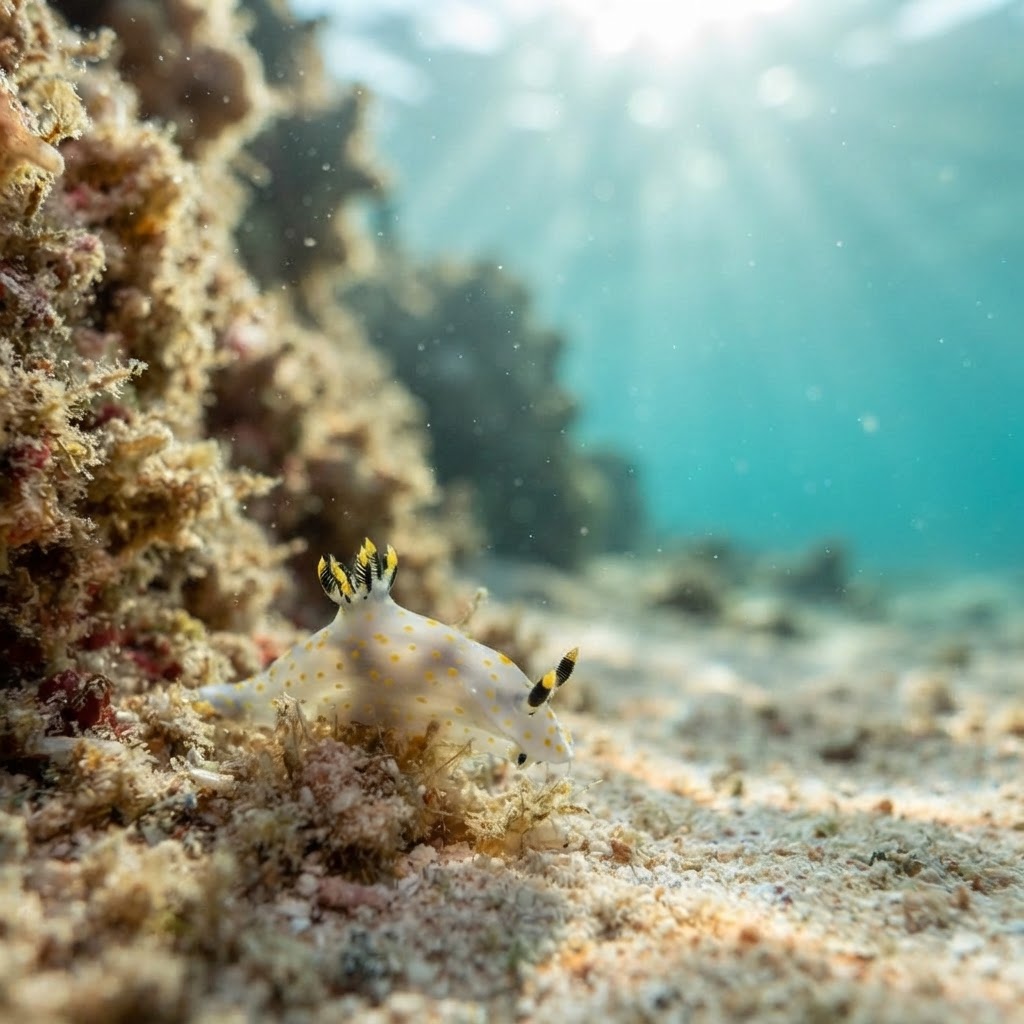
Polycera tricolor
A tiny 1cm nudibranch spotted along California's coast in cool 13-19C water, most reliably logged as a rare find on Pacific dives.
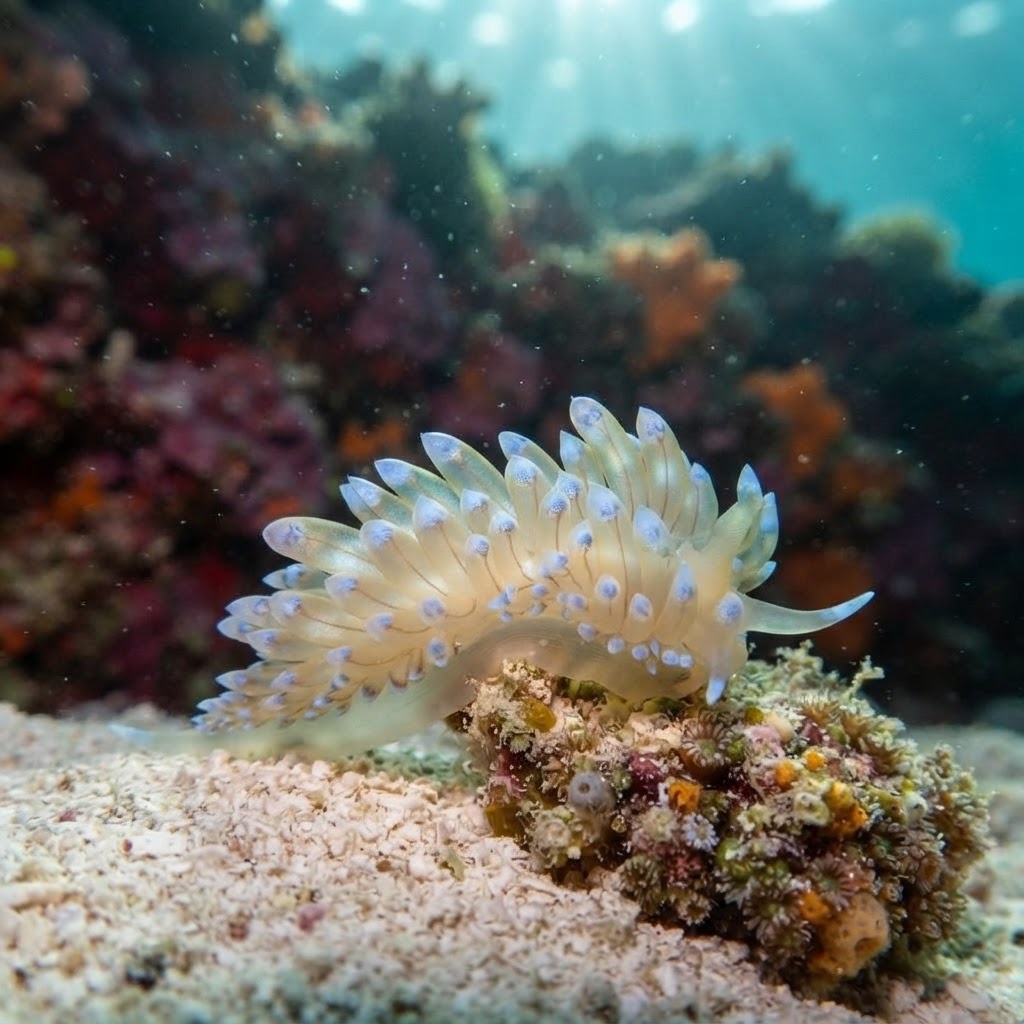
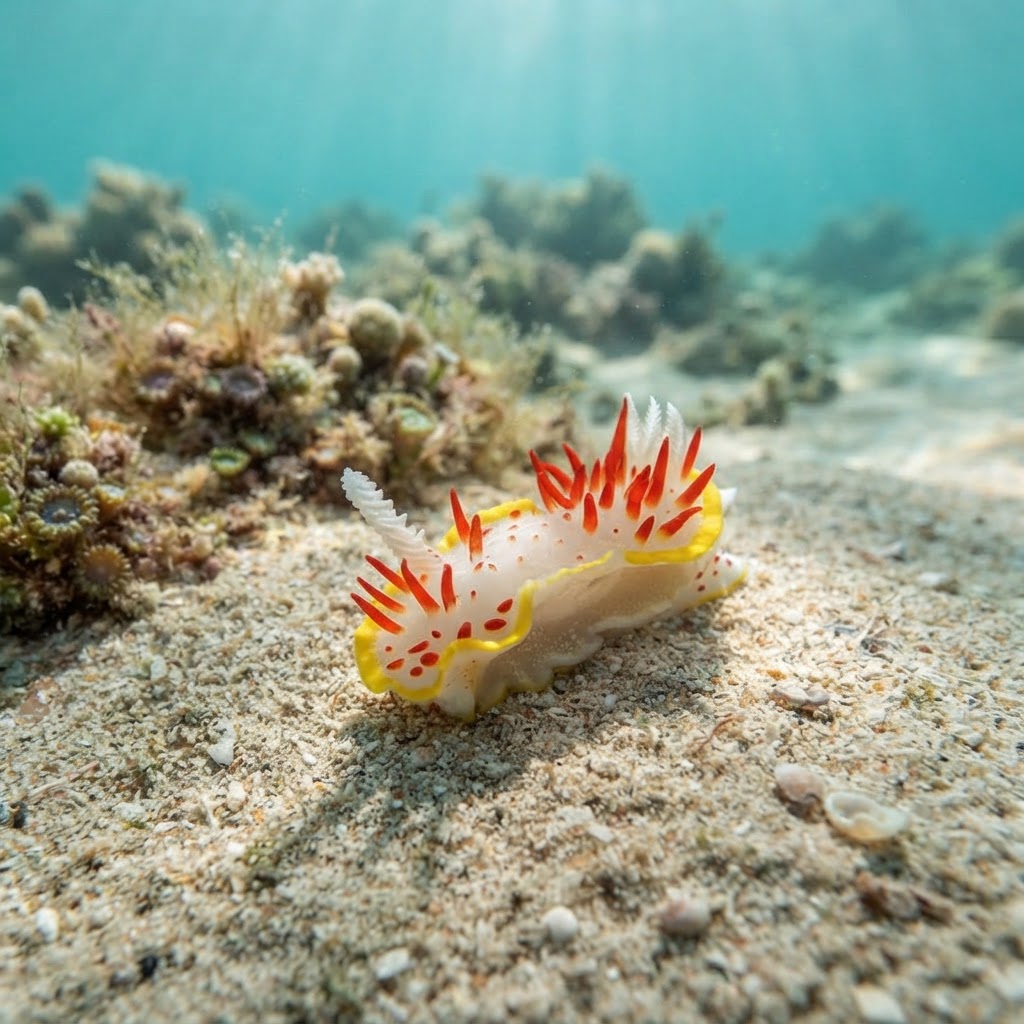
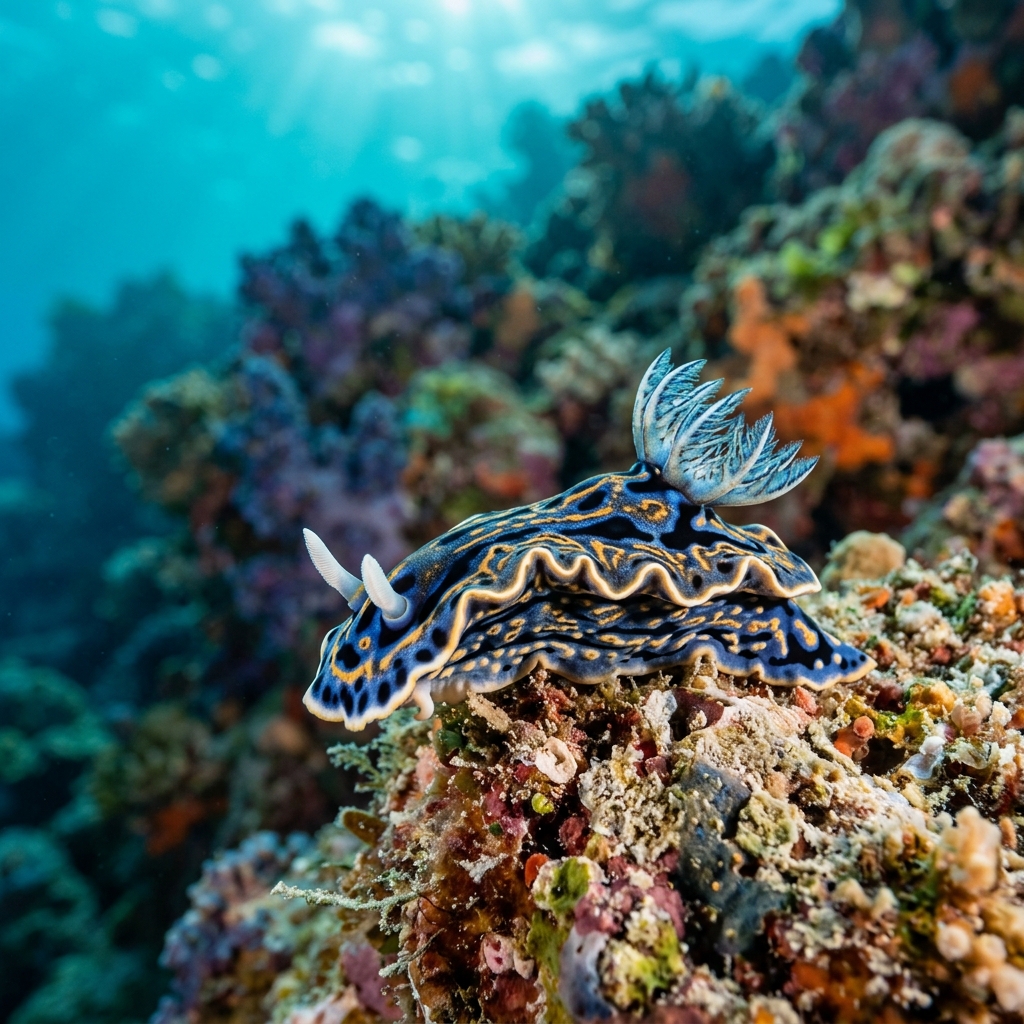
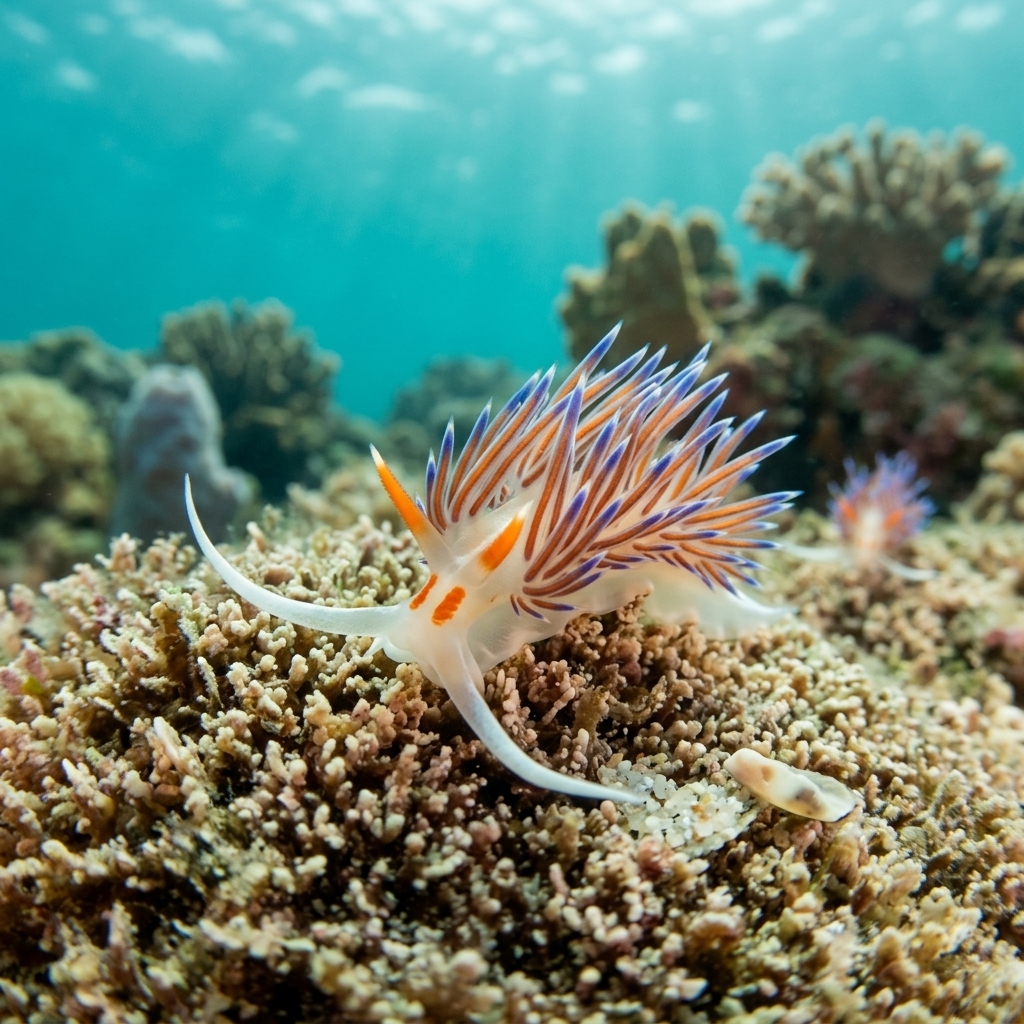
Barely a centimetre long, this nudibranch has a translucent white to pale body with orange or yellow tips on its projecting appendages (cerata) and the frilly gill cluster on its back. Look for the contrast between the pale body and the bright tips, which is what separates it from plainer white slugs on the same rock. You will need to slow down and scan holdfasts and encrusting growth closely, since its size makes it easy to swim straight past.
Divers find these tucked into rocky reef and encrusting invertebrate cover, moving slowly across the surface as it feeds. It shows no reaction to divers beyond its usual unhurried pace, since it has no reason to flee anything the size of a person. Most sightings happen during careful, close-focus searches of the substrate rather than open swimming, so it rewards divers who stop and look rather than cruise past.
Like other dorid nudibranchs, it likely feeds on encrusting bryozoans, and the bright cerata tips seen on close inspection may serve as a warning signal to would-be predators rather than pure decoration.
Sightings don't show a clear seasonal pattern, so treat this as a year-round possibility wherever it occurs. Its recorded temperature range of 13.1 to 19.1C spans much of the diving calendar on the California and British Columbia coasts, which likely explains the lack of a tight season.
Reef neighbours a diver could mistake it for. Use the identification notes above to tell them apart.
Nearly all logged sightings come from the United States, with California standing out as the strongest area, and a smaller but real presence in British Columbia, Canada. Divers doing cool-water Pacific coast sites, particularly in California, have the best odds of turning one up.
Mapping where Three-color Polycera is logged…
Most sightings come from California in the United States, with a smaller number logged in British Columbia, Canada. It favours cool-water rocky reef habitat along the Pacific coast.
There is no clear season in the sighting data, so it is best treated as a year-round find. Its recorded water temperature range of 13.1 to 19.1C covers most of the diving year in California and British Columbia.
Look for a translucent white body about a centimetre long with orange or yellow-tipped cerata and gill projections along the back. Its small size means you need to scan rocky surfaces and encrusting growth closely rather than expect it to stand out at a distance.
It stays tiny, typically around 1cm long, making it one of the smaller nudibranchs divers try to spot on Pacific coast reefs.
Yes, it is logged as rare at most sites where divers have recorded it, with a smaller number of sites reporting it as uncommon. Finding one usually takes a deliberate, slow search of the reef rather than a casual glance.
Site and sighting data is aggregated from diver logs, iNaturalist and GBIF. For taxonomy and conservation status:
Nudibranch
3,168 sites