Thorunna kahuna
A Hawaii speciality nudibranch, logged mostly as an uncommon find on Hawaiian reefs in warm 22-28C water year-round.
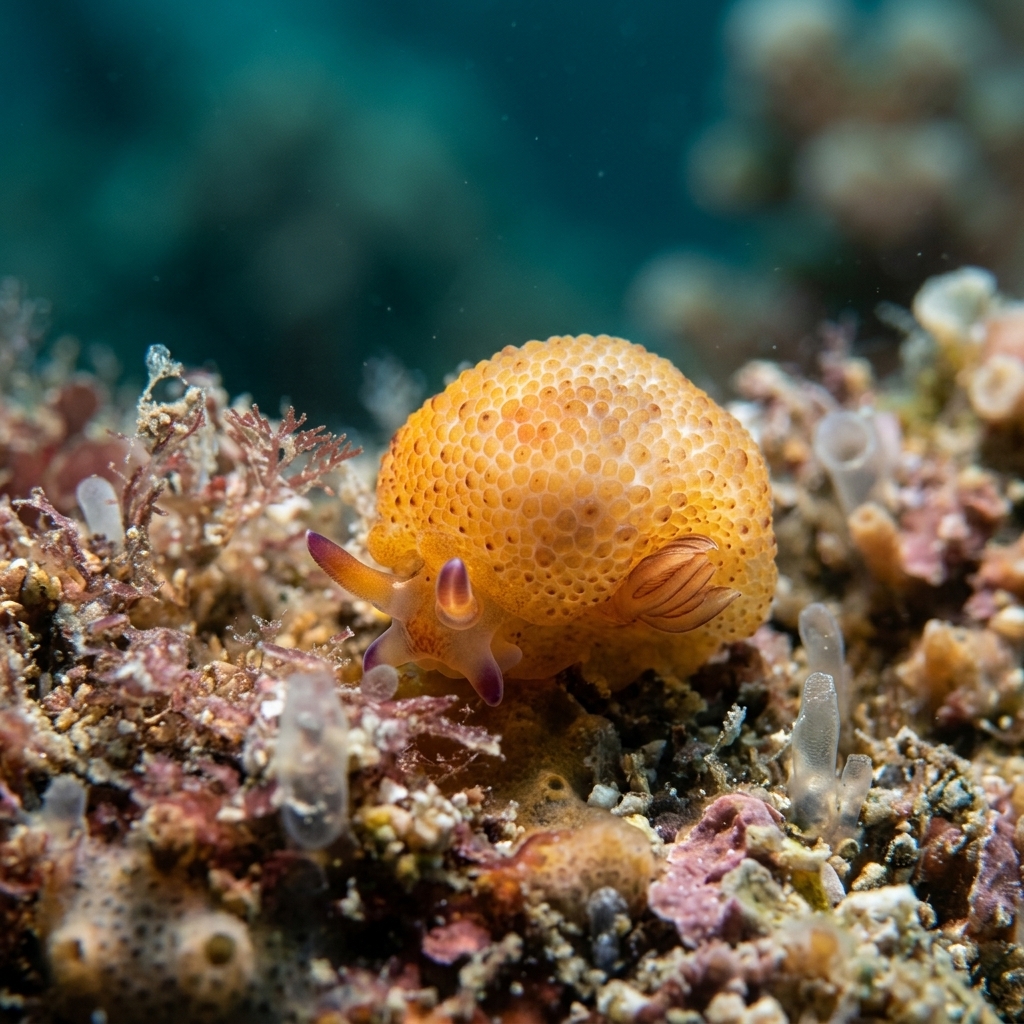
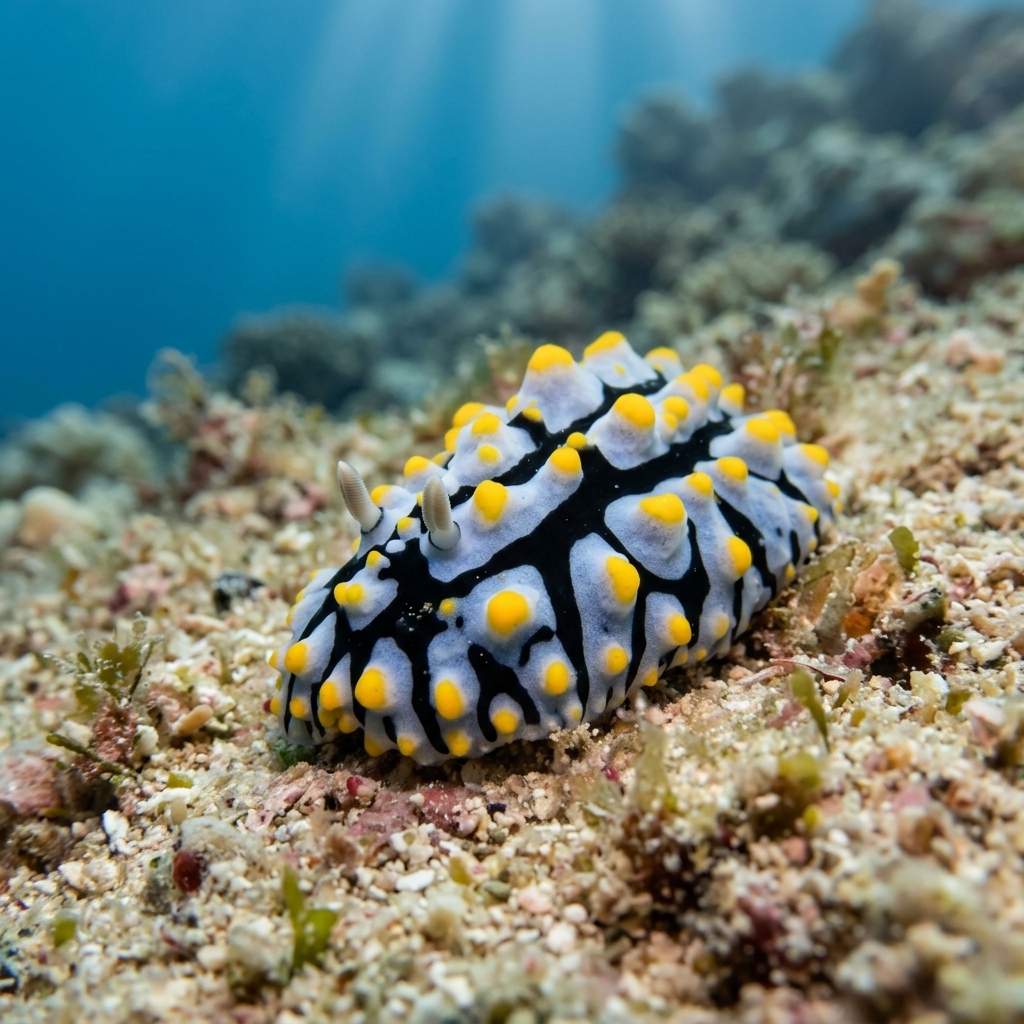
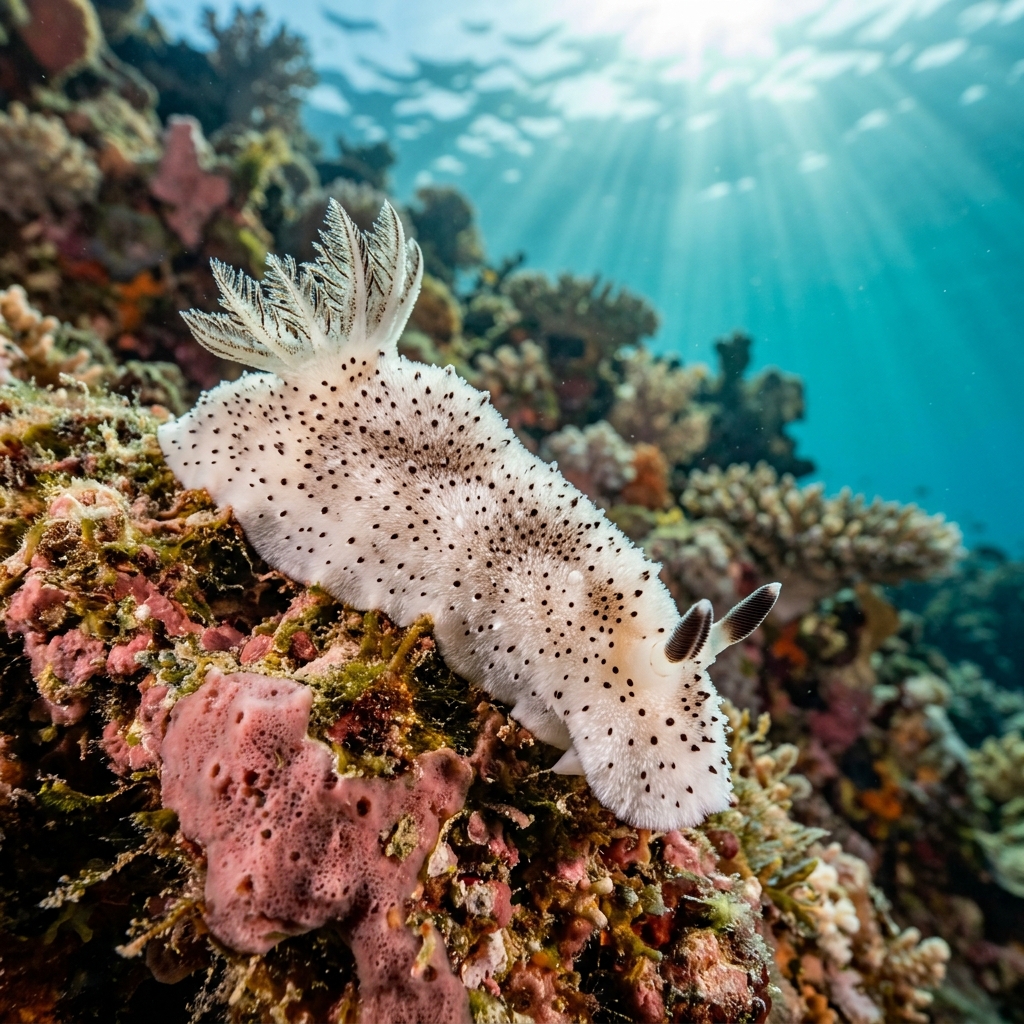
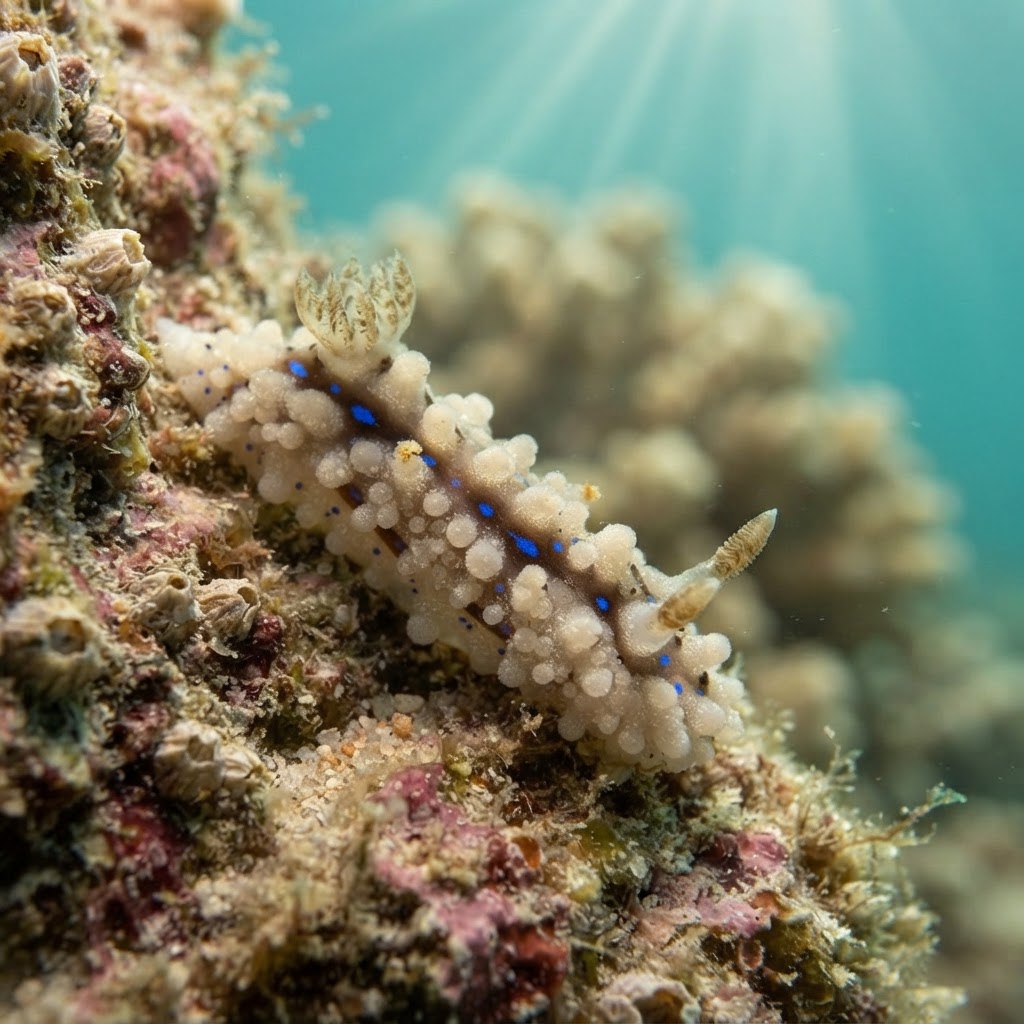
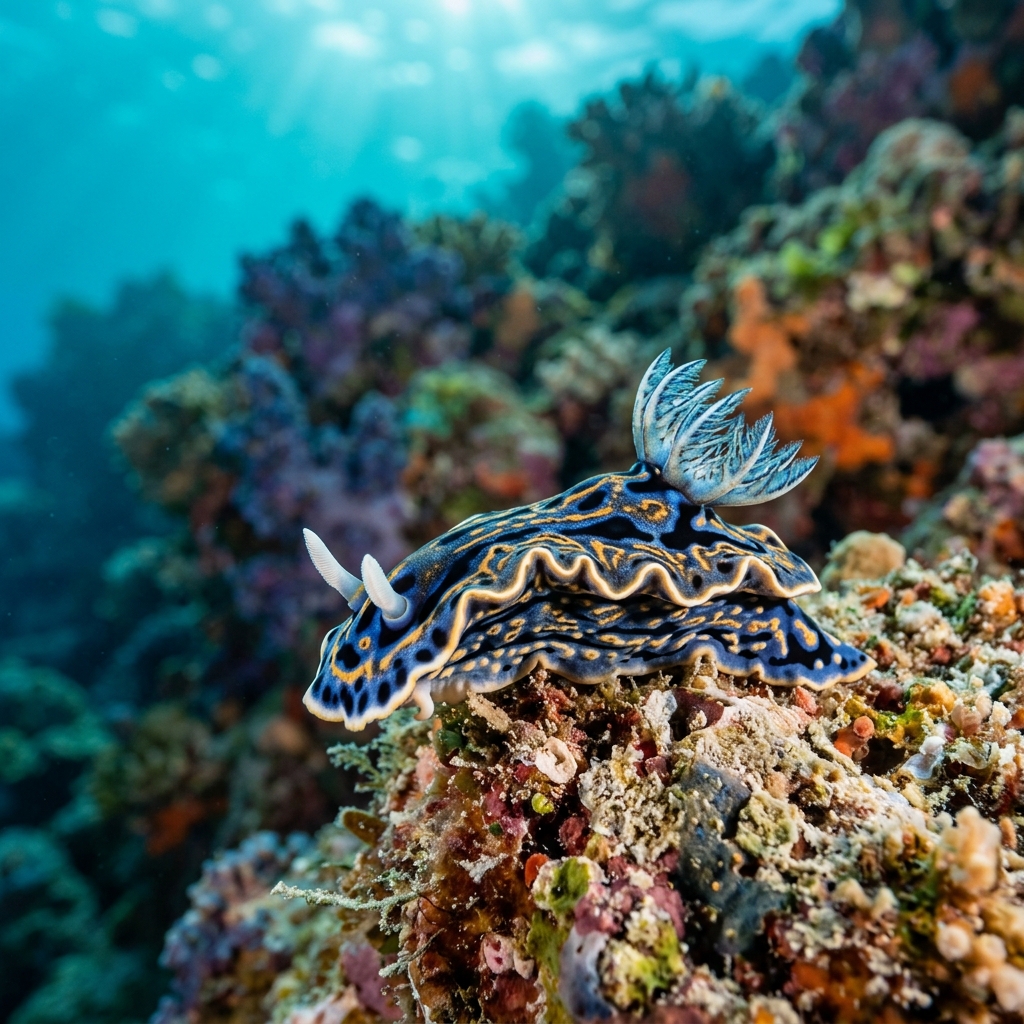
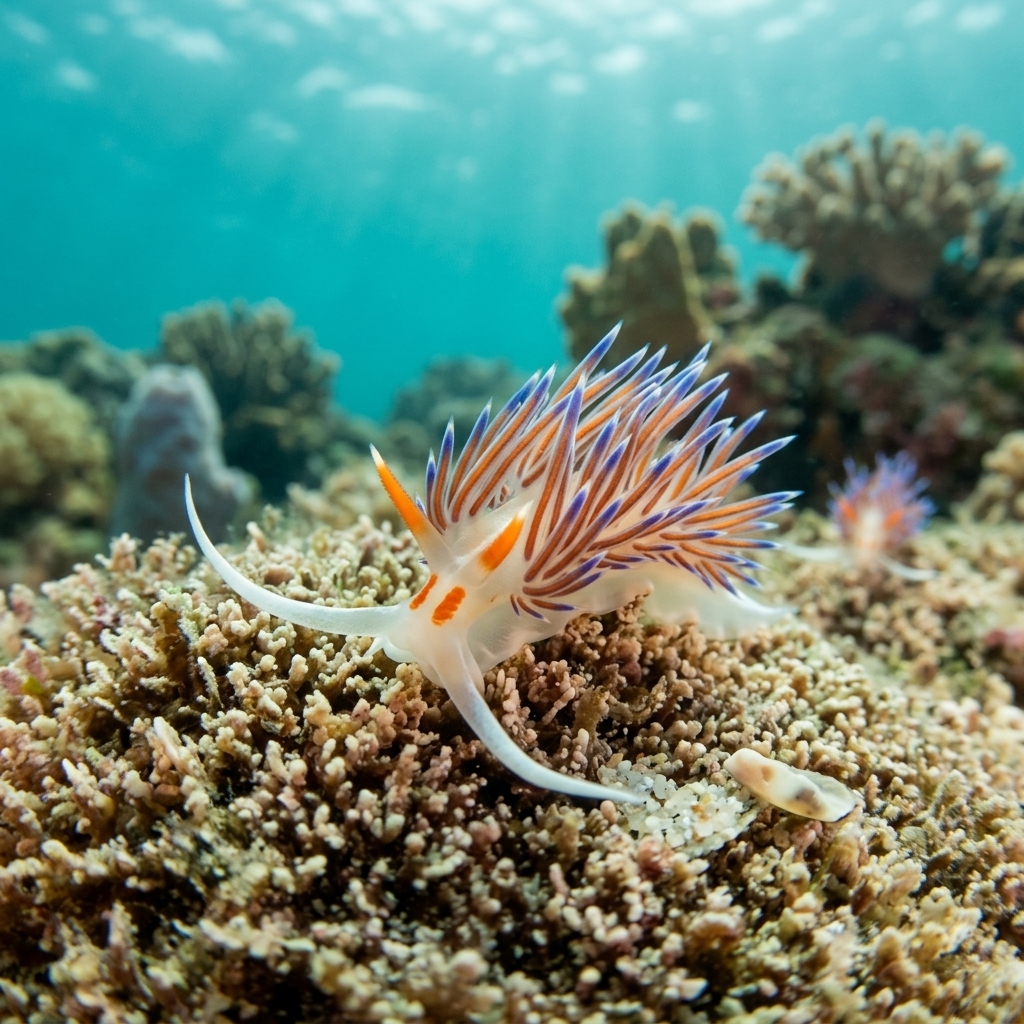
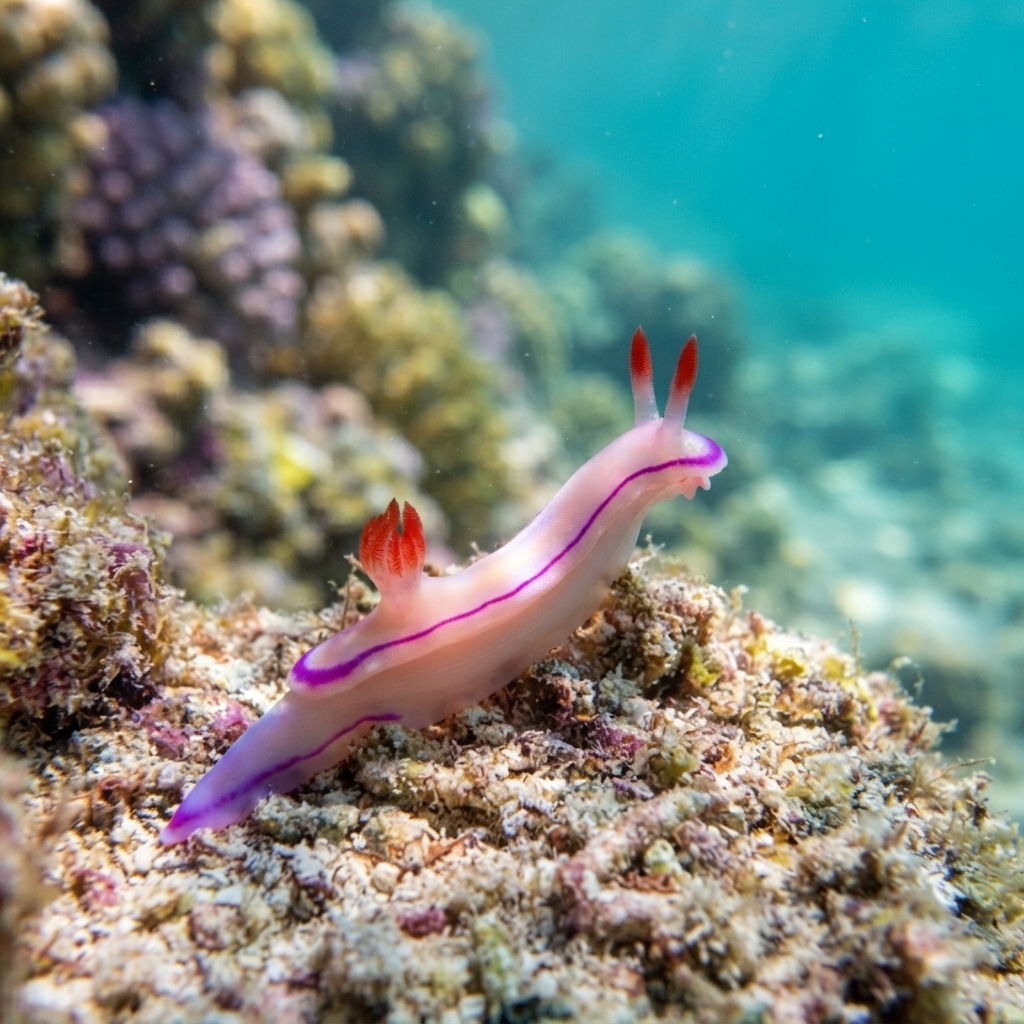
A small sea slug rarely longer than a couple of centimetres, with a soft, elongated body carried low over the reef. Look for the smooth, glossy mantle typical of chromodorid nudibranchs, patterned with the kind of bold contrasting markings that make this family easy to single out even at small size. The pair of feathery gills near the tail and the two rhinophores (sensory tentacles) up front are the two features to check first when confirming an ID.
Like most chromodorid nudibranchs, this is a slow, deliberate crawler that spends its time grazing over hard substrate rather than swimming or fleeing. Divers find it by slowing down and scanning rubble and reef surfaces closely, since it does not react to divers beyond continuing its unhurried pace across the bottom. Most sightings are logged as uncommon finds, so it rewards a patient, close look rather than a quick reef scan.
Like other dorid nudibranchs, it likely feeds on sponges and relies on chemicals absorbed from that diet, rather than a shell, to deter predators, which is why its bright pattern can be read as a warning rather than camouflage.
There is no clear seasonal pattern in the sightings, and the water temperature range it is found in, 22.4 to 28.4C, covers Hawaii's reefs comfortably all year, so it is a year-round possibility rather than a seasonal target.
Every logged sighting of this one comes from the United States, and specifically from Hawaii, which is currently the only place divers are reporting it. Within Hawaii it turns up scattered across a wide range of sites rather than concentrated in one or two spots, so it is worth scanning rubble and reef substrate on almost any Hawaiian dive.
Mapping where Thorunna Kahuna is logged…
Every recorded sighting so far comes from Hawaii, spread across a wide range of sites rather than one hotspot. It has not been reported from outside Hawaiian waters.
There is no strong season in the sightings data, and the water temperatures it is found in match Hawaii's reefs year-round, so any time of year gives a reasonable chance.
Look for a small, glossy-bodied nudibranch with bold contrasting markings, feathery gills near the tail, and a pair of rhinophores up front. It moves slowly over reef rubble rather than swimming.
Exact size data is not confirmed, but like most Thorunna species it stays small, likely only a few centimetres long, so a close look is needed to spot it on the reef.
No, this is a small, harmless sea slug with no sting or bite that poses any risk to divers. It simply crawls slowly over the reef and can be observed safely up close.
Like other dorid nudibranchs, it almost certainly grazes on sponges, absorbing chemical compounds from its food that may help deter predators rather than relying on a shell for protection.
Site and sighting data is aggregated from diver logs, iNaturalist and GBIF. For taxonomy and conservation status:
Nudibranch
3,168 sites