Thecacera pikachu
Spot the bright yellow Pikachu nudibranch in Sipadan, Bali, and the Philippines. Tips on ID, what to look for, and when to dive.
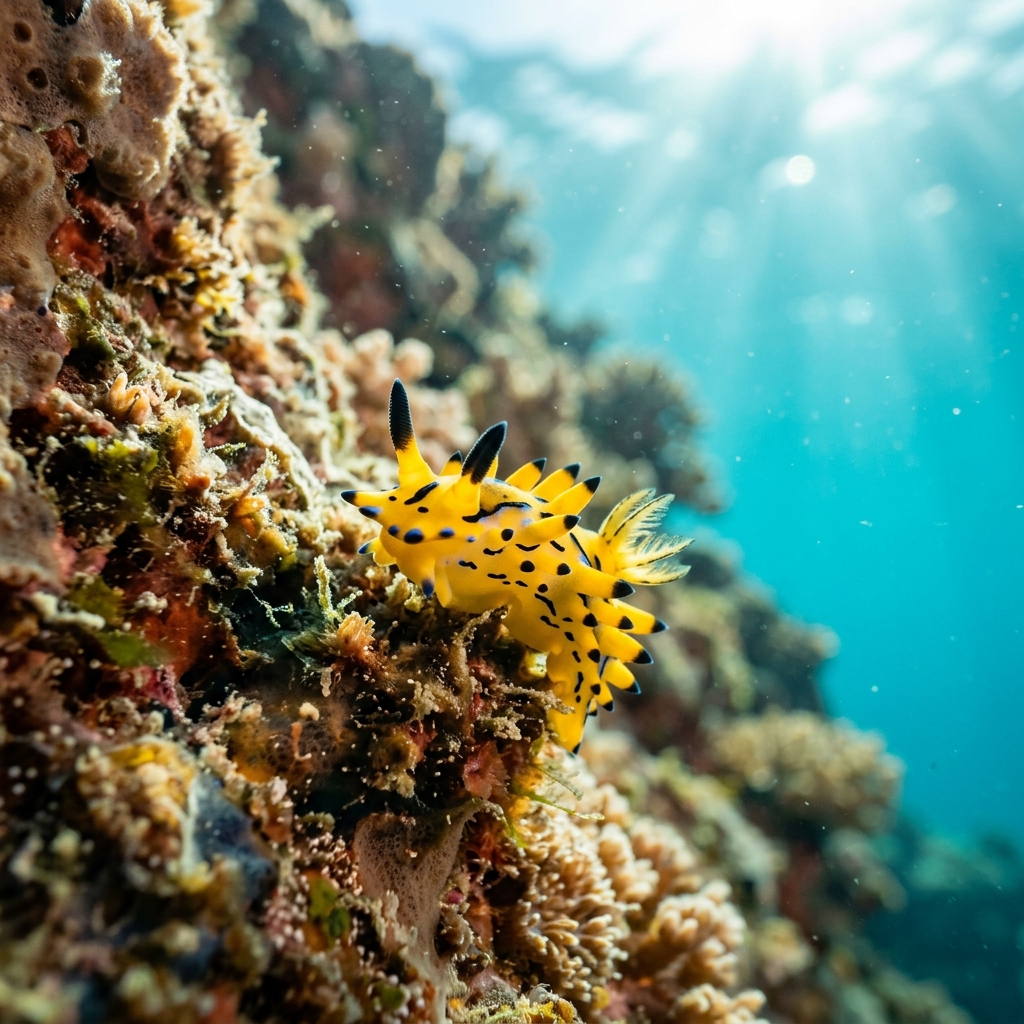
Named after a certain famous electric Pokémon for good reason, this small nudibranch sports a vivid yellow body with distinctive orange-tipped or black-tipped appendages (cerata) projecting from its back. The colour contrast is its biggest field mark: that warm yellow against the dark reef makes it stand out even at small sizes. Body shape is elongated and relatively low-profile, typical of the Polyceridae family. Spotted in water temperatures of roughly 27 to 29 degrees Celsius, so expect it on warm tropical reefs.
Like most nudibranchs, it is found crawling slowly across reef substrate, sponges, or algae-covered rock, often at close range to the surface it is grazing on. Divers typically spot it during a careful, slow dive rather than a swim-through, as it rarely moves far from cover. It shows no particular reaction to divers, making it an ideal macro photography subject if you can find it.
Thecacera pikachu was formally described and named in 2015, directly inspired by the Pokémon character due to its striking yellow colouration and dark markings. It is one of a small number of animal species named after pop-culture icons following formal taxonomic description.
No clear seasonal pattern has emerged from the data, so it is treated as a year-round resident on the tropical reefs where it lives. Its observed temperature range of 27 to 29 degrees Celsius matches the consistently warm conditions of the Coral Triangle throughout the year.
Most sightings come from Sipadan and the wider East Sabah coast of Malaysia, which accounts for the large majority of logged dive sites. Bali, Lombok, and Java in Indonesia are a strong second, with a handful of sites also recorded in Luzon and the northern Philippines. If you are hunting this species, Malaysian Borneo is your best starting point.
Mapping where Pikachu Nudibranch is logged…
The species is most commonly logged around Sipadan and East Sabah in Malaysian Borneo, which holds by far the most recorded sites. Bali and the broader Lombok and Java region of Indonesia are a reliable second option, and there are also sightings from Luzon in the northern Philippines.
There is no defined season in the available data, so it can be encountered year-round. Its preferred water temperature of 27 to 29 degrees Celsius matches the consistently warm conditions across the Coral Triangle throughout the year.
Look for a small, vivid yellow nudibranch with orange or black-tipped cerata projecting from its back. The bright warm yellow against dark reef substrate is the key field mark. It belongs to the family Polyceridae, giving it an elongated, relatively slender body compared to rounder dorid nudibranchs.
Precise size data for this species has not been formally documented in the available records. As a member of the Polyceridae family, it is a small macro subject, typically measured in millimetres to low centimetres, so a macro lens is the right tool for finding and photographing it.
The species was formally described and named in 2015, with its name directly referencing the Pokémon character Pikachu because of its vivid yellow body and contrasting dark markings. It is one of a small number of newly described animals given pop-culture inspired scientific names after meeting formal taxonomic requirements.
Site and sighting data is aggregated from diver logs, iNaturalist and GBIF. For taxonomy and conservation status:
Light-spotted Aegires
3,168 sites