Thecacera picta
Spot Thecacera picta in the warm reefs of the Philippines, Indonesia and Malaysia. Here's how to ID it and when to look.
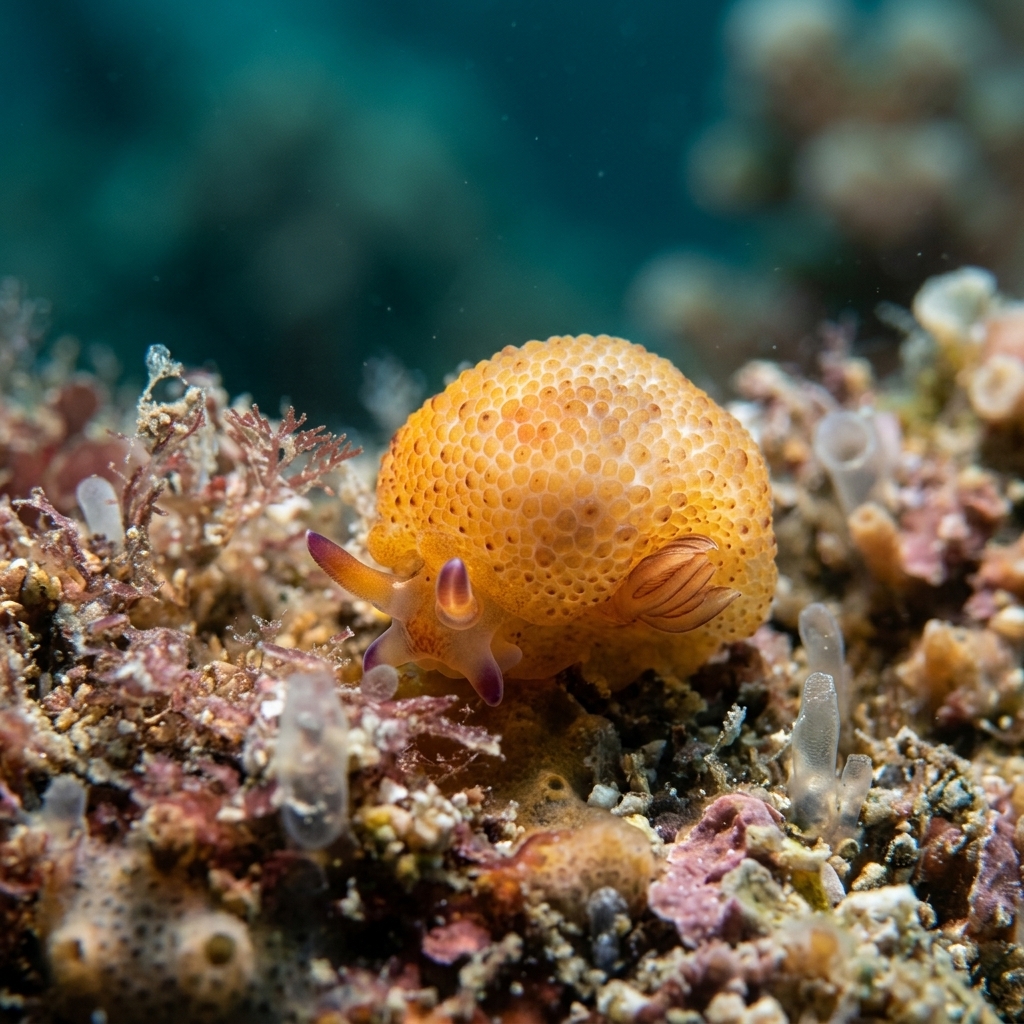
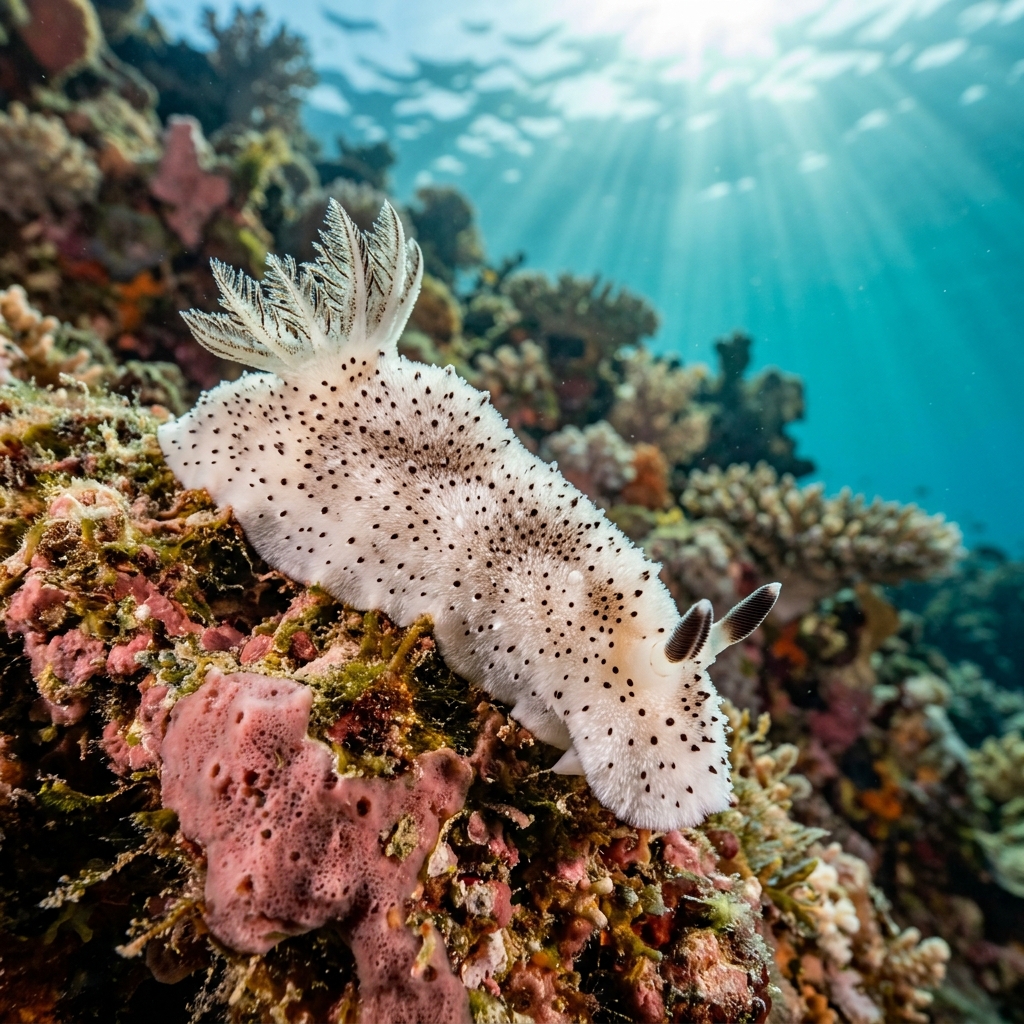
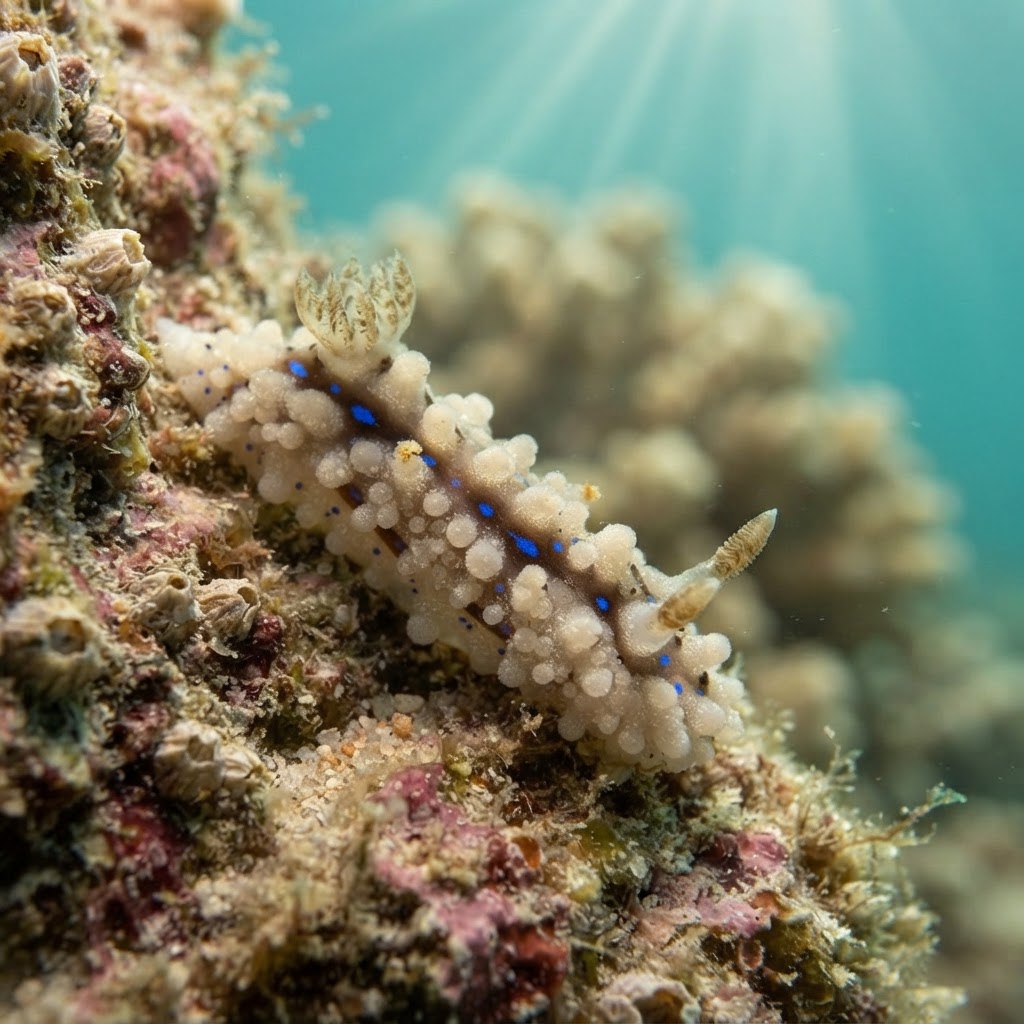
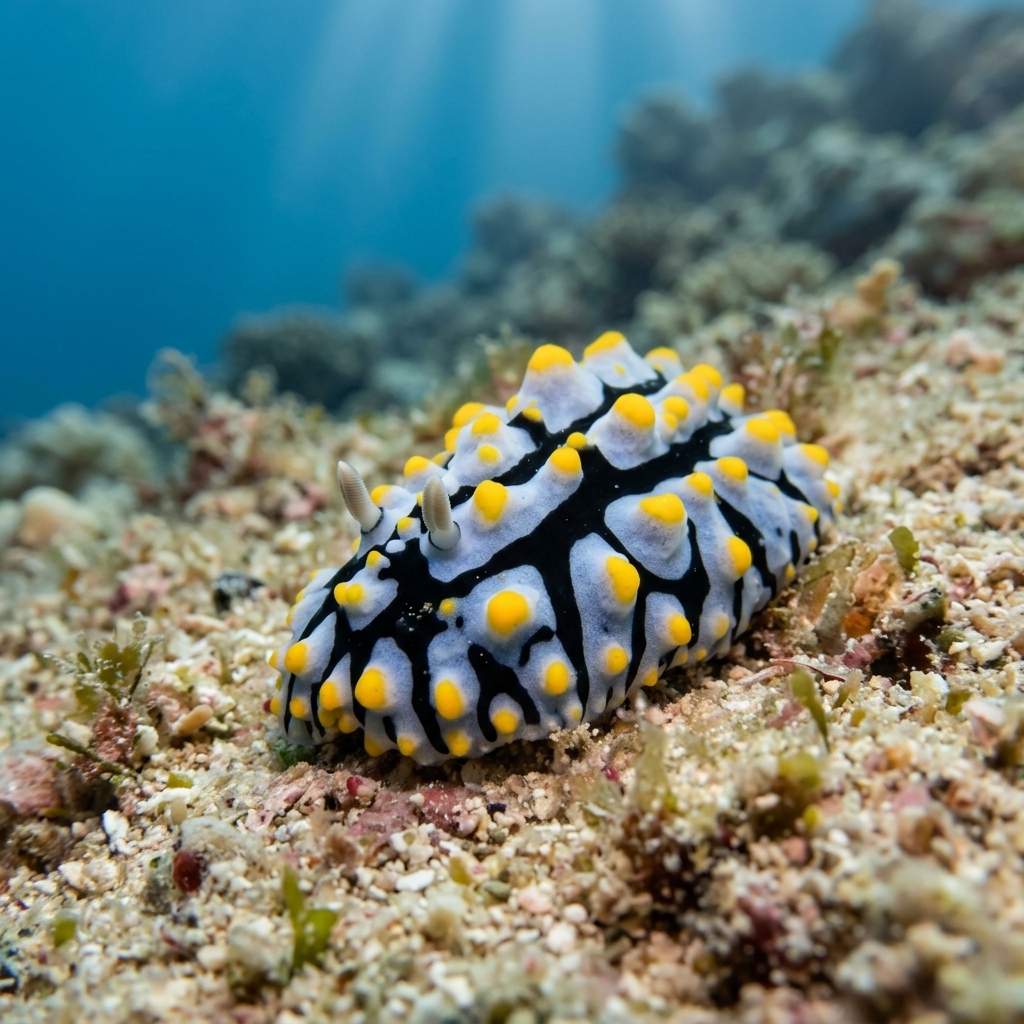
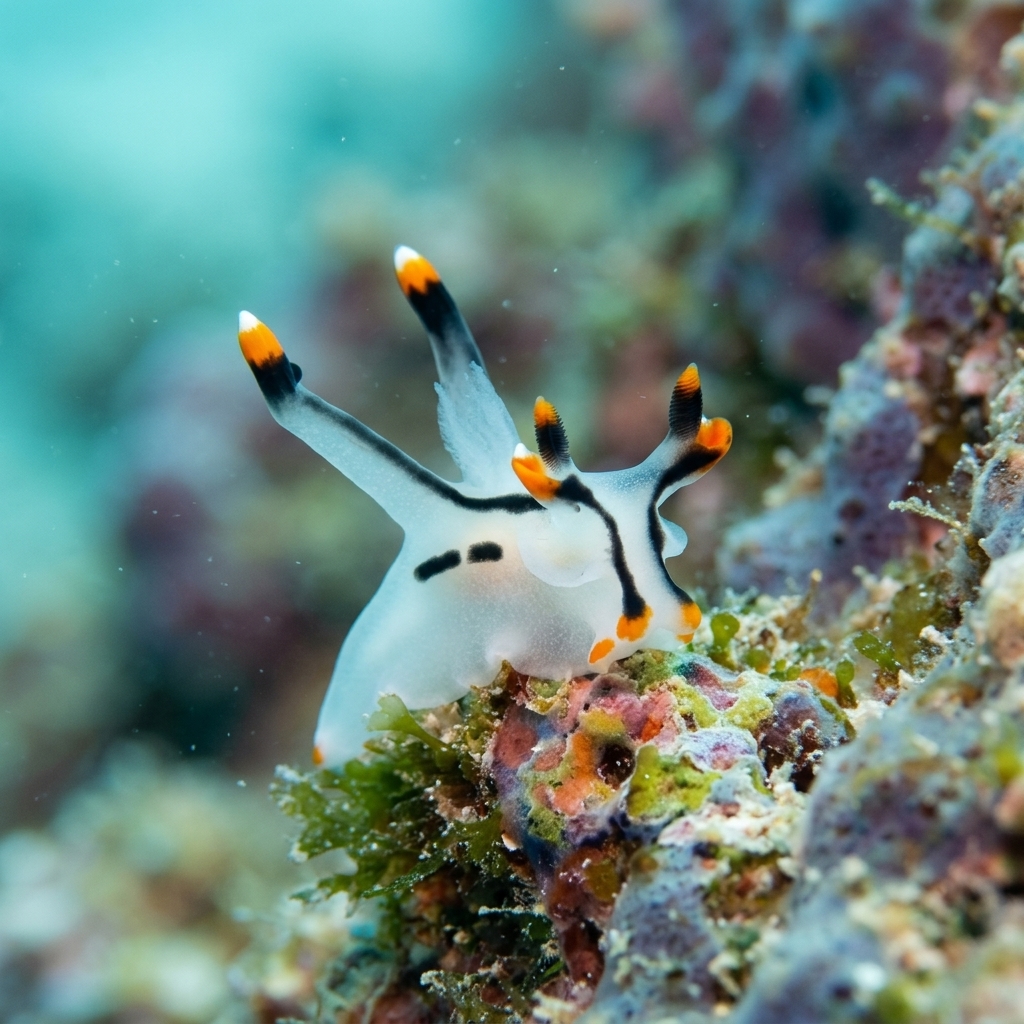
A small, elongated dorid nudibranch with a pale or white body marked by vivid orange or yellow spots and dark-tipped cerata (finger-like projections along the back). The gills and rhinophores (sensory horns) are typically edged in contrasting colour, making them the clearest field mark when the animal is at rest on rubble or algae. Observed in water temperatures of roughly 27 to 29 °C, so expect to find it on warm Indo-Pacific reef slopes and muck sites rather than cooler temperate waters.
Thecacera picta is typically found slowly crawling over rubble, coralline algae, or encrusting bryozoans, often in the shallower sections of a muck or reef-slope dive. It tends to ignore divers entirely, continuing to forage or rest as long as you approach slowly and avoid disturbing the substrate around it. Look low and close to the bottom; its small size means it is very easy to swim right past.
Like other members of the family Polyceridae, Thecacera picta is thought to feed on bryozoans, and its vivid markings are widely understood to serve as aposematic colouration, advertising to potential predators that it is unpalatable.
Northern Hemisphere sightings concentrate between January and August, so the first half of the year is the most productive window across the Philippines, Indonesia, and Malaysia. The species' preference for warm water above 27 °C means conditions in these tropical regions can remain suitable outside that window, though logged encounters drop off noticeably after August.
The overwhelming majority of sightings come from the Philippines, with Luzon and the north coast and Western Visayas accounting for the largest share of records. Indonesia, particularly Maluku and Papua, is the second most productive area, closely followed by Sipadan and East Sabah in Malaysia. Timor-Leste holds a small number of observations, suggesting the species is present but far less frequently encountered there.
Mapping where Thecacera picta is logged…
Most sightings are logged in the Philippines, particularly around Luzon and the Visayas islands. Indonesia's Maluku and Papua region and Sipadan and East Sabah in Malaysia are also strong areas. A handful of records come from Timor-Leste.
Sightings in the Northern Hemisphere cluster from January through August, making the early part of the year the most reliable window. Outside that period encounters are recorded but noticeably less frequent.
Look for a small white or pale nudibranch with orange or yellow spots and dark-tipped cerata along its back. The coloured tips on the gills and rhinophores are the clearest feature to key on. It is typically found crawling slowly over rubble or encrusting growth at the base of the reef.
It is classed as uncommon across the majority of sites where it has been recorded, with a smaller proportion of sites rating it rare and only a few rating it common. Patience and slow, careful searching of rubble and muck are the most reliable approaches.
No, it poses no risk to divers whatsoever. Like most nudibranchs, it is a slow-moving, soft-bodied animal that has no means of harming a person.
Site and sighting data is aggregated from diver logs, iNaturalist and GBIF. For taxonomy and conservation status:
Blue Dragon
3,163 sites