Cadlina limbaughorum
A 2cm white nudibranch logged along California's coast, most reliably found on cold rocky reefs from 14.6 to 20.6°C.
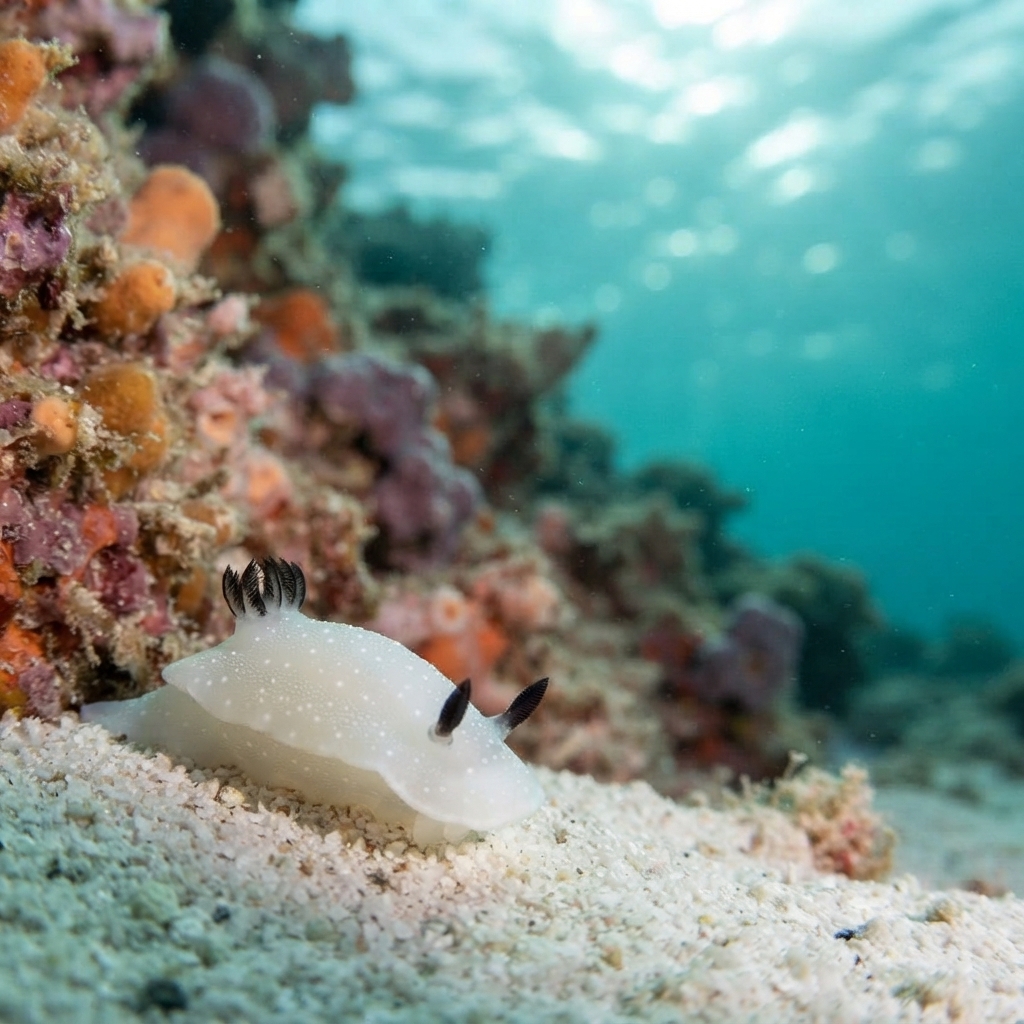
A small white to cream-bodied sea slug, rarely more than 2cm long, with a scattering of raised yellow-tipped bumps (tubercles) across its back. Look for the two rhinophores (sensory horns) at the front and a small cluster of feathery gills near the rear, both often edged in the same pale yellow as the tubercles. Its compact, low-slung body blends easily with encrusting sponge and algae, so it takes a slow, close look to spot.
Divers find this nudibranch tucked low on rock and encrusting sponge, moving at the unhurried pace typical of small dorid nudibranchs as it grazes. It shows no reaction to divers beyond continuing its slow crawl, and because of its size and camouflage it is usually noticed only by divers scanning the substrate closely with a torch or macro lens. Most sightings are logged as uncommon or rare, so finding one usually takes a patient, deliberate search rather than a chance encounter.
Like other Cadlina species, it likely feeds on sponges and can concentrate distasteful compounds from its diet in its tissue, a chemical defence common across the dorid nudibranch family.
There is not enough seasonal data to point to a particular month, so treat it as a year-round find on California's cold-water reefs. Its recorded temperature range of 14.6 to 20.6°C spans much of the state's typical diving conditions, so timing your dive around water temperature is less important than simply searching the right habitat.
Every logged sighting of this species comes from California, making it effectively a California specialty among divers who search the state's rocky reefs. It shows up most reliably around dive sites in the California region itself, with no confirmed records yet reported elsewhere.
Mapping where The Limbaugh's Cadlina is logged…
Confirmed sightings are concentrated in California, particularly along rocky reef sites in that region. No dives outside California have reported this species so far.
There is no clear seasonal pattern in the data, so it is best treated as a year-round possibility on California's cold-water reefs rather than tied to a specific month.
Look for a tiny white to cream nudibranch, about 2cm long, covered in small yellow-tipped bumps with matching yellow edges on its rhinophores and gill cluster. Its small size and pale colouring mean it often hides in plain sight against sponge-covered rock.
This species stays small, typically reaching around 2cm in length, which is fairly typical for members of the Cadlina genus.
No, this species poses no danger to divers. It has no stinging cells or venomous defences that could affect a person.
Like related Cadlina nudibranchs, it probably feeds on sponges and stores compounds from that diet in its own tissue as a defence against predators, a trait shared across many dorid nudibranchs.
Site and sighting data is aggregated from diver logs, iNaturalist and GBIF. For taxonomy and conservation status:
Nudibranch
3,168 sites