Tenellia ocellata
A small nudibranch found off the French Riviera, Andalusia and the Lisbon Coast, best hunted year-round in cool Atlantic and Mediterranean waters.
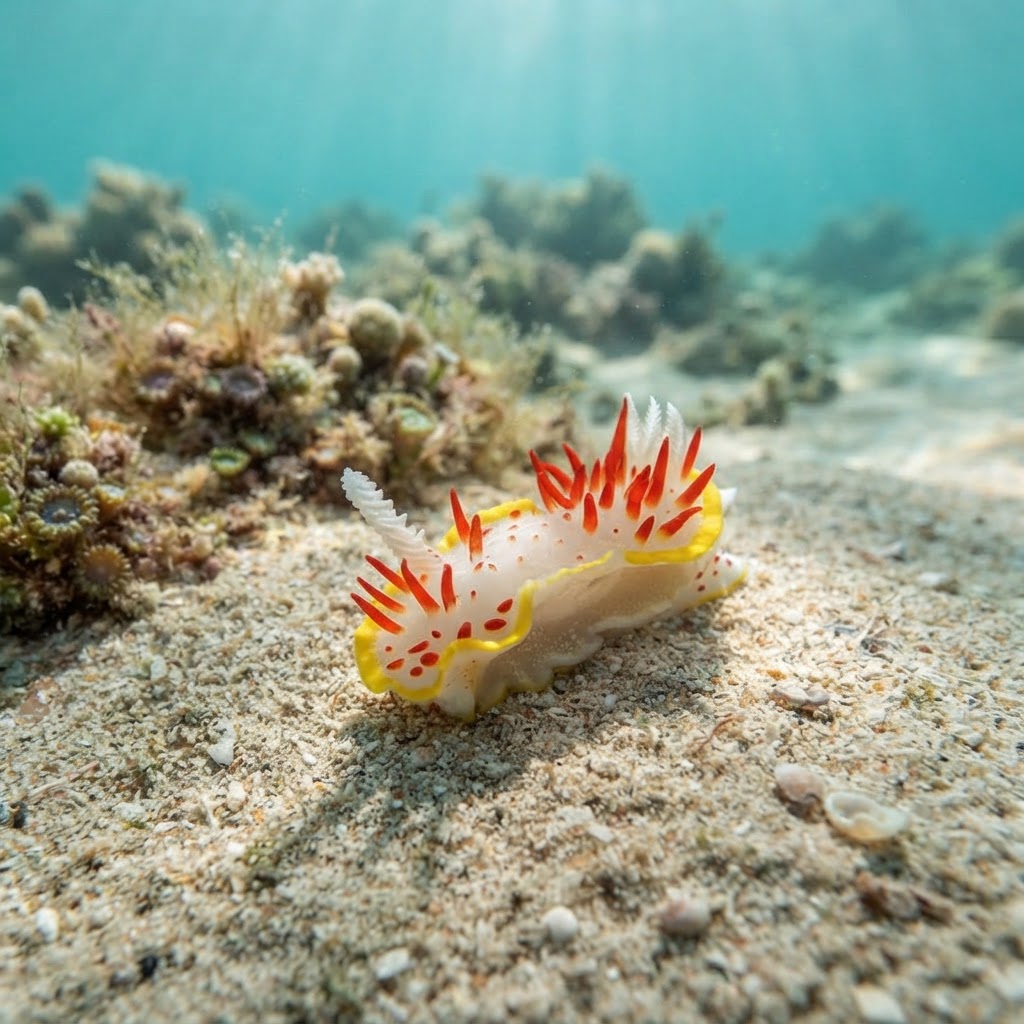
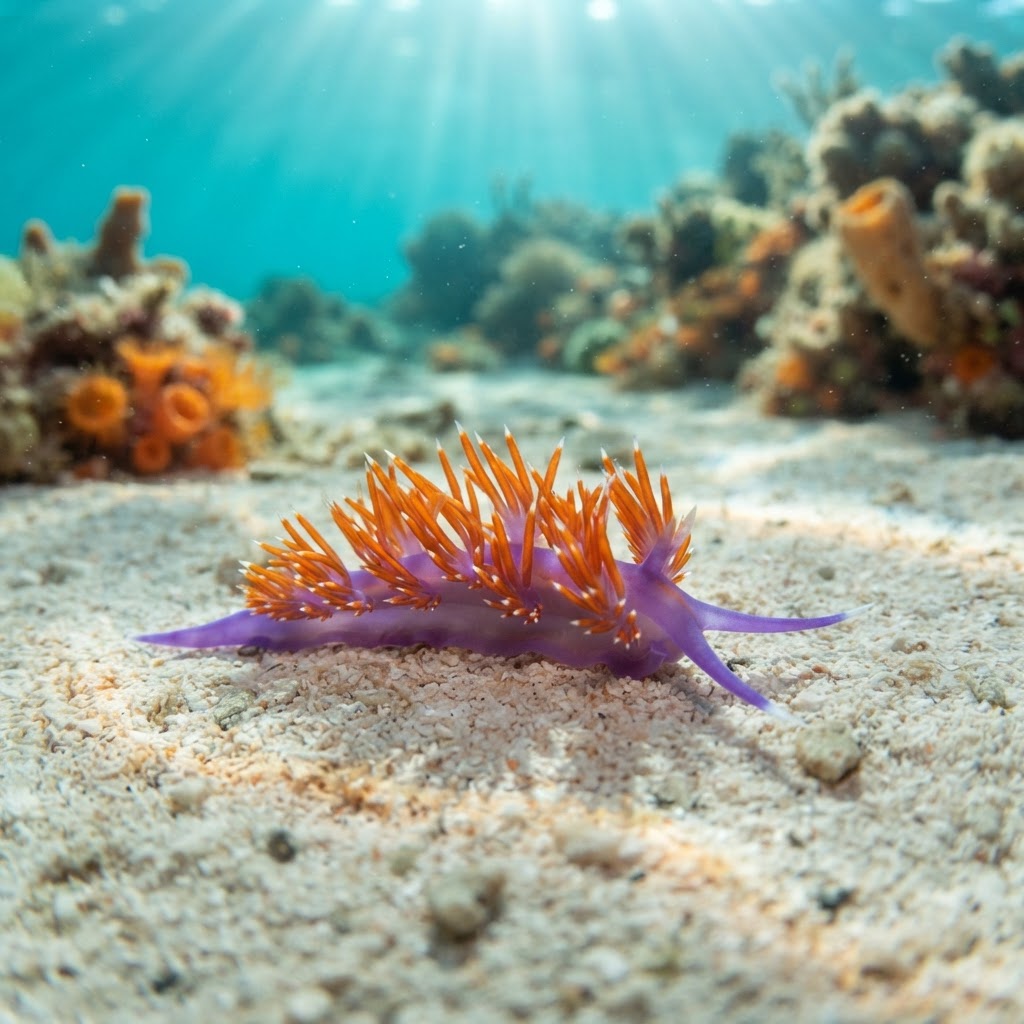
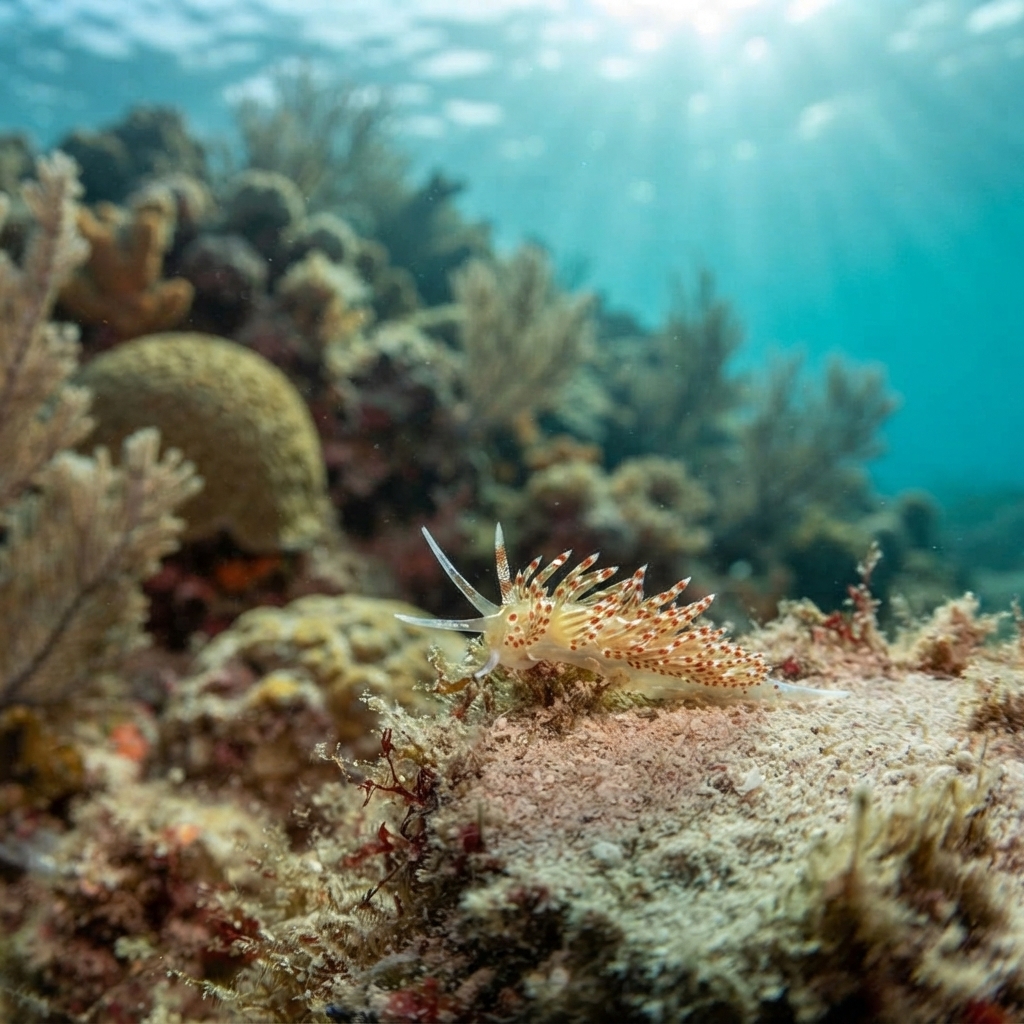
A small sea slug, easy to miss unless you slow down and scan rock and algae surfaces closely. Look for a slender, translucent to pale body with rows of dark, eye-like spots (the ocellated markings the name refers to) running down the back, and slim cerata (the finger-like projections along its sides used for both breathing and defence). Its small size and muted colouring mean it blends into weedy, encrusted substrate rather than standing out like the larger, brighter nudibranchs divers often expect.
Divers find it grazing slowly over rock, algae and encrusted surfaces, often in the same micro-habitats where its hydroid or bryozoan prey lives, since many trinchesiid nudibranchs feed on these small colonial animals. It shows no reaction to divers beyond its usual slow crawl, and because it is uncommon to rare at most sites where it has been logged, spotting one is more a matter of careful, close-focus searching than luck at a big attraction site.
The dark ocellated spots along its back are a useful field mark among the many small, pale nudibranchs found on European rocky reefs, where colour alone often is not enough to separate similar species.
Sighting data shows no strong seasonal pattern, so treat it as a year-round find within its comfort range of roughly 14.7 to 20.7C. That range fits cooler months in the Mediterranean and much of the year along the Atlantic coasts of Spain and Portugal, so timing your dive to water temperature matters more than chasing a specific season.
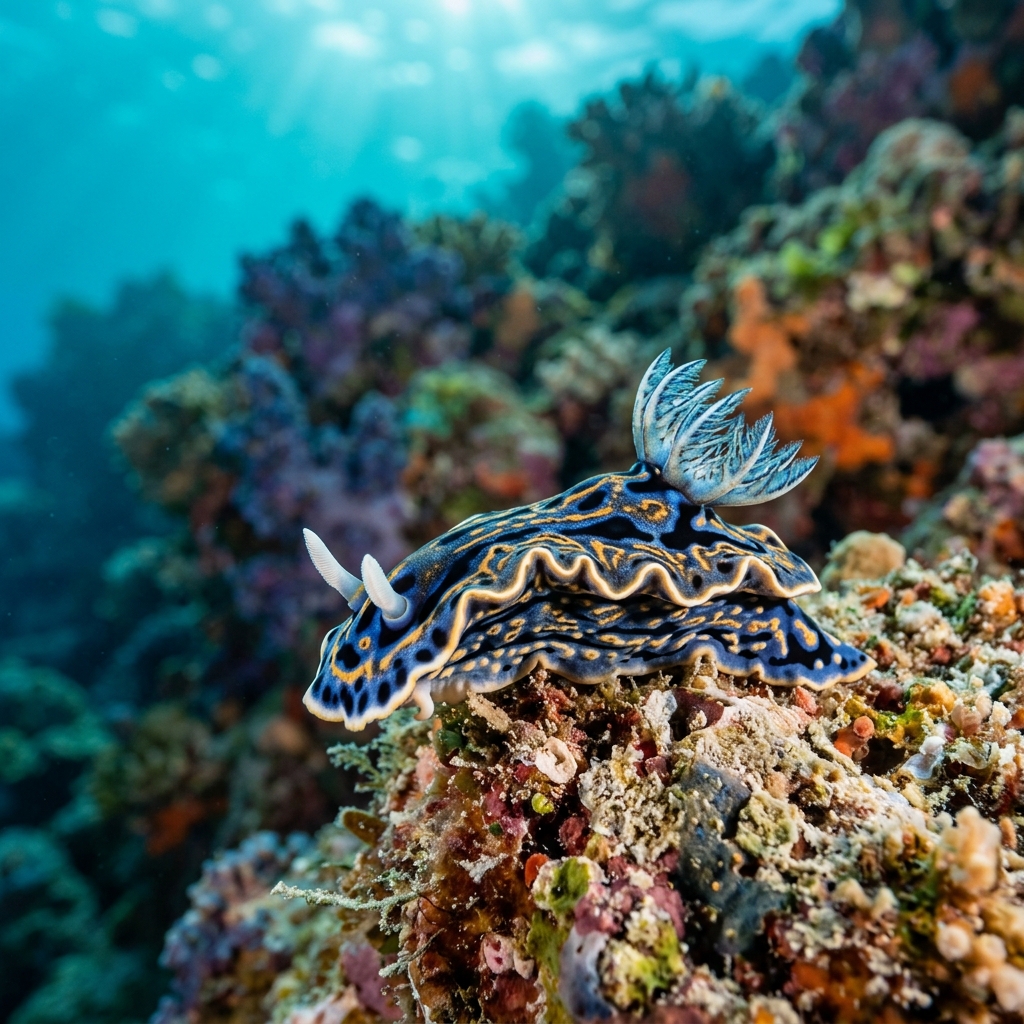
Reef neighbours a diver could mistake it for. Use the identification notes above to tell them apart.
This is a cool-water Atlantic and Mediterranean species, most reliably logged along France's French Riviera and Provence coast, Spain's Andalusia region, and Portugal's Lisbon Coast, with occasional records in Catalonia and the Bay of Biscay. Sites across these three countries account for the vast majority of logged sightings, making southwestern Europe the place to search rather than tropical destinations.
Mapping where Tenellia ocellata is logged…
It is most consistently recorded along the French Riviera and Provence coast in France, Andalusia in Spain, and the Lisbon Coast in Portugal. These three countries account for the large majority of logged sightings, making southwestern Europe the best bet for a search.
There is no clear seasonal pattern in the sighting data, so it can turn up year-round. It has been observed in water between about 14.7 and 20.7C, which covers cooler months in the Mediterranean and much of the year along the Atlantic coast.
Look for a small, slender, pale to translucent nudibranch with rows of dark, eye-like spots along its back and slim cerata down its sides. Its small size means you usually need to search closely on rock and algae rather than spotting it from a distance.
Exact size data is not available, but like most trinchesiid nudibranchs it is a small species, typically only a centimetre or two long, which is why it is easy to overlook on a reef.
At most sites where it has been recorded, divers rate it uncommon or rare, with only a smaller number of sites reporting it as common. Finding one usually takes deliberate, close-focus searching rather than a casual glance.
No, this species poses no danger to divers. It is a small, slow-moving grazer that can be safely observed and photographed without any risk.
Site and sighting data is aggregated from diver logs, iNaturalist and GBIF. For taxonomy and conservation status:
Blue Dragon
3,163 sites