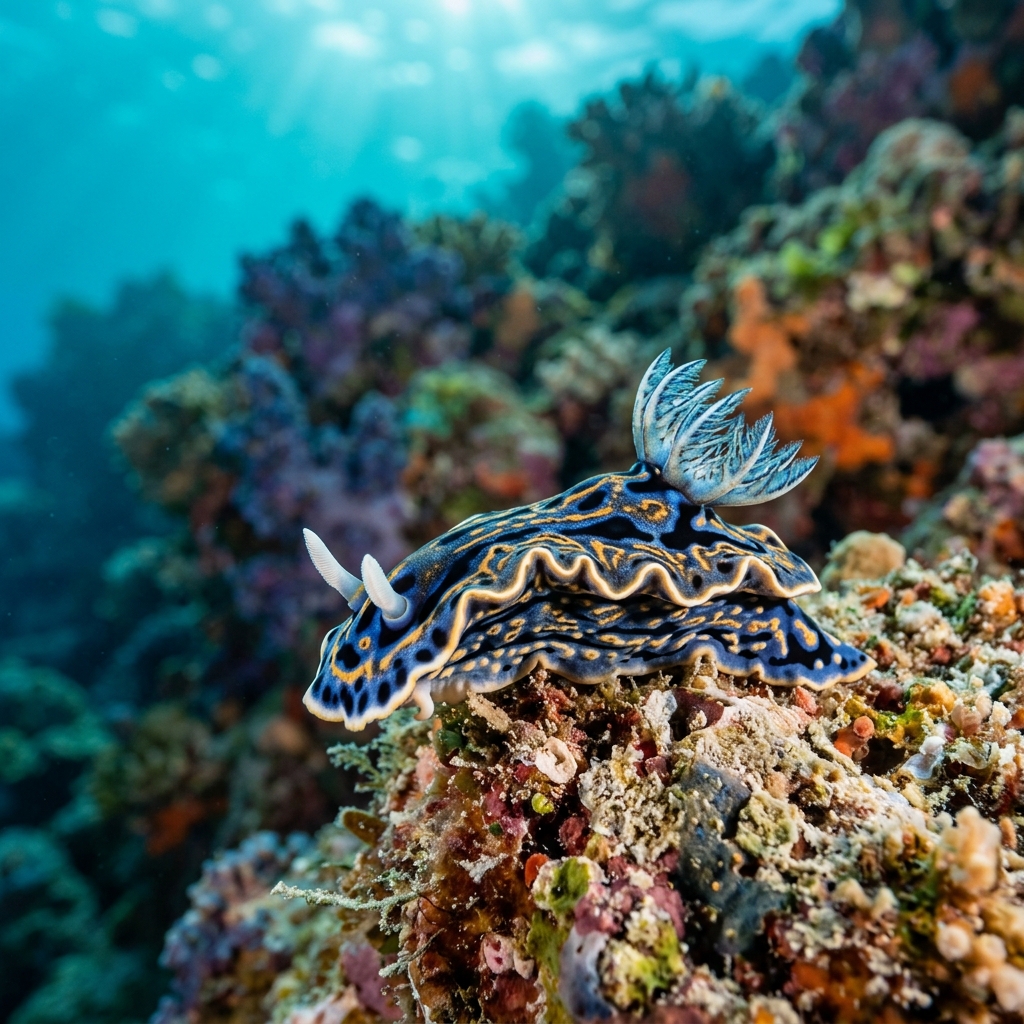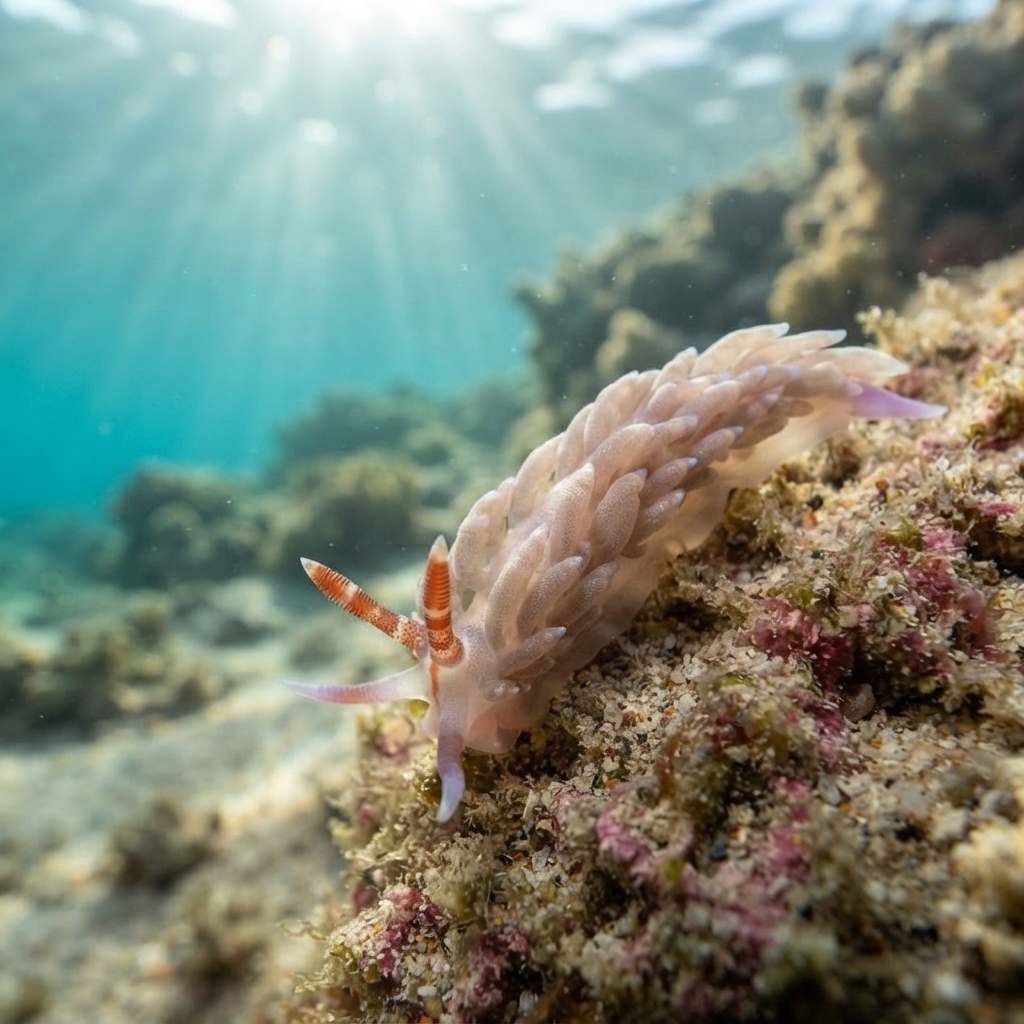
Tenellia nakapila
A rarely-logged nudibranch found in the Visayas, Philippines, in warm 25.5-31.5C reef water year-round.
A small nudibranch (sea slug) best picked out by scanning reef rubble and sponge patches closely rather than looking for it from a distance, since exact size and colour pattern data are thin for this species. Like other Tenellia species, expect a slender, tapering body carrying rows of finger-like projections (cerata) along its back, which often pick up colour from whatever it has been feeding on. Divers should treat any sighting as one for the macro camera and a careful side-by-side comparison with reference photos, since this is not a species you will confidently call from memory alone.
Divers log this one on slow, close-focus dives, tucked into reef rubble or hydroid and sponge growth where it is presumably grazing, as most Trinchesiidae nudibranchs feed on hydroids or similar colonial organisms. It shows no reaction to divers beyond the usual nudibranch response of continuing to graze unless directly disturbed, and sightings so far have been uncommon even at the handful of sites where it has been recorded. Look for it during the same unhurried, eyes-close-to-the-substrate dive style used for other small nudibranchs in the Visayas.
Like other members of the Trinchesiidae family, it likely sequesters stinging cells from the hydroids it feeds on and stores them in its cerata as a borrowed defence, though this has not been specifically documented for this species.
Sightings sit in warm water between 25.5 and 31.5C with no detected seasonal pattern, so it appears to be a year-round find on Visayas reefs rather than a seasonal one. Plan around good macro diving conditions generally rather than a specific month.
Every logged sighting of this species so far comes from the Philippines, concentrated in the Visayas region, which makes it the only place currently confirmed for this nudibranch. Divers chasing it should focus on Visayas dive sites known for strong macro life and slow, careful reef-scanning dives rather than wide-open reef swims.
Mapping where Tenellia Nakapila is logged…
All confirmed sightings are from the Visayas region of the Philippines, where a handful of dive sites have logged it. There is no confirmed record of this species outside the Philippines so far.
There is no detected seasonal pattern, and it has been observed in water from 25.5 to 31.5C, suggesting it can turn up year-round on Visayas reefs.
It is a small nudibranch with the slender body and back-mounted cerata typical of the Trinchesiidae family. Precise colour and size details are not well documented, so photographing any candidate sighting for comparison is the safest approach.
Exact size data has not been established for this species, though most Tenellia nudibranchs are small, typically in the centimetre range, and best spotted on close-focus macro dives.
Yes, it is logged as uncommon even at the small number of Visayas sites where it has been recorded, making it a real find for macro-focused divers rather than a routine sighting.
Site and sighting data is aggregated from diver logs, iNaturalist and GBIF. For taxonomy and conservation status:
Blue Dragon
3,163 sites