Phyllodesmium horridum
An uncommon nudibranch logged across the Western Cape, comfortable in cool 13.5 to 19.5°C water year-round.
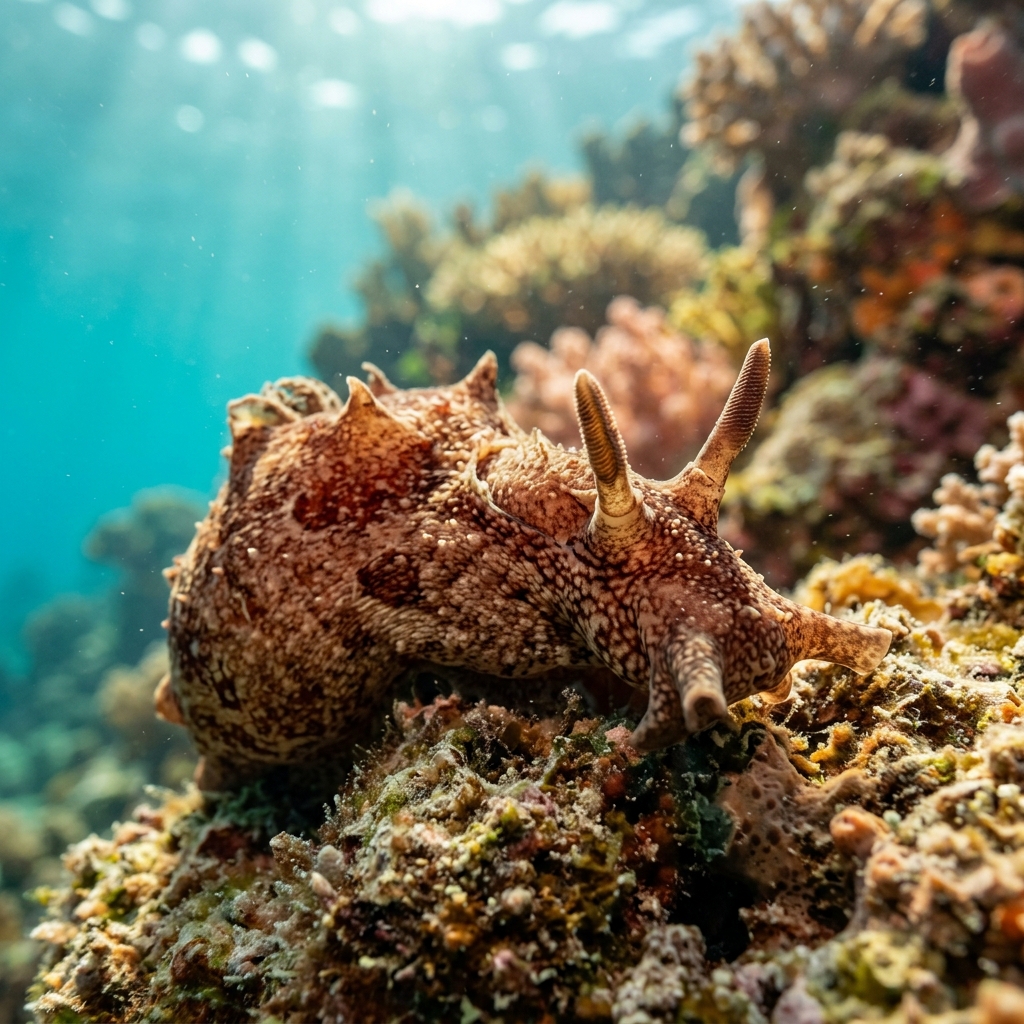
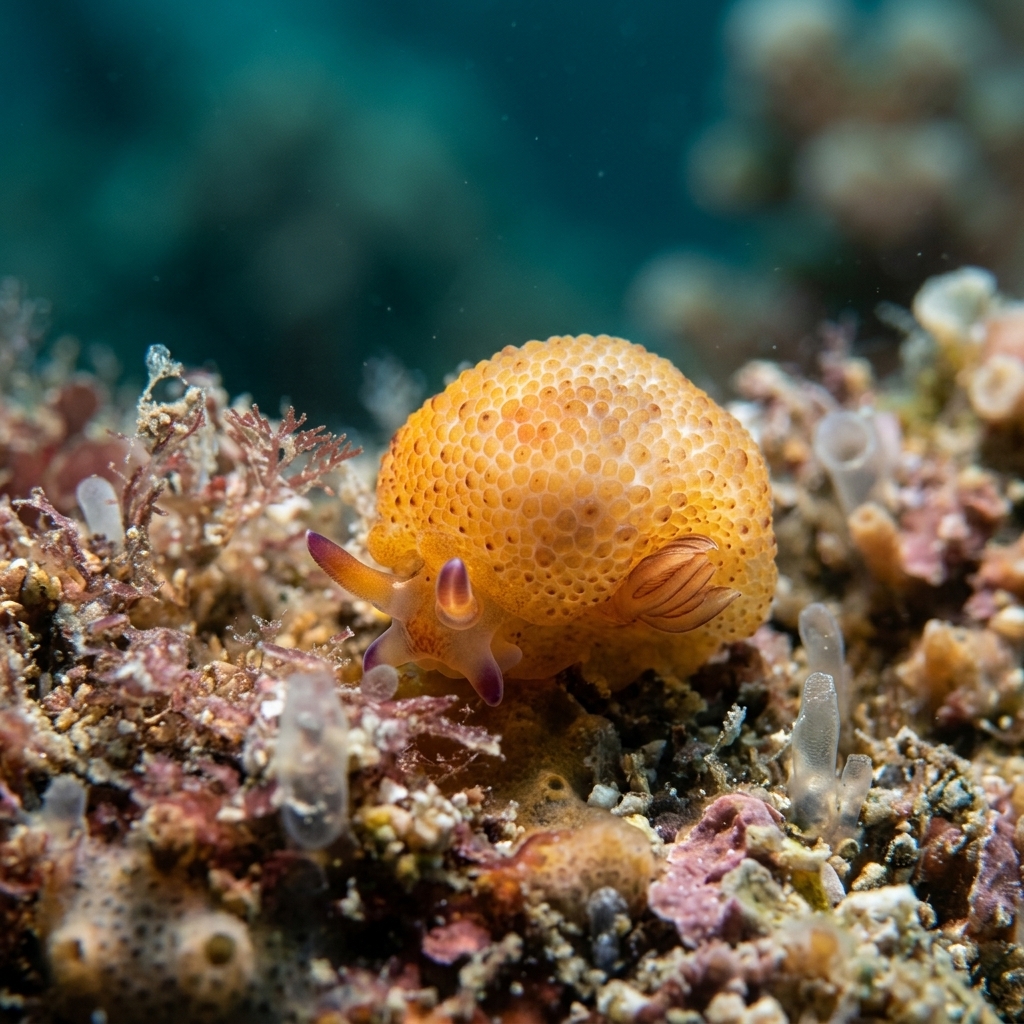
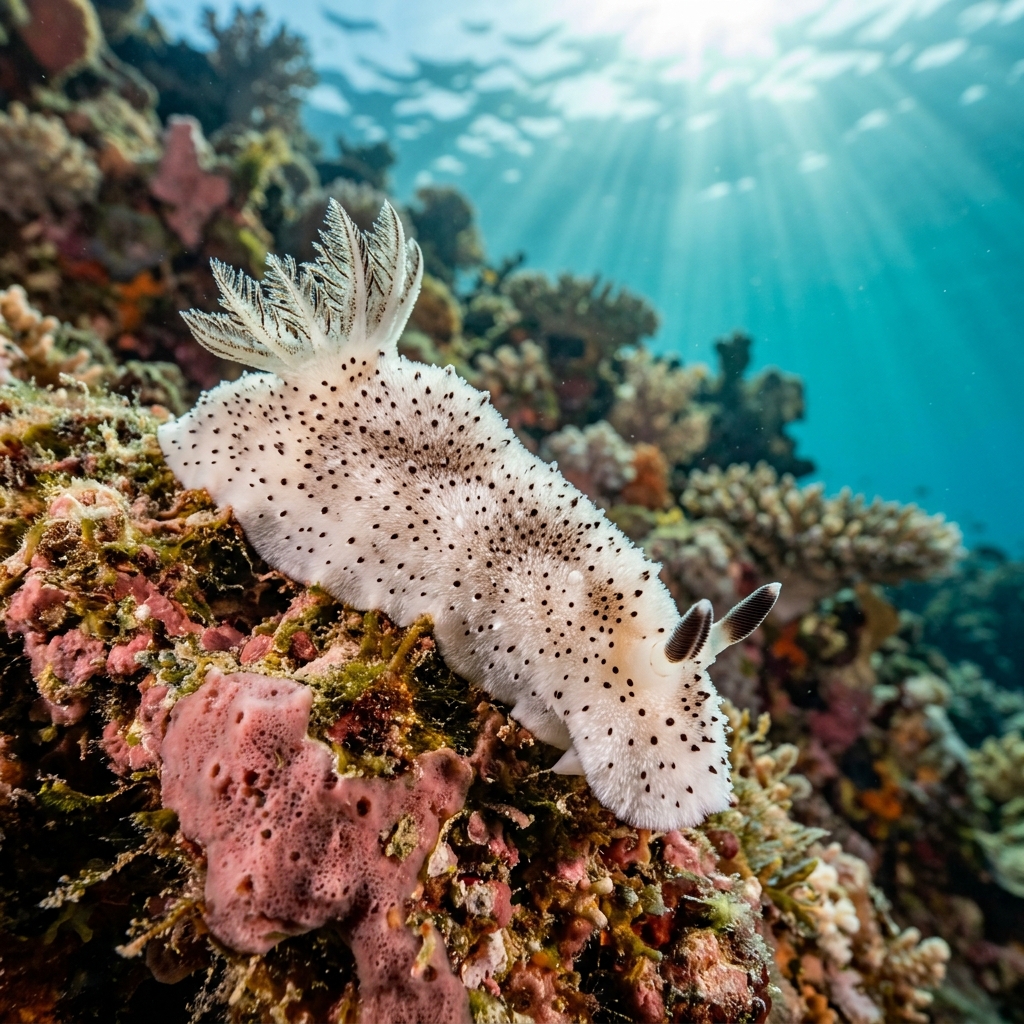
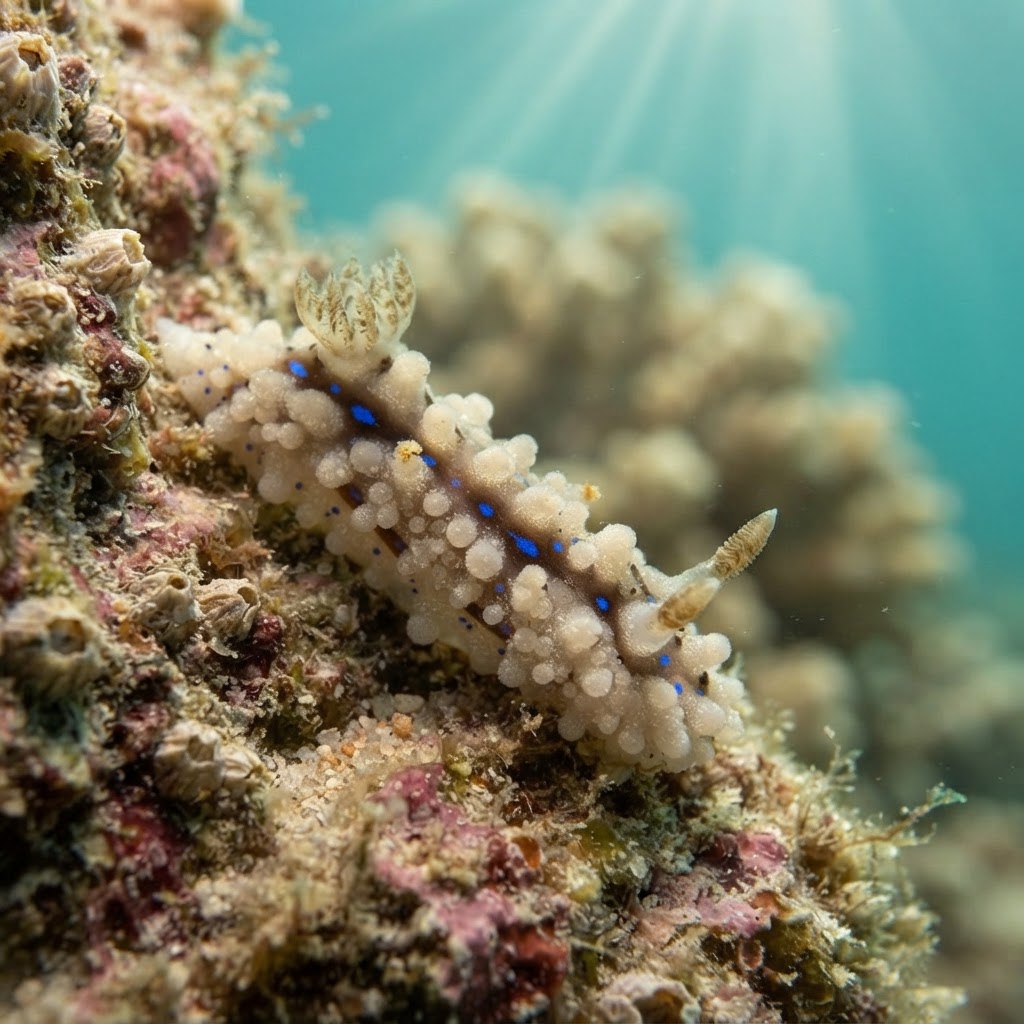
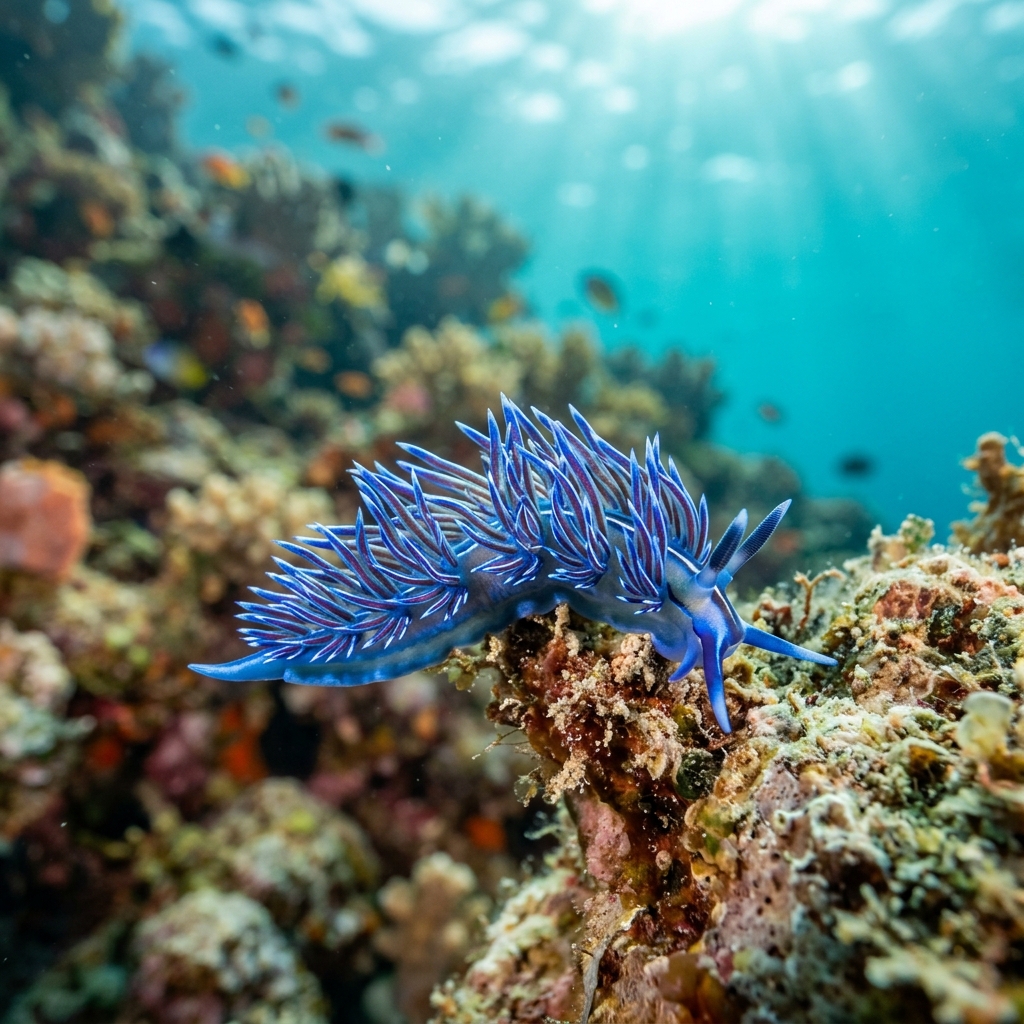
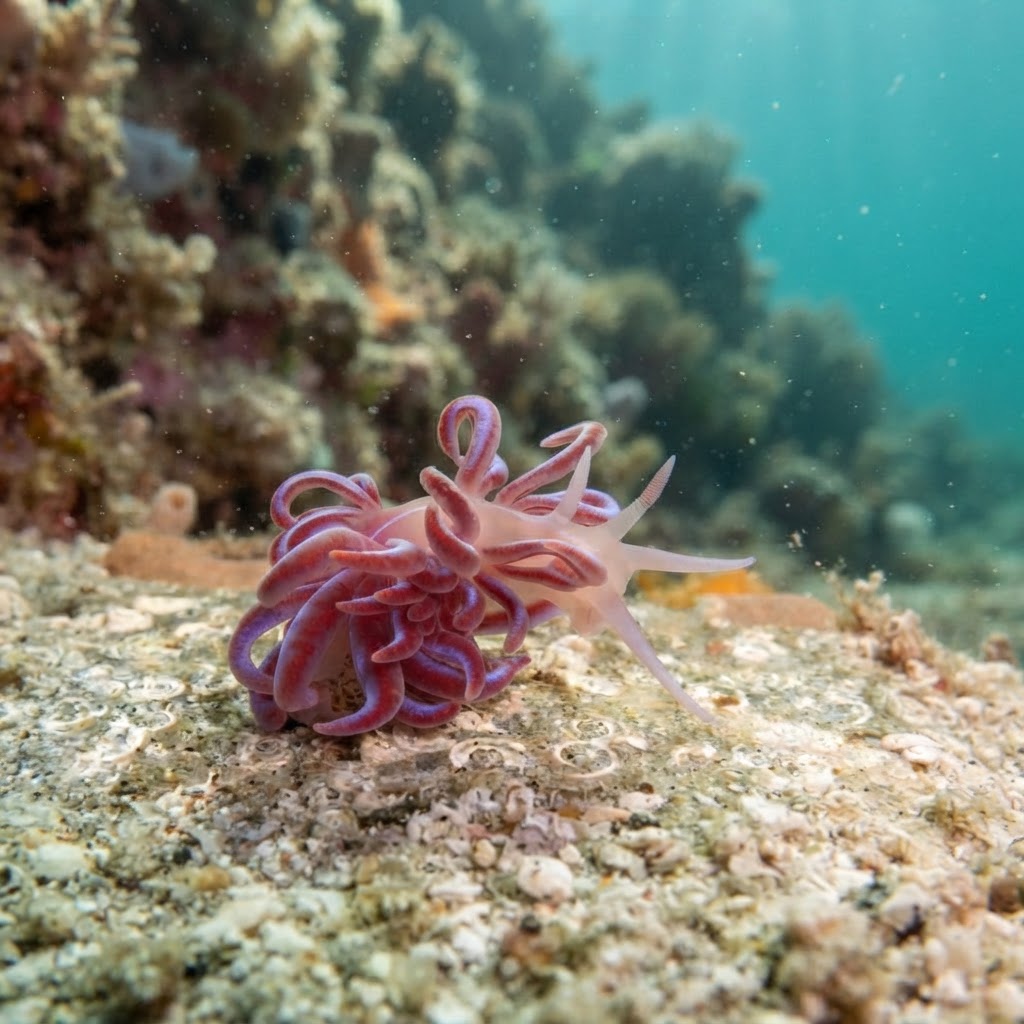
Look for an elongated, soft-bodied nudibranch whose back is covered in finger-like projections called cerata, which take on the branching shape and colour of the soft coral it has just been eating. Bodies run pale grey to brownish, often mottled to match the coral host, which makes this one blend in rather than stand out. There is no strongly contrasting stripe or spot to key on here, so divers usually spot it by first noticing an oddly textured patch on a soft coral branch and then realising it is moving.
Divers find it sitting motionless on the soft corals it feeds on, often so well matched in colour and texture to the coral branches that it takes a slow, deliberate scan to pick it out. It shows no reaction to divers beyond staying put, and most sightings happen during the kind of unhurried macro-focused dive where you are already searching coral heads closely rather than cruising past them.
Members of this genus are known for stealing stinging cells and pigments from the soft corals they eat and repurposing them in their own cerata, so the coral-like colouring on its back is not just camouflage, it is literally borrowed from its prey.
Sightings show no detectable seasonal pattern, and the species turns up across its recorded 13.5 to 19.5°C temperature range, so treat it as a year-round find on Western Cape dives rather than something tied to a particular month.
This one is a Western Cape speciality: every logged sighting comes from South Africa, with the Western Cape carrying the entire known record. If you are diving the cool reefs around Cape Town and the surrounding coastline, this is where to look, rather than further afield.
Mapping where Temperate Soft Coral Eater is logged…
Every recorded sighting comes from South Africa's Western Cape, making it a regional speciality rather than a species found on tropical reefs elsewhere.
There is no clear season in the data, and it has been logged across a 13.5 to 19.5°C range, so it is worth looking for on Western Cape dives at any time of year.
Check soft coral colonies for a slow-moving, elongated nudibranch whose back cerata mimic the colour and branching shape of the coral itself. It has no bold contrasting pattern, so it is found more by texture and movement than by standout colour.
Exact size data is not confirmed for this species, but like other members of its genus it stays small enough to be easily overlooked against its soft coral host.
It feeds on soft corals and incorporates their pigments and stinging cells into its own cerata, effectively wearing a disguise built from the prey it has eaten.
Site and sighting data is aggregated from diver logs, iNaturalist and GBIF. For taxonomy and conservation status:
Light-spotted Aegires
3,168 sites