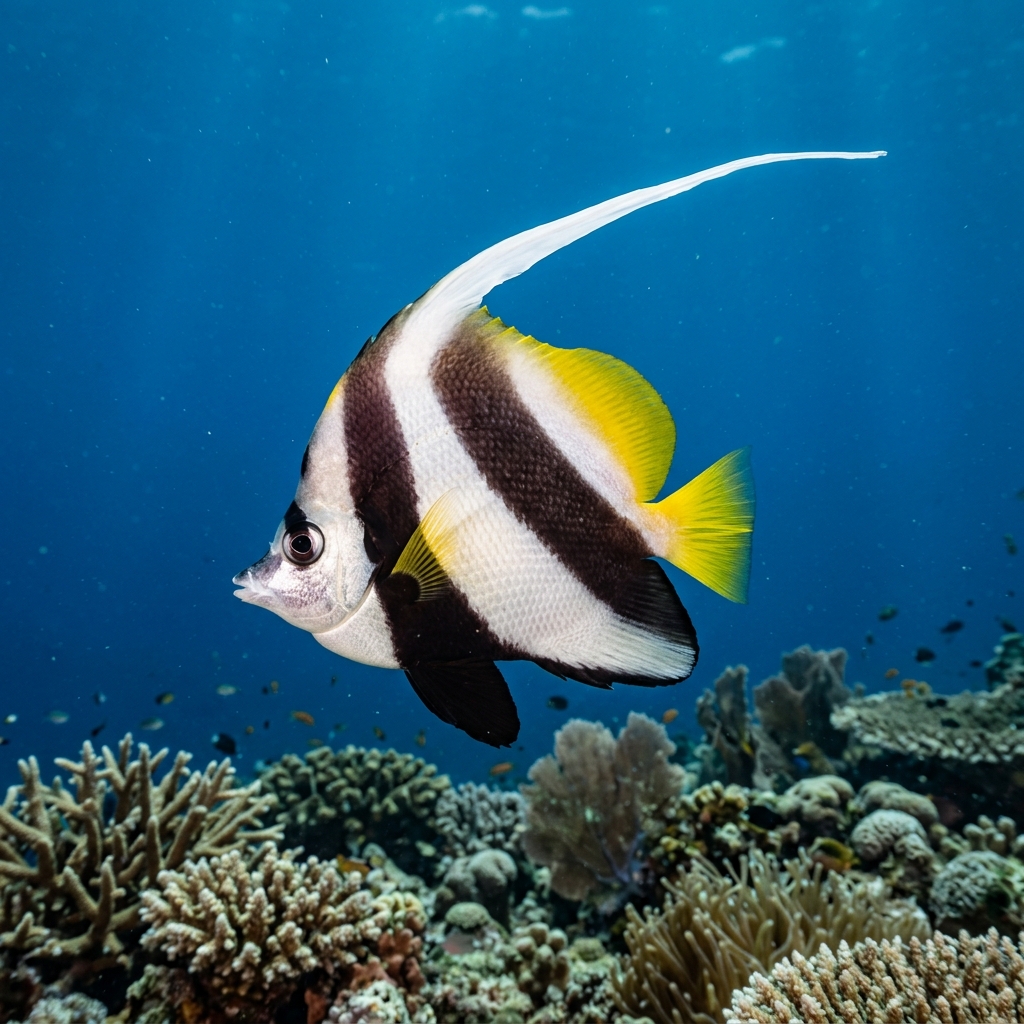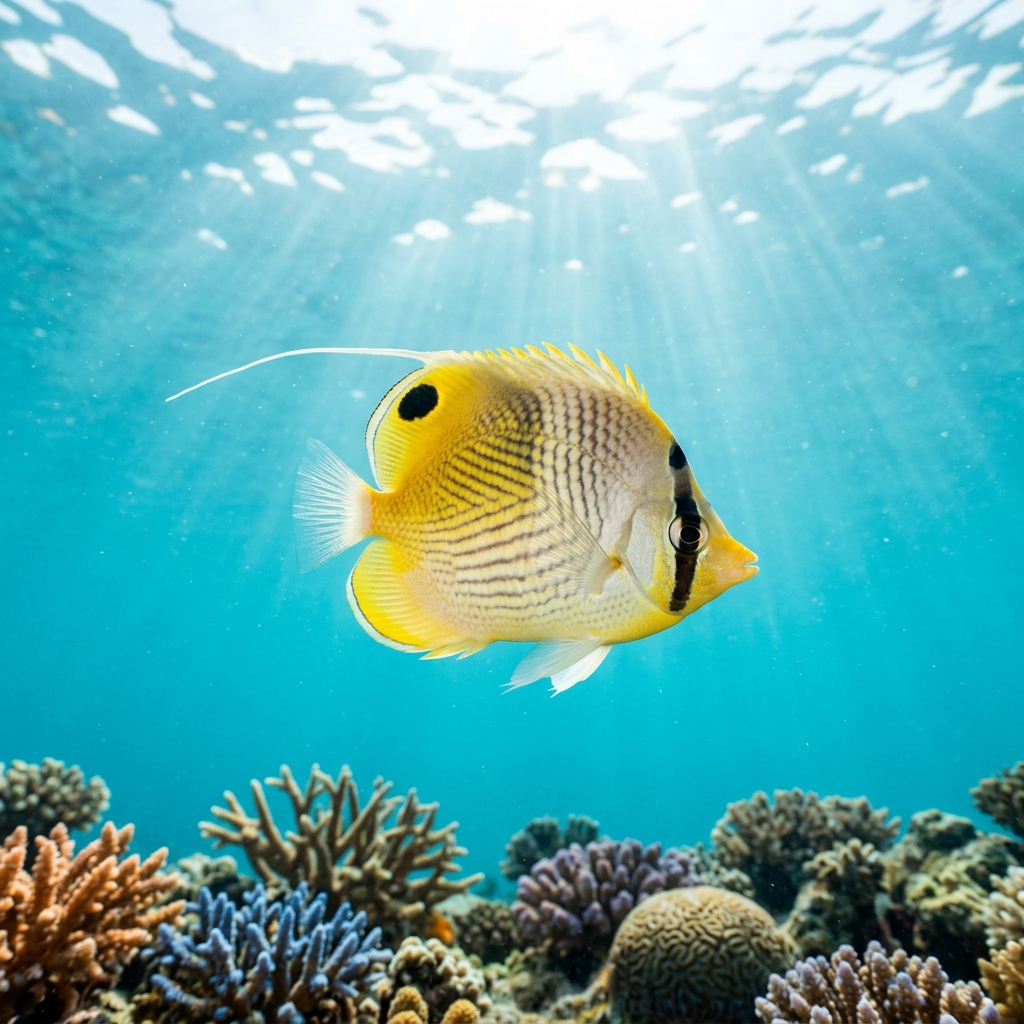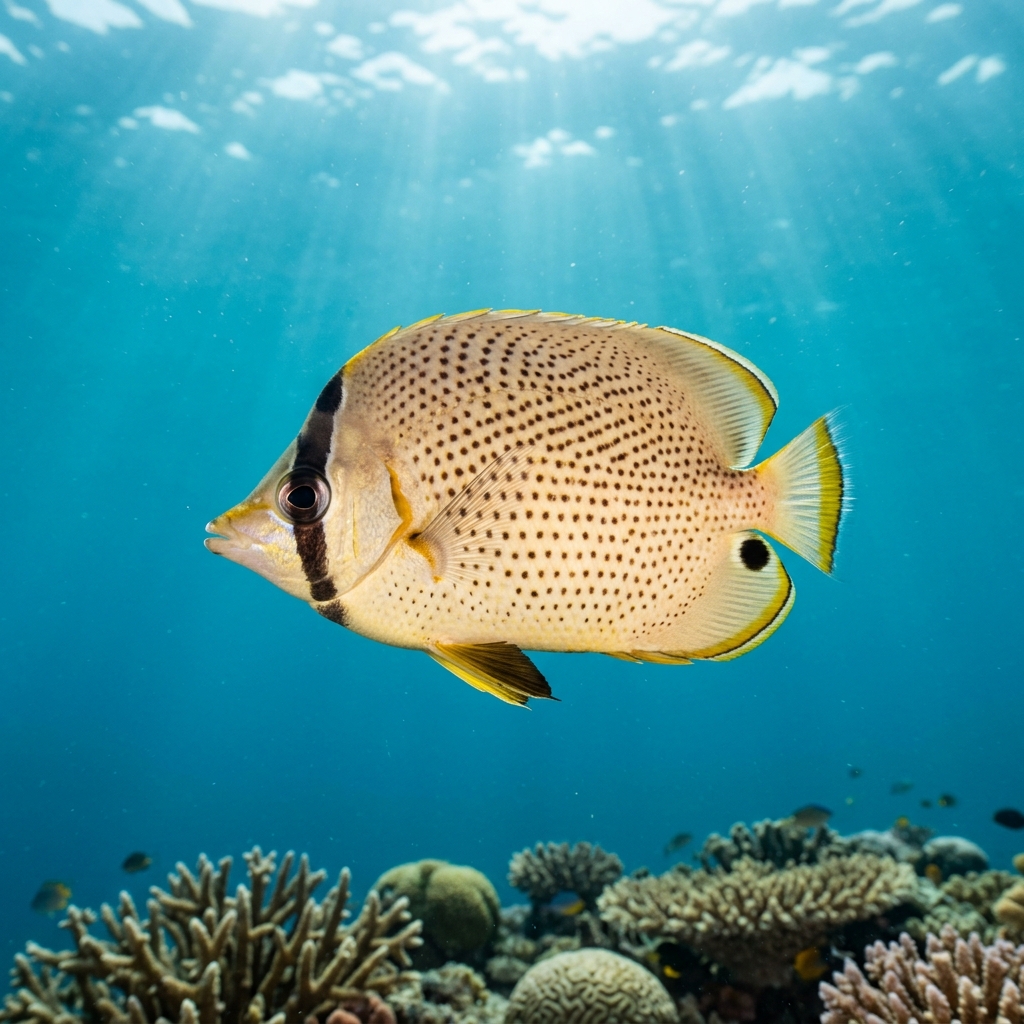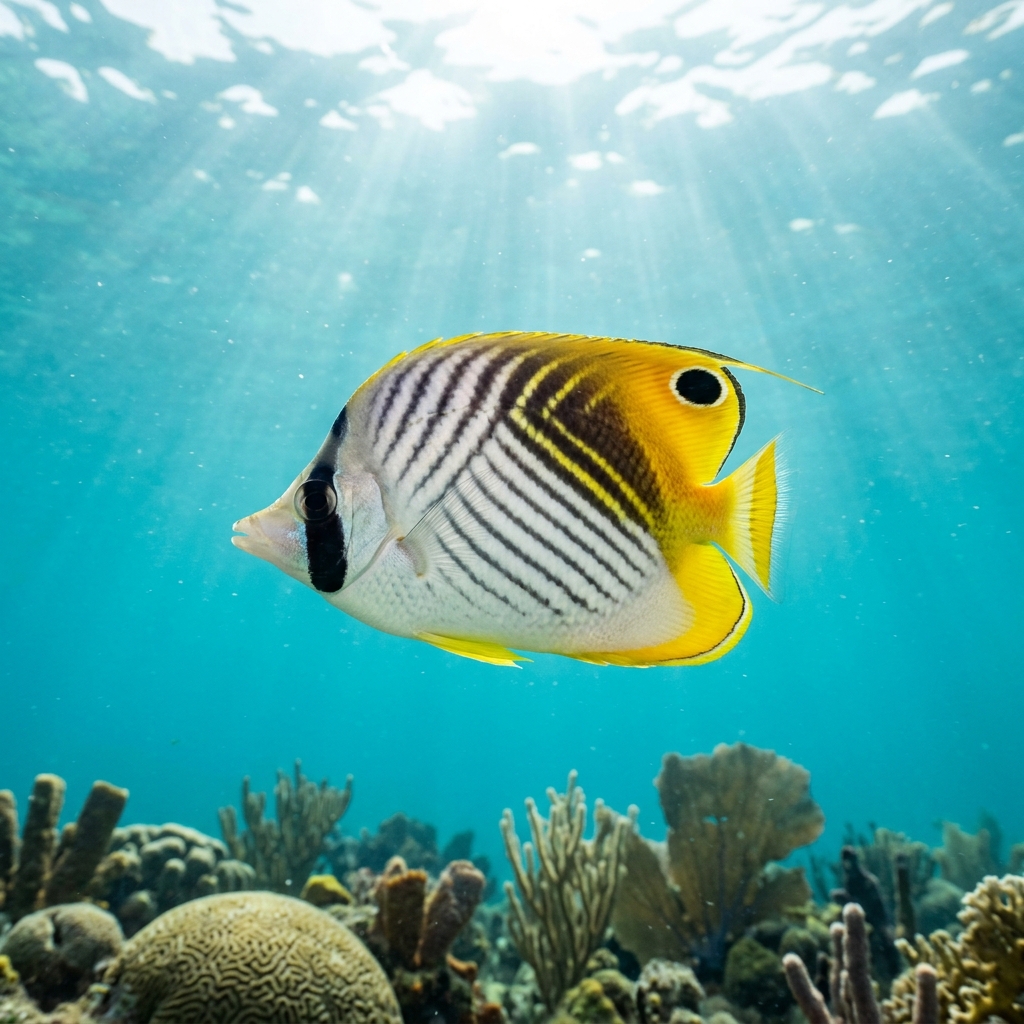
Chelmonops curiosus
Pale, long-snouted butterflyfish logged mostly in Western Australia's cooler reefs, 14.7 to 19.7C, uncommon but findable year-round.
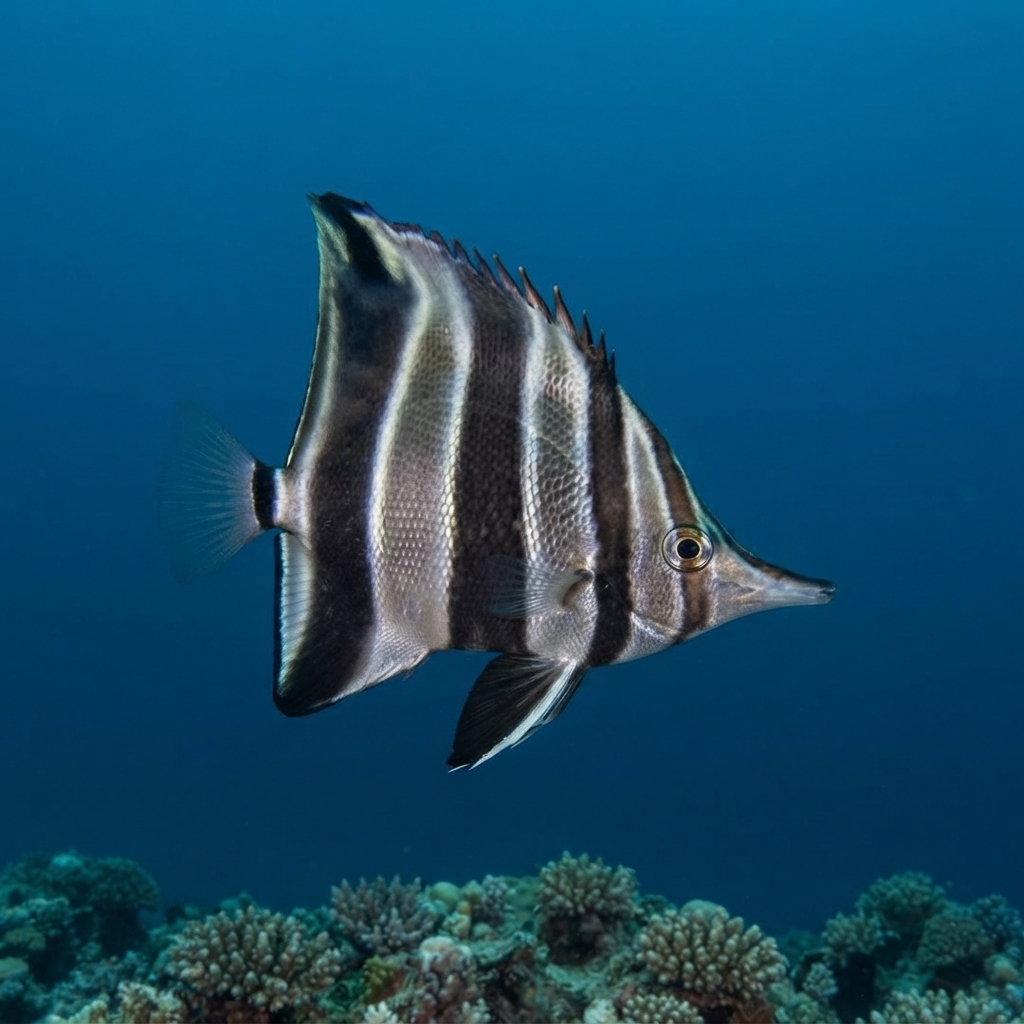
Elongated, pointed snout gives it a distinctly beaked profile compared with most butterflyfish. Body is pale grey to silvery-white with faint, broad vertical bars and a dark blotch near the tail base, growing to around 18cm. The long snout and washed-out colouring, rather than bold stripes, are the giveaway underwater.
Usually seen singly or in loose pairs, poking that long snout into crevices and sponge growth on rocky and reef-associated bottoms in search of small invertebrates. It tends to keep a cautious distance from divers rather than approach, and sightings skew toward deeper, cooler water in the 51 to 57m range logged by divers, so patience and a steady light pay off.
That extended snout is a specialised tool for picking small invertebrates out of narrow cracks and sponge crevices that blunter-faced butterflyfish can't reach.
Sightings don't show a clear seasonal spike, and the observed temperature range of 14.7 to 19.7C fits Western Australia's cooler reef conditions across most of the year, so it's a reasonable year-round find rather than a seasonal target.
Reef neighbours a diver could mistake it for. Use the identification notes above to tell them apart.
Almost every logged sighting comes from Australia, with Western Australia the stronghold and South Australia a secondary spot. Divers most reliably run into it on temperate reef sites through these two regions rather than on tropical coral reef.
Mapping where Talma is logged…
Almost all logged sightings are from Australia, concentrated in Western Australia with a smaller number of sites in South Australia. It's an uncommon but repeatable find on temperate reef dives in those regions.
There's no strong seasonal pattern in the data, and its comfort range of 14.7 to 19.7C matches Western Australia's reef temperatures for much of the year, so it can turn up on any dive in season for that region.
Look for a pale grey-white body with faint vertical banding and a noticeably long, pointed snout, rather than bold contrasting stripes. It grows to about 18cm and is usually spotted alone rather than in schools.
They typically reach around 18cm in length, a modest size in line with many reef-associated butterflyfish.
No, they pose no threat to divers and simply forage over the reef, keeping their distance if approached.
Its long, tapered snout is built for probing narrow crevices and sponge growth for small invertebrates, a feeding style that sets it apart from shorter-snouted butterflyfish relatives.
Site and sighting data is aggregated from diver logs, iNaturalist and GBIF. For taxonomy and conservation status: