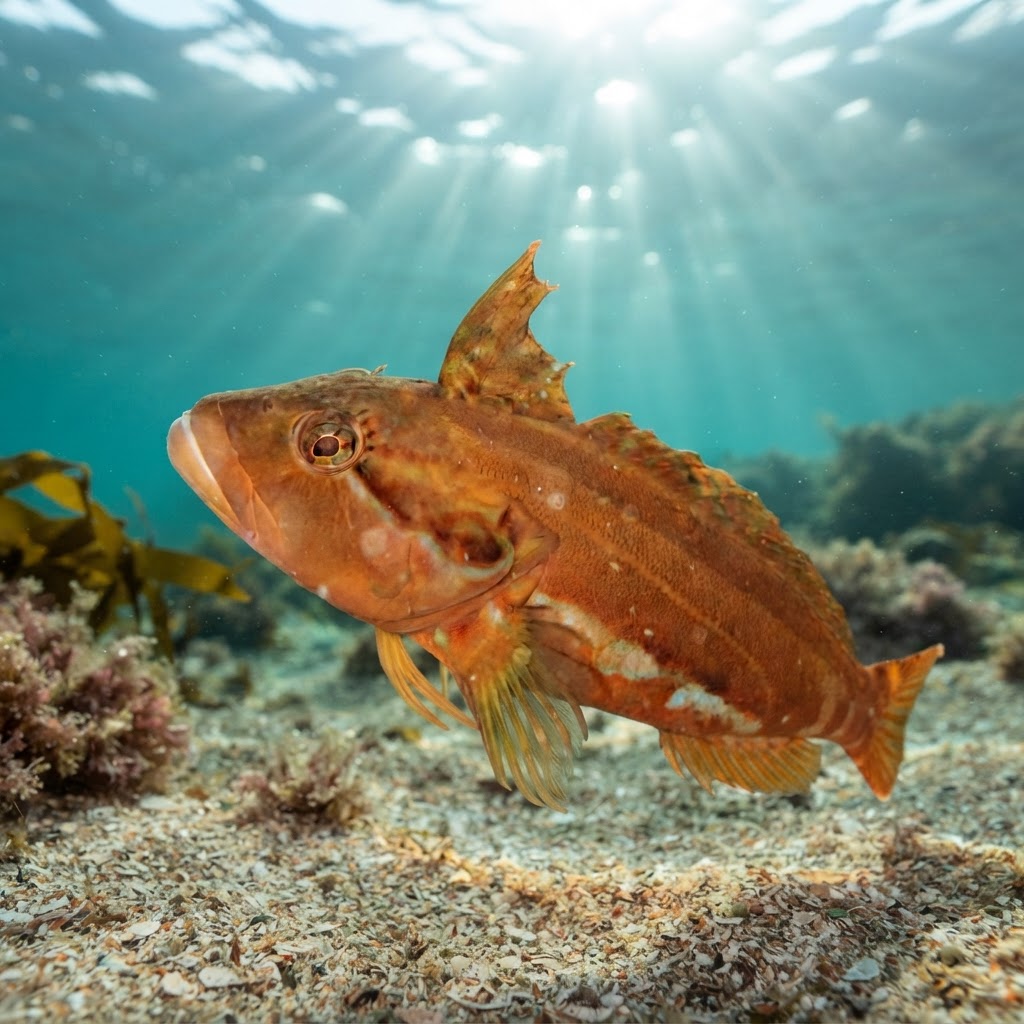
Clinus superciliosus
Common on Western Cape reefs at 15.5-22.5C, this blenny-like fish hides in kelp and rock crevices year-round.
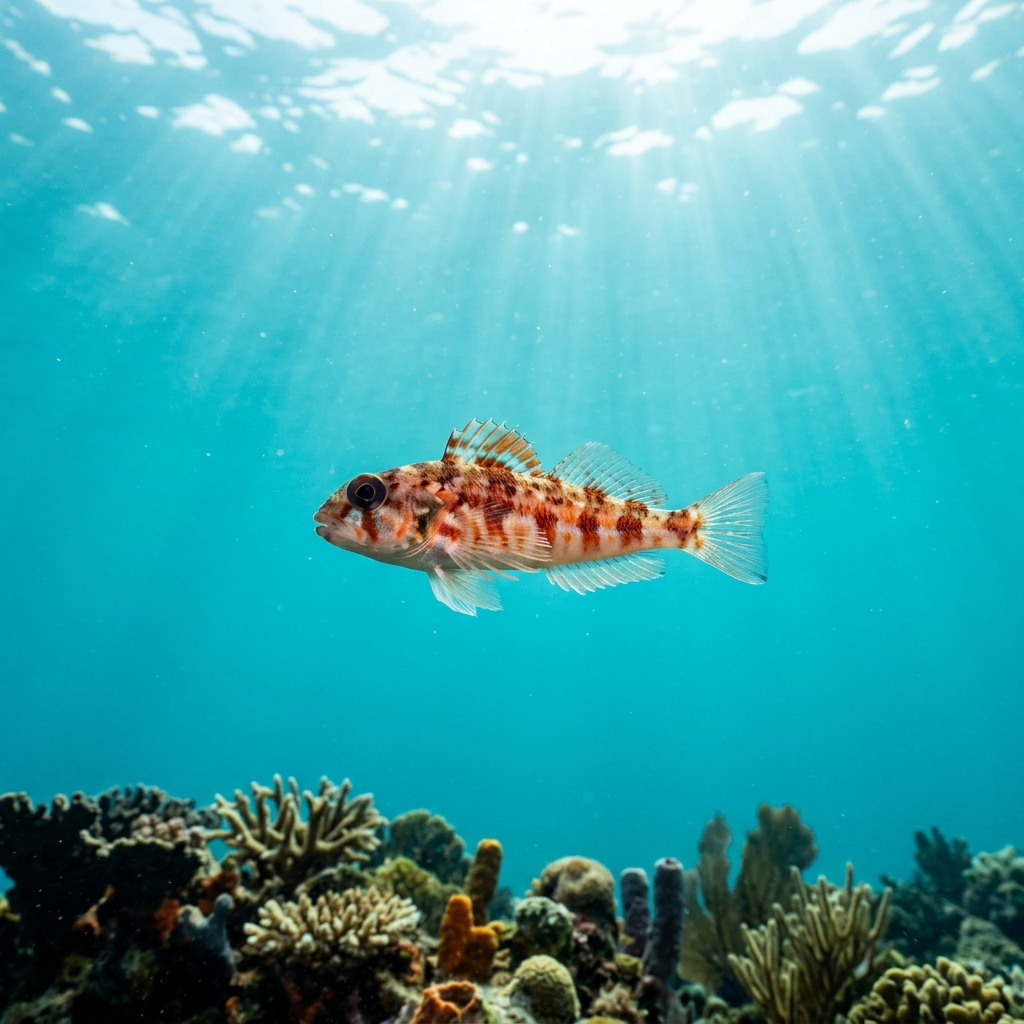
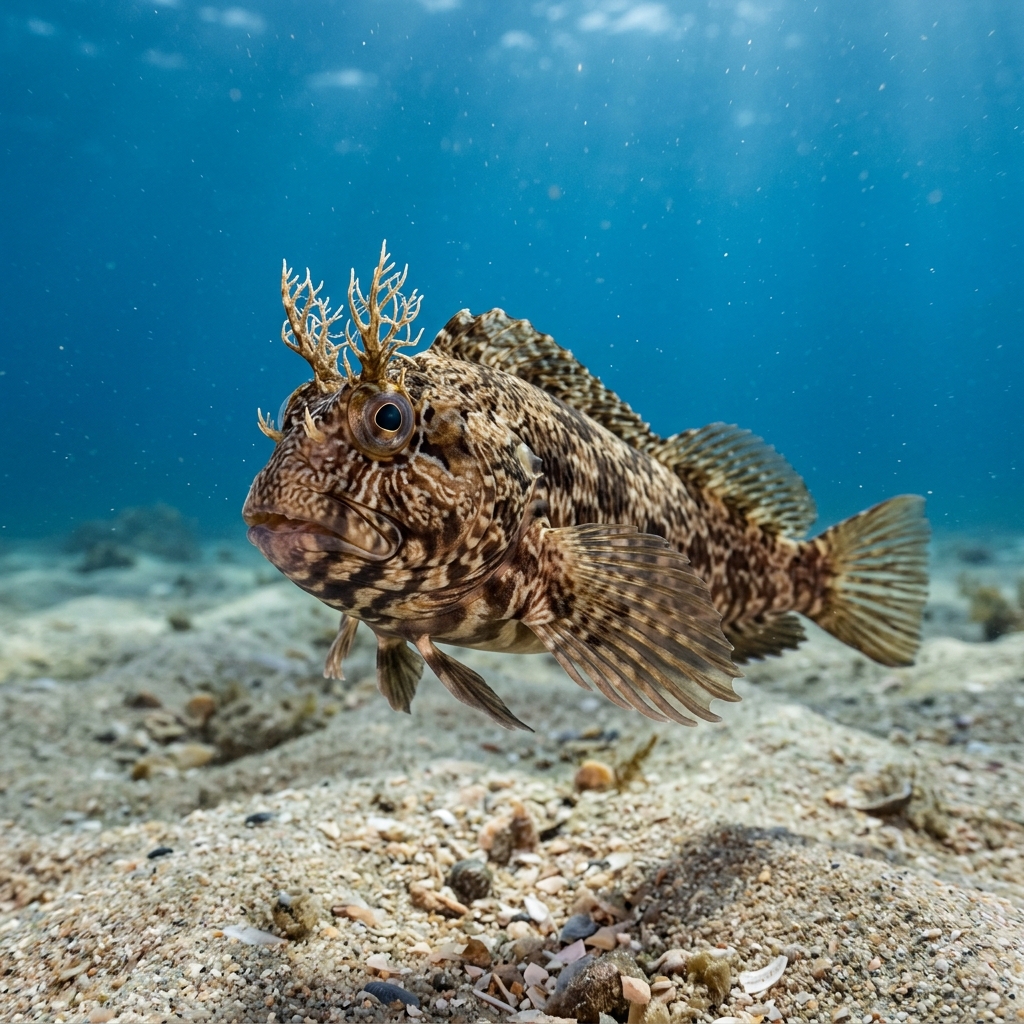
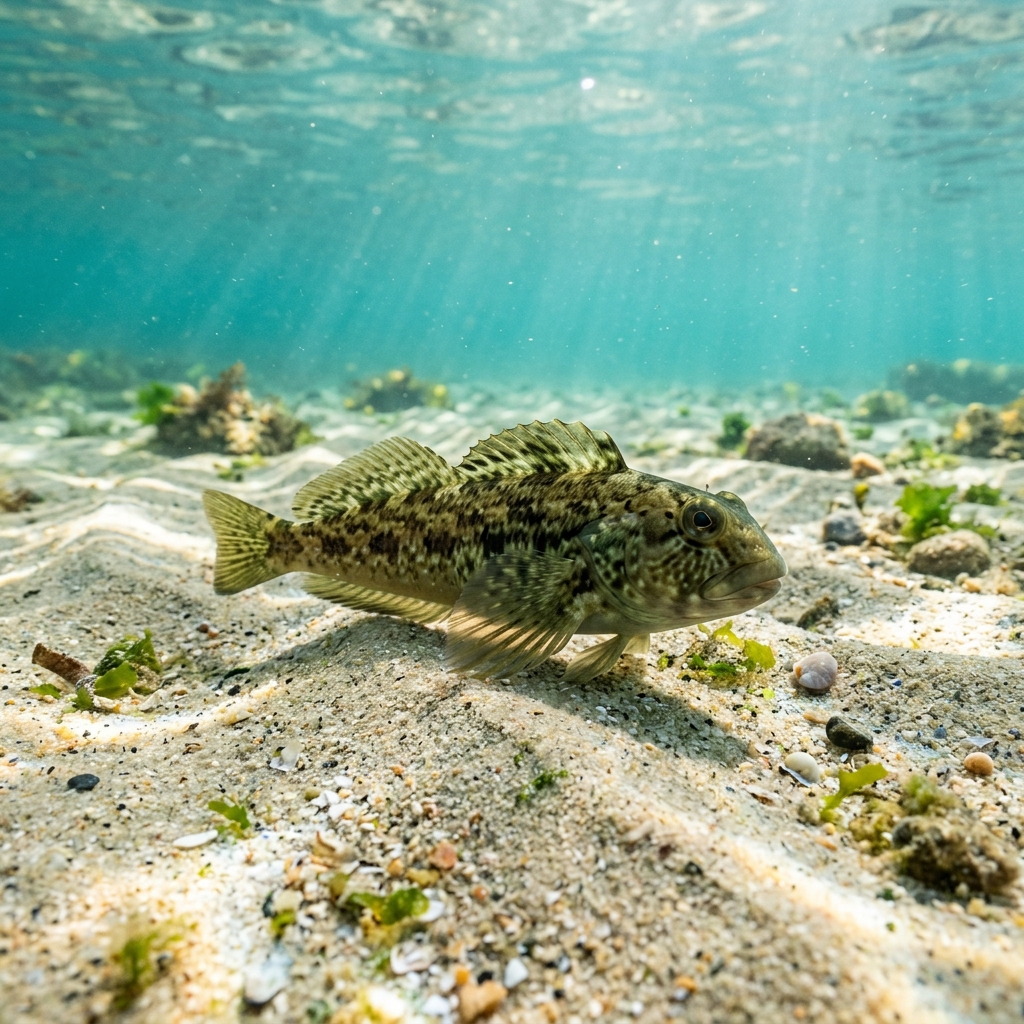
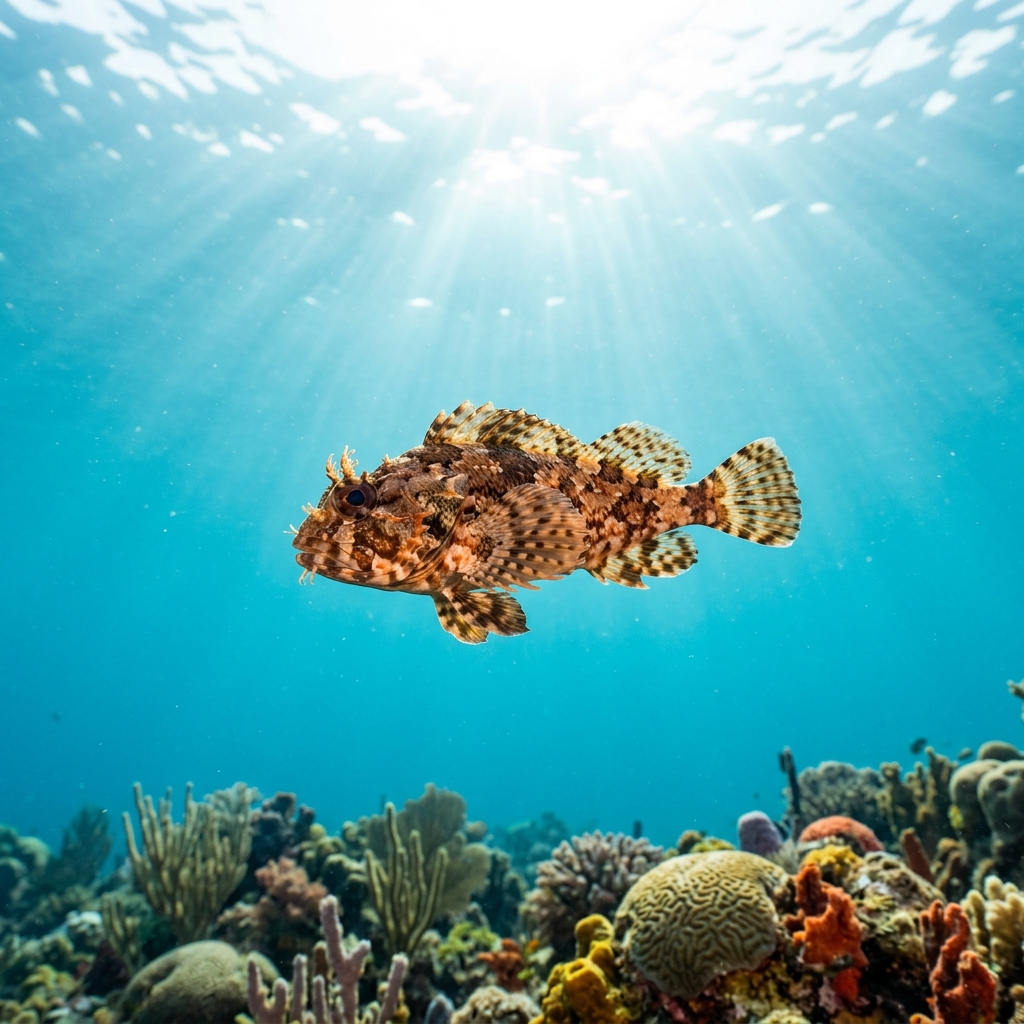
Grows to around 21cm, with a long, tapering body that lies flat against rock or tucks into crevices rather than swimming in open water. Colouring is mottled brown, olive and rust with irregular pale blotches down the flanks, giving it strong camouflage against kelp-covered reef. Look for the blunt head with small tentacle-like growths above the eyes and a continuous dorsal fin running most of the body length, a classic klipfish silhouette rather than a slim blenny shape.
Divers most often find it resting motionless on ledges, in crevices or among kelp holdfasts rather than swimming freely across the reef. It relies on camouflage and stillness rather than fleeing, so a slow, close look along rocky overhangs and kelp stipes is the best way to spot one. It is a bottom-dwelling (demersal) fish, so time spent scanning the substrate pays off more than watching midwater.
Klipfish in this genus are known for giving birth to live young rather than laying eggs, an unusual trait among reef fish that divers in cooler temperate waters get to encounter more often than most.
Sightings show no clear seasonal pattern, so it is logged year-round across its Western Cape sites. Its comfort range of 15.5 to 22.5C matches the cool temperate water off the Cape through all seasons, so there is no need to time a trip around temperature.
This is a Western Cape speciality, logged at reef and kelp sites right along that coastline in South Africa, with a single Eastern Cape record extending its range slightly east. If you are diving cool, kelp-fringed reef anywhere from Cape Town down toward the southern coast, this is one of the fish you can expect to find tucked into the rock.
Mapping where Super Klipfish is logged…
It is a Western Cape, South Africa speciality, found on rocky and kelp-covered reef sites along that coast, with occasional records extending into the Eastern Cape.
There is no strong season in the data, so it is seen year-round. It suits cool water between roughly 15.5 and 22.5C, which the Cape coast holds through most of the year.
Look for a mottled brown and olive fish around 21cm long, lying still on rock or wedged among kelp rather than swimming in open water. It has a long dorsal fin running most of its body and small tentacles above the eyes.
They typically reach about 21cm in length, making them a modest-sized reef dweller best spotted by looking closely at rock ledges and kelp rather than scanning for something large.
Like other klipfish, it gives birth to live young instead of laying eggs, which is unusual among reef fish and makes it a favourite among divers interested in unusual life cycles.
No, they pose no threat to divers. They are shy, camouflaged bottom-dwellers that rely on staying still and hidden rather than any defensive behaviour toward divers.
Site and sighting data is aggregated from diver logs, iNaturalist and GBIF. For taxonomy and conservation status:
Rusty Blenny
2,605 sites